
Why Do Root Canals Fail? A Complete Guide to Root Canal Retreatment
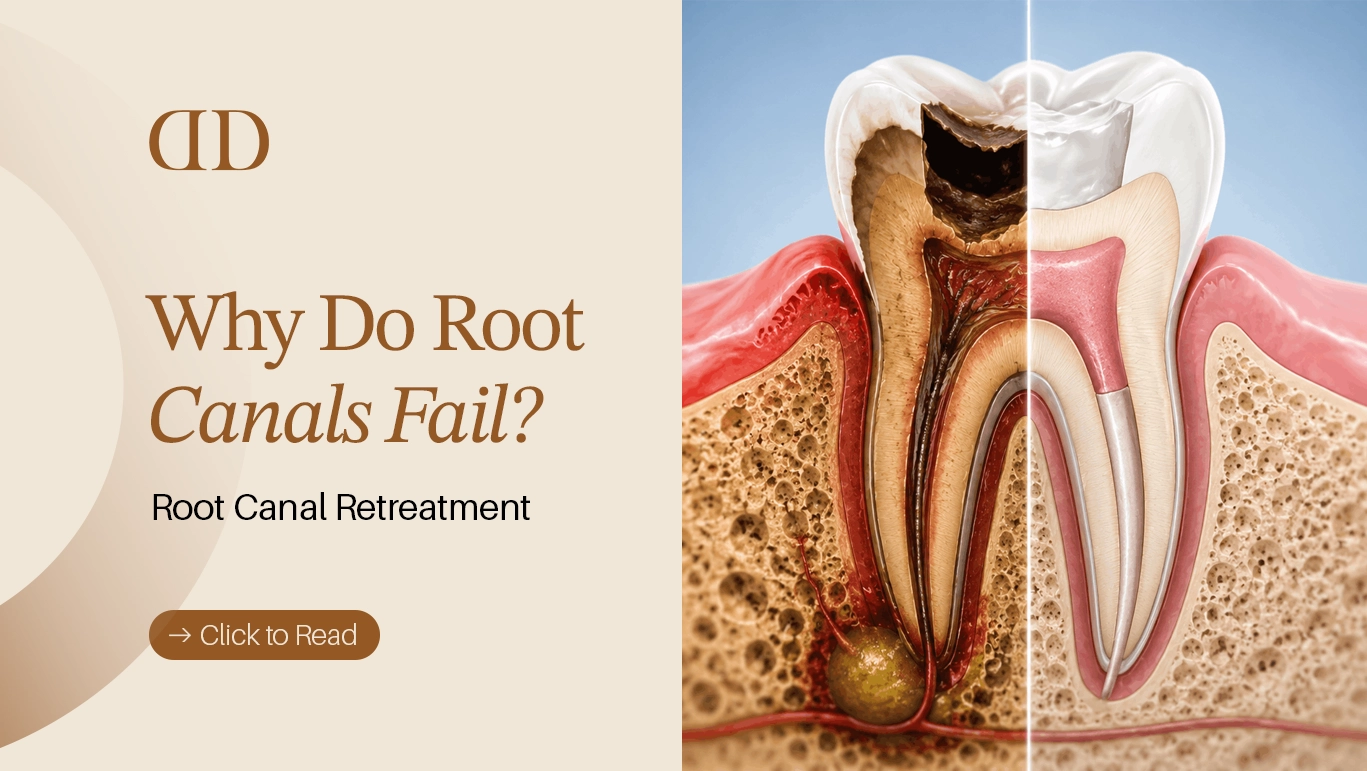

Saving a natural tooth is always the primary goal in modern dentistry. Root canal therapy boasts a remarkably high success rate, often rescuing damaged teeth from the brink of extraction. However, just like any medical or dental procedure, a root canal can occasionally fail. Discovering that a tooth you thought was fixed is causing pain or infection again can be incredibly frustrating.
If you are experiencing discomfort months or even years after your initial procedure, you might be asking yourself: Why do root canals fail? Understanding the underlying causes of a failed root canal and knowing that root canal retreatment is a highly effective secondary option can help relieve your anxiety and save your smile. At Darya Dental Clinic, we specialize in advanced endodontic solutions, ensuring that your retreatment is precise, pain-free, and permanent.
What is a Failed Root Canal?
A failed root canal occurs when the initial endodontic treatment does not successfully eliminate all bacteria from the tooth’s root canal system, or when the tooth becomes reinfected due to a breakdown in the protective restoration (like a crown or filling).
A root canal is considered failed when bacteria survive the initial cleaning, a hidden canal is missed, or the protective crown leaks. Symptoms include persistent pain, swelling, and sensitivity to pressure. The primary solution to save the tooth is root canal retreatment.
When a root canal fails, the infection can spread to the surrounding bone and tissue, leading to chronic discomfort or the formation of an abscess. It is important to note that a failure can manifest immediately after the procedure or remain dormant for several years before causing noticeable symptoms.
Top 5 Reasons Why Root Canals Fail
Even when performed by skilled clinicians, the complex anatomy of human teeth can present significant challenges. Here are the most common reasons behind root canal failures:
1. Complex or Missed Canal Anatomy
Human teeth, especially molars, can have intricate root systems with curved canals, hidden branches, or extra microscopic pathways (such as the MB2 canal in upper molars). If an endodontist misses one of these tiny canals during the first procedure, bacteria will continue to thrive inside it, eventually causing a secondary infection.
2. Delayed or Inadequate Final Restoration
After the interior of the tooth is cleaned and sealed, it must be protected with a permanent restoration usually a dental crown. If there is a long delay between the root canal and the placement of the crown, or if the permanent filling leaks, saliva and bacteria from the mouth can seep back into the canal system, contaminating the area once again.
3. Vertical Root Fractures
A tooth that has undergone a root canal becomes more brittle over time. If the tooth suffers a hairline fracture or a deep vertical crack that extends beneath the gumline, bacteria can easily penetrate the root. Unfortunately, teeth with deep vertical root fractures often cannot be saved by retreatment and may require extraction.
```html
```
Premium Dental Care in Turkey
Expert treatments with high-end technology. Get your personalized quote today via WhatsApp.
4. Breakdown of Sealing Materials
Over several years, the biocompatible filling materials (like gutta-percha) used to seal the canals can degrade. If the seal erodes or breaks down, it creates micro-gaps that allow bacteria to re-enter the root apex.
5. New Decay or New Trauma
A treated tooth is still susceptible to cavities. If a new cavity develops near the edge of the dental crown, it can breach the protective seal. Similarly, a new physical injury or trauma to the mouth can crack the tooth or dislodge the internal root filling.
```html  ```
```
Want trusted dental advice in your Google AI answers?
Add Darya Dental Turkey as a Preferred Source on Google to make our dental guides easier to find in your search results and AI Overviews.
Symptoms of a Failed Root Canal: When to Seek Help
It is common to experience mild sensitivity for a few days following an endodontic procedure. However, if symptoms emerge months or years later, it is a clear indicator that something is wrong. Knowing what to look for can help you seek treatment before the infection worsens.
- Persistent or Spontaneous Pain: Dull, throbbing pain that doesn’t go away, or sharp pain when biting down, is the most common sign of failure.
- Swelling and Tenderness: Swelling in the gums near the affected tooth, which may extend to the face or neck, indicates an active infection.
- Gum Pimples (Abscesses): A small, pimple-like bump on the gums (known as a fistula) may appear. This bump often drains pus, leaving a bad taste in your mouth.
- Thermal Sensitivity: Pain or prolonged discomfort when the tooth is exposed to hot or cold food and drinks.
- Mobility: The treated tooth may feel loose or shift slightly when touched.
If you notice any of these signs, it is crucial to schedule a diagnostic appointment immediately to evaluate the health of your dental roots.
What is Root Canal Retreatment?
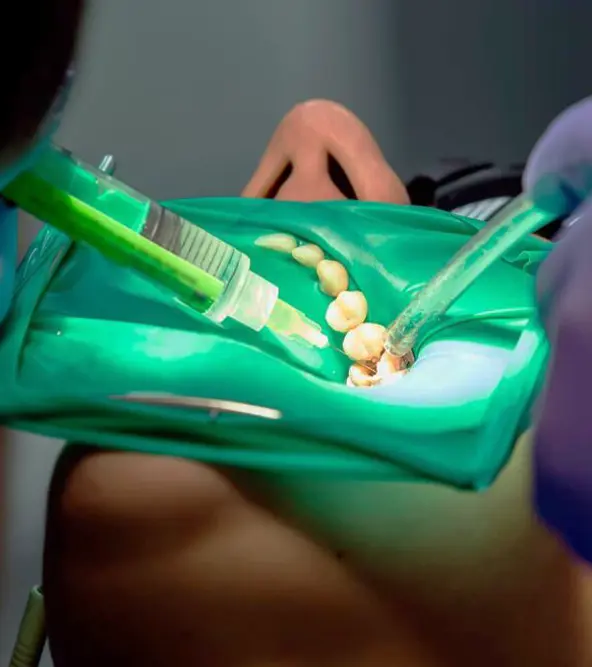
Root canal retreatment is a secondary specialized endodontic procedure designed to correct the issues that caused the initial treatment to fail. Instead of extracting the tooth, an endodontist re-enters the tooth structure, removes the old filling materials, thoroughly cleans and disinfects the entire canal system, and reseals it to prevent future bacterial invasion.
Step-by-Step: The Retreatment Process
The retreatment process requires a higher level of precision and expertise than a standard root canal. At modern clinics like Darya Dental Clinic, advanced diagnostic tools and dental microscopes are utilized to ensure success.
- Comprehensive Assessment and X-rays: The dentist takes digital X-rays or 3D cone-beam computed tomography (CBCT) scans to visualize the internal structure of the roots, look for missed canals, and assess the bone density around the tooth apex.
- Gaining Access: Local anesthesia is applied to ensure total patient comfort. The dentist then creates a small access opening through the existing dental crown or filling to reach the inside of the tooth.
- Removal of Old Materials: The previous filling material (gutta-percha) and any posts or core materials placed during the first procedure are carefully removed using specialized ultrasonic instruments.
- Deep Disinfection and Shaping: The dentist meticulously cleans, shapes, and disinfects the entire root canal system. Using high-magnification dental microscopes, they actively search for hidden, curved, or blocked canals that were missed previously.
- Sealing and Temporary Restoration: Once the canals are entirely sterile, they are refilled with new biocompatible gutta-percha and sealer. A temporary filling is placed to close the access opening.
- Final Protection (The Crown): After a brief healing period to ensure the infection has cleared, you will return to have a permanent, custom-made crown or filling placed, fully restoring the tooth’s structural integrity.
Who is a Suitable Candidate for Retreatment?
Root canal retreatment is generally the best course of action for patients who want to preserve their natural teeth and avoid the higher costs and surgical recovery associated with tooth extractions and implants.
You are an ideal candidate if:
- Your initial root canal has become reinfected due to a leaking crown or delayed final restoration.
- Your dentist detects an anatomical anomaly (like a hidden or curved canal) that can be treated with advanced tools.
- The tooth’s underlying root structure is stable, free of deep vertical fractures, and supported by healthy jawbone.
Root Canal Retreatment vs. Tooth Extraction: Which Is Better?
When faced with a failed root canal, patients often wonder whether it is better to try and save the tooth through retreatment or simply have it extracted and replaced. Choosing to preserve your natural tooth is almost always the ideal clinical decision.
To help you understand your options, here is a detailed breakdown comparing Root Canal Retreatment with Tooth Extraction & Dental Implant:
| Feature / Criteria | Root Canal Retreatment | Tooth Extraction & Dental Implant |
| Primary Goal | Preserves your natural tooth structure and root. | Replaces the missing natural tooth entirely. |
| Procedure Time | Typically completed in 1 to 2 visits. | Requires multiple stages over 3 to 6 months. |
| Surgical Invasiveness | Non-surgical, conservative endodontic procedure. | Surgical extraction and surgical bone/implant placement. |
| Biting Sensation | Keeps natural periodontal ligaments (feels natural). | Synthetic feel (no natural nerve/ligament feedback). |
| Long-Term Cost | More cost-effective as it utilizes the existing tooth. | Higher initial investment due to surgery and components. |
Whenever possible, choosing retreatment keeps your natural smile intact, maintains proper jawbone stimulation, and avoids the more invasive surgical timelines associated with implants.
Frequently Asked Questions
1. Is root canal retreatment painful?
No. Thanks to modern local anesthetics and advanced dental technology, root canal retreatment is no more uncomfortable than getting a standard dental filling. At Darya Dental Clinic, your comfort is our top priority, and we ensure the entire area is completely numb before beginning.
2. How long does a retreated root canal last?
With proper oral hygiene, routine dental checkups, and a high-quality permanent crown, a retreated tooth can last a lifetime. Studies monitored by endodontic associations show that retreatment has a highly favorable success rate when performed by experienced specialists.
3. What is the success rate of root canal retreatment?
According to clinical data published by organizations like the American Association of Endodontists, root canal retreatment boasts a success rate of up to 75% to 85%, depending on the specific cause of the initial failure and the condition of the remaining tooth structure.
4. Can a failed root canal cause health problems if left untreated?
Yes. An unresolved infection at the root of a tooth can expand into the jawbone, forming a painful abscess. Over time, bacteria can enter the bloodstream, potentially leading to systemic health complications or spreading inflammation to adjacent teeth.
5. What if the retreatment fails as well?
If a tooth cannot be saved through standard retreatment often due to severe anatomical blockages or microscopic fractures a minor surgical alternative called an apicoectomy (root-end resection) can be performed. If all endodontic options are exhausted, a safe extraction followed by an implant is the final alternative.
Save Your Smile with Darya Dental Clinic
A failed root canal does not mean you have to lose your tooth. Act quickly at the first sign of discomfort to prevent the infection from spreading and to maximize the chances of saving your natural smile.
At Darya Dental Clinic, our team of highly skilled endodontic professionals uses state-of-the-art diagnostic technology and microscopic treatment techniques to identify the exact cause of failure and restore your oral health permanently. Don’t let tooth pain hold you back reach out to us today to book your consultation!
