No-prep veneers are ultra-thin cosmetic dental shells made from high-purity lithium disilicate or advanced porcelain that bond directly to the front surface of your teeth. Unlike traditional dental veneers, this conservative dentistry approach completely eliminates the need for aggressive teeth shaving, preserving your natural tooth enamel while instantly correcting minor gaps, discoloration, or structural alignment issues.
What Are No-Prep Veneers?
In contemporary cosmetic dentistry, no-prep veneers represent a micro-invasive treatment modality designed to enhance smile aesthetics without modifying the underlying tooth structure. Traditional veneers rely on removing a portion of the tooth enamel to prevent the final restoration from looking bulky.
In contrast, no-prep alternatives use ultra-thin ceramic sheets often as thin as 0.2 mm to 0.3 mm (comparable to a contact lens) that fit seamlessly over the existing tooth frame. This technique prioritizes maximum tooth preservation while delivering a complete cosmetic teeth makeover.
How No-Prep Veneers Work
The clinical mechanism of no-prep veneers relies entirely on advanced adhesive dentistry. Because there is no mechanical retention created by drilling or shaping the tooth, the restoration depends on a high-strength chemical bond between the porcelain laminate and the outer enamel layer.
The dentist prepares the surface using a mild, microscopic etching gel that creates tiny porous channels in the enamel. A specialized silane coupling agent and fluid resin cement are then applied, fusing the ultra-thin veneer directly to the tooth. This creates a single, structurally unified entity capable of safely enduring daily biting forces.
Difference Between No-Prep and Traditional Veneers
The fundamental difference between traditional veneers and non-shaving options centers on the preparation style and the preservation of natural enamel. Traditional protocols require the dentist to file down the enamel layer by 0.5 mm to 0.7 mm. This process is irreversible and exposes the deeper, more sensitive dentin layer, often necessitating temporary restorations.
No-prep options bypass this aggressive alteration completely. To illustrate the exact clinical variations between these two treatments, evaluate the structural comparison matrix below:
Do No-Prep Veneers Require Teeth Shaving?
Veneers Without Shaving Explained
The concept of getting veneers without shaving is often met with skepticism by patients who assume that all cosmetic dentistry requires permanent tooth modification. However, modern digital smile design and precision lab milling allow dental specialists to create custom restorations that fit over the natural contours of your teeth.
By utilizing advanced dental ceramics like E-Max Crowns, these thin teeth veneers achieve remarkable structural durability without needing to cut into healthy enamel.
Veneer Prep vs Non-Shaving Veneers
During a standard veneer prep phase for traditional restorations, the dentist uses a diamond burr to remove enamel from the front and biting edges of the tooth. This is done to create a clear path of insertion and to prevent the finished porcelain from creating an over-contoured, thick appearance at the gum line.
With non-shaving veneers, the preparation is strictly adhesive rather than mechanical. The teeth are thoroughly cleaned, polished, and micro-etched, leaving the macro-structure of the natural tooth completely untouched.
Are Teeth Filed Down for No-Prep Veneers?
Patients frequently worry about having their teeth filed down for veneers, a concern driven by images of aggressive “peg teeth” often seen in poorly managed cosmetic procedures. With authentic no-prep protocols, your teeth are never shaved down to pegs.
The outer enamel remains completely whole and protected. This makes the entire treatment non-invasive, comfortable, and free from the post-operative thermal sensitivity commonly associated with traditional tooth reduction. Patients comparing minimally invasive veneer options can also review our porcelain veneer treatment to understand the differences and determine which approach may be suitable after a clinical evaluation.
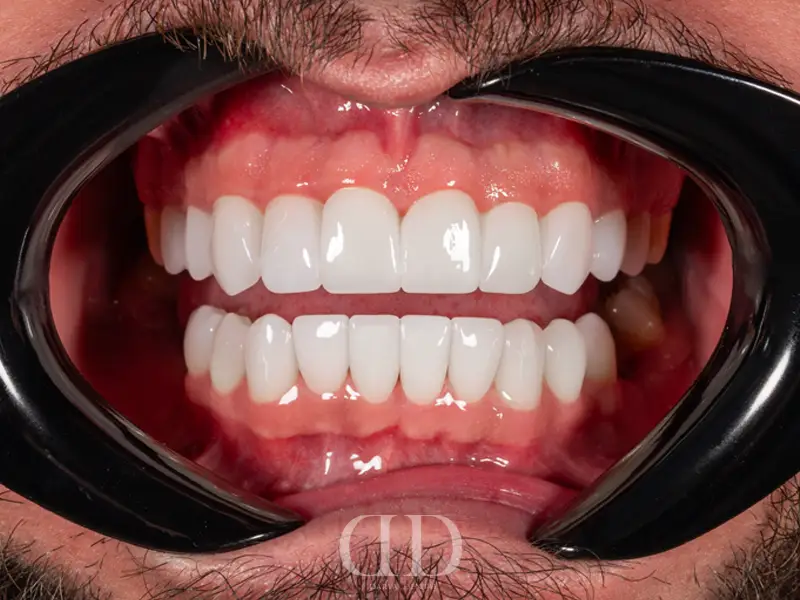
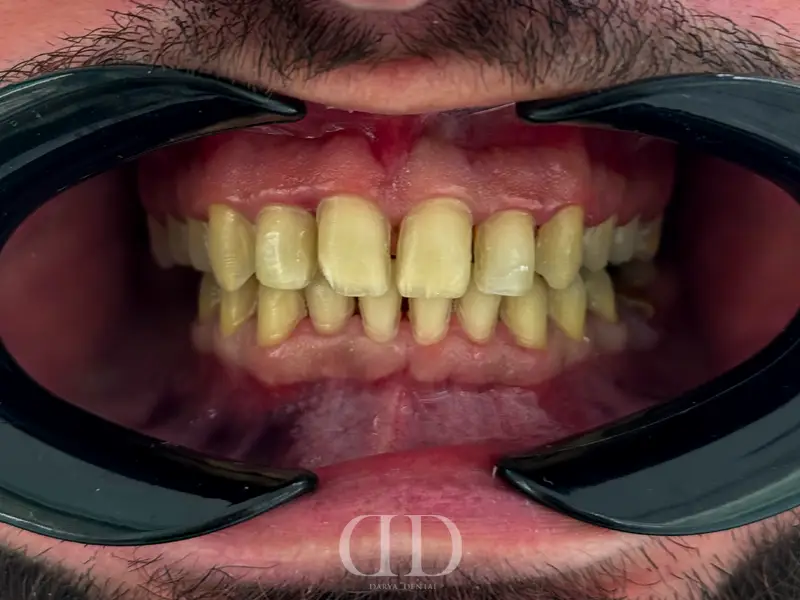
Simulate No-Prep Veneers
Slide to view how minor alignment, spacing, or color issues are completely resolved without shaving or drilling down your healthy teeth.
What is your primary aesthetic objective with No-Prep Laminalar?
No-prep restorations require extremely dense, ultra-thin porselen shells that bond straight to untouched enamel.
Why do you prefer No-Prep over traditional veneers?
Traditional veneers require thin shaving of natural structures, whereas No-Prep is 100% non-invasive.
What is your target brightness shade for your final smile?
Because No-Prep veneers are ultra-thin, we select advanced opalescent values to balance background teeth shades.
Excellent Candidate for No-Prep Veneers
Your clinical expectations align perfectly with our premium No-Prep Veneers. Utilizing advanced lithium disilicate layers (as thin as 0.2mm - 0.3mm), we can construct fully custom, durable, and reversible restorations without changing your natural teeth.
Zero Enamel Shaving
No-Prep veneers are designed as thin as 0.2mm - 0.3mm (contact lenses). We bond them directly over your natural enamel with absolutely zero drilling.
Pain-Free & Reversible
Because there is no healthy tooth reduction, the process is fully reversible and completed completely without anesthesia, injections, or discomfort.
High-Luster Bonding
Advanced lithium disilicate materials mimic the exact opalescent depth, light reflection, and surface texture of highly polished natural tooth glaze.
Who Is a Good Candidate for No-Prep Veneers?
Thin Teeth & Small Teeth Cases
Anatomical micro-dontia (naturally small teeth) or visible spacing are ideal clinical indicators for non-shaving veneers. Patients with thin teeth veneers requirements or genetic small teeth veneers configurations benefit significantly because the primary objective is to add structural volume rather than mask bulk. When a patient presents with narrow dental arches or teeth that sit slightly backward in the smile line, ultra-thin porcelain laminate shells can be safely bonded over the enamel surface. This builds out a fuller, more youthful smile profile without requiring any physical enamel reduction.
Gaps, Minor Misalignment & Shape Issues
If you are considering no prep veneers for gaps or looking at no prep veneers for crooked teeth, structural planning relies entirely on the degree of spatial deviation:
- Diastemas (Gaps): Small-to-moderate spaces between front teeth can be seamlessly closed by expanding the mesial and distal contours of the custom ceramic shells.
- Minor Crowding: Slight rotations or minor overlapping can be visually corrected by overlapping the ultra-thin porcelain veneers, creating a perfectly straight, uniform dental arch.
- Shape Abnormalities: Chipped incisal edges, peg laterals, or asymmetrical tooth margins can be fully redesigned to enhance overall facial harmony.
When No-Prep Veneers Are Not Recommended
While the concept of non-shaving dental restorations is highly appealing, specific clinical boundaries must be respected to avoid failure:
- Severe Crowding or Misalignment: If teeth are severely rotated or overlapping, placing a veneer without shaving will result in an unnaturally bulky, unhygienic profile that irritates the gingival margins. In these cases, a staged approach combining pre-treatment clear aligners or traditional porcelain veneers is recommended.
- Significant Discoloration: Because these laminates are ultra-thin and translucent, they cannot effectively mask dark, internal stains caused by severe tetracycline exposure or root canal treatments. For deep discoloration, structural coverage with Zirconia Crowns provides a superior aesthetic barrier.
- Active Bruxism: Patients who exhibit heavy, uncontrollable night-time teeth grinding or clenching risk cracking thin ceramic structures.
- Compromised Enamel: While minor thinning is acceptable, getting no prep veneers for thin enamel that is heavily eroded or structurally decayed is counter-indicated, as the adhesive resin requires a healthy outer enamel layer to achieve a permanent bond.
No-Prep Veneers Journey in Turkey - Step by Step
Submit clear photos of your smile. Since No-Prep Veneers require absolutely zero tooth reduction, our cosmetic dentistry specialists will carefully analyze your teeth alignment, proportions, and bite to confirm if you are an ideal candidate, delivering a custom plan and a transparent quote within 24 hours.
Visit our clinic for a completely non-invasive session. Because this procedure preserves 100% of your natural enamel with no drilling or needles, we completely bypass traditional uncomfortable impression molds. Instead, ultra-high-definition 3D intraoral scanners capture your teeth's exact dimensions in seconds.
Your bespoke veneers are designed using precision 3D CAD/CAM software and custom-milled to be micro-thin (often as thin as a contact lens, typically 0.2mm to 0.3mm) from premium, light-transmitting ceramic blocks. Master ceramists then hand-texture and glaze each shell to recreate natural light reflections and depth.
Without the need for any local anesthesia, your final micro-thin veneers are gently and permanently bonded to your natural teeth using advanced adhesive resins. Following precise bite verification and a high-shine diamond polish, you will instantly step out with a gorgeous, naturally luminescent smile with zero recovery time.
No-Prep Veneers vs Other Cosmetic Treatments
No-Prep Veneers vs Porcelain Veneers
The choice between no prep veneers vs porcelain veneers of a traditional style comes down to balancing structural reduction with aesthetic masking power. Traditional veneers require a physical alteration of the tooth structure, removing a controlled layer of enamel to accommodate a thicker ceramic shell. This makes the procedure irreversible but allows the laboratory to create opaque restorations that completely cover dark teeth. No-prep configurations preserve 100% of the natural tooth but require a pristine, reasonably white underlying surface due to their sheer translucency.
No-Prep Veneers vs Composite Bonding
When analyzing no prep veneers vs composite bonding, material science highlights differences in longevity and stain resistance. As outlined in the specialized Composite Bonding in Turkey, composite bonding utilizes a moldable plastic resin applied directly to the enamel in a single session. While bonding is highly conservative and cost-effective, resin materials are inherently porous. Over time, they are prone to surface chipping, edge wear, and discoloration from coffee or tea. No-prep ceramic laminates utilize high-purity glass-ceramics that maintain structural gloss, color stability, and edge integrity for decades.
Minimal-Prep Veneers vs No-Prep Veneers
The operational boundary between minimal prep veneers vs no prep veneers is micro-measured. Minimal-prep protocols do not aggressively reshape the teeth into pegs; instead, they require a ultra-conservative polishing of the enamel surface (usually between 0.1 mm and 0.2 mm). This superficial modification is typically performed to smooth out sharp dental line angles, create a definitive seating margin for the lab technician, or prevent a slightly prominent tooth from standing out. Pure no-prep options bypass even this superficial polishing, relying entirely on the native tooth topography.
Pros and Cons of No-Prep Veneers
Advantages of Non-Shaving Veneers
- Enamel Integrity Preservation: Bypassing the drill means your natural tooth infrastructure remains entirely intact and uncompromised.
- Pain-Free Clinical Experience: Because the sensitive dentin layer is never exposed, the entire process is performed comfortably without local anesthesia injections.
- Complete Treatment Reversibility: If you ever decide to remove the ultra-thin shells in the future, your underlying teeth remain healthy, whole, and unchanged.
- Zero Downtime or Temporaries: Patients do not need to wear bulky temporary plastic restorations while the final ceramics are being crafted in the laboratory.
Limitations & Clinical Boundaries
- Case Specificity: They are not a universal solution; patients with severe misalignment or dark internal staining are poor candidates.
- Risk of Bulkiness: If placed by an inexperienced clinician on an already prominent tooth, the restoration can look over-contoured at the gum line, creating plaque traps.
- Micro-Margin Management: The interface where the ultra-thin ceramic meets the natural enamel near the gums requires meticulous finishing to prevent soft-tissue irritation.
Long-Term Expectations
When pristine clinical protocols are maintained, non-shaving restorations offer a highly predictable, stable lifestyle upgrade. They behave exactly like natural teeth, blending seamlessly into your speech dynamics, facial transitions, and daily life. Because the ceramic is non-porous, the brightness achieved on day one remains uniform over the lifespan of the treatment.
Are No-Prep Veneers Permanent or Reversible?
Enamel Preservation & Reversibility
The most significant biological benefit of non-shaving restorations is their inherent reversibility. Because traditional cosmetic restorations remove the protective enamel layer, those teeth can never be left uncovered without risking severe decay and intense pain. With no-prep protocols, the enamel preservation means the biological “bridge” is never burned. Your teeth retain their natural defense mechanisms throughout the duration of the treatment.
Can No-Prep Veneers Be Removed?
Yes, if a patient ever wishes to revert to their original smile line or transition to alternative treatments, no-prep veneers can be safely unbonded. Specialist cosmetic dentists utilize advanced dental lasers or micro-abrasion tools to gently break down the adhesive resin layer without scratching or altering the underlying native enamel surface underneath.
Do No-Prep Veneers Damage Teeth?
A common concern among international patients is whether covering the teeth can cause long-term harm. When planned correctly, no-prep veneers do not damage teeth. Enamel health is preserved because no drilling takes place. Furthermore, the specialized adhesive resin seals the interface completely, preventing bacteria from leaking underneath the restoration. According to clinical guidance from the American Academy of Cosmetic Dentistry, preserving healthy enamel during cosmetic procedures is the most effective way to ensure long-term oral health and structural stability.
How Long Do No-Prep Veneers Last?
Average Lifespan
When meticulously bonded to healthy natural tooth enamel, premium non-shaving restorations exhibit an average lifespan of 10 to 15 years. In many clinical scenarios managed under optimal oral health conditions, they can sustain their structural integrity for up to 20 years. Because the underlying teeth remain whole, the structural foundation is incredibly stable. The longevity of the restoration is highly dependent on the quality of the primary adhesive bond and the patient’s commitment to daily oral hygiene.
Daily Care & Maintenance
Preserving your non-shaving veneers does not require complex clinical routines, but rather consistent, non-abrasive daily care:
- Brushing: Clean your teeth twice daily with a soft-bristled toothbrush and a non-abrasive gel toothpaste. Avoid whitening formulas containing highly abrasive particles like charcoal or silica, which can micro-scratch the protective ceramic glaze over time.
- Flossing: Meticulously floss every day around the cervical margins near the gum line. This prevents localized plaque accumulation, protecting the natural root interfaces from secondary decay.
- Professional Prophylaxis: Schedule routine dental cleanings and comprehensive check-ups every six months to monitor the marginal adaptation of the porcelain shells.
Do No-Prep Veneers Stain or Break?
High-purity glass-ceramics are completely non-porous materials. Unlike natural enamel or composite resin materials, the ultra-smooth factory-glazed surface does not possess microscopic pores that can trap external pigments. Consequently, the daily consumption of heavily pigmented substances like coffee, dark tea, or red wine will not alter the internal shade matrix of the veneers.
While highly resilient, they are not completely indestructible. Extreme vertical forces such as using your teeth as tools, biting into exceptionally hard candy, or chronic grinding can cause thin porcelain structures to chip or fracture.
No-Prep Veneers Cost in Turkey
No-Prep Veneers Turkey Price Range
When researching global aesthetic dentistry, evaluating the no prep veneers cost structure reveals a highly favorable economic model in Istanbul. A standard no prep veneer price plan at specialized clinics offers substantial savings compared to Western fees.
Rather than indicating a reduction in medical standards, clinical technology, or material grades, the competitive pricing of affordable no prep veneers is driven by macroeconomic indicators. Lower local operational overheads, favorable currency exchange rates, and structured government medical tourism incentives allow top-tier practices to utilize premium materials at a fraction of the cost found in the UK or US.
Are No-Prep Veneers Cheaper Than Traditional Veneers?
From a strict laboratory manufacturing standpoint, the raw ceramic ingot costs for traditional and no-prep options are quite similar. However, a comprehensive no prep veneers Turkey price matrix is often highly cost-effective because it simplifies the clinical workflow. Bypassing the aggressive tooth filing stage eliminates the need for diagnostic temporary restorations, local anesthesia medications, and multiple prolonged surgical sessions, reducing the overall treatment cost for the patient.
Cost Comparison: Turkey vs UK & US
To clarify the distinct financial variance between global healthcare fee structures, review the comparative cost distribution matrix below:
No-Prep Veneers in Istanbul
Why Istanbul Is a Hub for Veneers
Istanbul has firmly established itself as a premier global hub for advanced medical and cosmetic dentistry tourism. International patients consistently travel for treatments like no-prep veneers Turkey packages because the city combines world-class clinical infrastructure with highly experienced aesthetic specialists who perform high volumes of full-mouth reconstructions annually. Leading practices meet strict healthcare standards enforced by the Turkish Ministry of Health, ensuring that clinical safety, sterilization protocols, and material authenticity fully align with international European directives.
Treatment Timeline & Visit Duration
Completing your non-shaving smile transformation requires a brief 5 to 7-day stay in Istanbul. Because there is no need to wait for local anesthesia to wear off or for sensitive prepped teeth to heal under plastic temporaries, the process is streamlined and highly comfortable. A typical treatment journey fits seamlessly into a single week:
- Day 1: Comprehensive in-person consultation, high-resolution 3D intraoral digital scanning, and personalized digital smile design mapping.
- Days 2–4: Automated CAD/CAM milling of the ultra-thin ceramic ingots, meticulous hand-layering by master ceramists, and high-temperature kiln firing.
- Day 5: Try-in evaluation to check color integration and marginal bite alignment, followed by final high-strength adhesive resin bonding.
- Day 6: Final quality control validation before official medical departure release.
No-Prep Veneers Istanbul Before & After
The visual transformation achieved through a personalized no prep veneers Istanbul plan is characterized by natural radiance and subtle enhancement. Reviewing a verified no prep veneers before after gallery highlights how thin teeth veneers can completely reshape a smile without producing an artificial look. By accurately calculating light transmission gradients, cosmetic dental technicians can create a vibrant, healthy no prep veneers Turkey before after outcome that perfectly matches the patient’s natural skin tone and facial symmetry.
Treatment Process Step-by-Step
Digital Smile Design & Planning
The therapeutic journey begins with an advanced digital smile design evaluation. Instead of using traditional, uncomfortable manual impression putties, clinicians utilize high-resolution intraoral scanners to generate a precise 3D digital model of your mouth. Specialized smile mapping software is then utilized to evaluate the precise proportions of your lips, teeth, and gums, ensuring that the new ceramic shells blend harmoniously with your facial architecture.
Trial Smile & Bonding Phase
Before any permanent ceramic block is fabricated, a physical diagnostic mock-up often referred to as a “trial smile” can be placed temporarily over your teeth. This allows you to preview the exact shape, length, and projection of your future smile in real life. Once you approve the spatial dimensions, the teeth are cleaned and prepared using a micro-etching solution to optimize the chemical retention surface.
Final Placement & Bite Check
On the day of final placement, the ultra-thin restorations are carefully positioned for a trial fitting under natural light. The cosmetic specialist meticulously evaluates the marginal interfaces against the gum tissue and verifies your occlusion using digital bite-registration software. Once the fit is verified, specialized light-curing dental lasers are applied to solidify the resin cement instantly, establishing an unbreakable permanent fuse.
Safety, Materials & Natural Results
Natural-Looking Veneers & Aesthetic Design
Achieving genuine, natural looking veneers requires balancing material science with artistic design. The flat, opaque, chalky look often associated with low-quality cosmetic work is avoided by mimicking the natural light transmission properties of real enamel. Modern dental technicians craft natural veneers Turkey selections with a subtle translucent incisal edge gradient, allowing natural light to pass through the ceramic shell and reflect off the underlying tooth structure, producing a lifelike smile transformation.
Materials Used in No-Prep Veneers
To achieve exceptional structural durability within a micro-thin profile, practices utilize top-tier, bio-compatible glass-ceramics. High-purity lithium disilicate materials, such as genuine E-Max systems, feature an incredibly dense crystalline matrix that provides a flexural strength of approximately 400 MPa. This extreme material density allows the restorations to remain ultra-thin while easily resisting daily masticatory wear and structural fractures.
Is the Procedure Safe in Turkey?
Undergoing cosmetic dental care in Istanbul is exceptionally safe, provided you select a certified clinical environment. Reputable centers operate under strict European medical safety directives, employ internationally trained prosthodontists, and utilize class-B autoclaved environments to eliminate clinical vulnerabilities. This high standard of care ensures predictable success rates that consistently match or exceed Western clinical benchmarks.
Why Choose No-Prep Veneers in Turkey?
Conservative Dentistry Approach
Choosing a non-shaving smile transformation represents a profound commitment to long-term oral health. Bypassing the drill preserves 100% of your natural enamel framework, keeping your teeth structurally whole and entirely free from post-operative thermal sensitivity.
High Aesthetic Standards
Istanbul’s leading practices combine advanced digital smile mapping software with the artistic precision of master ceramists. This collaborative approach ensures that your final restorations are customized to your specific facial proportions, producing a radiant, balanced smile that enhances your features naturally.
Cost-Effective Smile Transformation
International patients can achieve an elite smile makeover at a highly competitive investment level. By taking advantage of Turkey’s favorable economic landscape, you can receive premium, internationally certified materials and world-class dental care without compromising on quality or safety.
Book a No-Prep Veneers Consultation
Online Consultation & Smile Analysis
Your journey toward an enamel-preserving smile transformation begins from the comfort of your home. By utilizing our remote digital assessment platform, you can securely submit close-up photographs of your teeth along with any recent dental X-rays for an initial evaluation by our clinical team.
Personalized Treatment Planning
Our dedicated medical specialists will analyze your unique facial structure, alignment characteristics, and enamel condition to craft a customized treatment proposal. Contact Darya Dental Clinic today to request your comprehensive, non-binding digital smile consultation and discover the ideal pathway toward a beautiful, natural-looking smile transformation.
