
When Do You Need a Periodontist? Signs, Symptoms, and Advanced Treatments

Maintaining a bright, white smile is often at the top of everyone’s dental priority list. However, the true foundation of a healthy smile lies beneath the surface: your gums. While routine cleanings with a general dentist are sufficient for surface-level care, there are times when your gums require the expertise of a specialist. So, when do you need a periodontist? Knowing the answer to this question can mean the difference between saving your natural teeth and facing permanent bone loss.
If you have noticed bleeding while brushing, persistent bad breath, or receding gums, you might be dealing with more than just sensitive teeth. Understanding when to transition from general dentistry to specialized periodontal care is crucial for your long-term oral and systemic health.
What is a Periodontist and What Do They Do?
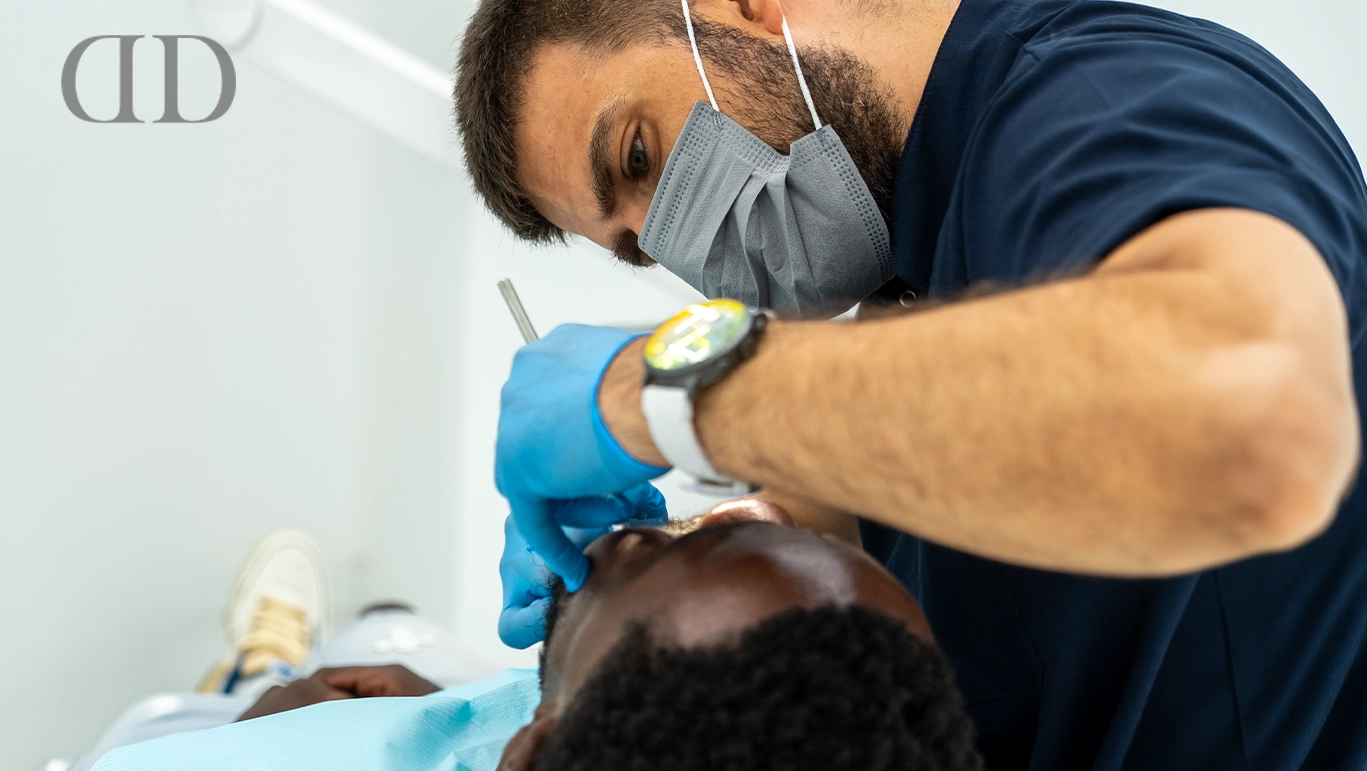
A periodontist is a dentist who specializes in the prevention, diagnosis, and treatment of periodontal (gum) disease, as well as the placement of dental implants. Following their standard dental degree, periodontists undergo an additional 3 years of rigorous, specialized residency training.
They are the structural engineers of oral health, focusing on the supporting structures of the teeth, which include:
- The Gingiva: The gum tissue wrapping around the teeth.
- The Alveolar Bone: The jawbone anchor that holds tooth roots in place.
- The Periodontal Ligament (PDL): The connective tissue fibers linking the tooth root to the bone.
While a general dentist handles cavities, crowns, and preventative cleanings, a periodontist steps in when chronic inflammation attacks these deep supporting tissues.
Understanding the Enemy: Gingivitis vs. Periodontitis
Gum disease is a progressive condition that starts quietly but can escalate into a severe oral health crisis. Understanding the transition from mild inflammation to advanced disease helps clarify exactly when a specialist’s intervention becomes mandatory.
1. Gingivitis: The Reversible Warning Sign
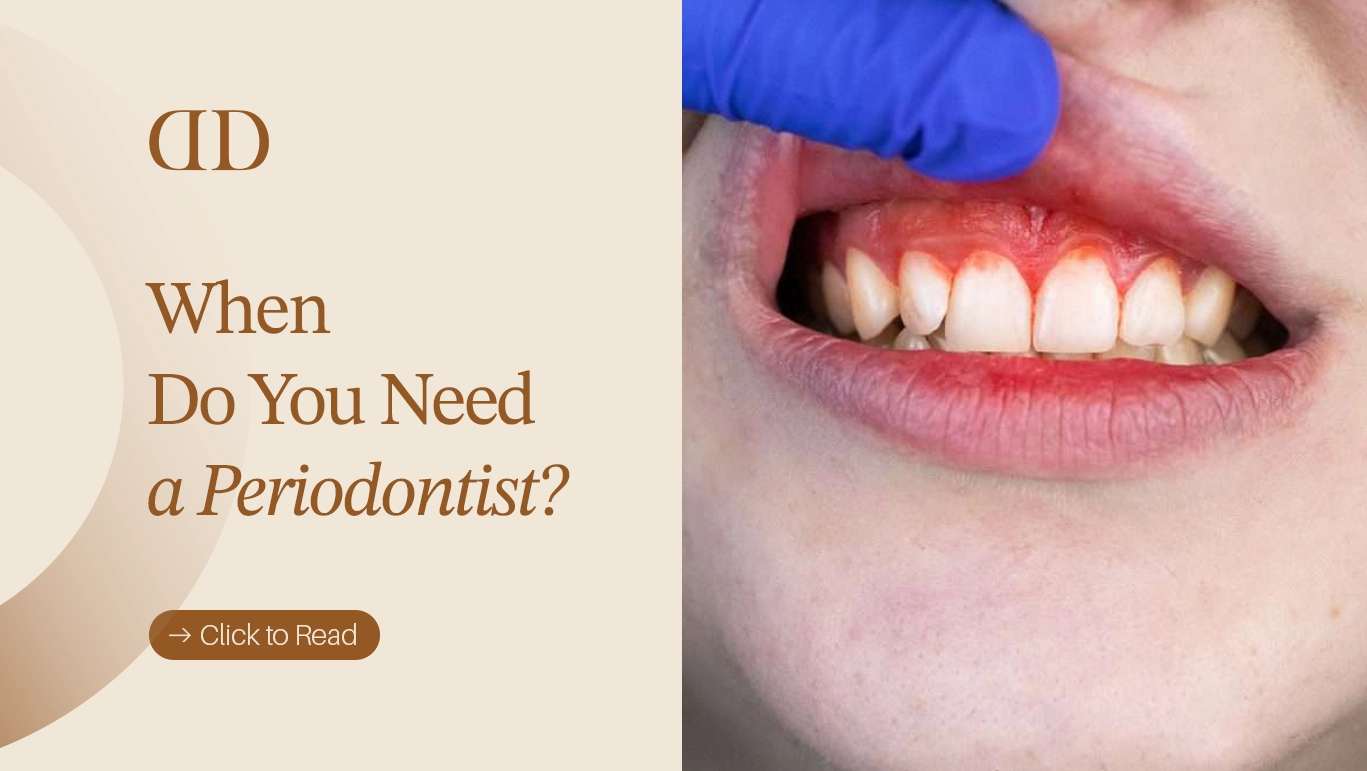
Gingivitis is the earliest and mildest form of gum disease. It is caused by plaque accumulation along the gumline. At this stage, the bacteria cause irritation, redness, and occasional bleeding, but the underlying bone structure remains completely intact. Gingivitis can usually be reversed with professional dental cleanings and improved home care.
2. Periodontitis: The Chronic Destruction
When gingivitis is left untreated, it progresses to periodontitis. Plaque hardens into tartar (calculus) and grows beneath the gumline. The immune system’s response to this constant bacterial invasion causes the body to break down its own bone and connective tissues. Gums pull away from the teeth, forming deep “pockets” that trap more bacteria, eventually leading to loose teeth and bone degradation.
Red Flags: 6 Signs You Need to See a Periodontist Immediately
Many symptoms of advanced gum disease are painless in their early stages, leading patients to mistakenly believe everything is fine. However, if you experience any of the following signs, you should skip the general waitlist and schedule a consultation with a specialist.
```html
```
Premium Dental Care in Turkey
Expert treatments with high-end technology. Get your personalized quote today via WhatsApp.
1. Persistent Bleeding and Swollen Gums
Healthy gums do not bleed when you brush or floss. If your gums are consistently red, swollen, tender, or bleed every time you clean your teeth, it is a clear indicator of active bacterial infection beneath the gumline.
2. Receding Gums (Teeth Appearing Longer)
As periodontal disease destroys the supporting tissues, the gums begin to pull back from the teeth, exposing the roots. This not only makes your teeth look longer but also increases sensitivity to hot and cold foods and leaves the roots vulnerable to decay.
```html  ```
```
Want trusted dental advice in your Google AI answers?
Add Darya Dental Turkey as a Preferred Source on Google to make our dental guides easier to find in your search results and AI Overviews.
3. Deep Periodontal Pockets
During a routine exam, dentists use a specialized probe to measure the space between your teeth and gums. Healthy pockets measure between $1\text{ mm}$ and $3\text{ mm}$. If your measurements are $4\text{ mm}$ or deeper, plaque and bacteria have migrated deep under the surface, creating an environment that only a periodontist can effectively clean.
4. A Shifting or Loose Bite
Have you noticed new gaps forming between your teeth? Does your bite feel different when you chew? Loose teeth are a late-stage symptom of periodontitis, indicating that the jawbone holding your teeth in place is actively dissolving.
5. Chronic Bad Breath (Halitosis)
Persistent bad breath or a constant metallic, foul taste in your mouth that doesn’t go away with mouthwash is frequently caused by volatile sulfur compounds released by anaerobic bacteria living deep within infected gum pockets.
6. Abscesses and Pus Between Teeth
The presence of pus, localized swelling, or a small bump on your gums (a gum abscess) means your body is fighting an acute infection. This requires immediate specialist intervention to prevent the infection from spreading into your bloodstream.
The Systemic Connection: Why Gum Health Impacts Your Entire Body
Periodontal health is not just about keeping your teeth; it is a critical component of your overall systemic well-being. Chronic inflammation in the mouth acts as an open gateway for harmful bacteria to enter the circulatory system.
Medical and dental research confirms that untreated periodontitis is closely linked to several systemic health issues:
- Cardiovascular Disease: Periodontal bacteria can enter the bloodstream and attach to fatty deposits in the heart’s blood vessels, increasing the risk of blood clots, arterial clogging, and heart attacks.
- Diabetes Management: The relationship here is a two-way street. Diabetics are more prone to infections like gum disease. Conversely, severe periodontitis increases systemic inflammation, making it significantly harder to control blood sugar levels.
- Respiratory Infections: Bacteria from infected gums can be inhaled into the lungs, potentially causing severe respiratory infections, bronchitis, or aspiration pneumonia, particularly in older adults.
Specialized Treatments Offered by a Periodontist
While a general dentist can perform routine cleanings above the gumline, a periodontist utilizes advanced non-surgical and surgical modalities to regenerate lost tissues and eliminate deep-seated infections.
| Treatment Type | Procedure Name | Clinical Objective |
| Non-Surgical | Scaling and Root Planing (Deep Cleaning) | Removing tartar from deep pockets and smoothing root surfaces to allow gums to reattach. |
| Surgical | Pocket Reduction (Flap Surgery) | Lifting the gums back to remove deep calculus and suturing the tissue tightly back in place. |
| Regenerative | Bone and Tissue Grafting | Using natural or synthetic materials to encourage the body to rebuild destroyed jawbone and gum tissue. |
| Esthetic / Implant | Dental Implant Placement | Replacing missing teeth by surgically anchoring titanium posts directly into the healthy jawbone. |
Why Global Patients Choose Darya Dental Clinic for Periodontal Therapy
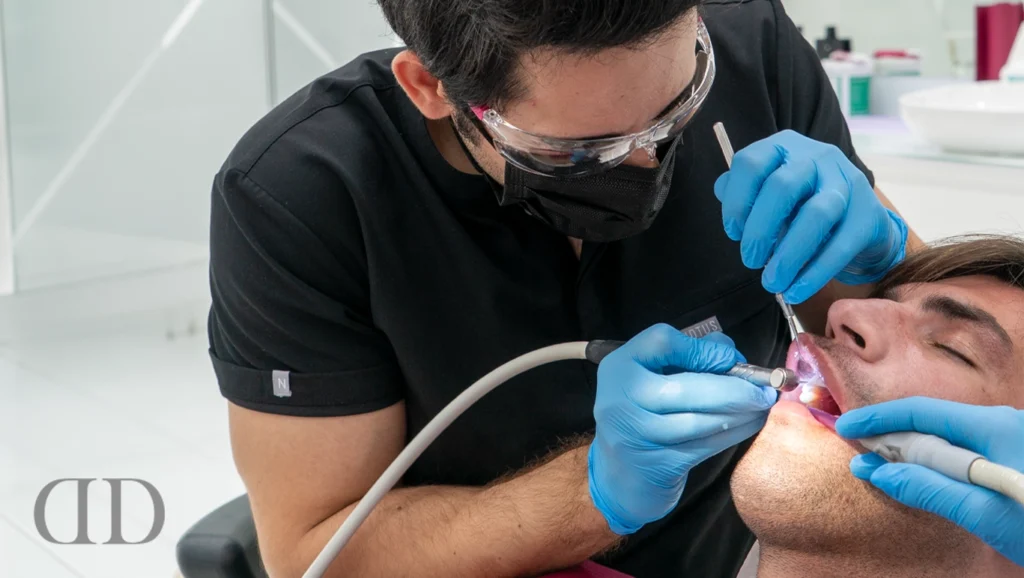
Advanced periodontal treatments, bone grafting, and dental implant placements require state-of-the-art technology and specialized clinical expertise. Over the past decade, Turkey has become a premier global hub for dental tourism, with Darya Dental Clinic leading the way in providing world-class periodontal care.
International patients choose our clinic for several vital reasons:
- Board-Certified Specialists: Our team consists of highly trained periodontists who handle complex cases of bone loss and tissue recession daily.
- Cutting-Edge Technology: We utilize advanced digital imaging, 3D CBCT scans for precise bone evaluation, and minimally invasive dental lasers that accelerate healing time and reduce discomfort.
- Comprehensive Care Packages: Patients traveling from abroad receive seamless support, including multi-lingual assistance, VIP transfers, and custom treatment plans that maximize clinical efficiency during their stay.
- Affordable Excellence: By choosing specialized care in Turkey, patients can access top-tier dental treatments and premium dental implant brands at a fraction of the cost compared to the UK, Europe, or North America, without ever compromising on quality.
Frequently Asked Questions (FAQ)
Can a general dentist treat gum disease?
A general dentist can effectively treat early-stage gum disease (gingivitis) through routine cleanings and oral hygiene education. However, if the infection progresses to chronic or advanced periodontitis (with pocket depths greater than $4\text{ mm}$), it requires the specialized training and surgical tools of a periodontist.
Is periodontal disease completely curable?
While gingivitis is completely reversible, advanced periodontitis is not “cured” in the traditional sense because lost jawbone cannot naturally grow back. Instead, periodontitis is a chronic condition that is successfully managed and halted through specialized treatment and strict maintenance programs.
Does scaling and root planing hurt?
Because a deep cleaning involves removing bacteria beneath the gumline, local anesthesia is used to completely numb your gums. You may feel mild pressure during the procedure and slight sensitivity for a few days afterward, but the process itself is painless.
What happens if I ignore the signs of receding gums?
Ignoring receding gums allows bacteria to penetrate deeper into the roots of your teeth. Over time, this leads to root decay, severe sensitivity, loss of the anchoring bone structure, and eventually, tooth loss.
Take Control of Your Oral Health Today
Your gums are the foundation of your smile, your bite, and your overall physical well-being. Recognizing the signs of gum disease early such as bleeding, chronic bad breath, or receding tissue is the key to saving your natural teeth. You do not have to wait for a formal referral to seek specialized care.
If you are experiencing any warning signs or want to explore advanced, affordable options for dental implants and periodontal therapy, contact Darya Dental Clinic today. Let our specialists design a tailored treatment plan to restore the strength, health, and beauty of your smile.
