
What Is Endodontics and How Does It Help Save Teeth?
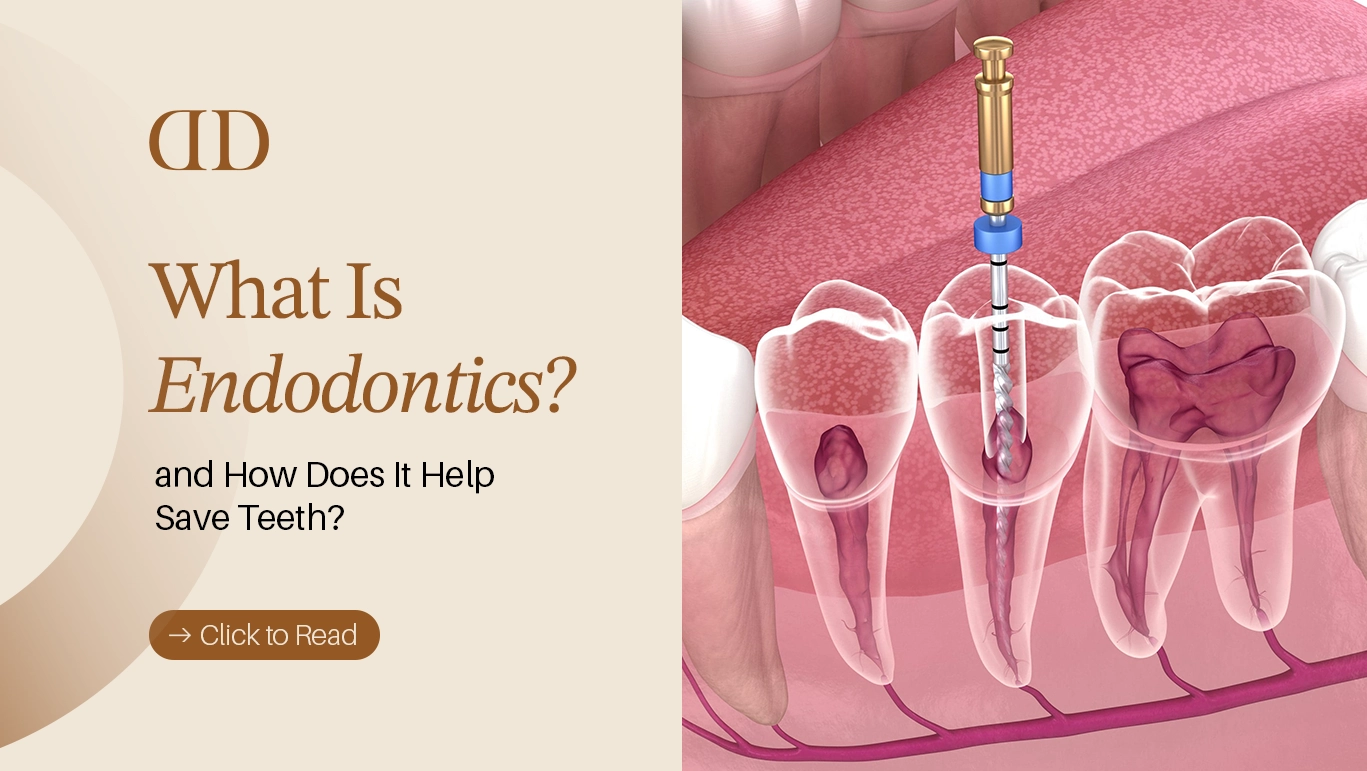

Endodontics is often mentioned quietly in dental conversations, yet it plays a surprisingly central role in how natural teeth are preserved over a lifetime. In its simplest sense, endodontics focuses on the inner life of the tooth. Instead of concentrating on surfaces or alignment, it explores what happens deep inside, where nerves, blood vessels, and connective tissues live. This hidden space is small, but its impact on comfort, function, and long term oral balance is significant.
At Darya Dental Clinic, the concept of endodontics is approached not as an isolated procedure, but as part of a broader philosophy of tooth preservation. Many people associate this field only with root canal treatments, yet endodontics includes far more than that single association. It reflects an entire discipline dedicated to understanding how teeth respond to stress, irritation, and healing over time.
To appreciate why endodontics matters, it helps to imagine the tooth not as a solid block, but as a living structure. Beneath enamel and dentin lies a soft tissue network called the pulp. This tissue is responsible for sensation and nourishment. When it becomes irritated or inflamed, the body reacts in complex ways. Endodontics exists to study and manage those reactions, with the aim of keeping the natural tooth functional for as long as possible.
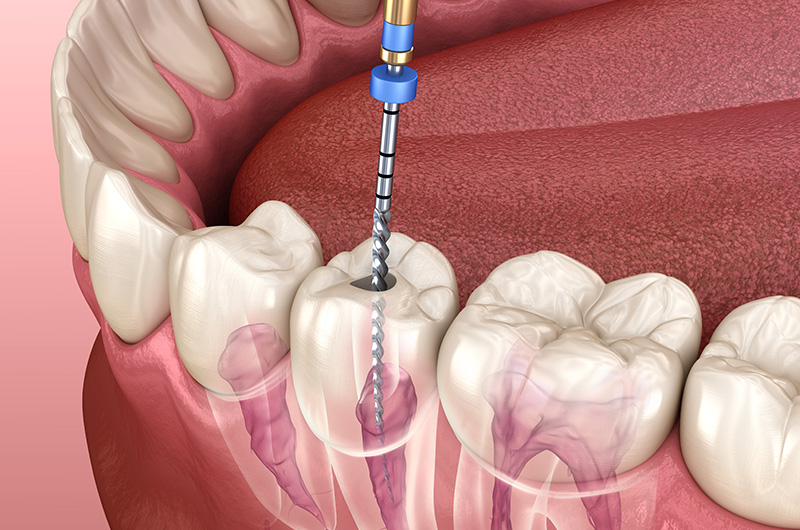
The Scientific Scope of Endodontics Inside the Tooth
From a scientific perspective, endodontics sits at the intersection of biology, materials science, and clinical observation. Researchers in this field study how bacteria interact with pulp tissue, how inflammation progresses within confined spaces, and how different materials influence healing. These questions may sound highly technical, yet they shape everyday dental decisions in subtle but important ways.
One of the defining features of endodontics is its focus on cause and effect. Instead of addressing only visible damage, it looks at why the inner tissues respond the way they do. Temperature sensitivity, spontaneous discomfort, or lingering pressure sensations are not random events. They are biological signals. Endodontics aims to interpret those signals rather than suppress them blindly.
This scientific mindset explains why endodontics has evolved rapidly over the past decades. Advanced imaging, refined instruments, and biocompatible materials have expanded what is possible inside the tooth. What once required aggressive intervention can now often be approached with greater precision and respect for surrounding tissues. These developments are widely discussed in academic circles such as the American Association of Endodontists, which regularly publishes research summaries and educational resources for professionals and the public. American Association of Endodontists
How Endodontics Connects Tooth Biology and Longevity
When people ask how endodontics helps save teeth, the answer lies in its relationship with time. Teeth are exposed to constant forces: chewing pressure, temperature changes, and microbial challenges. Over years, these forces can compromise the pulp. Endodontics studies how long a tooth can adapt before intervention becomes necessary, and how that intervention influences future stability.
A key idea in this field is balance. The pulp has a limited capacity to heal, especially once inflammation reaches a certain threshold. Endodontics does not promise to reverse every condition. Instead, it seeks to manage biological limits intelligently. By understanding when the pulp can recover and when it cannot, clinicians can make informed decisions that favor preservation over removal.
Another aspect often overlooked is how endodontics contributes to structural integrity. A tooth that retains its natural root maintains a unique relationship with the surrounding bone. This relationship influences bite force distribution and long term comfort. From this viewpoint, endodontics is not only about relieving discomfort, but also about maintaining harmony within the oral system as a whole.
```html
```
Premium Dental Care in Turkey
Expert treatments with high-end technology. Get your personalized quote today via WhatsApp.
Endodontic Treatment vs. Tooth Extraction and Dental Implants
Many patients mistakenly believe that extracting a painful tooth is a quicker, more permanent fix. However, preserving your natural tooth should always be the primary clinical objective for your long-term oral health and jawbone preservation.
The comparative table below outlines why endodontic intervention is biologically superior to extraction:
```html  ```
```
Want trusted dental advice in your Google AI answers?
Add Darya Dental Turkey as a Preferred Source on Google to make our dental guides easier to find in your search results and AI Overviews.
| Feature / Criteria | Endodontic Treatment (Root Canal) | Tooth Extraction & Dental Implant |
| Preservation of Anatomy | Keeps your natural root and crown structure perfectly intact. | The natural tooth is permanently lost and replaced with an artificial post. |
| Chewing Perception | Preserves the periodontal ligament, maintaining your natural bite force and sensation. | Lacks the periodontal ligament; sensory pressure feedback is significantly reduced. |
| Treatment Timeline | Usually completed in just 1 to 2 visits over a few days. | Requires extraction healing, bone grafting, and implant osseointegration (3–6 months). |
| Aesthetic Integration | Matches seamlessly as it uses your original tooth structure. | Achieving a natural gum-line contour around a porcelain crown can require extra surgeries. |
| Cost and Complexity | Highly cost-effective compared to full prosthetic replacement options. | Involves higher overall costs due to surgical phases and custom laboratory prosthetics. |
Clinical Insight: According to historical data from the American Association of Endodontists (AAE), no artificial replacement can completely replicate the look, feel, and function of a natural tooth. If the structural foundation of the root is intact, endodontic therapy remains the gold standard of care.
Modern Endodontics and the Evolution of Techniques
Modern endodontics looks very different from the outdated images many people still imagine. The field has gradually shifted toward minimally invasive concepts. Instead of removing more structure than necessary, current thinking emphasizes conservation. This change is rooted in research showing that preserving tooth structure improves long term outcomes.
Technological advances have played a major role in this evolution. High resolution imaging allows clinicians to visualize canal anatomy in ways that were impossible before. This matters because root canal systems are rarely straight or uniform. Endodontics recognizes these natural variations and adapts techniques accordingly, rather than forcing a one size fits all approach.
Materials science has also influenced endodontics significantly. Sealers and filling materials are now designed to interact more favorably with biological tissues. Rather than acting as inert plugs, many materials support a stable environment inside the tooth. Research institutions and biomedical databases such as the National Institutes of Health provide extensive insight into how these materials are evaluated and refined. National Institutes of Health
The Role of Endodontics in Tooth Preservation Philosophy
Beyond techniques and tools, endodontics represents a philosophy. This philosophy prioritizes natural structures whenever possible. Extraction may sometimes be unavoidable, but endodontics asks a critical question first: can this tooth still serve a functional role within the mouth?
This question is not answered lightly. It requires an understanding of anatomy, patient history, and biomechanical forces. Endodontics encourages a thoughtful pause before irreversible decisions are made. That pause is often where value is created, not only in clinical terms but also in how individuals perceive their own dental health.
In this sense, endodontics aligns closely with preventive thinking, even though it is often perceived as reactive. By studying patterns of pulp response and failure, the field contributes indirectly to earlier detection and smarter planning. The ultimate goal is not intervention for its own sake, but informed stewardship of natural teeth.
Endodontics as a Bridge Between Research and Daily Dentistry
One of the most interesting aspects of endodontics is how closely it links laboratory research with daily clinical reality. Findings from microbiology, immunology, and biomechanics do not remain confined to journals. They gradually shape guidelines, instruments, and educational standards used worldwide.
This bridge between research and practice is what gives endodontics its depth. It is a discipline where theory and hands on experience constantly inform each other. New questions arise from clinical observations, while research provides frameworks for interpreting those observations more clearly.
For patients and readers alike, this means that endodontics is not static. It is a field defined by ongoing inquiry rather than fixed answers. That openness to revision and refinement is part of what makes it scientifically engaging and practically relevant.
Endodontics from the Patient Perspective
From a patient’s point of view, endodontics is often discovered through curiosity rather than certainty. People usually begin searching for information when they notice persistent sensitivity, unexplained pressure, or subtle changes that feel different from routine dental sensations. In this context, endodontics becomes a way to interpret signals rather than label problems.
What makes endodontics particularly relevant for patients is its explanatory power. It helps translate internal biological processes into understandable patterns. Instead of reducing everything to discomfort, endodontics frames the tooth as a responsive structure with limits, adaptations, and stages. This perspective alone can change how people relate to their own dental experiences.
Another patient centered aspect of endodontics is expectation management. Rather than promising outcomes, it focuses on probabilities and tendencies. This measured approach aligns with how real biological systems behave, which is rarely absolute. For many readers, this realism builds trust and credibility.
How Endodontics Differs from Other Dental Approaches
Although endodontics works closely with other dental disciplines, its focus and priorities differ in meaningful ways. Understanding these distinctions helps clarify why it exists as a separate field rather than a subtopic.
Below is a simplified comparison that highlights how endodontics fits into the wider dental landscape:
| Focus Area | Primary Concern | Biological Depth | Long Term Perspective |
| endodontics | inner tooth tissues | high | strong |
| restorative dentistry | tooth structure | moderate | moderate |
| preventive care | surface protection | low | strong |
| prosthetic planning | replacement design | low | variable |
This comparison shows that endodontics is less about what is added to the tooth and more about what is preserved within it. That distinction explains why decisions involving endodontics often influence later restorative or prosthetic choices.
From an analytical standpoint, endodontics functions as an interpretive layer. It helps determine whether a tooth can continue participating in the oral system before other solutions are considered.
Key Ways Endodontics Influences Dental Planning
The influence of endodontics extends beyond a single moment or intervention. It shapes how future dental decisions are evaluated and sequenced. This influence can be summarized through several recurring themes:
- assessment of internal tissue limits rather than surface appearance
- prioritization of natural tooth retention when biologically reasonable
- contribution to timing decisions rather than immediate action
- clarification of symptom origin inside the tooth
Each of these points reflects a shift away from reactive thinking. Endodontics encourages structured observation before conclusions are drawn. That structure is especially valuable in complex cases where multiple factors overlap.
Importantly, these influences do not dictate outcomes. They provide context. Endodontics adds depth to planning by explaining what is happening inside the tooth, not by prescribing a single path forward.
Common Misunderstandings About Endodontics
Despite its scientific foundation, endodontics is often misunderstood. These misunderstandings usually arise from oversimplification rather than misinformation. Clarifying them helps readers approach the topic with greater nuance.
Some widespread assumptions include:
- endodontics is only relevant when discomfort is severe
- endodontics automatically weakens the tooth
- endodontics refers to a single standardized procedure
- endodontics decisions are purely mechanical
In reality, endodontics deals extensively with early stage changes, structural balance, and biological variation. It does not treat all teeth the same way because no two internal anatomies are identical.
By addressing these assumptions directly, endodontics becomes easier to understand as a field grounded in interpretation rather than routine.
Why Endodontics Plays a Long Term Role in Tooth Preservation
The long term value of endodontics lies in its timing. Teeth often signal internal stress long before visible damage appears. Endodontics studies these early signals and explores how they may evolve.
This long horizon perspective allows for more deliberate choices. Instead of reacting to failure, endodontics evaluates progression. That evaluation helps preserve options. Even when outcomes are uncertain, having informed alternatives matters.
From a broader view, endodontics contributes to sustainability in dentistry. Preserving natural structures reduces the need for extensive replacements and complex adaptations. While not every tooth can be saved indefinitely, understanding its internal condition provides clarity about how long it may remain functional.
In its essence, endodontics is a discipline of insight. It focuses on what cannot be seen easily, yet strongly influences what is possible over time. By examining pulp biology, tissue response, and internal adaptation, endodontics adds depth to modern dental thinking.
Rather than offering definitive answers, endodontics frames better questions. It invites observation, patience, and informed judgment. For readers interested in how dentistry approaches tooth preservation thoughtfully and scientifically, endodontics stands as one of the most intellectually grounded fields within oral health.
Frequently Asked Questions About Endodontics
1. Is a root canal treatment painful?
This is perhaps the most common misconception in dentistry. Modern root canal treatment does not cause pain; it relieves it. Because clinicians use advanced, localized anesthetics, the entire procedure is completely painless. Most patients report that receiving endodontic therapy feels no different than getting a standard composite filling.
2. Can a general dentist perform endodontic procedures?
Yes, all general dentists receive training in basic root canal therapy during dental school. However, for teeth with complex root canal networks, calcified canals, severe structural damage, or cases requiring retreatments, general practitioners will typically refer patients to an endodontist. Endodontists limit their practice exclusively to these complex internal cases.
3. How long does a root-canal-treated tooth last?
With proper care, an endodontically treated and properly restored tooth can last a lifetime. Because the tooth no longer contains a living nerve, it will not experience thermal sensitivity, but it is still vulnerable to gum disease and external decay. Maintaining meticulous oral hygiene and visiting your dentist for routine cleanings are essential for long-term survival.
4. What happens if I delay or avoid endodontic treatment?
Delaying treatment allows the bacterial infection inside the tooth to progress unchecked. Over time, the infection will travel beyond the root tips, destroying the surrounding jawbone, forming an abscess, and causing systemic inflammation. Eventually, the structural integrity of the tooth will degrade to the point where extraction becomes the only viable option.
5. Why does my tooth need a crown after a root canal?
When the pulp tissue is removed, the tooth loses its internal blood supply, which can make the remaining dentin structure more brittle over time. Furthermore, teeth requiring root canals often have large cavities or cracks. Placing a custom porcelain crown protects the weakened structure from heavy biting forces, preventing fractures and completely restoring the tooth’s aesthetics.
What to Expect After Treatment: The Recovery Phase
Following your appointment, it is entirely normal to experience mild tenderness or a dull ache in the surrounding jaw tissue for a few days. This is not caused by the internal root canal itself—which no longer has nerves—but rather by the healing process of the surrounding ligaments and tissues that were previously inflamed.
Post-Op Care Tip: This temporary discomfort can be easily managed with standard over-the-counter anti-inflammatory medications. We advise patients to avoid chewing directly on the treated tooth until the final permanent restoration (filling or crown) has been placed by the dentist.
