Maryland Bridge: A Conservative Solution for Missing Teeth

Losing a tooth, especially in the smile zone, can significantly impact your confidence, speech, and ability to chew comfortably. If you are looking for a reliable, permanent way to restore your smile without undergoing invasive surgeries or grinding down healthy adjacent teeth, a Maryland bridge might be the ideal dental treatment for you. At Darya Dental Clinic, we specialize in preserving your natural tooth structure while delivering highly aesthetic, durable tooth replacement options that fit your budget.
What is a Maryland Bridge?
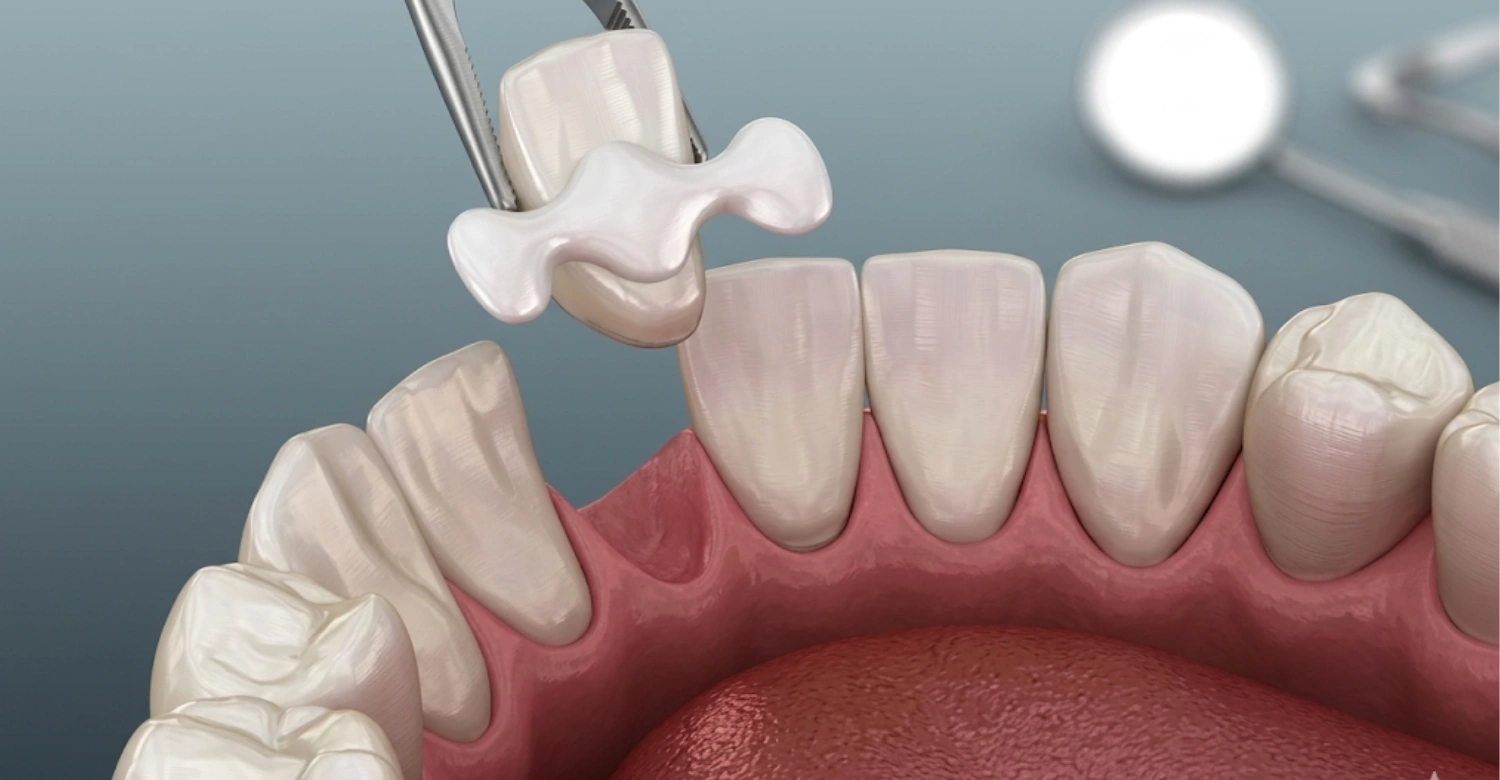
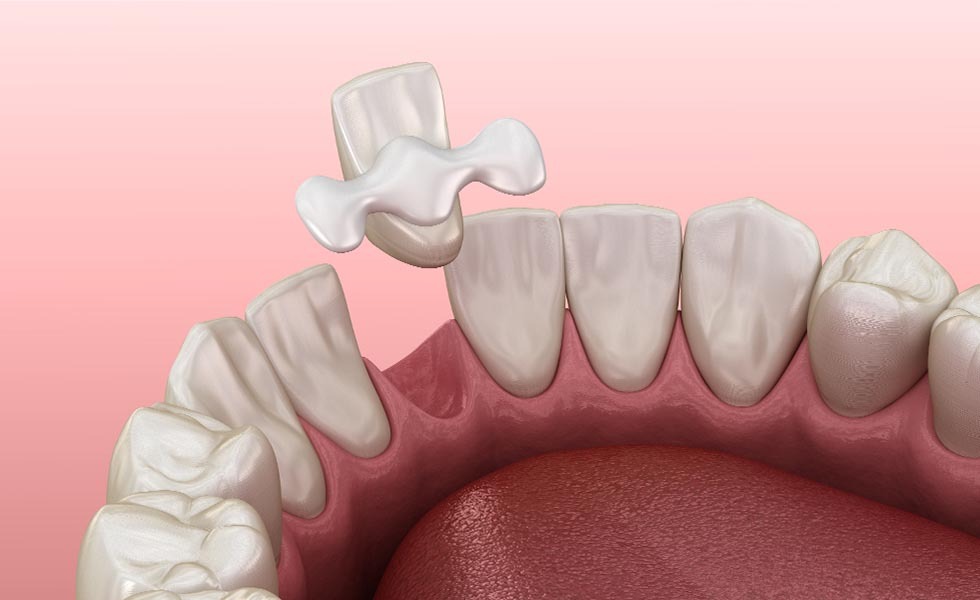
A Maryland bridge, clinically referred to as a resin-bonded fixed partial denture, is a conservative dental prosthesis used to replace a missing tooth. Unlike a traditional dental bridge that requires shaving down the enamel of neighboring teeth to place supporting crowns, this minimally invasive alternative uses a false tooth (pontic) with discreet “wings” attached to its sides.
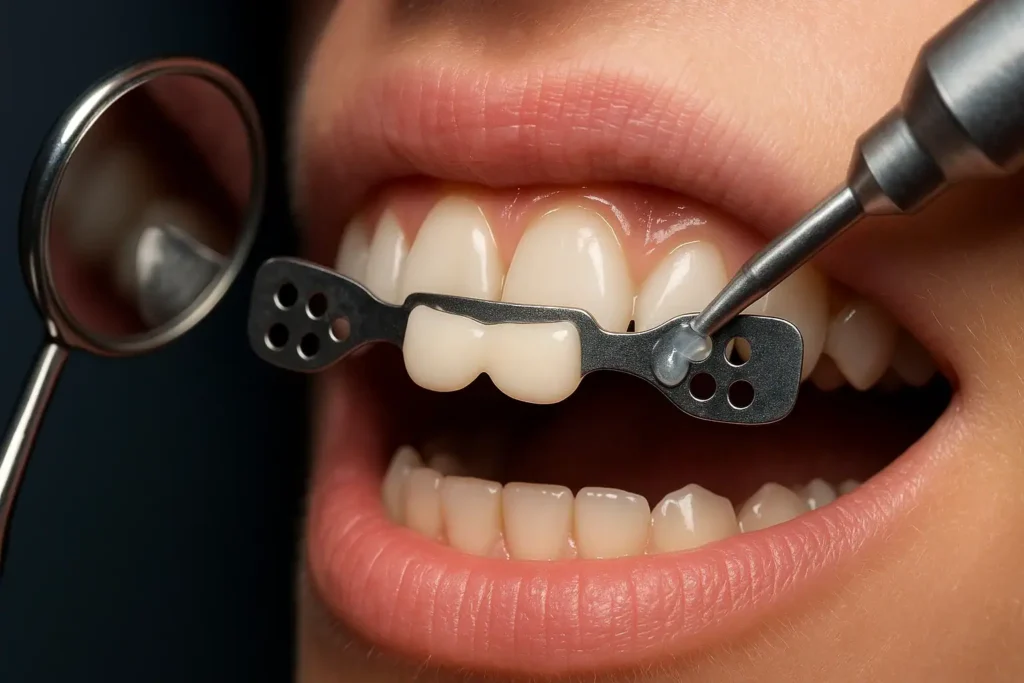
These wings made from either high-strength metal or tooth-colored zirconia are bonded directly to the back (lingual) surfaces of the adjacent teeth using a specialized dental resin. Because it leaves the healthy neighboring teeth virtually untouched, it is highly favored for replacing missing teeth in the front of the mouth. Patients considering a Maryland bridge can also review our dental bridge treatment to understand the available bridge types and which option may be suitable after clinical evaluation.
How Does a Maryland Bridge Work? The Clinical Mechanism
The biomechanics of a resin-bonded bridge rely heavily on advanced adhesive dentistry. Instead of structural support derived from circumferential drilling, it utilizes micro-mechanical bonding.
- The Pontic: The artificial tooth crafted to match the exact shade, shape, and translucency of your natural dentition.
- The Abutment Wings: These extensions sit flat against the back of the hidden surfaces of your anchor teeth.
- The Resin Bond: A medical-grade composite cement securely locks the wings to the enamel, ensuring the restoration stays firmly in place during daily functions like speaking and eating.
Who is an Ideal Candidate for a Resin-Bonded Bridge?
While a Maryland dental bridge offers an excellent, non-invasive alternative to implants, it requires specific clinical conditions to ensure long-term success. You are an ideal candidate if you meet the following criteria:
- Single Missing Tooth: The treatment is optimized for replacing one missing tooth, particularly incisors or canines.
- Healthy Adjacent Teeth: The anchor teeth must have strong enamel, healthy roots, and be free of large fillings or extensive decay.
- Correct Bite (Occlusion): Patients with a heavy bite, severe bruxism (teeth grinding), or deep overbites may put excessive pressure on the wings, increasing the risk of debonding.
- Good Oral Hygiene: Healthy periodontal (gum) tissues are essential to prevent plaque accumulation around the margins of the restoration.
Step-by-Step Procedure: What to Expect at Darya Dental Clinic
Getting a conservative bridge is a straightforward, completely pain-free process that usually requires only two short appointments.
1. The Initial Consultation & Minimal Preparation
Our expert cosmetic dentists examine your oral health, take digital X-rays, and evaluate your bite. If you are a good candidate, a microscopic layer of enamel (less than 0.5 mm) may be gently etched on the back of the anchor teeth to create a clean surface for maximum bonding strength. No anesthesia is required.
2. Digital Impressions
We use advanced intraoral scanners to capture a precise 3D digital model of your teeth. This ensures that the lab crafts a bridge that fits seamlessly into your bite without any bulky discomfort.
3. Fabrication in the Dental Laboratory
The digital blueprints are sent to our state-of-the-art laboratory, where master technicians sculpt your custom zirconia or porcelain bridge to blend flawlessly with your natural smile.
```html
```
Premium Dental Care in Turkey
Expert treatments with high-end technology. Get your personalized quote today via WhatsApp.
4. Final Bonding and Adjustment
Once ready, the bridge is tried in for fit and aesthetics. After your approval, the teeth are treated with a mild conditioning gel, and the wings are permanently bonded using a dual-cure resin cement. We check your occlusion to make sure your bite is completely balanced.
Part 2: Pros & Cons, Comparative Analysis, and the Turkish Dental Tourism Advantage
Advantages and Disadvantages of a Maryland Bridge
To make an informed decision about your oral health, it is essential to weigh both the clinical benefits and the structural limitations of a resin-bonded bridge.
```html  ```
```
Want trusted dental advice in your Google AI answers?
Add Darya Dental Turkey as a Preferred Source on Google to make our dental guides easier to find in your search results and AI Overviews.
The Advantages
- Maximum Tooth Preservation: Traditional bridges require drilling away a significant portion of healthy enamel from the adjacent teeth to serve as anchor caps. A Maryland bridge leaves these neighboring teeth completely intact.
- Non-Invasive & Painless: Because there is no aggressive drilling into the dentin or root structure, the procedure is entirely pain-free and rarely requires local anesthesia.
- Highly Aesthetic: Utilizing modern materials like zirconia or premium porcelain, the artificial tooth matches the natural translucency and shade of your front teeth seamlessly.
- Cost-Effective: It is generally a more affordable tooth-replacement option compared to dental implants, which require surgical placement and healing periods.
- Reversible Treatment: Should you decide to opt for a dental implant in the future, the Maryland bridge can be easily removed without having permanently altered your surrounding teeth.
The Disadvantages
- Lower Load Tolerance: Because it is bonded to the surface rather than anchored inside the bone or capped over a tooth, it cannot withstand heavy chewing forces. It is not recommended for back molars.
- Risk of Debonding: Over time, the resin cement can weaken due to biting forces, causing the bridge to loosen or detach. Fortunately, it can usually be easily re-bonded by a dentist.
- Translucency Constraints: If a metal framework is used instead of zirconia, a subtle gray shadow may sometimes appear through the natural anchor teeth. At Darya Dental Clinic, we combat this by predominantly utilizing high-translucency zirconia.
Maryland Bridge vs. Traditional Bridge vs. Dental Implant
Choosing the right restorative treatment depends on your budget, timeline, and oral anatomy. The table below outlines how the minimally invasive dental bridge holds up against other popular alternatives:
| Feature | Maryland Bridge | Traditional Dental Bridge | Dental Implant |
| Invasiveness | Minimal (Slight etching of enamel) | Moderate (Aggressive shaving of anchor teeth) | High (Surgical placement into the jawbone) |
| Treatment Time | 2 appointments (Within 3–5 days) | 2–3 appointments (Within 5–7 days) | 3 to 6 months (Including osseointegration) |
| Ideal Location | Front teeth (Incisors/Canines) | Any area (Front or back molars) | Any area with sufficient bone density |
| Longevity | 5 to 10 years (May require re-bonding) | 10 to 15+ years | Lifetime (With proper oral care) |
| Bone Preservation | Low (Does not stimulate the jawbone) | Low (Bone loss can occur under the pontic) | High (Prevents jawbone resorption) |
Why Choose a Maryland Bridge in Turkey at Darya Dental Clinic?
Turkey has firmly established itself as a global hub for medical and dental tourism, combining top-tier clinical expertise with highly competitive pricing. If you are considering traveling to Istanbul for a dental bridge in Turkey, Darya Dental Clinic offers an unparalleled patient experience.
1. Cost Efficiency Without Compromising Quality
The cost of dental treatments in the UK, Western Europe, and North America can be prohibitively expensive. Due to lower operational costs and favorable exchange rates, patients can save up to 70% on premium cosmetic dentistry in Turkey. We use the exact same globally certified materials such as Ivoclar Vivadent and Vita Zirconia found in top Harley Street or Beverly Hills clinics, but at a fraction of the price.
2. Rapid Turnaround for International Patients
We understand that your time abroad is limited. Traditional dental labs can take weeks to manufacture a custom prosthesis. At Darya Dental Clinic, we utilize advanced in-house CAD/CAM technology to design, mill, and polish your custom resin-bonded bridge in just a matter of days, allowing you to enjoy your vacation or head back home with a complete smile.
3. Experienced Cosmetic Specialists
Achieving a flawless bond with a Maryland bridge requires precision engineering and a deep understanding of adhesive dentistry. Our clinical team has treated thousands of international patients, ensuring that your bite is perfectly balanced to maximize the lifespan of your restoration.
How to Make Your Maryland Bridge Last
With proper oral hygiene and regular dental check-ups, a resin-bonded bridge can comfortably last between 5 to 10 years (and often longer). Because the framework relies on dental adhesives rather than structural mechanical locking, its lifespan is highly dependent on how well you maintain it.
Essential Maintenance Tips
- Perfect Your Flossing Routine: Plaque easily accumulates under the artificial tooth (pontic) and around the bonded wings. Use a specialized bridge threader or an interdental brush to clean the space between the gum line and the bridge daily.
- Avoid Biting Hard Objects: Refrain from biting directly into hard foods like whole apples, raw carrots, ice, or hard candies with your Maryland bridge. Cut these foods into smaller pieces instead.
- Never Use Your Teeth as Tools: Do not use your teeth to open packaging, bite your fingernails, or hold objects.
- Wear a Nightguard if You Grind: If you suffer from nocturnal bruxism (teeth grinding), a custom nightguard is highly recommended to protect the resin bond from extreme nocturnal forces.
Frequently Asked Questions
To provide you with complete clarity, our clinical team at Darya Dental Clinic has answered the most common questions patients ask about this conservative tooth replacement option:
1. Does getting a Maryland bridge hurt?
Not at all. The procedure is entirely non-invasive. Unlike traditional bridges, we do not shave down the sensitive dentin layer or nerve areas of your teeth. Only a microscopic etching of the outer enamel is required, meaning no drilling, no pain, and no local anesthesia are necessary.
2. Can a Maryland bridge fall off? What should I do if it does?
Because it is bonded to the surface of the teeth, there is a minor risk of debonding over time due to natural biting pressure. If your bridge comes loose or falls off, do not panic. Keep the bridge safe and contact a dentist immediately. In most cases, if the anchor teeth are still healthy, the dentist can simply clean the area and safely re-bond the exact same bridge back into place.
3. Is a Maryland bridge noticeable to others?
No, especially when modern materials are used. While older versions used metal backings that could create a dark shadow through the natural teeth, modern zirconia Maryland bridges are completely tooth-colored. The custom porcelain or zirconia pontic is precisely matched to your surrounding teeth, making it look completely natural in your smile zone.
4. Can I get a Maryland bridge for my back teeth (molars)?
Generally, no. The back teeth are subjected to heavy grinding and chewing forces (often exceeding 70-100 kg of pressure). A resin-bonded bridge cannot withstand these forces and will likely debond repeatedly. For back teeth, a traditional dental bridge or a dental implant is a much more durable choice.
5. How much does a Maryland bridge cost in Turkey?
While prices vary depending on the material used (porcelain fused to metal vs. full zirconia) and the number of teeth involved, a Maryland bridge in Turkey is significantly more affordable than in Western countries. On average, patients save between 60% to 70% on their treatment costs at our Istanbul clinic compared to the UK or Europe, without any compromise on global clinical standards.
Restore Your Smile Dynamically at Darya Dental Clinic
A missing front tooth doesn’t mean you have to undergo complex surgeries or sacrifice the health of your remaining teeth. A Maryland bridge offers a swift, beautiful, and completely conservative alternative to regain your chewing comfort and smile aesthetics.
At Darya Dental Clinic in Istanbul, Turkey, we combine state-of-the-art dental technology, premium European materials, and expert cosmetic craftsmanship to deliver seamless results tailored uniquely to you.
Ready to transform your smile?
Take the first step toward a complete, healthy smile today. Contact our medical coordinators at Darya Dental Clinic to get your free, personalized digital consultation and a detailed quote. Your new smile in Istanbul is just a click away!
