
Traditional Metal Brackets: Why Metal Braces Remain the Gold Standard in Orthodontics
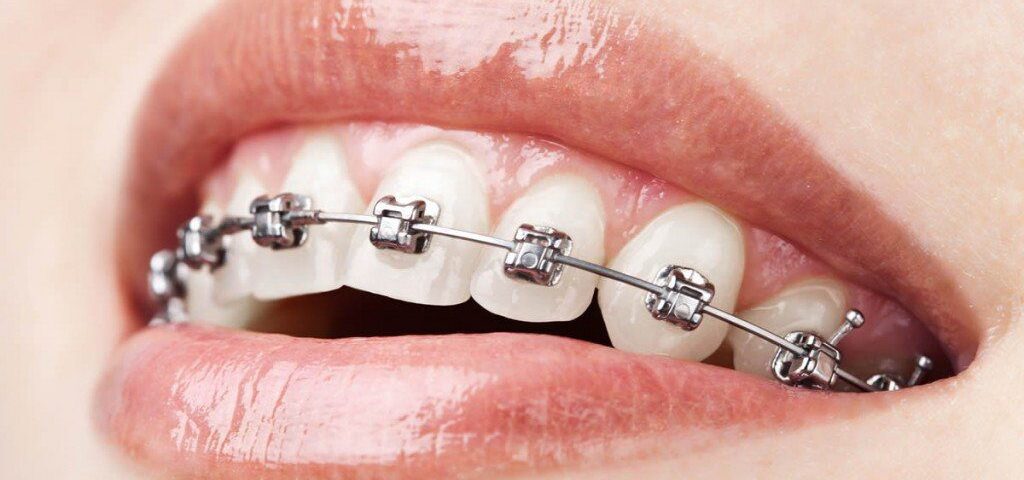

A confident, healthy smile is one of your most valuable assets. However, misalignment, overcrowding, and bite issues can often cause individuals to hide their smiles and even experience difficulties with chewing or speaking. If you are looking for a time-tested, highly reliable solution to achieve a perfectly aligned smile, metal braces remain the cornerstone of effective orthodontic treatment worldwide.
At Darya Dental Clinic, we understand that choosing the right orthodontic path can feel overwhelming. While modern dentistry offers various aesthetic alternatives, traditional dental braces continue to be the most powerful and versatile tool available for correcting even the most complex dental misalignments.
What Are Metal Braces?
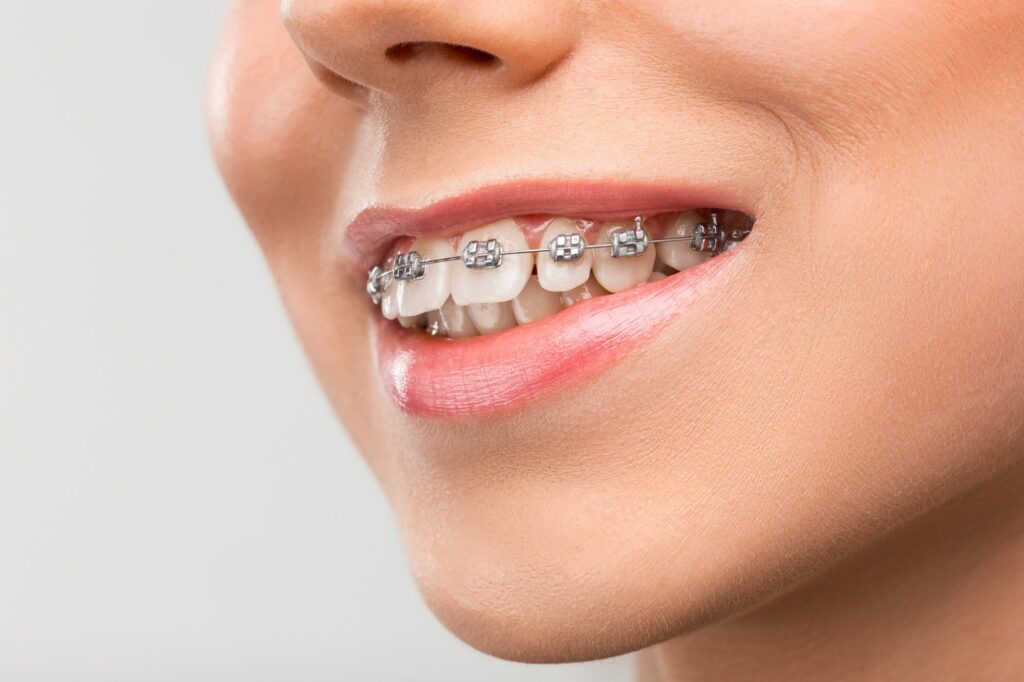
Metal braces are traditional orthodontic appliances used by dentists and orthodontists to correct crowded teeth, gaps, and misaligned bites. They consist of high-grade stainless steel brackets that are carefully bonded to the front of each tooth. These brackets are connected by a thin, flexible metal wire known as an archwire.
The archwire is held in place by tiny elastic bands (ligatures or “o-rings”), which come in a variety of colors. Together, these components work as a cohesive system to apply continuous, controlled pressure on the teeth, gradually guiding them into their ideal functional and aesthetic positions over time. Today’s modern metal brackets are significantly smaller, lighter, and far more comfortable than the bulky designs used in decades past. Patients considering orthodontic care can also explore all dental treatments to review other options that may form part of their overall dental treatment plan.
How Do Traditional Braces Work? The Science of Tooth Movement
Understanding the biomechanics of metal braces helps demystify the treatment process. The journey to a straighter smile relies on a natural biological process called bone remodeling.
- Continuous Pressure: The archwire is pre-shaped to the ideal curve of your dental arch. When threaded through the brackets on misaligned teeth, the wire bends. As it naturally tries to return to its original shape, it exerts a gentle, constant force on the teeth.
- Bone Remodeling: Under this controlled pressure, the tooth presses against the periodontal ligament on one side, causing the bone tissue in front of it to dissolve safely (resorption). Meanwhile, new bone tissue forms in the space left behind it (deposition).
- Periodic Adjustments: Every 4 to 6 weeks, your orthodontist at Darya Dental Clinic will tighten or replace the archwire. Each adjustment targets specific tooth movements, ensuring that the roots and crowns move safely into alignment without damaging the surrounding tissue.
Types of Modern Metal Braces
When patients think of metal braces, they often picture the high-visibility, bulky tracks of the past. However, modern manufacturing techniques and computer-aided design (CAD) have revolutionized orthodontic hardware. Today, there are two primary categories of traditional braces:
1. Traditional Twin Braces (Ligature-Tied)
This is the classic, highly effective system. Each metal bracket features four small “wings” where the archwire is placed. A small elastic band (ligature or “o-ring”) is wrapped around the wings to secure the wire in place.
- The Customization Factor: Because these elastic bands must be replaced at every visit, patients can choose from an array of colors—ranging from subtle, tooth-colored tones to vibrant, expressive shades.
2. Self-Ligating Metal Braces (Damon or SmartClip Systems)
Instead of relying on elastic rubber bands to hold the archwire, self-ligating braces utilize a built-in, specialized sliding door mechanism or “clip” that opens and closes to secure the wire.
- The Clinical Benefit: Because there are no elastic ties to stretch or decay, self-ligating brackets create significantly less friction against the archwire. This allows teeth to glide into place more smoothly, often resulting in slightly shorter treatment times, fewer routine adjustment appointments, and easier oral hygiene maintenance.
The Advantages and Disadvantages of Metal Braces
To provide an unbiased, clinical perspective that satisfies search quality guidelines (E-E-A-T), we must look at both sides of the orthodontic coin.
```html
```
Premium Dental Care in Turkey
Expert treatments with high-end technology. Get your personalized quote today via WhatsApp.
Key Advantages
- Unrivaled Durability: Made from premium stainless steel or titanium alloys, metal brackets are virtually indestructible. They rarely break, crack, or fracture, making them ideal for athletes, children, and active individuals.
- Universal Capability: While clear aligners are highly effective for mild-to-moderate crowding, metal braces remain the absolute gold standard for severe dental misalignments, complex root rotations, and major vertical jaw corrections (such as deep overbites or open bites).
- Maximum Control & Predictability: Because the appliance is permanently bonded to the teeth, the orthodontist retains 100% control over the treatment force. There is no risk of losing an appliance, and progress does not depend on compliance (unlike removable clear aligners).
- Cost-Effectiveness: When examining dental braces cost structures worldwide, traditional braces typically offer the most budget-friendly, high-return investment for long-term oral health.
Potential Disadvantages
- High Visibility: The metallic appearance remains visible during speech and smiling, which some adult patients prefer to avoid.
- Dietary and Hygiene Restrictions: Patients must avoid sticky, hard, or excessively crunchy foods that could dislodge a bracket or bend the archwire. Brushing and flossing also require dedicated attention and specialized tools (like interdental brushes).
Who is the Ideal Candidate for Traditional Braces?
While modern orthodontics offers excellent alternative options like ceramic braces and clear aligners, traditional dental braces are highly recommended for specific patient profiles:
Patients with Complex Malocclusions: If you exhibit severe tooth rotation, deep skeletal jaw discrepancies, or require significant tooth extrusion (pulling a tooth downward out of the bone), fixed metal brackets provide the precise physical leverage necessary to achieve these complex biological movements.
```html  ```
```
Want trusted dental advice in your Google AI answers?
Add Darya Dental Turkey as a Preferred Source on Google to make our dental guides easier to find in your search results and AI Overviews.
Children and Teenagers: Younger patients frequently benefit from fixed appliances because they eliminate the human error of forgotten, lost, or misplaced clear aligners.
Active Individuals Requiring Durability: For individuals who need a rugged appliance that can withstand the daily wear and tear of active lifestyles without fracturing, metal is the superior material choice.
Metal Braces vs. Ceramic Braces vs. Clear Aligners
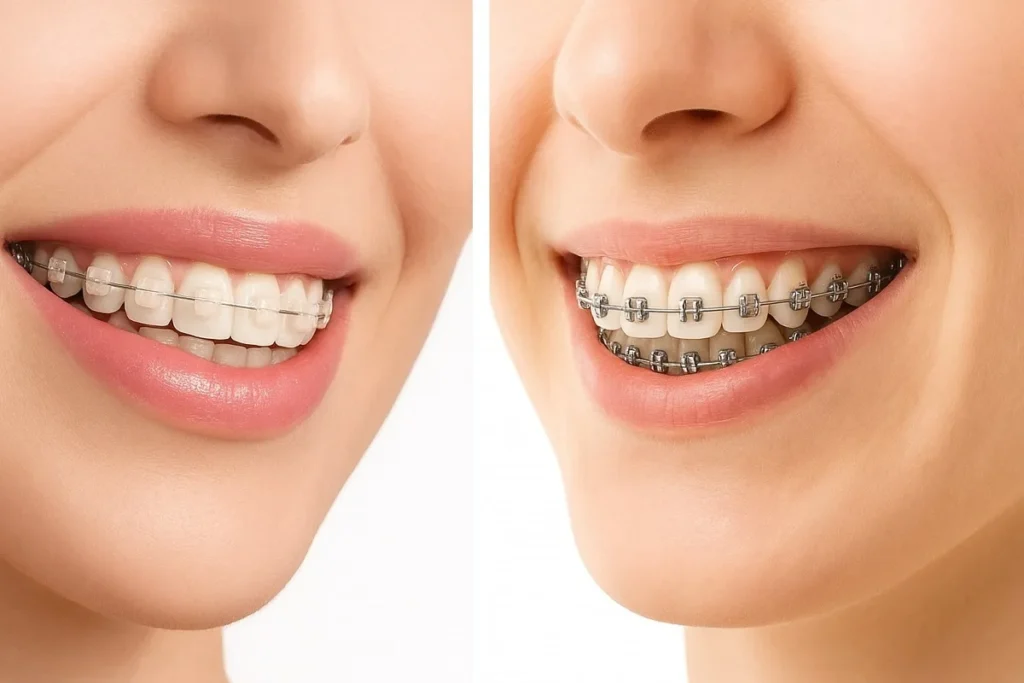
To help you visually evaluate which dental solution aligns best with your cosmetic goals and clinical needs, we have structured a direct comparison highlighting the core parameters of today’s leading systems:
| Criteria | Traditional Metal Braces | Ceramic Braces | Clear Aligners (Invisalign) |
| Primary Material | High-grade Stainless Steel / Titanium | Polycrystalline Alumina (Clear Ceramic) | Medical-grade Polyurethane Resin |
| Visibility | High (Metallic silver or colored bands) | Low (Translucent, matches tooth color) | Minimal (Virtually invisible plastic trays) |
| Durability | Maximum (Virtually indestructible) | Moderate (Brackets can chip under pressure) | High (Flexible, but can be lost or broken) |
| Complexity Handled | Extreme (Severe crowding, severe rotations, jaw bite flaws) | Moderate to Advanced | Mild to Moderate misalignments |
| Removability | Fixed (Stays on throughout treatment) | Fixed (Stays on throughout treatment) | Removable (Must be taken out to eat/brush) |
| Average Treatment Timeline | 12 to 24 months | 18 to 36 months | 6 to 18 months |
| Patient Compliance | Low Effort (Fixed to teeth; no daily user discipline required) | Low Effort | Critical (Must be worn 22+ hours per day) |
Daily Life & Maintenance: Caring for Your Metal Brackets
Maintaining exceptional oral hygiene is paramount when undergoing fixed orthodontic treatment. Because the brackets and wires create small areas where plaque can easily collect, adopting a structured cleaning routine prevents enamel decalcification (permanent white marks) and gum inflammation.
- Advanced Brushing Protocols: Utilize an orthodontic toothbrush with a “V-groove” pattern or a specialized oscillating electric toothbrush head twice a day. Ensure you brush carefully beneath, around, and directly above the wire at a 45-degree angle.
- Interdental Optimization: Standard flossing becomes difficult with a fixed archwire. We strongly recommend incorporating a floss threader or a water flosser (oral irrigator) alongside interdental brushes to effectively clear debris between the tight spaces around each metal bracket.
- Dietary Adjustments: Protect your appliances by eliminating hard foods (ice, hard candy, whole apples), sticky treats (caramel, chewing gum), and crunchier snacks (popcorn kernels, hard pretzels) that possess enough physical force to bend the archwire or snap a bonded bracket from the tooth.
Frequently Asked Questions About Metal Braces
Are metal braces painful?
The application of metal braces is entirely painless. However, in the 3 to 5 days following your initial bonding or a routine archwire adjustment, you will experience a general dull soreness or pressure as your teeth begin their bone remodeling phase. This is completely normal and can be easily managed with standard over-the-counter pain relievers and a temporary shift to a softer food diet.
How much do traditional metal braces cost?
The total investment for fixed brackets varies depending on the complexity of your specific misalignment, the estimated duration of treatment, and where you choose to receive your clinical care. In Western European countries, the UK, and the USA, orthodontic procedures can vary significantly. However, patients choosing top-tier clinics for orthodontic care in Turkey receive identical, internationally certified medical hardware at a far more accessible cost due to favorable exchange rates and lower operational expenses.
Can adults get metal braces, or are they just for teenagers?
Orthodontic treatment is driven by biological mechanics, not chronological age. As long as your teeth, roots, and supporting jawbone tissue are entirely healthy, your teeth can be successfully moved into alignment. Today, an increasing percentage of adult patients choose traditional metal brackets precisely because they provide the fastest, most predictable structural results for deep overbites, crossbites, and severe crowding.
Why Choose Darya Dental Clinic in Istanbul for Your Journey?
Orthodontic transformations require meticulous planning, structural precision, and unwavering clinical oversight. At Darya Dental Clinic, we approach smile transformations through a unique lens: Excellence cannot be rushed. Unlike conventional, high-volume clinics that double-book appointments, our practice operates on an absolute Undivided Attention Protocol—we treat exactly one patient at a time.
When you step into our modern Istanbul clinic, our European-trained specialists conduct a thorough, holistic assessment utilizing 3D CT scanning and advanced Digital Smile Design technology. We guarantee complete financial transparency, using only premium, internationally certified German and Swiss laboratory materials. For international patients looking to pair their life-changing orthodontic adjustments with world-class hospitality, we craft a seamless dental experience designed to deliver structural stability, optimal function, and a radiant smile built to last a lifetime.
Ready to take the first step toward your perfect alignment? Contact the team at Darya Dental Clinic today to schedule your comprehensive diagnostic consultation.
Recommended Educational Resource
For a complete visual walkthrough of how orthodontic brackets guide teeth into perfect alignment through continuous pressure, you can explore this insightful Orthodontic Braces Treatment Animation Video. This video offers a clear 3D perspective on structural changes, showcasing real transformations and helping you visualize the exact step-by-step progress your teeth undergo during traditional treatment.
