
Dry Socket or Normal Healing? Tooth Extraction Signs by Day
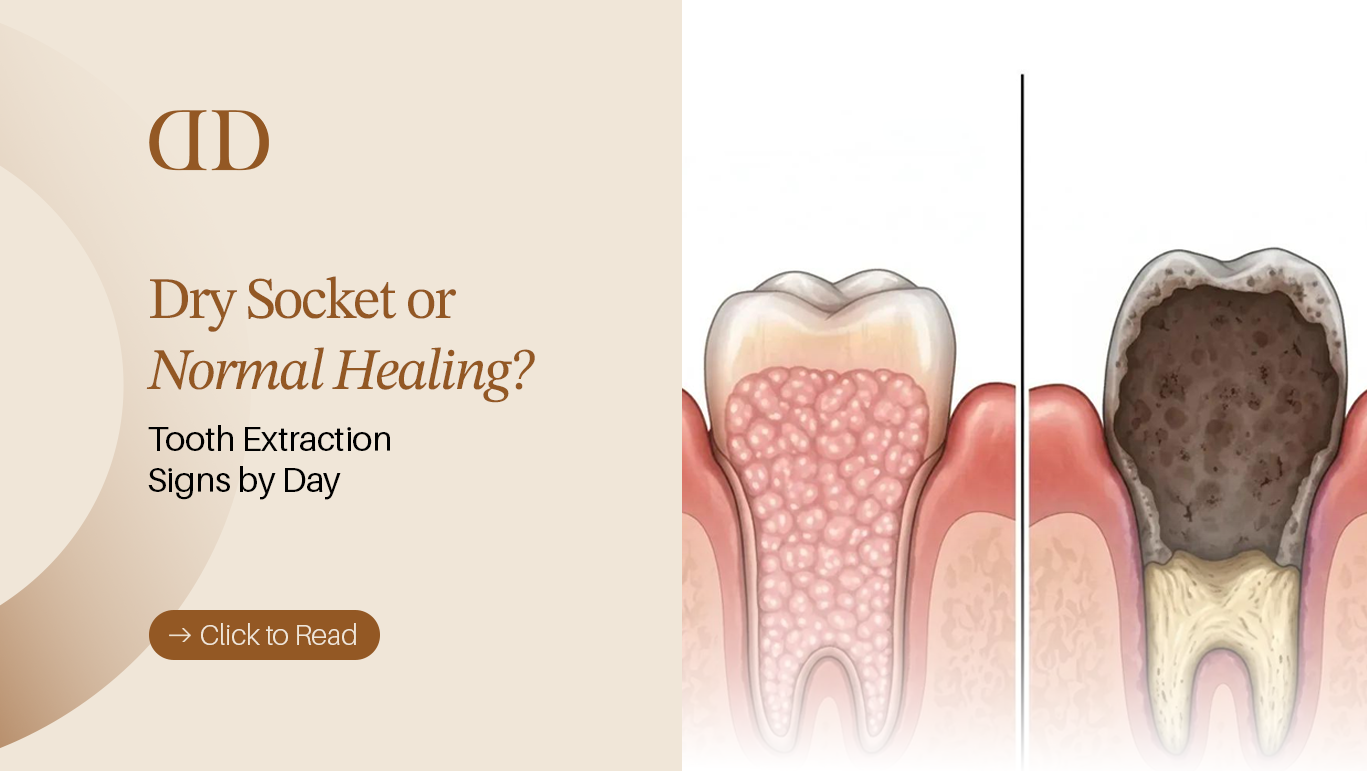

Understanding the difference between dry socket or normal healing after a tooth extraction comes down to watching how your symptoms change over time. Discomfort, mild swelling, and light bleeding are expected parts of the body’s natural recovery process. However, severe pain that suddenly worsens several days after the procedure may indicate alveolar osteitis, commonly known as a dry socket.
Evaluating the appearance of the surgical site and tracking changes in your discomfort day by day can help you determine whether your healing is progressing as expected or if it is time to seek advice from a dental professional.
What Normal Healing After Tooth Extraction Can Look Like
The body initiates a multi-stage repair process immediately after a tooth is removed. While individual recovery timelines vary based on the complexity of the extraction and overall health, normal healing generally follows a predictable pattern of gradual improvement.
Day 1: Blood Clot, Bleeding and Initial Discomfort
The first 24 hours are critical for establishing the foundation of recovery. Immediately following the procedure, a blood clot forms within the empty socket. This clot serves as a protective layer over the underlying bone and nerve endings while facilitating the growth of new tissue.
- Bleeding: Oozing or pink-tinted saliva is entirely normal during the first 24 hours. Firm pressure applied with a clean gauze pad helps stabilize the clot.
- Pain and Discomfort: Local anesthesia wears off within a few hours, leading to localized soreness. This initial discomfort typically peaks during the first day but remains manageable with prescribed or over-the-counter pain medications.
- Swelling: Slight facial swelling or mild inflammation around the gum tissue may begin to develop.
Days 2–3: What Should Happen as Healing Progresses?
During the second and third days, peak inflammation usually occurs before beginning to subside. The primary goal during this phase is to protect the delicate blood clot from becoming dislodged.
- Symptom Trajectory: Normal pain after tooth extraction should begin to stabilize or show subtle signs of improvement by the end of day 3. Swelling usually reaches its peak on day 2 or 3 and then gradually resolves.
- Socket Appearance: The socket will typically contain a dark red clot. As healing continues, a yellowish or whitish layer of tissue (granulation tissue) may form over the site. This is a normal part of tissue repair and should not be mistaken for pus or infection.
- Oral Function: Jaw stiffness may persist, but opening the mouth should gradually become more comfortable.
Days 4–7: Pain, Socket Appearance and Other Changes
By the end of the first week, the initial wound healing is well underway. Most individuals experience a significant reduction in discomfort and a return to normal daily routines.
- Pain Reduction: Any residual soreness should be mild and continuing to fade. You should no longer require strong pain medications.
- Tissue Formation: The socket site will appear smaller as the surrounding gum tissue begins to close over the area. Granulation tissue matures, protecting the deeper structures as bone remodeling begins beneath the surface.
- Daily Activities: Gentle chewing on the opposite side of the mouth becomes easier, and routine oral hygiene can usually be resumed around the surrounding teeth, taking care to avoid direct scrubbing of the socket.
What Is Dry Socket and When Does It Usually Become Noticeable?
Dry socket occurs when the protective blood clot fails to form, dissolves prematurely, or is physically dislodged from the socket before the underlying tissue has healed. Without this protective barrier, the sensitive underlying bone walls and nerve endings are left directly exposed to air, food particles, fluids, and oral bacteria.
This condition typically becomes noticeable between days 2 and 4 following the extraction. Unlike ordinary post-surgical discomfort, which is highest on the first day and diminishes thereafter, dry socket is characterized by a distinct secondary onset of severe, throbbing pain after initial recovery seemed to be progressing normally.
Dry Socket vs Normal Healing: Key Differences
Distinguishing between normal pain after tooth extraction and the onset of a dry socket relies on evaluating multiple clinical indicators. While normal recovery is characterized by steady, predictable improvement, a dry socket involves worsening symptoms, visible changes within the socket wall, and unmistakable oral side effects.
Premium Dental Care in Turkey
Expert treatments with high-end technology. Get your personalized quote today via WhatsApp.
| Symptom / Feature | Normal Tooth Extraction Healing | Dry Socket (Alveolar Osteitis) |
| Pain Trajectory | Peaks within 24–48 hours, then steadily decreases | Worsens significantly between Days 2–4 |
| Pain Intensity | Mild to moderate; easily managed with medication | Severe, intense, and throbbing; unmanaged by over-the-counter drugs |
| Pain Radiation | Localized strictly to the extraction site | Radiates outward to the ear, temple, eye, jaw, or neck |
| Socket Appearance | Filled with a dark red blood clot or whitish granulation tissue | Appears empty, dry, or exposes bare bone |
| Taste & Odour | Neutral, though minor metallic taste from blood is possible initially | Persistent unpleasant, foul taste and noticeable bad breath |
| Healing Progress | Gum tissue slowly closes over the socket over 1–2 weeks | Delayed healing; requires professional intervention |
Pain That Is Improving vs Pain That Suddenly Gets Worse
Pain trajectory is the single most reliable indicator when evaluating dry socket signs by day. Following a routine extraction, inflammation and surgical trauma cause localized discomfort. However, this discomfort should follow a downward trend after the second day.
- Normal Trajectory: Pain peaks on the day of the procedure or the morning after. By day 3 and day 4, the site feels noticeably less tender, and reliance on pain medication drops.
- Dry Socket Trajectory: Discomfort may initially subside as expected on day 1 or 2, only to return suddenly and intensely on days 2, 3, or 4. This dry socket pain is typically described as a deep, relentless, throbbing sensation that fails to respond to conventional pain relievers.
Normal Socket Changes vs an Apparently Empty Socket
Monitoring the visual appearance of the socket provides critical context regarding how the tissue is recovering beneath the surface.

Want trusted dental advice in your Google AI answers?
Add Darya Dental Turkey as a Preferred Source on Google to make our dental guides easier to find in your search results and AI Overviews.
- Normal Socket Appearance: Initially, the socket is filled with a dark red blood clot. Over the next several days, the site transforms as granulation tissue forms. This new tissue often appears pale, yellowish, or greyish. Patients sometimes misinterpret this temporary layer as infection or tissue breakdown, but it is actually a sign of active healing.
- Empty-Looking Socket: In cases of dry socket, the protective blood clot is either missing or noticeably degraded. Looking closely into the extraction site may reveal an empty space where the clot used to be. In some instances, dark, bare bone may be visible along the walls of the socket, leaving the nerve tissue unprotected.
Bad Taste, Bad Breath and Radiating Pain
The loss of the blood clot allows oral debris, fluids, and bacteria to accumulate inside the empty socket, which triggers distinct secondary symptoms:
- Radiating Pain: The exposed nerve endings inside the jawbone send severe pain signals along nerve pathways. Instead of remaining localized to the gum line, the pain frequently radiates outward to the side of the face, extending up into the ear, eye, or temple, or down into the lower jawbone and neck.
- Foul Taste and Breath: Bacterial accumulation within the unprotected socket often leads to persistent bad breath (halitosis) and a unpleasant, sour, or foul taste in the mouth that does not go away after rinsing or brushing gently.
When Should You Contact a Dentist After Tooth Extraction?
Knowing when to worry after tooth extraction ensures that complications are addressed early before causing unnecessary suffering or delayed recovery. While mild swelling and sore gums are expected, certain signs warrant prompt clinical evaluation.
You should contact your dentist or oral surgeon if you experience any of the following symptoms:
- Worsening Pain: Pain that escalates after day 2 or day 3 instead of gradually resolving.
- Severe, Unmanageable Pain: Throbbing pain that is not relieved by the maximum recommended dosage of prescribed or over-the-counter pain medications.
- Visible Bare Bone: An empty socket where the blood clot appears to have washed away, revealing bare white or greyish bone.
- Persistent or Heavy Bleeding: Bright red bleeding that continues to soak through gauze pads after applying firm pressure for 30 to 40 minutes.
- Signs of Infection: A high fever, chills, progressive swelling that spreads toward the neck or eye, or active pus discharging from the extraction site.
- Numbness or Tingling: Persistent numbness in the lip, tongue, or chin that lasts long after the local anesthetic should have worn off.
What Factors Can Affect the Healing Timeline?
A patient’s overall tooth extraction recovery timeline can be influenced by several clinical, anatomical, and behavioral factors. Recognizing these variables helps set realistic expectations for your individual recovery path.
- Surgical Complexity: Simple extractions involving fully erupted teeth typically heal faster than surgical extractions, such as impacted wisdom teeth, which require gum incisions or bone removal.
- Smoking and Tobacco Use: Inhaling smoke introduces harmful chemicals that restrict blood flow to healing tissues. Furthermore, the physical suction created by smoking or vaping can easily dislodge the blood clot from the socket.
- Poor Oral Hygiene: Inadequate plaque control allows bacteria to proliferate near the extraction site, increasing the risk of infection or breakdown of the protective clot.
- Medical History: Systemic conditions like diabetes, autoimmune disorders, or nutritional deficiencies can slow down cellular repair and delay tissue maturation.
- Bone Preservation Procedures: When an extraction is paired with socket preservation or bone grafting after tooth extraction, the initial healing phase may involve specialized care to protect both the graft material and the blood clot.
- Pre-Extraction Infection: Teeth removed due to extensive decay or chronic root infections may take longer to heal compared to healthy teeth extracted for orthodontic alignment. In some complex cases, patients evaluating treatment options may have weighed a root canal or tooth extraction prior to surgery, where existing periapical inflammation can slightly extend post-operative tissue recovery.
What to Do If You Suspect Dry Socket
If you notice severe, accelerating pain combined with a bad taste or an empty-looking socket, managing the condition requires professional dental care. Home remedies cannot replace clinical intervention for alveolar osteitis, but knowing what steps to take helps minimize discomfort while you arrange an evaluation.
- Contact Your Dental Clinic: Reach out to your oral surgeon or dentist immediately. Dry socket is a recognized post-operative complication, and dental teams prioritize patients experiencing severe post-extraction pain.
- Avoid Physical Disruption: Do not poke inside the socket with toothpicks, cotton swabs, or your tongue to check for exposed bone. Avoid aggressive rinsing, which can dislodge any residual tissue trying to form.
- Rinse Gently with Warm Salt Water: If instructed by your provider, gently swirl a mild solution of warm water and half a teaspoon of salt around your mouth and let it fall into the sink. Do not spit forcefully.
- Use Prescribed or Approved Analgesics: Continue taking recommended pain relief medications to keep symptoms manageable until your clinical appointment. Avoid placing aspirin directly on the gums, as this causes chemical burns to delicate oral tissues.
- Seek Professional Treatment: Clinical care typically involves gently flushing out accumulated food debris from the socket with sterile saline, followed by applying a medicated sedative dressing directly into the site. This dressing provides rapid relief by soothing exposed nerve endings, and it is replaced or removed over subsequent days as tissue repair resumes.
Frequently Asked Questions
How do I know if my tooth extraction is healing normally?
Normal healing is marked by discomfort and swelling that peak within the first 24 to 48 hours and steadily diminish each day thereafter. A dark red blood clot stays intact within the socket during the initial days, eventually giving way to a pale or yellowish layer of granulation tissue as surrounding gums close over the site.
What does dry socket pain feel like?
Dry socket pain is a severe, deep, throbbing ache that typically develops 2 to 4 days after extraction when initial surgical pain was already improving. The sensation frequently radiates away from the jaw toward the ear, temple, eye, or neck on the same side of the face and rarely responds to standard over-the-counter pain medications.
What day does dry socket usually start?
Dry socket most commonly becomes noticeable between days 2 and 4 following a tooth extraction. It rarely occurs on the first day because the original blood clot is still present immediately after surgery, and the risk drops significantly after the first week of healing.
Can the extraction site look white or grey during healing?
Yes, an extraction site can appear white or grey around days 3 to 7 as part of normal tissue repair. This discoloration is usually granulation tissue, a soft collagen-rich tissue packed with tiny blood vessels that covers the healing site, and should not be mistaken for dry socket or infection unless accompanied by severe pain or foul odor.
Is bad breath after tooth extraction normal?
Mild bad breath or a slight metallic taste is normal during the first day or two due to minor bleeding and disrupted oral hygiene routines around the surgical site. However, persistent bad breath accompanied by a foul, sour taste on day 3 or later often points to trapped food debris or bacterial growth inside an exposed socket.
Should pain be getting better after tooth extraction?
Yes, post-extraction pain should follow a clear downward trajectory starting around day 3. While mild aching or tenderness can persist for up to a week, any sudden increase in pain severity after initial improvement is an abnormal symptom that warrants dental evaluation.
What does an empty-looking socket mean?
An empty-looking socket usually indicates that the protective blood clot has either partially dissolved, washed away, or failed to form properly. If looking into the site reveals a dark void or visible greyish-white bone instead of tissue, it is a primary sign of dry socket.
When should I contact a dentist after tooth extraction?
You should contact a dentist if you experience pain that worsens after day 2 or 3, throbbing discomfort that isn’t relieved by pain medication, visible bare bone, continuous heavy bleeding, or systemic infection signs like fever and spreading facial swelling.
Final Thoughts
Navigating post-extraction care comes down to monitoring the trajectory of your symptoms rather than counting exact hours. Expected surgical soreness peaks early and steadily improves, giving way to new tissue formation over the first week. Conversely, a sudden onset of intense, radiating pain around days 2 to 4 especially when paired with bad breath or an empty socket is a clear sign to seek professional support. If your recovery strays from a path of gradual relief, consulting your dental provider ensures your socket is properly treated, kept clean, and set back on track for comfortable healing.
