
Gum Recession or Tooth Abrasion at the Gum Line? How They Differ
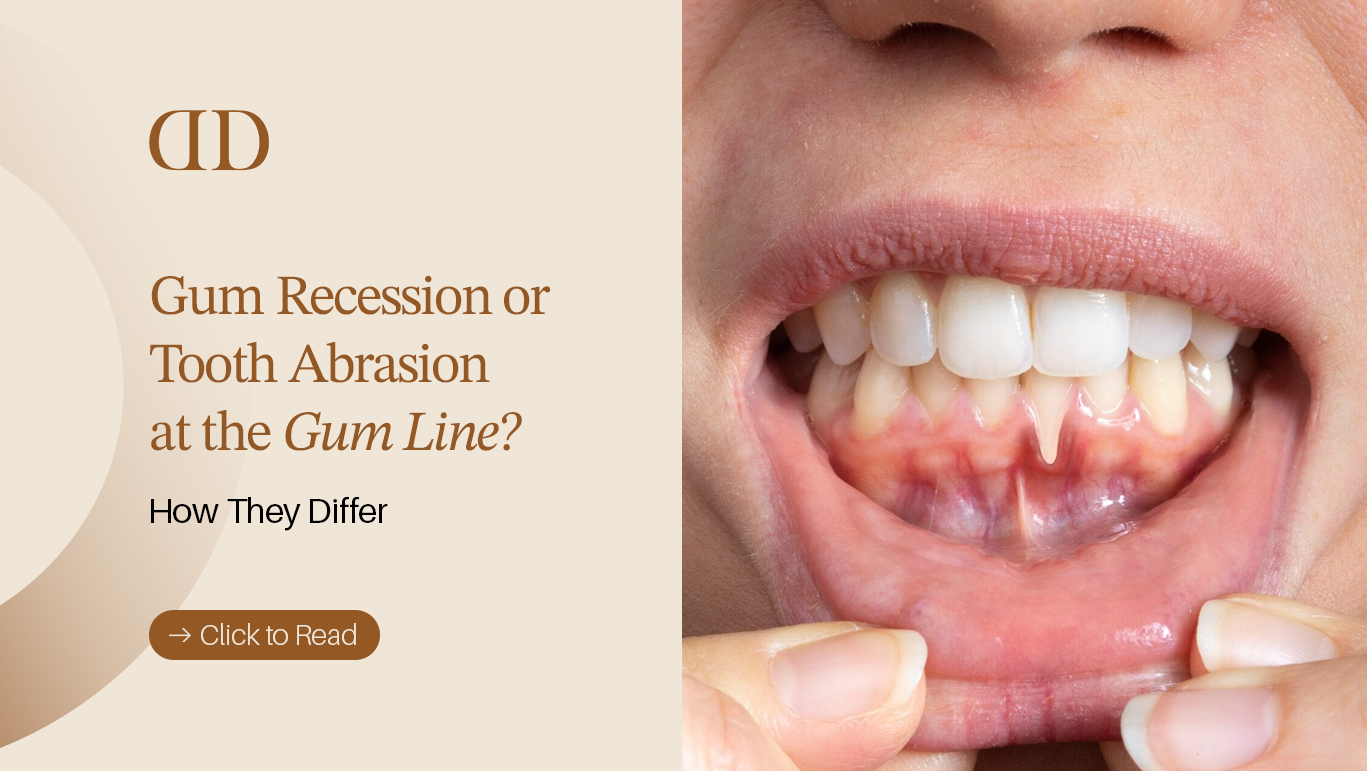

Gum recession involves the gradual loss or pull-back of the tissue surrounding your teeth, which exposes the underlying root surface. In contrast, tooth abrasion at the gum line is a physical wear process where tooth structure specifically enamel and dentin is worn away by mechanical friction, most commonly from aggressive brushing. While they are distinct conditions affecting different structures, they frequently appear at the exact same location near the tooth neck and often happen simultaneously.
What Is Gum Recession?
Gum recession (gingival recession) is the process in which the margin of the gum tissue surrounding the teeth wears away or pulls back, exposing more of the tooth or the tooth’s root. When this occurs, gaps or “pockets” form between the teeth and gum line, making it easy for disease-causing bacteria to build up.
The primary structural issue in gum recession is the loss of soft tissue volume and marginal attachment. The tooth itself does not lose structural material initially; rather, the soft protective border moves lower on lower teeth or higher on upper teeth.
Common indicators of gum recession include:
- Exposed Dentin and Roots: The lower portion of the tooth appears darker or more yellow than the crown because root dentin lacks outer enamel coverage.
- Elongated Tooth Appearance: Teeth may look visibly longer than neighboring teeth due to the shifting tissue line.
- Periodontal Pocketing: Soft tissue detaches from the tooth surface, creating spaces where plaque accumulates.
- Tissue Inflammation: Gums may appear red, swollen, or bleed during daily oral hygiene routine.
If left unmanaged, the exposing of the tooth root can lead to increased tooth sensitivity and, in advanced cases, structural bone loss around the root area.
What Is Tooth Abrasion?
Tooth abrasion is the progressive loss of hard dental tissue enamel and dentin caused by mechanical forces external to tooth-to-tooth contact. Unlike chemical erosion (caused by acids) or attrition (caused by grinding teeth together), abrasion occurs when an outside object repeatedly rubs against the tooth structure.
When abrasion affects the cervical region (where the tooth meets the gum line), it creates physical indentations directly in the enamel and exposed dentin. Understanding tooth abrasion and its common causes helps explain why these mechanical grooves form over time.
Key features of tooth abrasion include:
- Physical Tooth Loss: The actual volume of the tooth structure decreases, leaving distinct physical marks on the hard tissue.
- Smooth, Defined Indentations: The worn surface often feels smooth to the touch, often taking on a polished appearance under dental lighting.
- Location at the Cervical Margin: Wear is typically centered right at or just above the enamel-dentin junction near the gum line.
- Intact Soft Tissue Attachment (Initially): Abrasion primarily wears away the tooth shell itself, though aggressive mechanical action can simultaneously irritate surrounding tissue.
Mechanical wear of this nature leaves the internal layers of the tooth vulnerable to thermal changes and structural weakening.
Premium Dental Care in Turkey
Expert treatments with high-end technology. Get your personalized quote today via WhatsApp.
Gum Recession vs Tooth Abrasion: Key Differences
While gum recession and tooth abrasion are separate conditions, distinguishing between them at the gum line requires looking at specific structural, aesthetic, and functional factors. Understanding how they differ helps clarify why a notch, groove, or patch of discoloration has developed near the tooth margin.
Where the Damage Occurs
The fundamental distinction lies in which tissue layer experiences the primary damage:
- Gum Recession: The defect occurs in the soft tissue (gingival margin). As the soft tissue recedes, the protective seal around the tooth neck disappears, exposing the tooth root structure underneath.
- Tooth Abrasion: The damage occurs directly in the calcified hard tissue of the tooth. Physical friction wears through the hard outer enamel shell and gradually carves into the underlying dentin layer.
In short, gum recession is a soft-tissue displacement, whereas tooth abrasion is a hard-tissue volume loss.
How Each Condition Looks
Visually, these two issues manifest differently along the tooth border:
- Gum Recession Signs:
- The gum tissue line looks uneven compared to adjacent healthy teeth.
- The newly exposed root portion lacks glossy enamel, appearing slightly darker or more yellowish.
- A subtle border transition marks where the soft tissue used to sit.
- Tooth Abrasion Signs:
- A clear, physical groove or wedge-shaped lesion forms at the gum line.
- The notch often feels glassy or hard when touched with a fingernail or dental probe.
- Light reflects sharply off the polished, worn surface of the tooth enamel near the wear site.
Common Causes and Risk Factors
Understanding what triggers each condition is essential for stopping their progression.
Gum Recession Causes:
- Periodontal Disease: Bacterial accumulation causes chronic inflammation, destroying the soft tissue and underlying supporting bone.
- Genetics and Thin Gum Biotype: Naturally delicate or thin tissue is more susceptible to tearing, inflammation, and recession.
- Misaligned Teeth: Teeth situated outside the normal arch experience irregular pressure and thinner bony support, increasing recession risk.
- Hormonal Changes: Fluctuations during pregnancy or menopause can make gum tissue more vulnerable to swelling and detachment.
Tooth Abrasion Causes:
- Aggressive Brushing Technique: Using heavy pressure or a sawing back-and-forth motion quickly strips enamel near the cervical margin.
- Hard-Bristled Brushes: Stiff bristles act like mild sandpaper against fragile enamel and root dentin. Learning how to brush without excessive pressure is one of the most effective ways to prevent this mechanical wear.
- Abrasive Dentifrices: Highly abrasive whitening toothpastes or charcoal powders wear down tooth enamel faster than standard fluoride formulations.
- Foreign Objects: Frequently biting on hard objects (pins, fingernails, or oral piercings) introduces localized friction that accelerates structural wear.
Sensitivity and Exposed Tooth Structure
Both conditions can trigger sharp discomfort, but the mechanism behind tooth sensitivity varies slightly based on the underlying structural exposure.
Underneath the hard enamel shell lies dentin, which contains thousands of microscopic fluid-filled channels (dentinal tubules) leading directly to the tooth nerve.
In gum recession, sensitivity occurs because the receded soft tissue leaves root cementum and dentin exposed to external stimuli. Root cementum is thin and wears away quickly, leaving open tubules vulnerable to cold air, hot liquids, or sweet foods.
In tooth abrasion, sensitivity develops because mechanical forces strip away the protective enamel layer directly, exposing the underlying dentin. As the abrasion groove deepens closer to the dental pulp, the tooth becomes increasingly sensitive to thermal shifts, touch, and sweet or acidic ingredients.
Can Gum Recession and Tooth Abrasion Happen Together?
Yes, gum recession and tooth abrasion frequently occur at the same time, often reinforcing one another in a progressive feedback loop.
This dual condition typically unfolds in a specific sequence:
- Initial Tissue Loss: Overly aggressive brushing or localized inflammation causes the gum line to pull back slightly, exposing the softer root surface (cementum).
- Accelerated Tooth Wear: Root dentin is significantly softer than enamel. Continued hard brushing on this exposed area rapidly carves a wedge-shaped lesion into the tooth structure.
- Compounded Defect: The physical notch created by tooth abrasion makes it harder to clean the area smoothly, attracting plaque that further inflames the soft tissue, driving additional gum recession.
Because both conditions feed into each other, addressing both the mechanical habits (brushing force) and the soft tissue health is necessary to stabilize the gum line.
How Dentists Determine the Cause
Because gum recession and tooth abrasion share a similar clinical presence along the cervical border of the tooth, accurate differential diagnosis is critical. A precise clinical assessment identifies whether soft tissue loss, hard tissue wear, or a combination of both is active.
Periodontal Evaluation
During a comprehensive exam, the dentist measures the distance from the enamel-dentin junction to the edge of the soft tissue using a calibrated periodontal probe. This step confirms the extent of recession and checks for underlying bone loss or active inflammation.
Physical and Visual Examination
Dentists evaluate the shape and surface of the lesion under direct lighting. A hard, smooth, V-shaped notch cut cleanly into the enamel indicates mechanical abrasion. Conversely, a broad, shallow area with minimal notch depth usually suggests tissue recession exposing natural root contours.
When severe periodontal deterioration or chronic infection is detected alongside tissue loss, targeted professional care such as scaling and root planing for gum disease may be recommended to arrest bacterial destruction and stabilize the supporting structures.
When Should You See a Dentist?
Early evaluation prevents minor tissue or enamel damage from progressing into structural complications. Professional consultation is advised if you notice any of the following changes:
- Persistent Sensitivity: Sharp discomfort triggered by hot, cold, sweet, or acidic foods and drinks that does not resolve with desensitizing toothpaste.
- Visible Notches or Grooves: Clear indentations felt along the tooth surface near the gum line when run over by a fingernail or toothbrush.
- Visible Root Exposure: Teeth appearing noticeably longer, or a distinct yellowing shift in color near the soft tissue margin.
- Bleeding or Soreness: Redness, swelling, or bleeding during routine brushing and flossing, signaling potential tissue inflammation or periodontal distress.
- Aesthetic Concerns: Changes in the symmetry of your smile line caused by uneven tissue pull-back.
Prompt diagnosis ensures that custom preventive strategies or restorative interventions such as composite bonding, tissue grafting, or hygiene technique modification are applied before deeper tooth layers or supporting bone are compromised.
Frequently Asked Questions
What is the difference between gum recession and tooth abrasion?
Gum recession is the biological retreat of soft tissue away from the tooth, exposing the root surface. Tooth abrasion is the physical wear of enamel and dentin caused by external mechanical friction, such as aggressive brushing.
Can tooth abrasion cause gum recession?
Yes, using excessive pressure or hard bristles can physically abrade fragile soft tissue alongside tooth enamel. This mechanical trauma leads directly to tissue inflammation, retreat, and subsequent root exposure.
Does gum recession cause tooth wear at the gum line?
Gum recession itself exposes softer root dentin, which lacks protective enamel. Once exposed, this softer root structure becomes significantly more vulnerable to rapid wear from routine brushing and dietary acids.
Why is my tooth notched near the gum line?
A visible notch near the gum line is typically caused by tooth abrasion from hard toothbrush bristles, aggressive brushing technique, or heavy biting stresses known as abfraction.
Can gum recession and tooth abrasion happen at the same time?
Yes, they frequently co-occur. Brushing too hard can pull back the soft tissue margin while simultaneously carving mechanical grooves into the exposed tooth structure.
Is a wedge-shaped notch at the gum line always tooth abrasion?
Not always. While mechanical abrasion is a primary cause, wedge-shaped notches can also result from abfraction (flexing forces from teeth grinding) or chemical erosion from acids.
Can tooth abrasion cause sensitivity?
Yes, abrasion wears away outer enamel and exposes the underlying dentin layer. exposed dentin tubules transmit hot, cold, and tactile stimuli directly to the nerve, causing sharp sensitivity.
Can gum recession grow back on its own?
No, lost gum tissue does not regenerate naturally once it has receded. Treatment requires identifying the root cause, stopping progression, and using restorative or surgical solutions like grafting when necessary.
