
White Spots on Teeth: Causes, Remineralization and Cosmetic Options
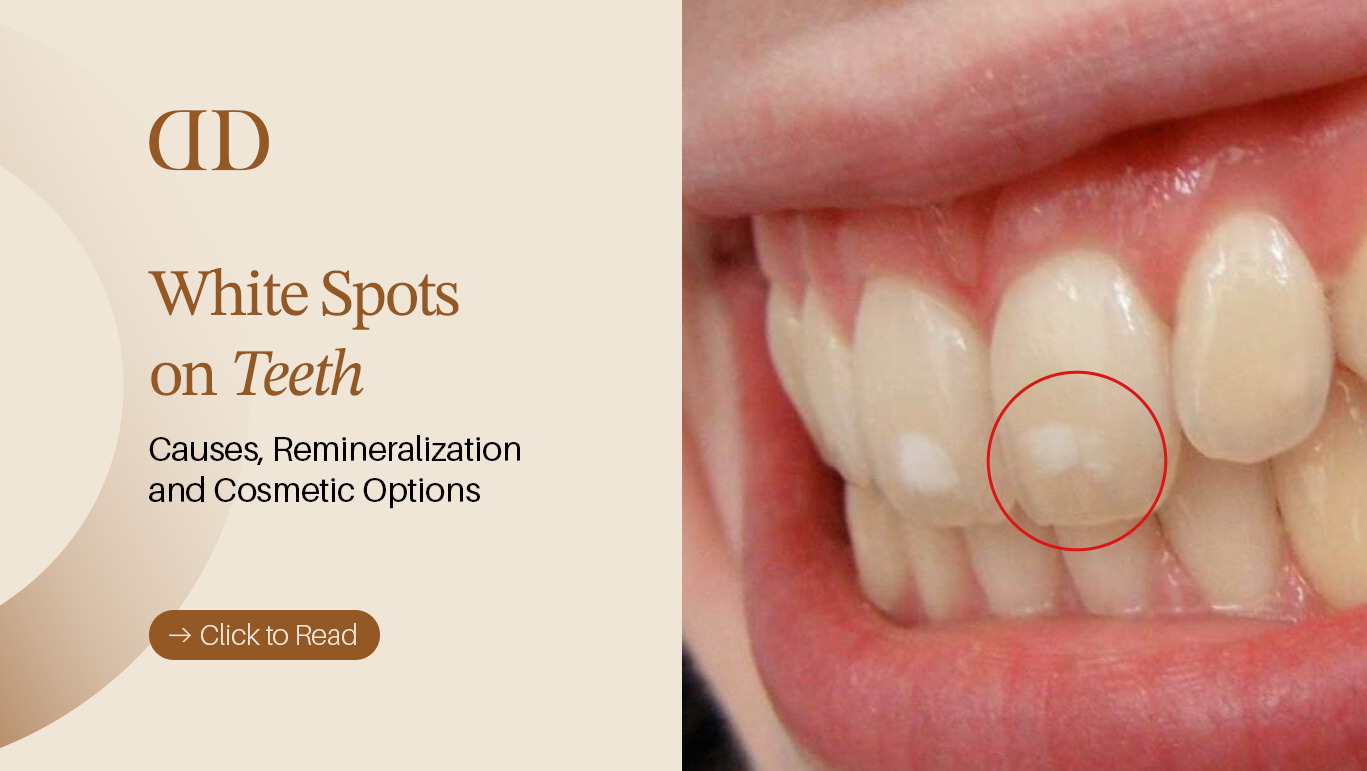

White spots on teeth are noticeable patches or streaks of lighter color on the tooth enamel, usually indicating an underlying change in the mineral structure or composition of the tooth surface. They appear when light bounces differently off areas of enamel that have lost density or developed structural variations during tooth formation. The main causes range from early enamel demineralization and plaque buildup around orthodontic appliances to dental fluorosis and developmental enamel hypoplasia. Remineralization therapies can help strengthen weakened enamel and stabilize early lesions, while conservative cosmetic options such as resin infiltration, microabrasion, or dental veneers can restore a uniform appearance when discoloration remains an aesthetic concern.
Understanding the specific cause of white spots is the essential first step toward addressing them effectively, as a treatment suitable for plaque-induced demineralization will not yield the same results for developmental enamel defects.
What Are White Spots on Teeth?
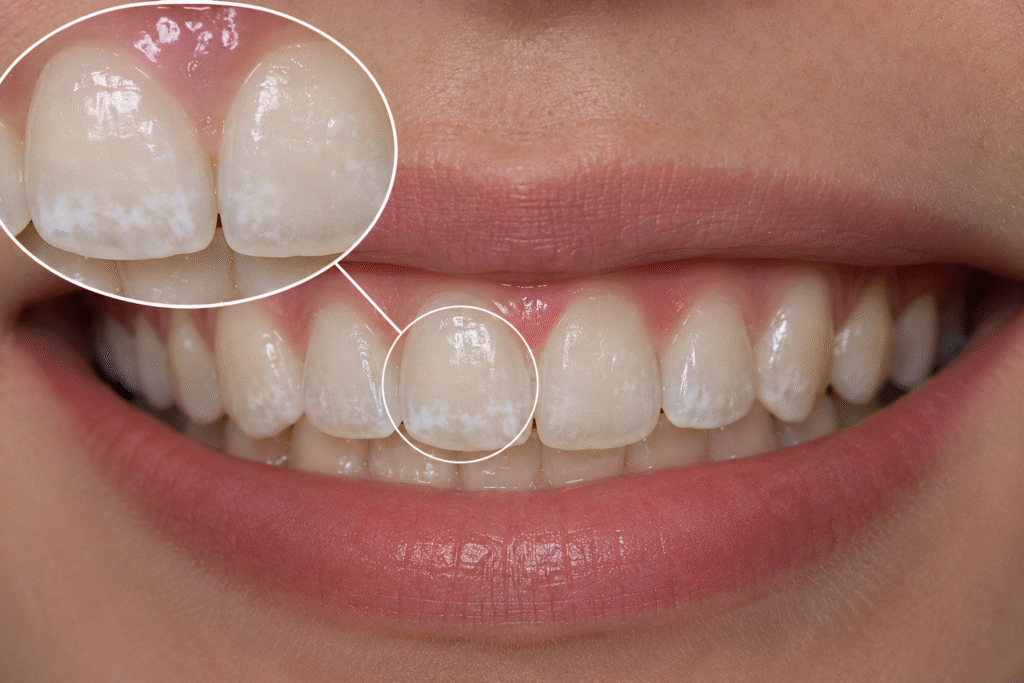
White spots on teeth are areas where the outer protective layer of the tooth the enamel has experienced a alteration in its structural density or mineral balance. Healthy enamel is dense, highly mineralized, and translucent, allowing light to pass through smoothly. When enamel loses essential minerals like calcium and phosphate, or when it forms improperly during childhood, its microscopic structure becomes porous.
These microscopic pores affect how light travels through the tooth structure. Rather than passing through normally, light refracts and scatters off the porous area, creating an opaque, chalky-white or milky appearance that stands out against the natural translucency of the surrounding tooth surface. While some white spots represent active, early-stage enamel decay, others are completely benign, inactive changes that occurred during tooth development years earlier.
What Causes White Spots on Teeth?
The appearance of white spots on teeth stems from several distinct underlying causes, each affecting the enamel at different stages of life and through different biological mechanisms.
Enamel Demineralization and White Spot Lesions
Tooth enamel demineralization occurs when oral bacteria consume sugars from food and produce organic acids. These acids gradually dissolve the vital minerals within the enamel matrix.
- Early Lesion Formation: As minerals leach out beneath the intact surface layer, a subterranean porosity develops. This creates what dentists term a “white spot lesion,” which represents the earliest clinical stage of dental caries (tooth decay).
- Dietary and Hygenic Factors: Frequent consumption of acidic beverages, sugary snacks, or poor oral hygiene accelerates demineralization, leaving localized chalky patches on high-risk surfaces.
If left unmanaged, demineralization can eventually breach the enamel surface and result in a physical cavity requiring a restoration.
Fluorosis and Other Enamel Changes
Not all white spots are caused by bacterial acid attacks. Some stem from factors during the structural development of the tooth.
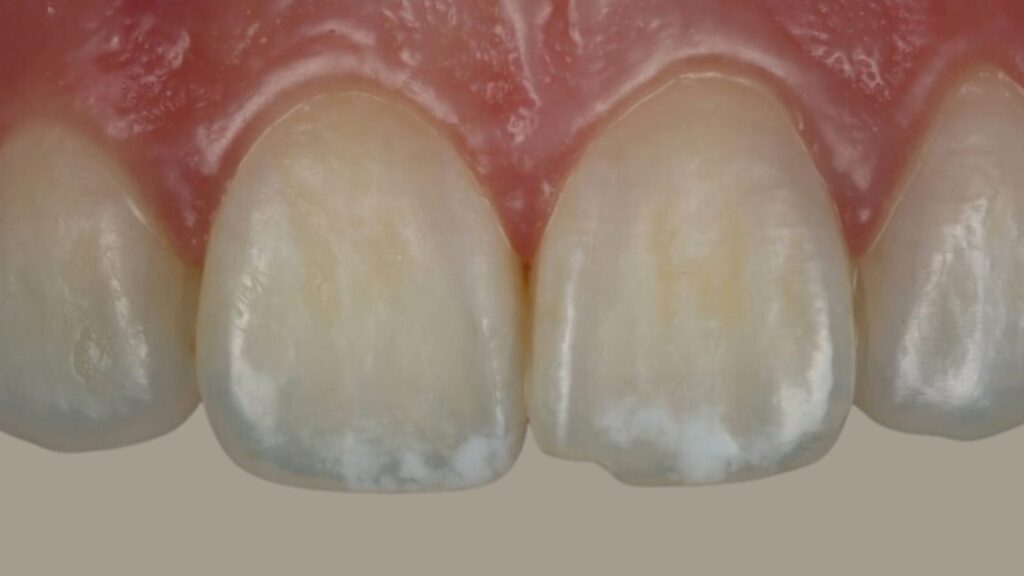
- Dental Fluorosis White Spots: Dental fluorosis occurs when children ingest excessive amounts of fluoride while their permanent teeth are still forming under the gums, typically before the age of eight. Mild fluorosis presents as faint, lacy white lines or small chalky flecks across the enamel surface, representing areas where mineral crystallization was slightly altered.
- Enamel Hypoplasia: This condition arises from systemic illnesses, high fevers, nutritional deficiencies, or trauma during early childhood that disrupts the cells responsible for building enamel (ameloblasts). The result is thinner, less dense, or structurally incomplete enamel that appears as distinct white, yellow, or brownish patches.
White Spots After Braces
One of the most common times patients notice white spots on teeth is immediately after fixed orthodontic brackets are removed.
Premium Dental Care in Turkey
Expert treatments with high-end technology. Get your personalized quote today via WhatsApp.
Fixed braces, wires, and bands create numerous tiny crevices that easily trap food particles and dental plaque. Cleaning around orthodontic hardware requires meticulous hygiene effort. When plaque is allowed to sit around the edges of a bracket for extended periods, acid-producing bacteria continuously wear away at the enamel minerals. When the brackets are finally taken off, clean squares of unaffected enamel are revealed, surrounded by chalky, white demineralized borders outlining where the brackets used to be.
Can White Spots on Teeth Be Remineralized?
Yes, white spots on teeth can be remineralized, provided they are early-stage lesions caused by active demineralization where the outer enamel surface remains intact. Remineralization is a natural repair mechanism in which essential minerals primarily calcium and phosphate re-enter the porous enamel structure, redepositing into the weakened crystalline framework.

Want trusted dental advice in your Google AI answers?
Add Darya Dental Turkey as a Preferred Source on Google to make our dental guides easier to find in your search results and AI Overviews.
However, remineralization is not a universal cosmetic fix. Its primary clinical function is to arrest active enamel decay and strengthen the tooth structure, rather than completely erase discoloration. While early white spot lesions may fade or blend more naturally into the surrounding enamel as mineral density improves, established or deep structural discoloration usually retains some visual opacity.
When Remineralization May Help
Remineralization therapies are most effective when applied to newly formed, superficial white spot lesions caused by recent acid exposure or plaque buildup, such as those noticed immediately after orthodontic treatment.
- Active vs. Inactive Lesions: Active demineralization appears matte, rough, and chalky. These active lesions readily absorb topical minerals. Once a lesion becomes inactive (glossy and smooth), the outer surface layer has hard-sealed, making it significantly harder for minerals to penetrate into the deeper porous body of the spot.
- Non-Bacterial Causes: Remineralization cannot alter white spots resulting from dental fluorosis or enamel hypoplasia. Because these conditions represent intrinsic structural variations created while the tooth was forming underground, post-eruptive mineral applications cannot change their underlying crystalline arrangement.
What Factors Affect Enamel Remineralization?
The success of white spots on teeth remineralization depends on maintaining a favorable biochemical environment in the oral cavity. Several key factors directly influence how effectively minerals redeposit into weakened enamel:
| Factor | Mechanism / Impact on Enamel | Clinical Role |
| Saliva Quality & Flow | Buffers oral acids and acts as a natural reservoir for dissolved calcium and phosphate ions. | Essential baseline for natural enamel self-repair. |
| Fluoride Availability | Integrates into enamel to form fluorapatite, which is significantly more resistant to future acid attacks than original hydroxyapatite. | Found in prescription toothpastes, mouthwashes, and professional varnishes. |
| Biomimetic Agents (CPP-ACP & Hydroxyapatite) | Casein Phosphopeptide-Amorphous Calcium Phosphate (CPP-ACP) and nano-hydroxyapatite deliver bioavailable calcium and phosphate directly to porous enamel. | Applied via specialized topical creams or targeted toothpastes to accelerate repair. |
| Dietary Acid & Sugar Frequency | Frequent acid exposure lowers oral pH below 5.5, continuously favoring mineral loss over mineral gain. | Reducing acidic drinks and frequent snacking allows remineralization windows to occur. |
| Plaque Control | Bacterial biofilm blocks topical minerals from contacting the enamel surface directly. | Thorough daily mechanical cleaning is required before mineral agents can function. |
When Do White Spots Need Cosmetic Treatment?
When remineralization is no longer effective or when white spots stem from developmental causes like fluorosis cosmetic dentistry offers non-invasive to minimally invasive solutions. The appropriate cosmetic option depends entirely on the depth, size, and cause of the spot.
Resin Infiltration
Resin infiltration for white spots is a minimally invasive micro-invasive treatment designed to blend white spot lesions visually with the healthy surrounding tooth structure without drilling.
During the procedure, the dentist prepares the surface of the white spot with a mild etching gel to open the microscopic pores of the enamel. A low-viscosity, clear liquid resin is then applied, which seeps deep into the porous body of the lesion via capillary action. Once light-cured, the resin fills the microscopic voids. Because the refractive index of the cured resin closely matches that of natural, healthy enamel, light passes through the tooth normally again, masking the white spot’s chalky appearance. Resin infiltration is particularly popular for treating post-orthodontic white spots and mild fluorosis.
Enamel Microabrasion
Enamel microabrasion is a conservative technique used to physically remove superficial enamel discolorations. It involves applying a specialized compound containing a mild acid (such as hydrochloric or phosphoric acid) combined with fine abrasive particles (such as silicon carbide) to the tooth surface.
The dentist gently massages this slurry over the affected area, micro-reductionally polishing away a microscopic outer layer of enamel (usually less than 100 microns). This process erases shallow white spots located within the outermost enamel layer while leaving a smooth, highly polished surface. Microabrasion is ideal for superficial fluorosis flecks or shallow post-brace spots, but it is unsuitable for deeper developmental defects.
Professional Teeth Whitening
Patients often wonder if whitening can eliminate white spots. It is important to clarify that professional whitening agents do not selectively bleach or erase white spots. Instead, peroxide-based whitening gels lighten the overall shade of the natural, healthy enamel surrounding the spot.
In many cases, whitening can help reduce the color contrast between the white spot and the rest of the tooth, making the spot far less noticeable. However, during the first few days of whitening, white spots may temporarily appear brighter due to transient enamel dehydration. A comprehensive evaluation ensures that professional teeth whitening is combined correctly with other treatments such as microabrasion or resin infiltration if color uniformization is the primary goal.
Composite Bonding and Veneers
For deep, extensive white spots or severe enamel hypoplasia that extend through the full thickness of the enamel, superficial treatments may not achieve a uniform appearance.
- Composite Bonding: The dentist selectively removes the affected chalky enamel and places a color-matched composite resin directly onto the area, sculpting it to match the natural contour of the tooth.
- Dental Veneers: When white spots are accompanied by structural weakness, surface roughness, or widespread discoloration across multiple teeth, custom porcelain restorations provide a comprehensive cosmetic outcome. Placing dental veneers or ultra-thin porcelain veneers allows full coverage of underlying structural defects, establishing long-term color uniformity and structural protection. Veneers are considered an extensive option and are reserved for cases where conservative treatments are insufficient.
White Spots on Teeth: Which Treatment Is Appropriate?
Selecting the most suitable treatment for white spots on teeth requires a thorough clinical assessment by a qualified dentist. Because different enamel changes share similar visual characteristics, accurate diagnosis is the cornerstone of effective management.
Key Clinical Assessment Criteria
- Lesion Etiology: Determining whether the white spot is an active demineralization lesion, an inactive historical mark, a outcome of fluorosis, or a developmental structural anomaly.
- Lesion Activity: Evaluating if the surface enamel is active, porous, and prone to decay, or if it has remineralized into a stable, smooth, inactive state.
- Depth of Mineral Loss: Assessing whether the alteration is confined to the superficial surface layer or extends deep into the enamel matrix.
- Patient Aesthetic Goals: Weighing the visual contrast of the spot against the patient’s cosmetic expectations to determine whether conservative remineralization, resin masking, or full coverage is appropriate.
Treatment Comparison: Addressing White Spots on Teeth
The table below outlines the primary treatment options available for managing white spots on teeth, comparing their mechanisms, ideal clinical indications, invasiveness, and long-term durability:
| Treatment | How It Works | Best Suited For | Invasiveness | Expected Durability |
| Remineralization Therapy | Topical calcium, phosphate, and fluoride redeposit into porous enamel to strengthen structure. | Active, early-stage demineralization and recent post-orthodontic spots. | Non-invasive | Permanent structural stabilization; visual improvement varies. |
| Resin Infiltration | Etches porous enamel and infiltrates it with clear liquid resin to match natural light refraction. | Moderate post-orthodontic lesions and mild-to-moderate fluorosis. | Micro-invasive (no drilling) | Long-lasting (typically 5+ years) with stable optical masking. |
| Enamel Microabrasion | Mild acid and fine abrasive particles gently polish away a microscopic surface layer of enamel. | Very shallow fluorosis flecks or superficial post-brace discoloration. | Minimally invasive (micro-reduction) | Permanent removal of the targeted superficial layer. |
| Professional Whitening | Lightens the surrounding tooth structure to decrease color contrast with white spots. | Generalized mild unevenness where structural treatment is not required. | Non-invasive | Requires periodic maintenance to retain surrounding shade. |
| Composite Bonding | Replaces localized chalky enamel with color-matched tooth-colored resin material. | Isolated deep developmental defects or resistant hypoplastic spots. | Minimally invasive (selective removal) | High durability (5–7+ years), susceptible to gradual staining over time. |
| Dental Veneers | Custom porcelain shells cover the entire front surface of the tooth. | Severe hypoplasia, extensive structural defects, or widespread cosmetic concerns. | Invasive / Extensive (enamel preparation required) | Long-term durability (10–15+ years) with superior color stability. |
Dental Assessment and Professional Guidance in Istanbul
For international patients traveling to Istanbul, Türkiye, evaluating white spots on teeth forms an integral part of comprehensive smile design and restorative consultations. At clinics such as Darya Dental Turkey in Ataşehir, dentists perform detailed diagnostic assessments to distinguish between superficial mineral loss and intrinsic structural defects before recommending any procedure.
Establishing an accurate diagnosis ensures that patients receive the least invasive, most effective treatment suited to their specific enamel condition whether that involves conservative remineralization, specialized resin infiltration, or custom porcelain restorations.
Frequently Asked Questions
What causes white spots on teeth?
White spots on teeth are caused by changes in enamel mineral density or structure. Primary causes include bacterial acid demineralization (early decay), excessive fluoride intake during tooth development (fluorosis), plaque accumulation around braces, and developmental disruptions (enamel hypoplasia).
Can white spots on teeth go away on their own?
No, established white spots generally do not completely disappear on their own. While early active demineralization can be stabilized through natural saliva minerals and improved hygiene, the visual opacity often persists without targeted clinical interventions like remineralization therapy, resin infiltration, or microabrasion.
Can white spots on teeth be remineralized?
Yes, early-stage white spot lesions caused by recent demineralization can be remineralized using topical calcium, phosphate, and fluoride agents. However, remineralization primarily restores structural density and may not fully eliminate deep or developmental discoloration.
Are white spots after braces permanent?
White spots after braces are permanent in terms of structural enamel changes if left untreated, but they can be successfully managed. Early management with remineralizing agents can strengthen the area, while treatments like resin infiltration or microabrasion can significantly reduce or eliminate their visual appearance.
Does teeth whitening remove white spots?
No, professional teeth whitening does not selectively remove white spots. Bleaching gels lighten the overall shade of the surrounding enamel, which can reduce visual contrast, but whitening alone will not erase the underlying structural change within the white spot.
Is resin infiltration suitable for white spots on teeth?
Resin infiltration is highly suitable for mild-to-moderate post-orthodontic white spots and superficial fluorosis. It works by filling the microscopic pores of the enamel with a clear resin that matches the optical properties of natural tooth structure without requiring drilling.
Can veneers cover white spots on teeth?
Yes, dental veneers can completely cover white spots on teeth. However, because veneers require enamel removal, they are typically reserved for severe, deep developmental defects or cases where conservative options like resin infiltration or microabrasion are ineffective.
White spots on teeth reflect diverse enamel changes ranging from early plaque-induced demineralization to developmental conditions like fluorosis and hypoplasia. Understanding the underlying cause is key to choosing the right solution. Conservative approaches such as topical remineralization, resin infiltration, and microabrasion effectively restore enamel integrity and blend visible discolorations while preserving natural tooth structure. For deeper or extensive defects, restorative options like composite bonding or porcelain veneers provide long-lasting aesthetic correction. A professional dental evaluation ensures an accurate diagnosis, guiding you toward the safest, most effective treatment for a healthy, uniform smile.
