What Do Teeth Look Like Under Veneers?
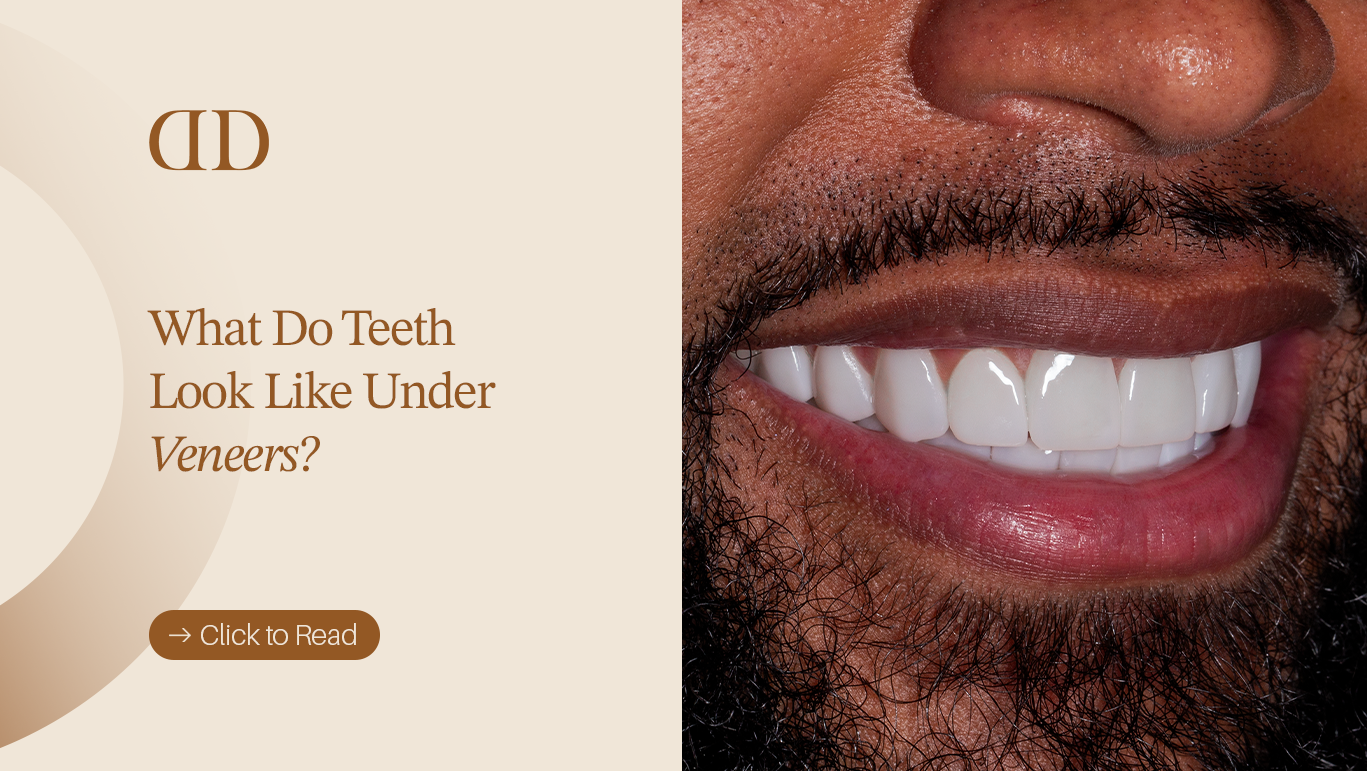

Teeth under veneers may look smaller, flatter, shorter or less glossy than they did before treatment, depending on how much enamel is removed during preparation. In conservative veneer treatments, the natural teeth may retain most of their original shape. With more extensive preparation, the change can be more noticeable.
Dental veneers are thin restorations bonded to the front surfaces of natural teeth. The teeth remain underneath the veneers, but conventional preparation can permanently change their shape and remove some of their protective enamel. Not every patient needs the same amount of preparation, and some carefully selected cases may be suitable for minimal-prep or no-prep veneers.
Understanding what teeth look like at each stage helps clarify an important distinction: the appearance of a prepared tooth is not the same as the appearance of the final veneer. A photograph of teeth before veneers are fitted may look very different from the finished result, but that image alone cannot establish how much enamel remains or whether the teeth are healthy.
What Do Teeth Look Like Before and After Veneer Preparation?
The appearance of natural teeth changes according to their original shape, the planned restoration and the amount of tooth structure that needs to be adjusted.

Natural teeth before veneer preparation
Before treatment, teeth retain their original contours, enamel surface and natural edges. Their colour, spacing, alignment and thickness help determine the design of the planned veneers.

Teeth after preparation
Prepared teeth may look shorter, flatter or less prominent because selected areas of enamel have been reshaped. The amount of visible change varies considerably between patients.

Teeth with bonded veneers
Premium Dental Care in Turkey
Expert treatments with high-end technology. Get your personalized quote today via WhatsApp.
Once bonded in place, veneers cover the prepared front surfaces and create the planned tooth shape, colour and contours. The final appearance depends on the restoration design, material and underlying tooth colour.
Illustrative visual references only. These images are not a matched before-and-after case and should not be used to estimate the amount of enamel removed from an individual tooth.

Want trusted dental advice in your Google AI answers?
Add Darya Dental Turkey as a Preferred Source on Google to make our dental guides easier to find in your search results and AI Overviews.
Natural teeth before veneer preparation
Natural teeth have a three-dimensional shape, with curved surfaces, defined edges and varying degrees of translucency. The outer layer, called enamel, protects the underlying dentin and contributes to the way teeth reflect and transmit light.
Before planning veneers, a dentist considers tooth proportions, existing restorations, enamel condition, gum health, bite and the desired aesthetic changes. These factors help establish whether the natural teeth need reshaping at all and, if preparation is necessary, where it should occur.
Teeth after minimal enamel preparation
After minimal preparation, the front surfaces of the teeth may appear slightly flatter or more uniform. Small adjustments can create space for the veneers and help prevent the final restorations from looking unnecessarily bulky.
The changes may be difficult to identify in a photograph, particularly when the preparation is conservative. The important consideration is not simply how small the teeth appear, but how much healthy tooth structure remains and whether the planned restoration can be bonded appropriately.
Why some prepared teeth look smaller or flatter
Prepared teeth can look different for several reasons:
- Enamel reduction: Removing selected areas of enamel changes the original contours.
- Tooth position: Teeth that already sit forward or overlap may require a different preparation approach.
- Veneer thickness: Space may be needed to accommodate the restoration without creating excessive bulk.
- Existing tooth shape: Short, narrow, worn or uneven teeth may need a different design from naturally prominent teeth.
- Treatment objectives: Correcting colour alone may require a different approach from changing tooth length, shape or alignment.
The final appearance should be assessed against the treatment plan rather than judged solely by how prepared teeth look temporarily.
Do Teeth Look Like Stumps Under Veneers?
No. Teeth prepared for veneers do not necessarily look like tiny stumps. Conservative veneer preparation usually focuses on the front surface and selected edges rather than reshaping the entire tooth into a short, narrow structure.
The appearance depends on the original anatomy, the planned restoration and the amount of reduction required. Images showing very small, heavily reshaped teeth may represent a particular case or a different restorative procedure. They should not be treated as the standard appearance of every tooth prepared for veneers.
The difference between veneer and crown preparation
Veneers and dental crowns cover different amounts of the natural tooth.
| Feature | Dental veneers | Dental crowns |
|---|---|---|
| Main coverage | Primarily the front surface | Covers most or all of the visible tooth |
| Typical purpose | Change colour, shape or appearance | Restore a tooth that needs more extensive coverage |
| Preparation | Usually limited to selected surfaces | Generally involves more circumferential reshaping |
| Tooth structure | Aims to preserve as much suitable structure as possible | Requires space for the crown around the tooth |
| Suitability | Depends on enamel, alignment, bite and aesthetic goals | Depends on structural damage, existing restorations and clinical needs |
The distinction matters because a tooth prepared for a crown may look substantially smaller than a tooth prepared for a conventional veneer. However, the amount of preparation required for either restoration varies by case.
Why tooth reduction varies between patients
There is no single preparation amount that applies to every patient. A dentist may need little or no reduction in selected cases, while other teeth require more adjustment to achieve an appropriate fit and appearance.
Factors include:
- The position and natural prominence of the teeth.
- The amount of colour change required.
- The desired length, width and contour.
- The thickness and optical properties of the selected material.
- The condition of the existing enamel and restorations.
- The relationship between the upper and lower teeth when biting.
A treatment plan should explain why preparation is proposed and what alternatives may be suitable before any irreversible enamel removal takes place.
What Happens to the Enamel and Dentin Under Veneers?
Enamel is the hard outer layer of the tooth. Dentin is the underlying tissue that forms much of the tooth’s structure. Veneer preparation is planned around preserving healthy enamel wherever possible because enamel provides an important surface for reliable adhesive bonding.
A veneer does not replace the entire natural tooth. It covers a selected surface, while the underlying tooth continues to provide its structural foundation.
What enamel removal means for the natural tooth
Enamel does not regenerate after it has been physically removed. This is why conventional veneer preparation is generally considered irreversible, even though the veneer itself can be replaced.
When preparation is planned appropriately, the aim is to remove only the amount of tooth structure needed for the intended restoration. Excessive or poorly planned reduction may increase the risk of sensitivity, compromise the available bonding surface or create other restorative challenges.
The amount of remaining enamel is also relevant to bonding. A dentist assesses whether the tooth offers a suitable foundation for the selected restoration and whether an alternative treatment could preserve more natural structure.
Why prepared teeth may look different in colour
Prepared teeth can appear different in colour because the original outer enamel surface has been altered. The underlying dentin may become more visually influential where enamel has been reduced, and the prepared surface may reflect light differently from an intact tooth.
This does not mean that all prepared teeth become yellow. Colour varies with the original tooth, the location and extent of preparation, lighting and the stage of treatment.
The final veneer is designed with the underlying tooth colour in mind. Its material, translucency, thickness and shade all influence the finished appearance. If temporary veneers are used, their colour and surface characteristics may also differ from those of the final restorations.
What Do Teeth Look Like Under Different Types of Veneers?
Different veneer approaches involve different levels of tooth preparation. The most suitable option depends on the patient’s natural teeth, aesthetic goals and clinical circumstances.
| Veneer type | Expected preparation | Appearance of the natural tooth |
|---|---|---|
| Traditional porcelain veneers | Enamel is usually removed from selected surfaces | May look flatter or smaller after preparation |
| Minimal-prep veneers | Limited reshaping where required | Often retains more of the original contours |
| No-prep veneers | Little or no tooth reduction in selected cases | May remain close to its original shape |
| Composite veneers | May involve little or some surface preparation | Depends on the bonding technique and planned shape |
Traditional porcelain veneers
Traditional porcelain veneers usually require some enamel reduction to create sufficient space for the ceramic restoration. This helps the veneer fit the tooth without producing an excessively thick appearance.
After preparation, the teeth may have flatter front surfaces or slightly altered edges. The exact appearance depends on the treatment plan. Once bonded, the porcelain veneers cover the prepared surfaces and establish the planned shape and colour.
Porcelain veneers are not suitable for every tooth. The dentist must consider the remaining enamel, bite, alignment and the extent of the proposed aesthetic change.
Minimal-prep veneers
Minimal-prep veneers are designed to limit changes to natural tooth structure. Preparation may involve smoothing selected areas or making small adjustments to create an appropriate fit.
These veneers can be useful when the existing tooth shape and position allow the restoration to be placed with limited modification. However, minimal preparation is not appropriate for every case. A tooth that is already prominent, for example, may become too bulky if a veneer is added without creating enough space.
The term describes a conservative approach, not a guarantee that no enamel will be removed.
For a closer comparison of preparation approaches, see minimal-prep versus traditional veneers.
No-prep veneers
No-prep veneers are designed to be placed with little or no reduction of the natural tooth. In suitable cases, the dentist may be able to bond the restoration directly to the existing enamel.
This approach can preserve more natural tooth structure, but it is not suitable for everyone. Adding a veneer without creating sufficient space may make the tooth look too thick or prominent. Severe misalignment, certain bite conditions and substantial colour changes may also limit its suitability.
No-prep veneers should not automatically be described as reversible. Even when the tooth has not been reduced, removing a bonded restoration may affect the bonding surface or require additional treatment. The actual condition of the tooth after removal depends on the original enamel, bonding procedure and clinical circumstances.
Read more about no-prep veneers.
Composite veneers
Composite veneers use a tooth-coloured resin material that is shaped and bonded to the tooth. Depending on the case, composite may be added directly to the natural surface with little preparation, or selected areas may need reshaping.
The underlying tooth may therefore retain much of its original form, although the result varies with the technique and treatment goals. Composite can also be used to modify small chips, spaces and uneven edges without necessarily requiring a conventional porcelain veneer preparation.
The choice between composite and porcelain depends on factors such as the required aesthetic change, available tooth structure, bite, maintenance expectations and the characteristics of each material.
What Do Teeth Look Like If Veneers Are Removed?
The appearance of natural teeth after veneer removal depends largely on how they were prepared before the veneers were placed. If enamel was removed during conventional preparation, the teeth will not automatically return to their original shape when the restorations are taken off.
Removing a veneer does not reverse the original preparation. The dentist must assess the remaining tooth structure and determine whether the tooth can be left uncovered or needs another restoration.
What happens after conventional preparation
After conventional veneer preparation, the natural teeth may appear smaller, flatter or less glossy than they did before treatment. Their colour may also look different because the original enamel surface has been altered.
Depending on the amount of enamel remaining, the teeth may be more sensitive to temperature or other stimuli. Sensitivity is not inevitable, but persistent or severe discomfort should be evaluated by a dentist.
If the original preparation removed substantial enamel, the tooth may require a new veneer or another suitable restoration to protect and restore its appearance and function.
Can a tooth return to its original condition?
No. Natural enamel that has been removed does not grow back. A replacement veneer may restore the planned appearance, but it does not recreate the original natural tooth structure.
This distinction is important when considering long-term treatment. Veneers may need repair or replacement over time, and future restorations must account for the tooth structure that remains.
Before treatment, ask the dentist what removal would involve, how much preparation is anticipated and what options would be available if the veneers eventually need replacement.
How Can You Protect Natural Teeth Under Veneers?
Long-term oral health depends on the condition of the underlying teeth, the fit of the restorations and consistent dental care. Veneers cover part of a tooth, but they do not make the tooth immune to decay or gum disease.
The following habits help support the health of teeth with veneers:
- Brush twice daily: Use a soft-bristled toothbrush and fluoride toothpaste.
- Clean between teeth daily: Floss or use an appropriate interdental cleaning aid to remove plaque around the teeth and veneer margins.
- Attend routine dental examinations: Regular assessments allow the dentist to check the gums, restoration edges, bite and underlying tooth structure.
- Avoid using teeth as tools: Biting hard objects can damage both natural teeth and veneers.
- Address grinding or clenching: If you grind your teeth, ask a dentist whether protective measures are appropriate.
- Seek advice about new symptoms: Persistent sensitivity, pain, swelling, a loose veneer or a change around the gumline should be assessed.
A veneer that looks intact from the front may still have a problem at its edges or underneath it. Regular examinations are therefore important even when the visible surface appears normal.
The most useful preventive approach begins before treatment: understanding the proposed preparation, the condition of the enamel and the maintenance required after placement.
Frequently Asked Questions About Teeth Under Veneers
Do teeth look like stumps under veneers?
No, teeth prepared for veneers do not normally need to be shaped into tiny stumps. Veneer preparation generally focuses on the front surface and selected edges, while crown preparation usually involves more extensive reshaping around the tooth.
Are teeth shaved down for veneers?
Some enamel removal is common with traditional veneers, but the amount varies by patient. Minimal-prep veneers require less reshaping, while no-prep veneers may require little or no reduction in selected cases.
Do veneers cover the whole tooth?
No. Traditional veneers usually cover the front surface of the tooth and may extend around selected edges. Dental crowns, in contrast, generally cover most or all of the visible tooth.
Do teeth become yellow after veneer preparation?
Not necessarily. Prepared teeth may look different in colour because the enamel surface has been altered and the underlying dentin may become more visually apparent. The final appearance also depends on the veneer material, thickness and shade.
Can you see your natural teeth under veneers?
The natural tooth remains beneath the veneer, but the amount of its colour that influences the final appearance depends on the restoration’s material, thickness, translucency and the original tooth colour. Proper planning helps the dentist account for these factors.
What happens when veneers are removed?
The result depends on the original preparation. Teeth that have lost enamel may look smaller or flatter after removal, and replacement restorations may be needed. Removing a veneer does not restore enamel that was previously removed.
Do no-prep veneers damage natural teeth?
No-prep veneers are intended to preserve natural tooth structure, but their suitability and removal risks depend on the individual case. Bonding, removal and the condition of the enamel can affect the underlying tooth, so no-prep treatment should not automatically be considered risk-free or reversible.
Can teeth decay underneath veneers?
Yes. Veneers do not prevent tooth decay. Plaque can accumulate around restoration margins, and the natural tooth remains susceptible to cavities. Daily oral hygiene and regular dental examinations help identify problems early.
Are veneers permanent?
Veneers are durable restorations, but they may require repair or replacement over time. Conventional veneer preparation is generally irreversible because removed enamel does not grow back. The long-term plan should account for maintenance and possible future replacement.
What teeth look like under veneers depends on the amount of enamel removed, the original tooth shape and the type of restoration used. Prepared teeth may look flatter or smaller, but they do not all become stumps. Conservative techniques can preserve more natural tooth structure when the clinical conditions allow.
Before choosing veneers, discuss the proposed preparation, the expected appearance of your teeth before the final restorations are fitted, and the implications of future removal or replacement. A dental examination is necessary to determine which approach is appropriate for your teeth.
Author and medical review information
- Written by: Dt. Sedat
- Medically reviewed by: Darya Özcan
