
Tooth Armour: What Is a Toothpaste Serum?
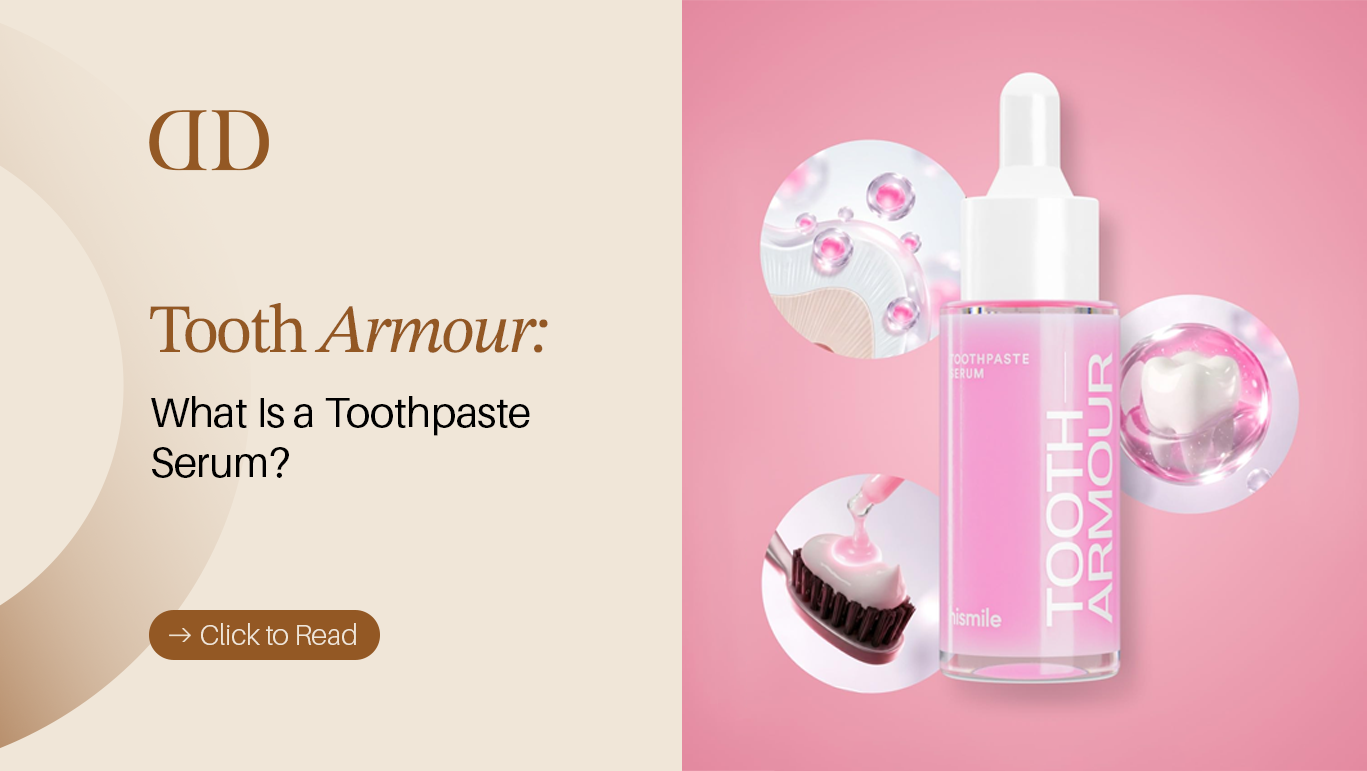

A toothpaste serum is a serum-style oral-care product designed to deliver active ingredients to the tooth surface, often with a focus on enamel care, remineralization, or sensitivity. Unlike conventional toothpaste, the term “serum” generally describes the product format and how it is positioned for use rather than a formal dental treatment category.
Tooth Armour, also referred to in searches as tooth armor, is a product term associated with this toothpaste-serum concept. To understand what it may actually do, it is important to separate the product’s marketing terminology from what is known about its ingredients and the wider dental evidence.
What Is a Toothpaste Serum?
A toothpaste serum is an oral-care formulation intended to be applied to the teeth in a serum-like form rather than the more familiar paste or gel format. The exact formulation varies between products, so “toothpaste serum” should not be treated as a standardized clinical category.
The main question is therefore not simply whether a product is called a serum, but which active ingredients it contains, how they interact with tooth tissues, and what clinical evidence supports those ingredients.
This distinction matters because different oral-care products can have very different purposes. Some are primarily intended to remove plaque and deliver fluoride for cavity prevention. Others may contain ingredients intended to reduce sensitivity, support enamel mineral balance, or address cosmetic concerns such as surface staining.
For example, the American Dental Association notes that toothpaste can contain active ingredients for purposes including cavity prevention, sensitivity reduction and enamel-erosion control. Fluoride is particularly well established for helping prevent tooth decay and supporting remineralization of enamel during the early stages of decay.
So, when evaluating a toothpaste serum, the useful questions are:
- What are its active ingredients?
- Is it intended to supplement or replace conventional toothpaste?
- What evidence supports those ingredients?
- Is the claim about prevention, sensitivity, cosmetic appearance, or treatment?
- Does the product address an existing dental problem, or is it intended for daily oral care?
A toothpaste serum should not automatically be considered a replacement for professional dental treatment. A visible cavity, persistent tooth pain, or significant structural damage requires an appropriate dental assessment rather than relying on an oral-care product alone.
What Is Tooth Armour?
Tooth Armour is a product name associated with the toothpaste-serum format. People searching for “tooth armour toothpaste serum,” “tooth armor,” or “tooth serum” may therefore be looking for information about a particular product as well as information about the broader concept of toothpaste serums.
Premium Dental Care in Turkey
Expert treatments with high-end technology. Get your personalized quote today via WhatsApp.
That distinction is important for interpreting online claims.
A product description can explain what a manufacturer says its serum is designed to do. Independent dental research, however, is needed to determine how confidently those claims can be applied to oral health outcomes.

Want trusted dental advice in your Google AI answers?
Add Darya Dental Turkey as a Preferred Source on Google to make our dental guides easier to find in your search results and AI Overviews.
For example, nano-hydroxyapatite and other forms of hydroxyapatite have been investigated as active ingredients in oral-care products. Recent systematic reviews have reported evidence suggesting potential benefits for enamel remineralization and caries prevention, but the available evidence varies by study design, population, formulation and outcome. A 2025 systematic review and meta-analysis found no significant difference between hydroxyapatite and fluoride toothpastes for several caries-related outcomes, while also noting differences in some measures of lesion size and fluorescence.
This means that the phrase “tooth armor” should not be interpreted as proof that a product can literally repair or regrow a damaged tooth. Enamel and dentin are biological tissues with specific structural limitations, and the effect of an oral-care product depends on the condition being addressed.
It is also useful to distinguish early mineral loss from an established cavity. Remineralization can be relevant when minerals are being lost from the tooth surface before significant structural breakdown occurs. It does not mean that a toothpaste serum can restore a tooth once a physical cavity has formed.
The same principle applies to claims involving “cavity healing tooth armor” or “dental cavity healing tooth armor.” These phrases may reflect search language or product-related claims, but they should not be interpreted as evidence that an established cavity can be treated at home with a serum.
How Does a Toothpaste Serum Work?
A toothpaste serum works primarily through the ingredients it delivers to the tooth surface. The exact mechanism depends on the formulation, so there is no single mechanism that applies to every product described as a toothpaste serum.
For enamel-focused products, one area of interest is the interaction between mineral-based ingredients and the tooth surface. Hydroxyapatite, for example, is chemically related to the mineral component of teeth and has been studied in toothpaste and other oral-care formulations.
The broader concept is easier to understand by separating three processes:
- Demineralization — minerals are lost from enamel under conditions that favor mineral dissolution.
- Remineralization — minerals can be redeposited into early, non-cavitated enamel lesions under favorable oral conditions.
- Structural tooth loss — once tooth tissue has been physically lost and a cavity or other defect has formed, a toothpaste cannot simply rebuild the missing structure.
Fluoride also plays an established role in this process. According to the ADA, fluoride helps strengthen enamel and remineralize enamel during the early stages of tooth decay, which is one reason fluoride toothpaste remains a standard component of preventive oral care.
Research on hydroxyapatite is active and increasingly substantial, but it does not justify treating all hydroxyapatite products as equivalent to one another or assuming that they are universally superior to fluoride. A 2024 systematic review reported an expanding body of clinical evidence for hydroxyapatite-containing oral-care products, while also noting the need to interpret the evidence according to the available clinical trials and formulations.
The practical takeaway is simple: a toothpaste serum may support particular aspects of oral care depending on its formulation, but the word “serum” itself does not establish a clinical benefit.
Nano-Hydroxyapatite and Enamel Care
Nano-hydroxyapatite toothpaste contains extremely small particles of hydroxyapatite, a calcium-phosphate mineral closely related to the mineral component of tooth enamel and dentin.
This ingredient has attracted attention because of its potential role in enamel care and remineralization. Research has investigated whether hydroxyapatite particles can interact with the tooth surface, contribute minerals to areas affected by early demineralization, and help reduce sensitivity.
However, the evidence needs to be interpreted carefully.
Hydroxyapatite is not the same thing as physically rebuilding a tooth. If enamel has experienced early mineral loss, remineralization may help restore some mineral content under suitable oral conditions. But once tooth structure has been substantially lost, such as with an established cavity, an oral-care product cannot simply recreate the missing tissue.
This distinction is particularly important when evaluating claims around dentin tooth armor or dentine tooth armor. Dentin is the tissue beneath enamel and contains microscopic tubules that can contribute to tooth sensitivity when they become exposed or stimulated.
Some hydroxyapatite-based products are therefore investigated for their potential to occlude these tubules and reduce sensitivity. The result, however, depends on the formulation, the underlying cause of sensitivity and the individual patient.
Hydroxyapatite should also not automatically be presented as a replacement for fluoride. Fluoride has a long-established role in cavity prevention, and current evidence does not support a blanket conclusion that hydroxyapatite is better than fluoride for everyone.
Other Ingredients Commonly Found in Toothpaste Serums
The active ingredients in a toothpaste serum can vary considerably between products. Depending on the formulation, an oral-care serum may contain mineral-based ingredients, desensitizing agents, cleaning ingredients, humectants, flavoring agents or other components intended to support daily oral hygiene.
This is why looking only at the product format can be misleading.
Two products can both be called a tooth serum while having substantially different formulations and intended uses. One may focus primarily on enamel care, while another may emphasize sensitivity, cosmetic appearance or general oral hygiene.
When assessing a product, consider:
| Ingredient category | Potential role | Important limitation |
| Hydroxyapatite / nano-hydroxyapatite | Enamel and mineral care; investigated for remineralization and sensitivity | Evidence varies by formulation and clinical outcome |
| Fluoride | Helps prevent caries and supports enamel remineralization | Not every toothpaste serum contains it |
| Desensitizing ingredients | May help reduce sensitivity | Persistent sensitivity can have an underlying dental cause |
| Cleaning agents | Help remove plaque and surface deposits | Cleaning does not mean repairing damaged tooth structure |
| Flavoring and formulation ingredients | Improve product experience and stability | Do not themselves establish a therapeutic effect |
For Tooth Armour specifically, product descriptions should be understood as product claims unless they are independently supported by clinical evidence. The presence of an ingredient with published research does not automatically prove that every formulation containing that ingredient produces the same clinical outcome.
Toothpaste Serum vs Regular Toothpaste
The main difference between a toothpaste serum and regular toothpaste is usually formulation and product format, not necessarily a completely different approach to oral health.
Conventional toothpaste is generally designed to be used with brushing to clean teeth and deliver active ingredients. A toothpaste serum may use a different consistency or application method and may be positioned around specific ingredients such as hydroxyapatite.
The comparison therefore depends on the individual product rather than the word “serum” alone.
| Feature | Toothpaste serum | Regular toothpaste |
| Format | Usually serum-like or less paste-like | Paste or gel |
| Primary purpose | Depends on formulation; may emphasize enamel care or sensitivity | Daily cleaning and delivery of active ingredients |
| Hydroxyapatite | May be included | May be included in some formulations |
| Fluoride | May or may not be included | Commonly included in cavity-prevention toothpaste |
| Sensitivity focus | May include ingredients intended for sensitivity | Some formulations are specifically designed for sensitivity |
| Evidence | Depends on ingredients and formulation | Depends on the specific ingredients and product |
| Dental treatment | No | No |
This means that toothpaste serum vs toothpaste should not be treated as a simple competition between two categories.
For someone choosing an oral-care product, the more useful comparison is between the active ingredients, their intended purpose and the available evidence.
For example, someone primarily concerned about cavity prevention may prioritize a fluoride-containing toothpaste based on established preventive evidence. Someone interested in hydroxyapatite may want to understand what the available clinical research says about that ingredient and how the particular formulation is intended to be used.
If you are also interested in how mineral loss and remineralization work biologically, the more detailed explanation of tooth remineralization provides useful context.
Can Toothpaste Serum Protect Tooth Enamel?
A toothpaste serum may support enamel care depending on its ingredients, but the term itself does not guarantee enamel protection.
Enamel is constantly exposed to processes that can shift the balance between mineral loss and mineral gain. Acids from dietary sources and bacterial activity can contribute to demineralization. Saliva, fluoride and other factors can support remineralization.
A remineralizing toothpaste or serum may therefore be relevant as part of preventive oral care, particularly when the formulation contains ingredients with evidence for supporting mineral balance.
Hydroxyapatite is one ingredient being studied for this purpose. Clinical research has investigated whether hydroxyapatite-containing toothpastes can help with early enamel lesions and other measures of mineral change. The evidence is promising in some areas, but differences between formulations and study designs mean that broad claims should be avoided.
It is also important to distinguish enamel protection from enamel regeneration.
Protection can mean helping the tooth surface withstand processes associated with mineral loss. Remineralization refers to the return of minerals to an area of early mineral loss. Neither term means that a toothpaste serum can regenerate a complete layer of enamel after substantial structural loss.
For people with signs of enamel erosion, persistent sensitivity or visible changes in the tooth surface, product selection should be considered alongside the underlying cause. Brushing technique, dietary acids, reflux, grinding and other factors can all contribute to enamel problems.
Can Toothpaste Serum Help With Sensitive Teeth?
A toothpaste serum may help with sensitive teeth if its formulation contains ingredients that reduce sensitivity, but it should not be assumed to treat every cause of tooth sensitivity.
Sensitivity can occur when dentin becomes exposed or when stimuli reach the underlying tooth structures through pathways such as dentinal tubules. Cold drinks, hot foods, sweet foods or touch may then produce a short, sharp sensation.
Hydroxyapatite has been studied as one possible approach because particles may help cover or occlude exposed dentinal tubules. This is one reason terms such as dentin tooth armor appear in searches related to toothpaste serum products.
However, sensitivity is a symptom rather than a diagnosis.
If sensitivity is new, persistent, worsening or localized to one tooth, the cause may be something that requires professional assessment. Examples can include decay, a cracked tooth, gum recession, enamel wear or other dental conditions.
A toothpaste serum may therefore be part of an oral-care routine, but persistent sensitivity should not simply be masked with a product without considering why it is occurring.
If you have veneers or other restorations, product selection can also require additional consideration, particularly when abrasivity and cleaning methods are relevant. Darya’s guide to toothpaste for veneers covers that topic separately.
Can Toothpaste Serum Heal Cavities?
No toothpaste serum should be presented as a treatment that can heal an established cavity. The important distinction is between early enamel demineralization and a cavity in which tooth structure has already been lost.
During the early stages of mineral loss, the tooth surface may still have the potential to undergo remineralization. Fluoride and other mineral-based approaches can support this process under appropriate conditions.
An established cavity is different. Once bacterial activity has resulted in a physical defect in the tooth, simply applying toothpaste or a serum cannot recreate the missing tooth structure.
This is why searches such as “cavity healing tooth armor,” “dental cavity tooth armor,” or “dental cavity healing tooth armor” need to be interpreted carefully. They may reflect an interest in whether Tooth Armour or another toothpaste serum can reverse decay, but the evidence does not justify treating a toothpaste serum as a substitute for dental treatment.
If you have a visible hole in a tooth, persistent pain, swelling, spontaneous toothache or symptoms that are getting worse, a dental examination is more appropriate than relying on an oral-care product.
In short:
| Situation | What a toothpaste serum may contribute | What it cannot be assumed to do |
| Early mineral loss | May support remineralization depending on ingredients | Guarantee reversal |
| Enamel care | May support maintenance of the tooth surface | Regrow substantial lost enamel |
| Dentin sensitivity | Some ingredients may help reduce sensitivity | Treat every underlying cause |
| Established cavity | May form part of general oral hygiene | Fill or rebuild the cavity |
| Dental pain or infection | Oral hygiene remains important | Replace professional diagnosis or treatment |
How to Use a Toothpaste Serum
There is no single universal how to use toothpaste serum protocol because formulations differ. The product’s own directions should therefore be followed.
If a toothpaste serum is intended for routine oral care, several general principles are useful:
- Check the product instructions. The recommended amount and application method can vary between formulations.
- Understand whether it replaces or supplements toothpaste. Some products are marketed for use on their own, while others may be used alongside conventional toothpaste.
- Pay attention to active ingredients. If cavity prevention is your primary concern, check whether the product contains fluoride and consider the evidence behind its ingredients.
- Use a gentle brushing technique. More pressure does not necessarily provide better cleaning and can contribute to mechanical wear or gum irritation.
- Do not use a serum as a substitute for dental assessment. Persistent pain, sensitivity or visible tooth damage needs evaluation.
The most appropriate routine depends on the product formulation and your individual oral-health needs. Someone with frequent cavities may have different priorities from someone mainly concerned with sensitivity or cosmetic surface staining.
What Are the Benefits of Toothpaste Serum?
The potential toothpaste serum benefits depend on the ingredients rather than the serum label itself.
Possible areas of interest include:
- Enamel care: Certain mineral-based ingredients, including hydroxyapatite, have been investigated for their interaction with enamel and early mineral loss.
- Remineralization support: Some formulations are designed around ingredients that may contribute to mineral replenishment during early demineralization.
- Sensitivity management: Hydroxyapatite and other ingredients have been studied for their potential to reduce sensitivity, including through effects on exposed dentinal tubules.
- Alternative formulations: A serum format may appeal to users who prefer a different texture or application method from conventional toothpaste.
- Targeted oral care: Depending on its formulation, a serum may focus more specifically on enamel, sensitivity or another aspect of oral care.
These potential benefits should not be confused with treatment claims.
For example, saying that an ingredient has been studied for enamel remineralization is different from saying that a particular product will regrow enamel. Likewise, evidence that an ingredient may reduce sensitivity does not mean that every person with sensitive teeth will experience the same result.
What Does the Evidence Say About Toothpaste Serum?
The evidence should be considered at the ingredient and formulation level, because “toothpaste serum” itself is not a standardized clinical treatment category.
Hydroxyapatite is one of the most relevant ingredients in this discussion. Recent systematic reviews have examined hydroxyapatite-based toothpastes in relation to caries prevention, remineralization and other oral-health outcomes. A 2025 systematic review and meta-analysis reported that hydroxyapatite toothpaste may be an effective fluoride-free alternative in certain contexts, while also emphasizing that outcomes varied across studies.
Other reviews have described the clinical evidence for nano-hydroxyapatite as promising but not sufficient to support the claim that it is universally superior to fluoride. The available studies also differ in concentration, particle characteristics, formulation, duration and clinical endpoints.
Fluoride remains important in the evidence base for preventive dentistry. The American Dental Association describes fluoride toothpaste as an important tool for preventing cavities and supporting enamel remineralization.
The practical conclusion is therefore more nuanced than “hydroxyapatite versus fluoride.”
A person choosing a toothpaste serum should consider:
- the active ingredients;
- the concentration and formulation where available;
- whether fluoride is present;
- the oral-health problem they are trying to address;
- the evidence supporting the specific ingredient;
- and whether a dental examination is necessary.
Product Claims vs Dental Evidence
| Product claim or phrase | What it means clinically |
| “Tooth Armour” / “tooth armor” | A product or marketing term, not a recognized dental treatment |
| “Toothpaste serum” | A product format or positioning, not a standardized treatment category |
| “Remineralizing” | May refer to supporting mineral recovery in early, non-cavitated lesions |
| “Enamel protection” | May describe support for maintaining enamel against mineral loss |
| “Cavity healing” | Should not be interpreted as filling or rebuilding an established cavity |
| “Sensitivity relief” | May be possible with appropriate ingredients, but the underlying cause still matters |
| “Nano-hydroxyapatite” | An ingredient with a growing body of clinical research, not proof of a specific product outcome |
This distinction is particularly important when reading product pages. A manufacturer can describe what its product is designed to do, while independent clinical research determines how confidently a broader dental claim can be made.
For users in Istanbul who have persistent symptoms or need professional assessment, a dental clinic in Ataşehir can be the next step when home oral care is not enough.
Frequently Asked Questions About Toothpaste Serum
What is a toothpaste serum?
A toothpaste serum is a serum-style oral-care product designed to deliver active ingredients to the tooth surface. The term describes a product format rather than a formally recognized dental treatment category.
What is Tooth Armour?
Tooth Armour is a product term associated with the toothpaste-serum concept. When people search for “tooth armor” or “tooth armour toothpaste serum,” they may be referring to this specific product as well as the broader idea of a serum-style oral-care product.
Is Tooth Armour the same as toothpaste?
Not necessarily. Tooth Armour is described as a toothpaste serum, while conventional toothpaste is usually a paste or gel formulated for brushing. Whether a serum can replace a particular toothpaste depends on its formulation, active ingredients and intended use.
How does a toothpaste serum work?
A toothpaste serum works through its active ingredients rather than simply because it is called a serum. Depending on the formulation, ingredients may support enamel care, remineralization or sensitivity management.
Can toothpaste serum protect tooth enamel?
It may support enamel care when it contains ingredients with evidence for that purpose. However, “enamel protection” should not be interpreted as the ability to regenerate substantial amounts of lost enamel.
Does nano-hydroxyapatite remineralize teeth?
Nano-hydroxyapatite has been studied for its potential role in remineralization and enamel care. Current research is promising, but outcomes vary between formulations and studies, so it should not be described as universally superior to fluoride.
Can toothpaste serum help sensitive teeth?
It may help with sensitivity when it contains an appropriate desensitizing ingredient. Hydroxyapatite, for example, has been investigated for its potential to reduce sensitivity by interacting with exposed dentinal tubules. Persistent or unexplained sensitivity should still be assessed by a dentist.
Can toothpaste serum heal cavities?
An established cavity cannot be assumed to heal through toothpaste serum use. Early, non-cavitated mineral loss is different from a cavity involving actual structural loss. A visible cavity requires professional dental assessment.
Can toothpaste serum replace fluoride toothpaste?
That depends on the formulation and the individual’s oral-health needs. Fluoride has strong evidence for cavity prevention, so a fluoride-free serum should not automatically be considered an equivalent replacement for everyone.
How do you use a toothpaste serum?
Follow the manufacturer’s instructions because application methods vary. Check whether the serum is intended to replace toothpaste or be used alongside it, and use gentle brushing if brushing is part of the recommended routine.
Is toothpaste serum safe for daily use?
Safety for daily use depends on the specific formulation, ingredients and instructions. A product should be used according to its labeling. If it causes irritation or if you experience persistent oral symptoms, seek professional advice.
Does toothpaste serum whiten teeth?
A toothpaste serum may help with some surface staining if its formulation contains appropriate cleaning ingredients, but this is different from changing the intrinsic color of the tooth. A serum should not automatically be considered a professional teeth-whitening treatment.
Toothpaste serum is best understood as a product format rather than a new category of dental treatment. Tooth Armour is associated with this serum-style approach, but its potential benefits should be assessed through its actual ingredients and the evidence supporting them.
Hydroxyapatite and nano-hydroxyapatite are relevant areas of dental research, particularly for enamel care, remineralization and sensitivity. At the same time, fluoride remains an established component of preventive cavity care. Neither ingredient should be presented as a universal solution for every oral-health problem.
Most importantly, remineralization and cavity treatment are not the same thing. Early mineral loss may be influenced by preventive oral care, while an established cavity or persistent dental symptom may require professional treatment.
For that reason, a toothpaste serum can be considered as part of an oral-care routine, but it should not be used to delay an appropriate dental assessment when there is pain, visible tooth damage, persistent sensitivity or another concerning symptom.
