
Should Teeth Be Whitened Before Veneers or Crowns?
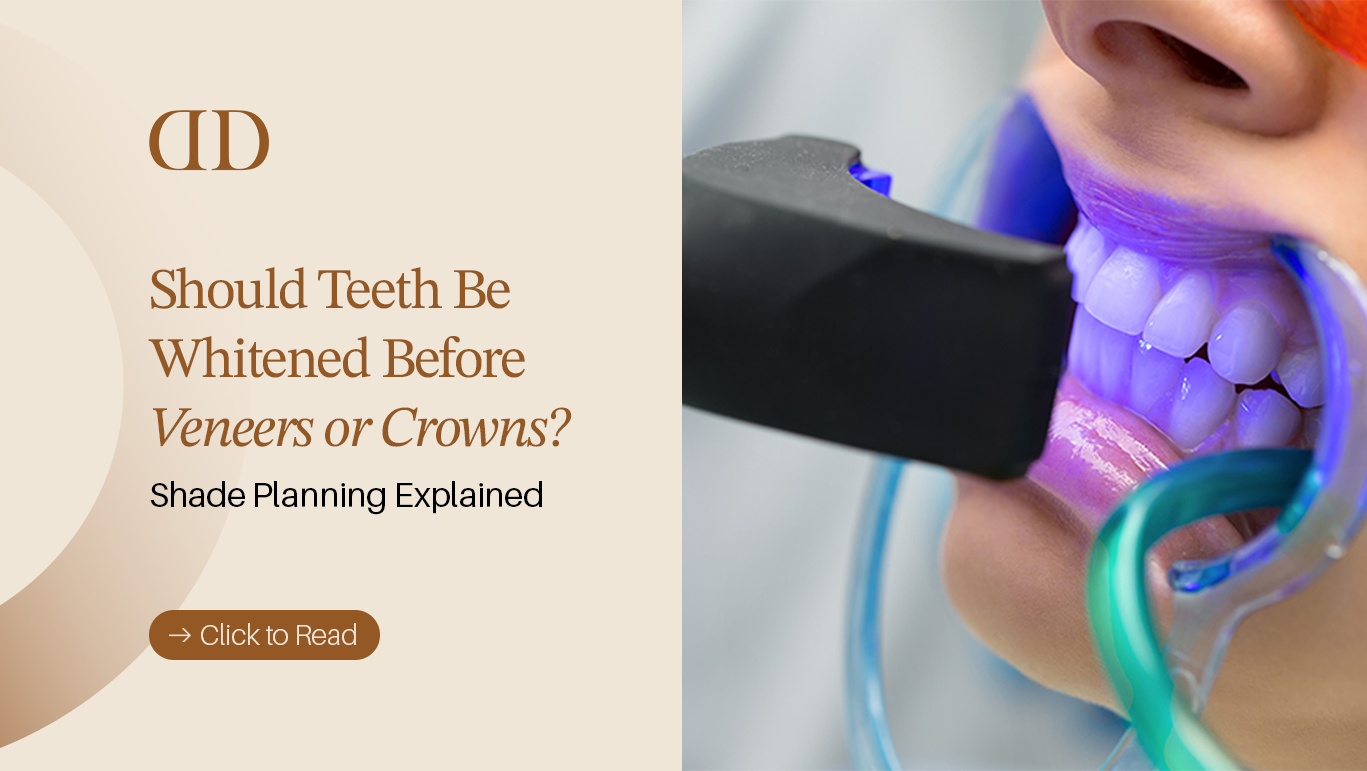

If you are considering veneers or crowns and also want a whiter smile, teeth whitening before veneers or crowns may be considered as part of the overall shade-planning process. The reason is simple: whitening can change the colour of natural teeth, while tooth-coloured restorations generally do not whiten in the same way. Planning the final shade beforehand can therefore help the restoration colour be selected in relation to the natural teeth that will remain visible.
This does not mean that everyone needs to whiten their teeth before getting veneers or crowns. The appropriate sequence depends on the existing tooth shade, the number and position of restorations, the desired result and the overall treatment plan. A dental examination is important before deciding whether whitening should be included.
Should You Whiten Your Teeth Before Veneers?
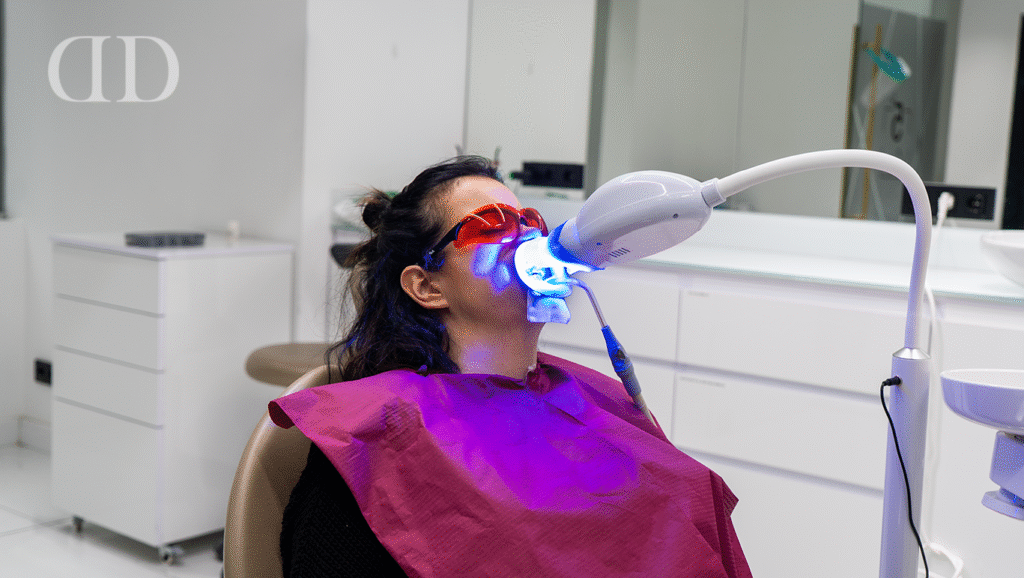
There is no universal rule that says every patient must whiten their teeth before veneers. However, teeth whitening before veneers can be worth considering when natural teeth will remain visible alongside the veneers and their colour will influence the final smile design.
The key issue is not simply how white your teeth should be. It is how the veneer shade will relate to your natural tooth colour after any planned whitening.
For example, imagine that you are having veneers placed on several front teeth while other natural teeth remain visible when you smile. If the natural teeth are whitened before the veneer shade is selected, the final shade can be planned against the updated tooth colour. If whitening is performed later, the natural teeth may become lighter while the veneers remain at their original shade. Tooth-coloured restorations do not respond to bleaching in the same way as natural teeth.
This is why the question “should I whiten my teeth before veneers?” is better approached as a treatment-planning question rather than a simple yes-or-no decision.
When Whitening Before Veneers May Be Considered
Whitening may be discussed before veneer treatment when:
- You want to lighten your natural teeth as part of the overall smile plan.
- Some natural teeth will remain visible next to the veneers.
- You are considering a lighter veneer shade.
- You want the final veneer colour to be planned after determining the desired natural tooth colour.
- You are having multiple cosmetic treatments and want their shades considered together.
The opposite may also be appropriate. If whitening is unlikely to contribute meaningfully to the planned result, or if the treatment involves restorations that will determine most of the visible tooth colour, a different sequence may make more sense.
The important point is that whitening should be considered before the final veneer shade is selected when it is part of the treatment plan. The final decision should be based on an individual assessment rather than a fixed rule.
Premium Dental Care in Turkey
Expert treatments with high-end technology. Get your personalized quote today via WhatsApp.
Why Tooth Whitening Can Affect Veneer Shade Planning
Shade planning is about more than choosing the whitest shade available. A veneer has to be considered in relation to the teeth around it, the colour of the underlying tooth and the visual characteristics of the restoration.
Natural teeth and restorations also behave differently when their colour is changed. According to the American Dental Association, whitening affects natural teeth, whereas tooth-coloured restorations such as crowns do not change colour through bleaching in the same way. This can create a colour difference if natural teeth are whitened after restorations have already been placed.

Want trusted dental advice in your Google AI answers?
Add Darya Dental Turkey as a Preferred Source on Google to make our dental guides easier to find in your search results and AI Overviews.
For that reason, tooth shade, veneer shade and the colour of the remaining natural teeth should be considered together.
Research into porcelain veneers also shows why shade selection can be more complex than simply selecting a shade tab. The final appearance of a veneer can be influenced by factors including the underlying tooth colour and the optical properties of the restoration.
Natural Teeth and Veneers Do Not Respond to Whitening in the Same Way
Natural tooth structure can respond to bleaching, but porcelain and other tooth-coloured restorative materials do not simply become lighter because the surrounding natural teeth have been whitened.
This distinction is particularly important when only some teeth are being restored.
Suppose you have veneers on the upper front teeth and natural teeth beside them. If you later whiten the natural teeth, their colour may become lighter while the existing veneers remain essentially at their established shade. The result may be a more noticeable difference between the restorations and natural teeth. The ADA specifically advises patients with tooth-coloured restorations to be aware of this potential difference.
That is why whitening natural teeth with veneers already in place should be discussed with a dentist rather than treated as an automatic maintenance step.
Why Final Shade Should Be Planned Before Veneer Fabrication
The final shade should be considered before veneer fabrication because the colour selected for the restoration is part of the design process.
If whitening is planned, it can change the reference colour of the natural teeth. Selecting the veneer shade before considering that change may therefore make the planning less predictable.
The process is not simply:
Whiten → choose the whitest veneer → place veneers.
Instead, the treatment plan should consider:
Current tooth colour → planned whitening, if appropriate → desired final tooth shade → veneer shade selection → restoration colour matching.
This approach is particularly relevant when multiple teeth are being treated or when veneers need to blend with natural teeth that remain visible.
Studies of dental restorations have also demonstrated that shade selection is a significant part of achieving an acceptable colour match, while the optical properties and underlying colour of the tooth can affect the final appearance.
For this reason, dental shade selection should take place as part of the broader treatment plan, not as an isolated decision about how white the veneers should look.
The goal is not necessarily the lightest possible shade. It is a shade that is appropriate for the planned restoration and compatible with the surrounding smile.
If whitening is also being considered, the treatment plan can incorporate professional teeth whitening before the restorative shade is finalised, where clinically appropriate.
The sequence of whitening and veneer treatment varies between patients. A dentist should assess the teeth, existing restorations and intended treatment before recommending the appropriate order.
What Happens If You Whiten Your Teeth After Veneers?
If you whiten your natural teeth after veneers have already been placed, the natural teeth may become lighter while the veneers remain at their existing shade. Veneers themselves cannot simply be whitened in the same way as natural teeth. The American Dental Association notes that tooth-coloured restorations are not affected by bleaching in the same way as natural teeth.
This is why can you whiten veneers is an important question for anyone who already has restorations.
Whitening may still be possible for the natural teeth around existing veneers, but the expected result needs to be considered carefully. If those teeth become noticeably lighter than the restorations, the difference in veneer colour can become more apparent.
The same principle applies to crowns. A crown that has already been fabricated does not simply become lighter when the natural teeth around it are bleached.
Can You Whiten Veneers?
No. Conventional tooth whitening is designed to change the colour of natural tooth structure, not to bleach an existing veneer. The same applies to many other tooth-coloured restorations.
This does not mean veneers cannot be professionally cleaned or that their appearance can never be improved. Surface staining and the condition of the restoration can be assessed, but this is different from changing the intrinsic shade of an existing veneer through bleaching.
If an existing veneer is significantly different from the desired colour, the appropriate solution depends on why the colour difference exists and on the condition of the restoration. Simply applying more whitening product is not a reliable way to change the shade of the veneer.
This is also why whitening after veneers should be approached as part of a dental treatment plan rather than as an isolated cosmetic procedure.
Should Teeth Be Whitened Before Crowns?
The same basic shade-planning principle applies to teeth whitening before crowns.
If a crown will be placed next to natural teeth, the colour of those natural teeth can be an important reference when determining the crown shade. If whitening is planned, it may therefore be considered before the final shade of the crown is selected.
However, whether whitening should actually be performed depends on the individual treatment plan. A patient having one crown on a front tooth may have different shade-matching considerations from someone receiving several crowns or a combination of crowns and veneers.
The American Dental Association specifically points out that existing crowns and other tooth-coloured restorations will not change colour through bleaching in the same way as natural teeth. This can create a difference between natural teeth and restorations if whitening is performed after the restoration has been placed.
Whitening Before Crowns: What Matters?
The main considerations include:
- Which teeth will receive crowns?
- Which natural teeth will remain visible?
- Is whitening part of the overall smile plan?
- What is the current natural tooth colour?
- Will the crown need to match neighbouring natural teeth?
- Are veneers, crowns or other restorations being planned at the same time?
The goal is not necessarily to make every tooth as white as possible. Instead, matching crowns to natural teeth requires the final colour to be considered in the context of the teeth surrounding the restoration.
Crowns and Veneers: Why Shade Matching Matters
When a smile includes both crowns and veneers, the restorations should be considered as part of the same aesthetic plan when they are visible together.
A patient may want a single uniform shade, but achieving visual harmony is more complex than simply requesting the same shade for every restoration. The existing natural teeth, the location of each restoration and the characteristics of the restorative material can all affect the final appearance.
For this reason, matching veneers and crowns is best approached as a coordinated shade-planning decision.
| Situation | Shade-planning approach |
| Natural teeth before veneers | Whitening may be considered before the final veneer shade is selected |
| Natural teeth after planned whitening | The veneer shade can be planned in relation to the updated natural tooth colour |
| Existing veneers | Whitening can affect surrounding natural teeth, but not the veneers in the same way |
| Crown with natural teeth | Crown shade should be considered in relation to the visible natural teeth |
| Crowns and veneers together | The restorations should be assessed as part of the overall colour plan |
How Veneer Shade Is Chosen
Veneer shade selection is not simply a choice between “white” and “very white.” The final appearance depends on several factors, including the existing tooth colour, the restoration itself and the surrounding teeth.
The colour underneath a veneer can also influence its final appearance. Research published in the Journal of Prosthetic Dentistry found that the colour of natural dentin can significantly affect the final colour match of porcelain veneers.
This is one reason why dental shade selection should be considered during treatment planning rather than treated as an isolated cosmetic preference.
A systematic approach to shade determination can also improve the consistency of restoration colour matching. Research comparing shade-guide systems found differences in the accuracy of shade selection between systems.
Matching Veneers With Remaining Natural Teeth
When only some teeth receive veneers, the remaining natural teeth become particularly important.
For example, if veneers are placed on the central front teeth while the adjacent teeth remain natural, the veneer shade needs to work visually with those neighbouring teeth. If those natural teeth have already been whitened, the veneer colour matching process should take that updated shade into account.
This is why the timing of whitening matters.
If whitening is planned as part of the smile treatment, it may be preferable to establish the intended natural tooth colour before the final veneer shade is determined. The exact sequence, however, should be decided clinically.
Choosing a Shade for Multiple Veneers
When several veneers are planned, shade selection can be approached differently from a single-tooth restoration.
Multiple veneers can create a more uniform visible area, but the surrounding natural teeth still matter. The desired result may involve a lighter shade, a more natural shade or a shade selected to blend with existing restorations.
The number and position of veneers therefore matter when choosing a veneer shade.
Rather than selecting a shade solely from a generic reference, the dentist needs to consider how the proposed restorations will relate to the patient’s existing teeth and overall smile.
When Whitening Is Part of the Overall Smile Plan
Whitening can be one component of a broader cosmetic treatment plan when a patient wants to change the colour of natural teeth as well as restore or reshape selected teeth.
In that situation, the sequence matters because whitening changes natural tooth colour. Once the desired natural shade has been established, the restorative shade can be considered in relation to it.
However, whitening is not automatically necessary before every veneer case. Some patients may not benefit from it, while others may have existing restorations or tooth conditions that require a different approach.
A dental examination should therefore come before deciding on the sequence of whitening and veneers.
The most important principle is straightforward: shade planning should come before the final restoration is fabricated, particularly when whitening is part of the planned treatment.
The remaining question is what to do if you already have veneers or crowns and are considering whitening now. That situation requires a slightly different approach because the existing restoration will not respond to bleaching like natural tooth structure.
What If You Already Have Veneers or Crowns?
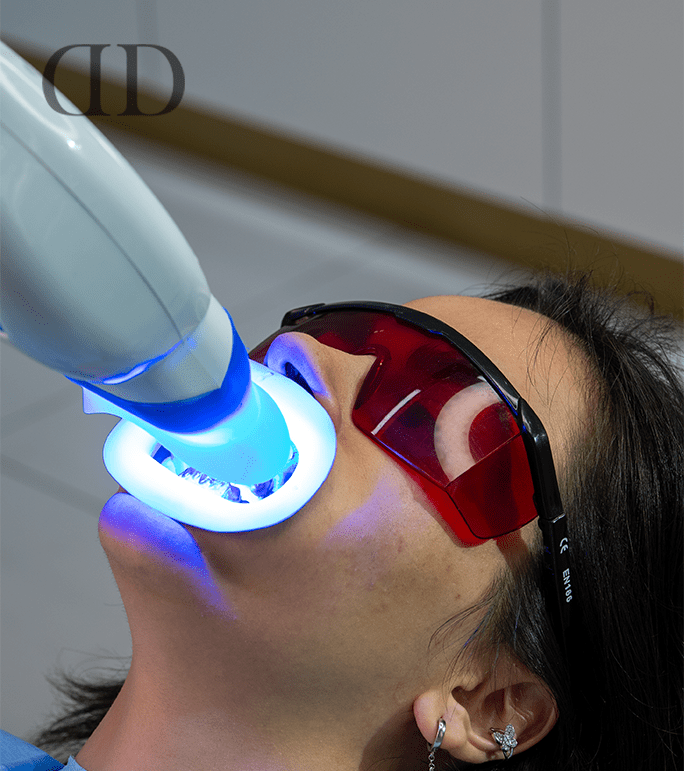
If you already have veneers or crowns and are considering teeth whitening, the first question is whether the teeth you want to whiten are natural teeth or restored teeth.
Natural teeth can respond to whitening, while tooth-coloured restorations do not whiten in the same way. The American Dental Association notes that bleaching affects natural teeth but does not change the colour of existing tooth-coloured restorations, including crowns.
This distinction matters when veneers or crowns are visible next to natural teeth. Whitening the natural teeth may make them lighter without changing the shade of the existing restoration.
If you already have veneers and are unhappy with their colour, whitening is therefore not a simple way to make the veneers themselves lighter. The appropriate approach depends on the condition of the restorations, the surrounding natural teeth and what is causing the perceived colour difference.
Can Existing Veneers Be Whitened?
Existing veneers cannot be bleached like natural teeth. Professional cleaning may help with certain surface deposits or staining, but this is different from changing the underlying shade of the veneer.
If the desired colour is substantially different from the existing veneer shade, a dental professional needs to assess whether the restoration can be maintained, polished or whether another treatment approach should be considered.
The same principle applies to crowns. Whitening the natural teeth around an existing crown can change the contrast between the restoration and the surrounding teeth, but it will not simply change the crown to the new natural tooth shade.
What Happens If You Whiten Natural Teeth Around Existing Restorations?
The outcome depends on the starting colours and the amount of visible natural tooth structure.
For example:
- A natural tooth may become lighter after whitening.
- An existing veneer may remain at its original shade.
- An existing crown may remain at its original shade.
- The difference between natural teeth and restorations may therefore become more noticeable.
This is one reason why existing restorations should be identified before whitening is undertaken. The ADA recommends considering existing tooth-coloured restorations during whitening treatment planning because they will not change colour like natural teeth.
If you are considering both whitening and restorative treatment, the better approach is to plan the two together rather than treating them as completely separate cosmetic procedures.
Veneer Shade Planning at Darya Dental Turkey
Veneer shade planning is an important part of deciding how veneers should relate to the natural teeth that remain visible.
At Darya Dental Turkey in Ataşehir, Istanbul, patients considering veneer treatment can discuss the relationship between their current tooth colour, any planned whitening and the shade of the proposed restorations as part of treatment planning.
The aim is not simply to select the lightest available veneer colour. The more relevant question is how the planned veneer shade will work with the patient’s natural teeth and the overall smile.
For patients considering different veneer options, the treatment plan may also involve reviewing E-Max veneers or laminate veneers depending on the clinical situation.
If whitening is part of the intended treatment plan, professional teeth whitening can be considered in relation to the restorative shade rather than planned independently.
For patients considering treatment in Istanbul, the consultation should establish which teeth are being restored, which natural teeth will remain visible and whether whitening has a meaningful role in the overall plan.
Frequently Asked Questions
Should I whiten my teeth before getting veneers?
Whitening may be considered before veneers when changing the natural tooth colour is part of the overall treatment plan. This can be particularly relevant when natural teeth will remain visible beside the veneers. The final sequence should be determined during dental treatment planning.
Should you whiten your teeth before veneers?
There is no universal requirement to whiten before veneers. If whitening is planned, however, it is generally important to consider its effect on the natural tooth shade before the final veneer colour is selected.
Can you whiten your teeth before veneers?
Yes, natural teeth can be whitened before veneers when whitening is clinically appropriate. The purpose of doing so may be to establish the desired natural tooth colour before the veneer shade is finalised.
Why should teeth be whitened before veneers?
Whitening before veneers may help establish the colour of the natural teeth before the restoration shade is selected. This can be relevant when veneers need to match or complement natural teeth that remain visible.
It is not necessary in every case, and whitening should not be treated as a mandatory step in veneer treatment.
Can you whiten veneers after they are placed?
No, existing veneers cannot be whitened like natural teeth. Whitening products are designed to change natural tooth colour and do not bleach tooth-coloured restorations in the same way.
Can porcelain veneers be whitened?
Porcelain veneers cannot be bleached to a lighter shade in the same way as natural teeth. If the shade of an existing porcelain veneer is no longer suitable, the restoration needs to be assessed separately from the natural teeth.
Should teeth be whitened before crowns?
Whitening may be considered before crowns when the colour of the natural teeth will influence the crown shade. This is especially relevant when the crown will be visible next to natural teeth. Existing crowns, however, will not whiten like natural tooth structure.
How is veneer shade chosen?
Veneer shade is chosen by considering the natural tooth colour, the planned restoration and the surrounding teeth. The underlying tooth colour can also influence the final appearance of a porcelain veneer, particularly when the restoration is relatively translucent.
Shade selection is therefore more than choosing a generic “white” colour. It is part of the overall restoration design.
Can veneers be matched to whitened teeth?
Yes, veneers can be planned to complement the colour of whitened natural teeth. When whitening is part of the treatment plan, the resulting natural tooth colour can be considered when the veneer shade is selected.
The exact approach depends on which teeth are being restored and which natural teeth remain visible.
What happens if I whiten my teeth after getting veneers?
The natural teeth may become lighter while the veneers remain at their existing shade. This can make a colour difference between the restorations and natural teeth more noticeable.
For this reason, patients with existing veneers should discuss whitening with their dentist before starting treatment.
Do veneers change colour after teeth whitening?
Whitening does not simply change the colour of existing veneers. The natural teeth may respond to bleaching while the veneers remain at their established shade.
Can crowns and veneers have the same shade?
Crowns and veneers can be planned to have a coordinated shade, but the final colour needs to be assessed in relation to the natural teeth and the restorations being used. When multiple restorations are visible together, their shades should be considered as part of the same overall colour plan.
How long should I wait after whitening before getting veneers?
There is no single waiting period that applies to every patient. The appropriate timing depends on the individual treatment plan, the whitening approach and when the dentist considers the tooth shade suitable for final restorative shade selection.
A fixed number of days should therefore not be assumed without professional assessment.
Can you change the colour of veneers after they are placed?
The colour of an existing veneer cannot simply be changed through conventional tooth whitening. If the existing shade is unsuitable, the dentist needs to assess the restoration and discuss the appropriate options.
Teeth whitening before veneers or crowns is primarily a shade-planning question, not a mandatory treatment step. When whitening is part of the smile plan, considering it before the final restoration shade is selected can help the planned veneers or crowns relate more appropriately to the natural teeth that remain visible.
The most important distinction is that natural teeth and tooth-coloured restorations do not respond to whitening in the same way. This is why whitening after veneers or crowns can sometimes create a colour difference between natural teeth and existing restorations.
For veneer treatment, the final shade should be considered in relation to the natural tooth colour, the number of teeth being restored and the overall smile plan. Research also shows that underlying tooth colour can influence the final appearance of porcelain veneers, reinforcing the importance of careful shade planning.
If you are considering veneers, crowns and whitening together, a consultation can help determine whether whitening should form part of the treatment sequence and how the final veneer shade selection should be approached.
