
Smart Dental Implants: How Technology is Revolutionizing Tooth Replacement
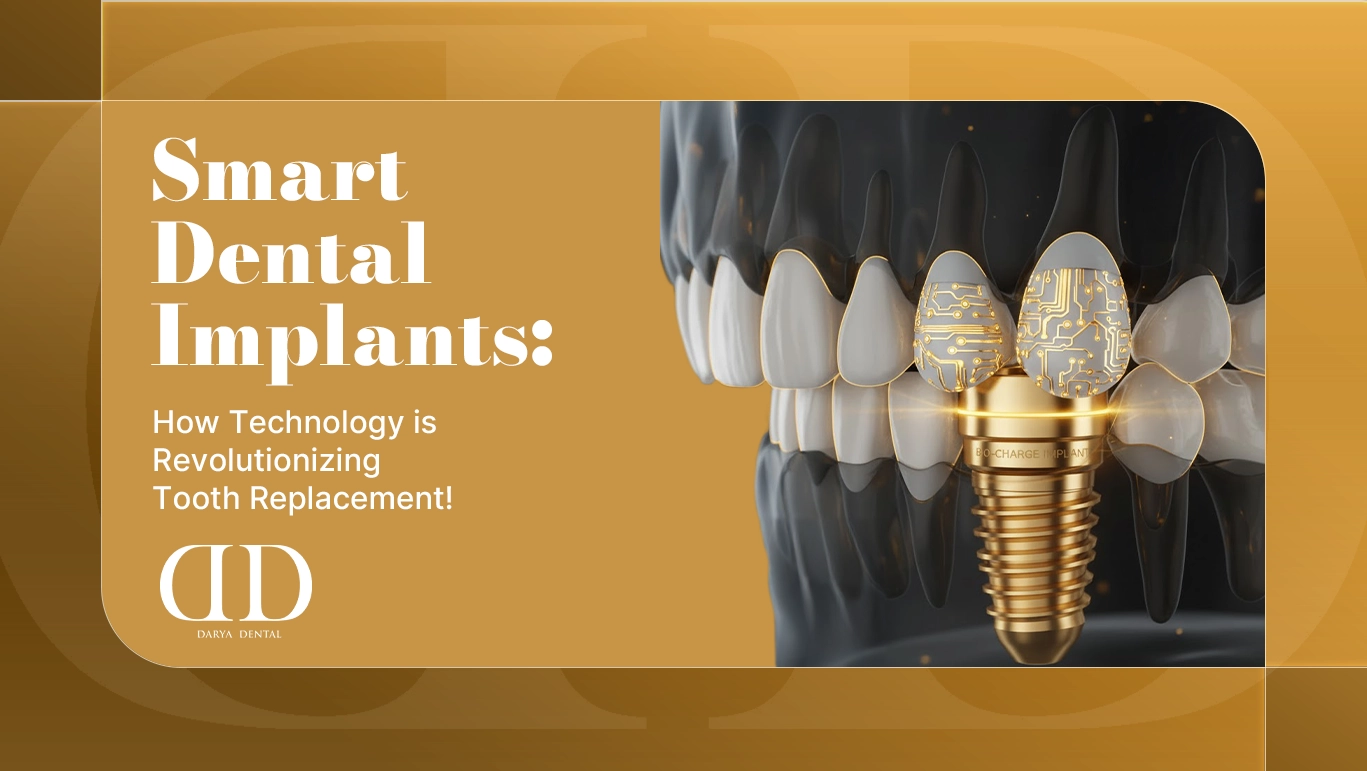

Dental implants have become a well-established way to replace missing teeth, but researchers are now exploring how implant technology could do more than support a replacement tooth. Smart dental implants are an emerging area of dental research that combines implant materials or components with sensing, bioactive, or responsive technologies.
Unlike conventional implants, which primarily provide structural support for a crown, bridge, or denture, emerging smart implant concepts are designed to interact with their surrounding environment or provide additional information about conditions around the implant. Depending on the technology, this may involve monitoring mechanical forces, responding to biological signals, improving tissue integration, or delivering localized therapeutic effects.
It is important to distinguish current dental implants from experimental smart implant technologies. Conventional dental implants are clinically established, while many of the advanced sensing and bioresponsive concepts discussed in this article remain under development or require further clinical validation.
Patients considering implant treatment today can review our dental implant treatment options to understand how established implant treatment works before considering emerging technologies.
What Are Smart Dental Implants?
Smart dental implants are an emerging class of implant technologies designed to provide functions beyond conventional tooth replacement.
Traditional dental implants are generally passive devices. A titanium implant is surgically placed into the jawbone, where it undergoes osseointegration and eventually supports a dental restoration. The implant itself does not normally collect or transmit information about its environment.
Smart dental implants aim to introduce additional functionality through technologies such as sensors, smart biomaterials, bioactive surfaces, piezoelectric materials, or other responsive components.
Depending on the design, researchers are investigating technologies that could potentially:
- Monitor mechanical forces around an implant
- Detect changes in the local biological environment
- Support bone and soft-tissue integration
- Reduce bacterial colonization
- Provide information that may help evaluate implant stability
- Deliver localized therapeutic effects
However, these functions should not be interpreted as standard features available in every smart dental implant. Different research systems use different technologies, and many remain at the experimental or preclinical stage. A 2026 review of smart dental implants describes the field across several levels, including biocompatible, bioactive, bioresponsive, and bioadaptive approaches.
```html
```
Premium Dental Care in Turkey
Expert treatments with high-end technology. Get your personalized quote today via WhatsApp.
How Do Smart Implants Work?
There is no single design for a smart dental implant. The technology depends on the intended function.
Some concepts focus on sensing. Sensors can potentially detect mechanical or environmental changes around an implant and convert them into measurable signals. Other approaches use smart materials that respond to biological or mechanical stimuli.
```html  ```
```
Want trusted dental advice in your Google AI answers?
Add Darya Dental Turkey as a Preferred Source on Google to make our dental guides easier to find in your search results and AI Overviews.
A smart implant system may involve several components:
Sensors and Detection Systems
Researchers are investigating sensors capable of detecting parameters such as mechanical strain, pressure, temperature, or other biological signals.
Mechanical sensing is particularly relevant because excessive or uneven forces can influence implant stability and the surrounding bone. Monitoring these changes could eventually provide clinicians with additional information during implant follow-up.
Smart Materials
Not every smart implant needs an electronic chip.
Some emerging technologies use materials that respond to their environment. These may be designed to promote bone formation, resist bacterial colonization, or respond to specific biological or mechanical stimuli.
This is an important distinction because the term “smart implant” can refer to much more than a traditional implant containing electronics.
Energy and Data Transmission
Electronic sensing systems also face a practical challenge: how to power sensors and transfer information from inside the body.
Researchers have investigated approaches including wireless power transfer, energy harvesting, and piezoelectric materials. One 2026 study reported an experimental dental implant abutment that converts oral motion into electrical energy and uses the resulting effect for antibacterial and cell-adhesion applications. However, this is experimental research rather than a routine clinical treatment.
What Is a Smart Tooth?
The phrase “smart tooth” is sometimes used to describe dental technologies that combine a replacement tooth or dental component with sensing or responsive functions.
In the context of smart dental implants, the concept can include an implant-supported restoration combined with technologies designed to collect information or interact with the surrounding biological environment.
The term should not be confused with a standard dental crown or implant. A conventional implant restoration does not automatically contain sensors, wireless communication systems, or artificial intelligence.
Some smart tooth concepts are also being investigated outside conventional implant dentistry, including sensor-equipped dental components and experimental systems designed to monitor mechanical or biological conditions.
The broader goal is to move from a purely structural replacement toward a dental restoration that can provide additional information or biological functionality.
Smart Implants With Electronic Sensors
One of the most technologically ambitious directions involves integrating electronic sensing into implant systems.
Researchers are investigating miniature components that could detect mechanical forces or changes in the environment around an implant. The resulting information could potentially be processed and used to identify changes that are difficult to detect through routine observation alone.
However, the engineering challenges are substantial.
Any electronic component intended for long-term use in the mouth must withstand:
- Repeated chewing forces
- Moisture and saliva
- Temperature changes
- Bacterial exposure
- Long-term mechanical stress
- Strict biocompatibility requirements
The oral environment is particularly demanding because dental implants are exposed to both mechanical loading and biological factors continuously.
For this reason, integrating electronics into an implant is not simply a matter of placing a miniature computer inside a titanium component. Researchers must also demonstrate durability, safety, reliable signal detection, and long-term compatibility with surrounding tissues.
What Can Smart Dental Implants Monitor?
The monitoring capabilities depend entirely on the specific technology being investigated.
Mechanical Forces
Sensors may be used to investigate how forces are distributed around an implant during biting and chewing.
This could eventually help clinicians understand excessive loading, abnormal force patterns, or changes in mechanical behavior over time.
Implant Stability
Changes in mechanical behavior may potentially provide information related to implant stability and osseointegration.
However, smart implant monitoring should not be presented as a replacement for established clinical assessments. Dentists still rely on clinical examination, imaging, implant stability measurements, and other diagnostic methods when evaluating implant treatment.
Biological Conditions
Researchers are also investigating smart materials and sensing systems that respond to biological conditions around an implant.
Potential targets include inflammation, bacterial activity, tissue integration, and changes in the local environment.
These technologies are particularly interesting because biological complications such as peri-implant inflammation can affect long-term implant outcomes. However, the ability to detect or prevent such complications through smart implant technology remains an area of active research rather than an established clinical standard.
Smart Dental Implants vs Traditional Implants
| Feature | Traditional Dental Implant | Smart Dental Implant Technology |
| Tooth replacement | Established | Yes, depending on system |
| Osseointegration | Required | Required for implant-based systems |
| Sensors | Generally absent | May be incorporated |
| Biological response | Mainly passive | May be designed to respond to the environment |
| Data collection | Limited to clinical assessment | Potentially available in experimental systems |
| Clinical availability | Widely established | Limited and technology-dependent |
| Evidence base | Extensive clinical evidence | Still developing |
| Main purpose | Replace missing teeth | Replace teeth plus additional monitoring or biological functions |
The biggest difference is therefore not that a smart implant replaces a tooth better by definition. Its potential advantage is the additional information or biological functionality that may be incorporated into the implant system.
For patients who need dental implants today, conventional implant treatment remains the established clinical option. Smart implant research is developing alongside it rather than replacing it at the current stage.
Are Smart Dental Implants Safe?
Safety is one of the biggest questions surrounding smart dental implants, particularly when a technology involves sensors, electronics, or responsive materials inside the body.
The answer depends on the specific technology. Conventional dental implants have an established clinical safety record, while newer sensor-equipped and bioresponsive implant concepts require additional clinical evidence before their long-term safety can be assessed with the same confidence.
Any smart implant intended for clinical use would need to satisfy requirements for biocompatibility, mechanical stability, sterilization, and long-term tissue compatibility. Electronic components would also need to remain protected from the oral environment.
The fact that a technology is described as “smart” does not make it inherently safer or more dangerous. Its safety has to be evaluated according to the materials, design, intended use, clinical evidence, and regulatory status of the specific system.
What Are the Risks of Smart Dental Implants?
Smart dental implant technology introduces some considerations that are less relevant to conventional implants.
Electronic or sensor failure: A sensor may stop functioning or produce inaccurate information. If the implant itself remains structurally sound, a monitoring failure would not necessarily mean failure of the tooth replacement.
Mechanical durability: Components must tolerate repeated chewing forces without compromising the structural integrity of the implant or restoration.
Biocompatibility: Any material or electronic component placed in the body must be compatible with surrounding tissues.
Data and connectivity: If a system collects and transmits health information, privacy, data security, and compatibility with clinical software also become relevant considerations.
Long-term evidence: This is perhaps the most important limitation. Many advanced smart implant technologies are relatively new, so long-term human data are more limited than for conventional dental implants.
These factors do not mean smart implants are unsafe. They mean that emerging technologies require appropriate testing and clinical validation before their benefits and risks can be compared with established implant treatment.
Are Smart Dental Implants Available Today?
This is where the distinction between research and routine dental treatment becomes particularly important.
Conventional dental implants are widely used in clinical dentistry. Fully integrated smart dental implants with advanced sensing, communication, or bioresponsive functions are a much more limited and developing field.
Research groups have demonstrated prototypes and experimental systems capable of sensing mechanical forces, generating electrical signals, modifying surfaces, or interacting with the biological environment. However, the existence of a successful laboratory prototype does not mean that the same technology is commercially available as a routine dental treatment.
A 2026 review of smart dental implants highlights the potential of these technologies while also identifying challenges involving clinical translation, standardization, long-term validation, and integration into everyday dental practice. (sciencedirect.com)
For patients who need an implant now, there is therefore no general reason to delay established treatment simply because smart implant research is progressing.
Are Smart Implants Better Than Traditional Dental Implants?
Not necessarily.
Smart dental implants may eventually offer additional information or biological functions that conventional implants do not provide. However, “more technology” does not automatically mean “better treatment.”
Traditional implants have the advantage of extensive clinical experience and established treatment protocols. Smart implants may eventually provide advantages in monitoring and personalized care, but those benefits need to be demonstrated in well-designed clinical studies.
The more useful comparison is therefore:
Traditional implants are an established treatment. Smart implants are an emerging technology intended to add new capabilities to implant treatment.
Which approach is appropriate depends on the patient’s clinical situation, the available technology, the quality of evidence, and the treating dental team’s assessment.
Potential Benefits of Smart Dental Implants
Although many applications remain under investigation, smart dental implants could provide several potential benefits.
Earlier Detection of Changes
If reliable sensors can identify changes in mechanical loading or the surrounding biological environment, clinicians may eventually be able to identify concerning trends before they become clinically obvious.
This could be particularly useful during implant healing or in patients who require closer monitoring.
More Personalized Follow-Up
Implant maintenance is not identical for every patient. Information about loading patterns or changes around an implant could potentially help dentists tailor follow-up intervals and maintenance strategies.
However, this should complement rather than replace clinical examinations and imaging.
Better Understanding of Implant Performance
Smart systems could also provide researchers with data about how implants behave under real-world conditions. Over time, such information may help improve implant design, restorative planning, and maintenance protocols.
Potential Bioactive Functions
Not all smart implants rely on electronic monitoring. Some emerging approaches focus on materials that can actively interact with surrounding tissue.
Researchers are investigating implant surfaces and materials designed to encourage bone formation, reduce bacterial adhesion, or respond to biological conditions. These approaches could eventually contribute to improved integration and reduced complications, but their clinical effectiveness needs to be demonstrated for specific technologies.
How Much Do Smart Dental Implants Cost?
There is currently no reliable universal price for a “smart dental implant.”
The original article’s projected price of $5,000 to $10,000+ per tooth should not be presented as an established market price because many of the technologies discussed are not commercially standardized products.
The same applies to the original estimates for subscriptions, battery replacement, reader devices, and insurance coverage. Those figures were projections rather than established prices and should therefore be removed.
For a conventional dental implant, total treatment cost may include the implant, abutment, crown, surgery, diagnostic imaging, and additional procedures when required. Smart implant technologies could involve additional costs if they eventually become commercially available, but these will depend on the specific system and its regulatory and clinical status.
For this reason, patients should not use an estimated smart implant price to compare treatment options today.
Who Could Benefit From Smart Dental Implant Technology?
Smart implant technology could eventually be particularly useful in situations where additional monitoring provides meaningful clinical information.
Potential applications include:
- Patients requiring close implant monitoring
- Complex or multiple-implant restorations
- Research participants
- Patients with specific risk factors requiring individualized follow-up
- Clinical situations where mechanical loading or biological changes are particularly important
However, the original article’s claim that smart implants are specifically suitable for people with diabetes, osteoporosis, previous implant failure, or other conditions should not be interpreted as an established treatment recommendation. These patients may require more careful implant assessment, but that does not mean a smart implant is currently indicated for them.
Likewise, athletes, performers, technology enthusiasts, and anxious patients should not be presented as clinical indications. These groups may find the concept interesting, but interest is different from medical necessity.
What Could the Future of Smart Dental Implants Look Like?
The future potential of smart dental implants extends beyond simply collecting data.
Researchers are exploring ways to combine implant materials, sensing technologies, bioactive surfaces, and digital systems. In the longer term, this could allow implant treatment to become more responsive to changes in the surrounding environment.
Potential developments include:
More Advanced Monitoring
Future systems may provide more detailed information about mechanical loading, implant stability, or biological changes.
AI-Assisted Data Analysis
Artificial intelligence could eventually help interpret large amounts of implant data and identify patterns that are difficult to detect manually.
However, AI should be viewed as a potential decision-support technology rather than a replacement for clinical judgment.
Responsive Implant Materials
Some research focuses on implants that respond to changes in their environment by releasing therapeutic substances or altering their surface properties.
Integration With Digital Dentistry
Smart implant data could eventually be combined with digital imaging, treatment-planning software, and other clinical information.
These possibilities are promising, but they should be described as areas of development rather than guaranteed future features.
Should You Wait for Smart Dental Implants?
For most patients who currently need tooth replacement, waiting for an experimental technology is not automatically the better choice.
Traditional dental implants are an established treatment with decades of clinical experience. If a patient is clinically suitable for implant treatment, the decision should be based on current dental needs rather than an assumption that a future smart implant will necessarily provide a better result.
Waiting may be reasonable only when a patient has a specific reason to delay treatment and understands the potential benefits and uncertainties. That decision should be discussed with a dental professional.
The original article’s recommendation to wait one or two years for smart implants should therefore be removed. There is no reliable universal timeline for when advanced smart implant systems will become widely available.
Frequently Asked Questions
What are smart dental implants?
Smart dental implants are emerging implant technologies designed to provide functions beyond conventional tooth replacement, such as sensing, monitoring, or biological interaction.
How do smart dental implants work?
Depending on the design, smart implants may use sensors, smart materials, or responsive technologies to detect mechanical or biological changes around the implant.
Can smart dental implants detect infection?
Some research is investigating technologies that may detect biological changes associated with inflammation or bacterial activity. However, smart implants should not currently be described as a guaranteed method for detecting peri-implant infection before symptoms appear.
Are smart dental implants available now?
Advanced smart implant technologies are still developing. Conventional dental implants are widely available, while many sensor-equipped or bioresponsive systems remain in research or limited development stages.
Are smart dental implants better than traditional implants?
Not necessarily. Traditional implants have extensive clinical evidence, while smart implants are being developed to add monitoring or biological functions. More technology does not automatically mean a better clinical outcome.
How much do smart dental implants cost?
There is no standardized market price for smart dental implants because many advanced systems remain experimental or are not widely commercialized.
Can smart implants replace regular dental checkups?
No. Even if smart implant monitoring becomes clinically available, it would be expected to complement professional examinations rather than replace them.
Smart dental implants represent an important direction in dental research, particularly because they could combine tooth replacement with sensing, monitoring, and responsive biological functions.
The technology, however, should not be confused with conventional dental implants that are already established in clinical practice. Many of the most advanced smart implant concepts remain under development, and their long-term safety, effectiveness, cost, and practical clinical value require further evidence.
For patients considering implant treatment today, established dental implants remain the appropriate basis for clinical decision-making. Smart implant technology is worth watching, but it should not be presented as a universally available replacement for current implant treatment.
Patients considering dental implants at Darya Dental Turkey can discuss their current treatment options and determine which established implant approach is appropriate for their individual oral health, anatomy, and restorative needs.
