
Sinus Lift And Bone Graft Before Dental Implants
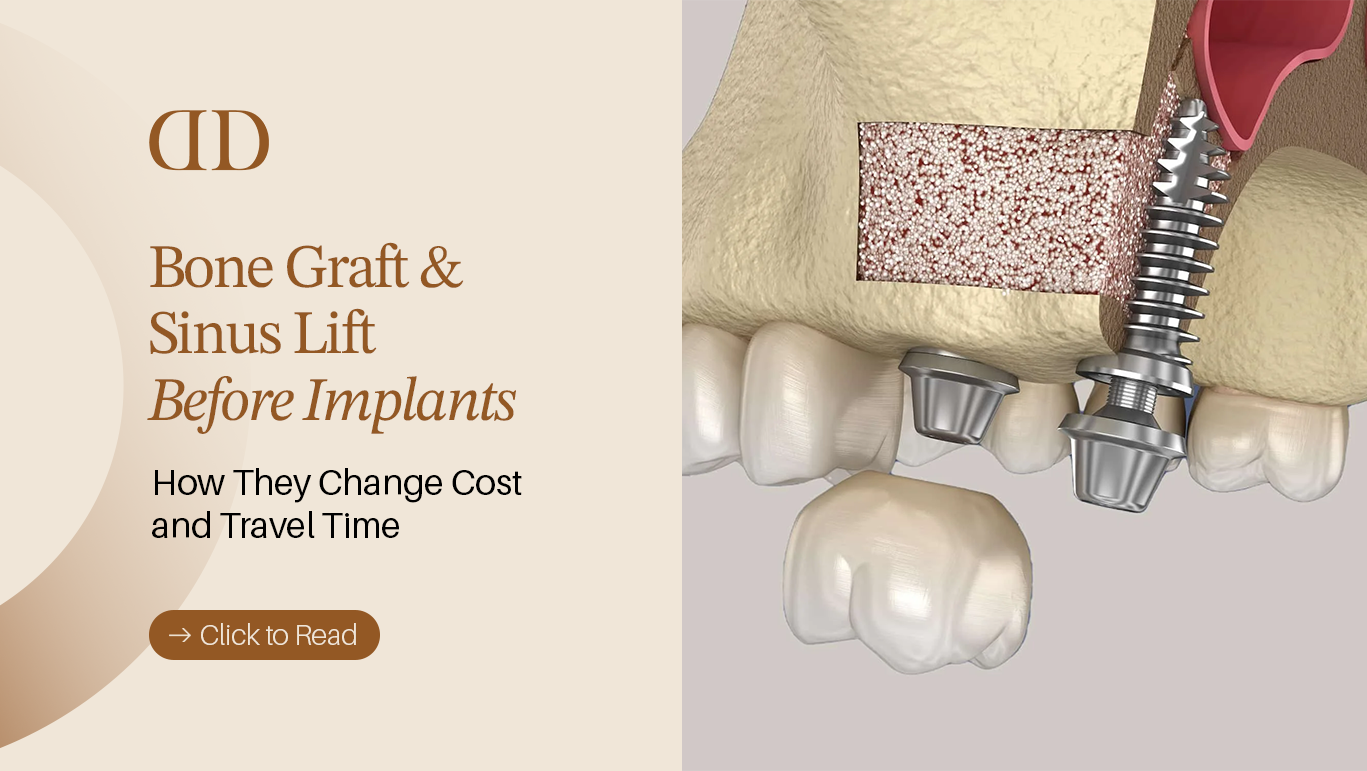

When planning for dental restorations, encountering insufficient bone volume in the upper jaw can seem like a major obstacle. For dental implants to achieve long-term stability and integration, they require a solid foundation of healthy jawbone. A sinus lift and bone graft procedure provides the necessary structural support when the upper jaw lacks adequate height or density, ensuring that subsequent implant placement is safe, stable, and predictable.
At Darya Dental Clinic, advanced diagnostic tools such as 3D CBCT (Cone Beam Computed Tomography) imaging are utilized to precisely assess bone height, sinus anatomy, and bone quality. This enables the creation of fully customized treatment plans tailored to each patient’s unique anatomical requirements.
Why Bone Volume Matters For Dental Implants
Dental implants function similarly to natural tooth roots. Once inserted into the jawbone, they undergo a biological process called osseointegration, where the surrounding bone fuses directly with the implant surface. This integration provides the mechanical strength needed to support chewing forces and maintain long-term oral health.
When the available bone is thin, soft, or compromised:
- The implant lacks primary stability during placement.
- Forces from chewing can lead to micromovements, preventing proper fusion.
- In the upper back jaw (posterior maxilla), placing an implant without adequate bone risks penetrating the natural sinus membrane.
Ensuring proper bone height and density before or during implant placement is critical for the structural longevity of the restoration.
When Sinus Lift And Bone Graft May Be Needed
A combination of a sinus augmentation and bone grafting is typically indicated in specific clinical situations involving the upper arch:
- Long-Term Tooth Loss: When posterior upper teeth (molars or premolars) have been missing for extended periods, the surrounding jawbone naturally resorbs due to a lack of functional stimulation.
- Pneumatization of the Maxillary Sinus: As bone resorbs, the maxillary sinus cavity expands downward into the space previously occupied by tooth roots, leaving only a paper-thin layer of bone.
- Periodontal Disease: Advanced gum infections can destroy the supporting jawbone structure around upper teeth.
- Anatomical Variations: Some individuals naturally possess larger sinus cavities or thinner maxillary bone structures.
Determining the need for these procedures relies on comprehensive 3D imaging to evaluate bone height relative to the sinus floor.
What Is A Sinus Lift And Bone Graft?
Understanding these procedures involves recognizing how bone augmentation techniques restore lost tissue volume in the upper jaw.
What Is A Sinus Lift?
A sinus lift also known as a sinus augmentation or maxillary sinus elevation is a specialized surgical procedure designed to increase the amount of vertical bone in the upper posterior jaw. The surgeon carefully accesses the maxillary sinus cavity, gently lifts the thin sinus membrane upward, and creates a secure space beneath it for new bone material.
Premium Dental Care in Turkey
Expert treatments with high-end technology. Get your personalized quote today via WhatsApp.
What Is A Dental Bone Graft?
A dental bone graft is a procedure that places natural or synthetic bone material into areas with insufficient bone density or volume. Over time, the body uses this graft as a scaffold, replacing it with natural bone tissue through bone regeneration.
Is Sinus Lift And Bone Graft The Same Thing?
No, they are not the same thing, though they are frequently performed together during upper jaw reconstruction.

Want trusted dental advice in your Google AI answers?
Add Darya Dental Turkey as a Preferred Source on Google to make our dental guides easier to find in your search results and AI Overviews.
- Sinus Lift: Refers specifically to the surgical lifting of the maxillary sinus membrane to create space.
- Bone Graft: Refers to the physical material placed into that newly created space (or other deficient areas of the jaw) to build up volume.
| Feature | Sinus Lift | Dental Bone Graft |
| Primary Purpose | Elevate the sinus floor to gain vertical height | Increase bone volume, width, or density |
| Primary Location | Upper posterior jaw (maxillary sinus region) | Any area of the upper or lower jawbone |
| Sinus Involvement | Direct elevation of the sinus membrane | Not always involving the sinus cavity |
| Implant Relation | Prepares the upper jaw specifically for implants | Prepares extraction sockets, ridges, or sinus sites |
Why Are Sinus Lift And Bone Graft Used Before Dental Implants?
Placing an implant directly into an area with insufficient bone height or near an un-lifted sinus membrane carries significant risks, including implant failure, chronic sinusitis, or instability.
Insufficient Bone In The Upper Jaw
The upper back jaw is naturally one of the most challenging areas for dental implant placement due to its lighter, more porous bone quality compared to the lower jaw.
Bone Loss After Tooth Loss
When a natural tooth is extracted or lost, the alveolar bone that once held the root begins to resorb. Within the first year following tooth loss, a significant percentage of bone width and height can be lost if preventive steps are not taken.
Sinus Position And Available Bone Height
The maxillary sinuses reside just above the upper back teeth. When teeth are missing, the sinus floor gradually drops lower into the jaw space. A sinus lift reverses this by pushing the floor back up, providing the necessary depth for an implant anchor.
How Bone Grafting Supports Implant Placement
The bone graft material acts as a biological framework. Over a period of several months, your body deposits new cells into this framework, transforming it into solid, living bone that can firmly hold a dental implant fixture.
Sinus Lift And Bone Graft Procedure
The surgical journey involves precise steps designed to maximize comfort, accuracy, and predictability.
Initial Consultation And CBCT Scan
Every treatment begins with a thorough clinical examination and high-resolution 3D CBCT imaging. This diagnostic step allows the surgical team to measure exact bone dimensions, evaluate sinus health, and locate key anatomical landmarks before any procedure begins.
Treatment Planning
Using 3D digital assessments, a personalized surgical plan is established. Factors such as the required graft volume, material selection, and whether implants can be placed simultaneously or in a separate stage are carefully calculated.
Sinus Membrane Elevation
Under local anesthesia (or sedation options), a small incision is made in the gum tissue to access the underlying bone. A precise window is created in the outer bone wall, exposing the sinus membrane. Using specialized micro-instruments, the delicate membrane is elevated upward without perforation.
Bone Graft Placement
Once the membrane is lifted, the selected bone graft material is carefully packed into the newly created space beneath the membrane. A protective collagen membrane is often placed over the window to support proper healing.
Healing And Bone Regeneration
The surgical site is closed with fine sutures. Over the following months, vascularization occurs, and the graft material integrates seamlessly with your natural jawbone structure.
Bone Graft And Sinus Lift Recovery
The recovery period following a sinus lift and dental bone grafting procedure is a crucial phase of your treatment journey. Proper post-operative care ensures smooth soft-tissue healing, minimizes discomfort, and establishes an optimal environment for bone integration and eventual dental implant placement.
How Long Does Sinus Lift And Bone Graft Recovery Take?
Initial soft tissue healing typically occurs within 7 to 14 days, during which surgical sutures are either absorbed or removed by your dentist. However, complete osseous healing where the graft material integrates fully with your existing jawbone takes between 4 to 9 months.
The precise timeline varies based on several clinical factors:
- The volume of bone graft material placed.
- Individual biological healing and regenerative rates.
- The specific grafting technique utilized.
- Systemic health factors, such as blood circulation and non-smoking status.
Pain After Sinus Lift And Bone Graft
Most patients report mild-to-moderate discomfort rather than severe pain. Surgical pain is usually most noticeable during the first 48 to 72 hours post-procedure and is effectively managed with prescribed or over-the-counter pain relievers and anti-inflammatory medications.
Swelling And Other Common Symptoms
Post-operative symptoms are a natural part of the body’s inflammatory response and generally peak within 48 hours before gradually subsiding:
- Swelling: Mild to moderate facial swelling near the cheek or upper jaw area.
- Bruising: Light discoloration along the cheek or beneath the eye.
- Minor Bleeding: Slight oozing from the surgical site or minor nasal bleeding during the first 24 to 48 hours.
- Nasal Congestion: A feeling of fullness in the sinuses due to localized inflammation.
When Can You Return To Normal Activities?
Most patients can resume light daily activities and return to non-strenuous work within 2 to 3 days post-surgery. Strenuous physical exercise, heavy lifting, or vigorous bending should be avoided for at least 7 to 10 days, as elevated blood pressure can cause bleeding at the surgical site or disrupt the healing bone graft.
When Can You Fly After Treatment?
For international patients traveling to Istanbul, air travel timing requires careful planning. Changes in cabin pressure can exert pressure on the delicate sinus membrane.
Clinical Recommendation: Patients are generally advised to wait at least 7 to 10 days after a sinus lift before flying. Your clinical team will evaluate your healing progress during a follow-up appointment before clearing you for return flight travel.

When Can Dental Implants Be Placed After A Sinus Lift And Bone Graft?
The timing of implant placement depends on the initial stability of your existing bone structure and the overall volume of bone required.
Simultaneous Implant Placement
If there is sufficient existing vertical bone (typically at least 4 to 5 millimeters) to provide primary mechanical stability for the implant fixture, the sinus lift, bone graft, and implant insertion can often be completed in a single surgical session.
Delayed Implant Placement
When vertical bone height is severely compromised (less than 4 millimeters), a staged approach is safest. The sinus lift and bone graft are performed first, followed by a healing period of 4 to 9 months. Once the graft has fully mineralized into solid bone, the dental implant is placed in a secondary, minor procedure.
How Bone Healing Affects The Implant Timeline
A successful implant relies entirely on complete bone maturation. Placing loading forces on an implant inserted into immature or un-integrated graft material significantly increases the risk of implant mobility or failure. Thorough diagnostic imaging confirms adequate bone density before moving forward to the final restoration stage.
Sinus Lift And Bone Graft Cost
Understanding the cost factors associated with sinus augmentation and bone grafting helps patients budget accurately for their complete dental implant treatment.
How Much Does A Sinus Lift And Bone Graft Cost?
The overall cost of a sinus lift and bone graft varies significantly based on individual anatomical requirements and surgical complexity. While costs in Western Europe or North America can be substantial, receiving care in Istanbul, Turkey offers high-quality oral surgery using international-standard materials at considerably more competitive pricing.
What Affects The Cost Of Bone Graft And Sinus Lift?
Several key elements influence the overall price of the procedure:
- Type of Sinus Lift: Direct (lateral window) sinus lifts are more complex and require more graft material than indirect (closed) sinus lifts, reflecting in the overall cost.
- Volume and Type of Graft Material: The total quantity of bone material needed and whether autograft, allograft, xenograft, or synthetic material is used.
- Diagnostic Imaging: Advanced 3D CBCT scans required for pre-operative planning and post-operative assessment.
- Surgical Complexity: Additional procedures, such as protective collagen membranes or specialized growth factor applications (PRF/PRP).
- Anesthesia Options: Local anesthesia versus conscious sedation arrangements.
Does Bone Grafting Increase The Total Implant Treatment Cost?
Yes, bone grafting and sinus elevation are separate surgical procedures from the implant placement itself. They require specialized materials, extended surgical time, and advanced surgical expertise. However, investing in a stable bone foundation prevents premature implant failure and guarantees long-term success.
How Sinus Lift And Bone Graft Affect Your Treatment And Travel Time
Planning a dental trip for complex restorative care involves coordinating both surgical timelines and travel logistics.
| Treatment Phase | Recommended Duration in Turkey | Primary Focus |
| Visit 1: Initial Surgery | 7 – 10 Days | CBCT Consultation, Sinus Lift, Bone Graft (± Implant), Post-op Check |
| Healing Period (Home) | 4 – 9 Months | Natural Bone Regeneration & Osseointegration |
| Visit 2: Final Restoration | 5 – 7 Days | Abutment Placement, Impressions, Final Crown/Bridge Fitting |
How Many Days Should You Stay In Istanbul?
For the initial surgical phase involving a sinus lift and bone graft, we recommend planning a stay of 7 to 10 days in Istanbul. This allows sufficient time for:
- Pre-operative CBCT imaging and clinical assessment.
- The surgical procedure itself.
- Post-operative observation, swelling reduction, and suture check/removal before flying home.
Can Sinus Lift And Implant Treatment Be Combined?
Yes, when clinical conditions allow. If your residual bone allows for simultaneous implant placement, both the bone graft and implant hardware are placed in the first visit. If a staged approach is required, your treatment will be divided across two separate visits to Istanbul.
Planning A Dental Trip To Turkey
Our international patient coordination team assists patients through every stage of their travel planning. From evaluating initial X-rays remotely to scheduling airport transfers, clinic visits, and accommodations in Istanbul, the process is structured to provide a stress-free experience.
What To Expect After Sinus Lift And Bone Graft
Proper post-surgical self-care directly influences the healing process and guarantees the long-term success of your bone graft and sinus augmentation. Following these clinical guidelines minimizes complications and promotes smooth tissue regeneration.
Eating And Drinking After Surgery
- First 24 Hours: Stick exclusively to soft, cool, or room-temperature foods (such as yogurt, smooth soups, smoothies, or pudding). Avoid hot liquids, which can increase blood circulation to the surgical site and trigger bleeding.
- Chewing Location: Chew strictly on the opposite side of your mouth to prevent mechanical disruption or food impaction around the graft site.
- Strict Prohibitions: Never use a straw. The suction force created in your mouth can dislodge the blood clot, expose the graft material, or delay healing.
Oral Hygiene During Recovery
- Day 1 Care: Avoid aggressive rinsing, spitting, or touching the surgical area with your tongue or fingers.
- Rinsing Protocol: Starting 24 hours after surgery, gently rinse with a prescribed chlorhexidine mouthwash or warm salt water 2 to 3 times daily, especially after meals.
- Brushing Technique: Gently brush your remaining teeth, but completely avoid touching the surgical site or sutures with your toothbrush bristles for the first week.
Physical Activity And Exercise
Rest is essential for initial recovery. Avoid strenuous physical activity, high-impact workouts, heavy lifting, or bending over for at least 7 to 10 days post-surgery. Increased heart rate and blood pressure can lead to localized throbbing, renewed bleeding, or disruption of the elevating sinus membrane.
Follow-Up Appointments
Follow-up evaluations are critical for monitoring soft-tissue closure, assessing suture line integrity, and detecting early signs of infection. For international patients receiving care at Darya Dental Clinic, a final clinical examination and suture check are conducted prior to departure from Istanbul.
Possible Risks And Complications
While sinus lift and bone grafting procedures boast success rates exceeding 95%, understanding potential risks ensures early detection and prompt clinical intervention if needed.
Sinus Membrane Perforation
The Schneiderian membrane lining the sinus cavity is delicate. In some cases, a small tear or perforation may occur during elevation.
- Management: If a small tear occurs, the oral surgeon immediately repairs it using a biocompatible collagen membrane before placing the graft material. If a significant tear occurs, the surgeon may pause the procedure to allow the membrane to heal for a few months before re-attempting.
Swelling And Bleeding
Minor swelling and localized blood-tinged saliva or slight nasal oozing are completely normal during the first 48 hours. However, continuous, heavy bleeding or excessive facial swelling after 3 to 4 days requires professional clinical evaluation.
Infection
Although post-operative infections are uncommon when preventative antibiotics are taken as directed, signs of localized infection include:
- Persistent or worsening pain after day 4.
- Increasing facial swelling or throbbing sensations.
- Unpleasant taste or persistent drainage around the graft site.
- Fever or general malaise.
When To Contact Your Dentist
You should contact your dental team immediately if you experience persistent severe pain unresponsive to medication, fever, significant graft material displacement through the nose or mouth, or persistent bleeding beyond 48 hours.
Why Choose Darya Dental For Bone Graft And Sinus Lift In Istanbul?
Undergoing advanced oral surgery in a foreign country requires complete confidence in your clinical team’s expertise, technology, and patient care standards. At Darya Dental Clinic, we prioritize surgical precision, patient comfort, and long-term treatment predictability.
Digital Treatment Planning
Every surgical procedure is planned digitally using low-radiation 3D CBCT imaging. This high-definition technology provides three-dimensional views of bone height, density, and sinus architecture, completely eliminating guesswork from the surgical plan.
CBCT-Based Assessment
Our oral surgeons analyze your jaw structure down to the millimeter. This allows us to select the exact graft material, calculate the ideal graft volume, and determine whether simultaneous or delayed dental implant treatment offers the highest success rate for your specific anatomy.
Personalized Implant Planning
We believe that no two smiles are identical. Whether you suffer from severe upper jaw bone loss or require localized sinus augmentation following an extraction, your treatment plan is fully tailored to restore both facial aesthetics and full chewing functionality.
International Patient Coordination
Navigating dental care abroad is made seamless with our dedicated multilingual patient coordinators. From managing pre-arrival 3D X-ray reviews to arranging private airport transfers, local accommodations, and post-treatment follow-ups, Darya Dental Clinic ensures your dental journey in Istanbul is comfortable and transparent.
Sinus Lift And Bone Graft In Ataşehir, Istanbul
Located in the modern, accessible district of Ataşehir, Istanbul, Darya Dental Clinic provides an ideal environment for advanced oral surgeries and comprehensive smile restorations. Patients visiting our clinic benefit from state-of-the-art facilities located close to major transport hubs, boutique hotels, and cultural landmarks.
Sinus Lift Near Ümraniye
For patients staying in or traveling from Ümraniye and surrounding areas, our modern Ataşehir facility is conveniently situated just minutes away. This proximity offers quick travel times for pre-surgical consultations, 3D imaging, surgical procedures, and follow-up care during your stay in Istanbul.
Frequently Asked Questions
Is Sinus Lift And Bone Graft The Same Thing?
No. A sinus lift specifically raises the floor of the maxillary sinus membrane to gain vertical bone height, while a bone graft provides the actual tissue framework to build up volume in deficient areas.
Do I Need A Bone Graft Before Dental Implants?
A bone graft is necessary if your natural jawbone lacks the height, width, or density required to securely anchor a dental implant and support long-term chewing forces.
How Much Does A Sinus Lift And Bone Graft Cost?
Costs vary based on surgical complexity, required graft volume, and whether the procedure is staged or combined with implant placement. Getting treatment in Turkey offers significant savings compared to Western nations while maintaining international clinical standards.
How Long Does Sinus Lift And Bone Graft Recovery Take?
Soft tissue healing generally takes 7 to 14 days, while full bone regeneration and integration require between 4 to 9 months before placing or loading dental implants.
Is Sinus Lift And Bone Graft Painful?
The procedure is performed entirely under local anesthesia or sedation, making it pain-free. Mild post-operative discomfort and swelling over the following 3 to 5 days can be easily managed with prescribed medications.
When Can Dental Implants Be Placed After A Sinus Lift?
If residual bone provides sufficient primary stability (at least 4 to 5 mm), implants can be placed simultaneously during the sinus lift. Otherwise, implants are placed after a 4 to 9 month bone integration phase.
Can I Fly After Sinus Lift And Bone Graft Surgery?
It is strongly recommended to wait at least 7 to 10 days before flying. Air pressure changes in airplane cabins can place unnecessary stress on the healing sinus membrane.
Does A Sinus Lift Increase The Cost Of Dental Implants?
Yes, a sinus lift is an additional surgical procedure requiring specialized materials and expertise. However, it ensures the structural foundation necessary for your implants to last a lifetime.
Rebuild Your Smile With Confidence
Insufficient jawbone height does not mean you have to give up on getting permanent, natural-looking dental implants. A sinus lift and bone graft procedure offers a proven, predictable pathway to restoring lost bone tissue and creating a secure foundation for your new smile.
Contact the international care team at Darya Dental Clinic today to submit your 3D CBCT scans for a complimentary remote consultation and take the first step toward your personalized treatment plan in Istanbul.
