
Root Canal and Crown in Turkey: Can Both Be Completed in One Trip?
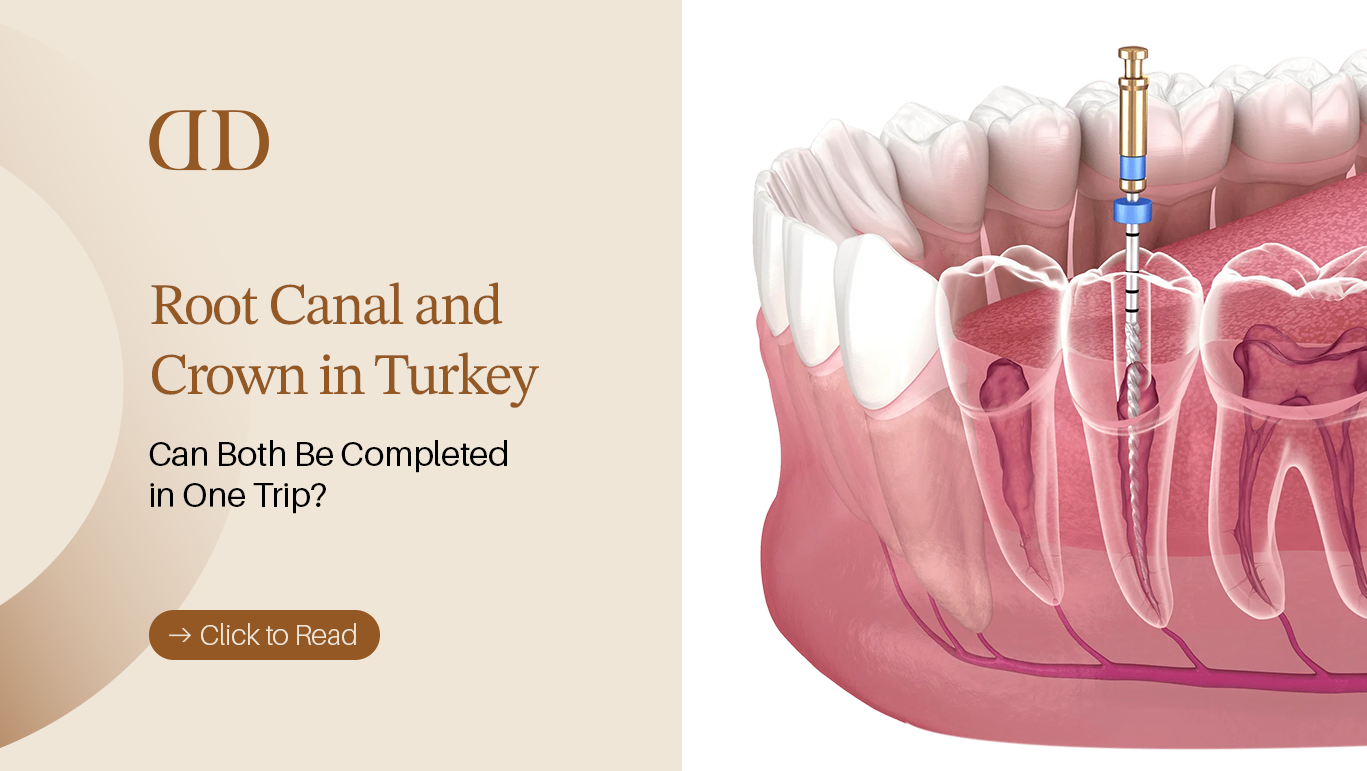

Patients traveling for dental care often wonder if completing a root canal and a crown in a single trip to Turkey is achievable. In most standard clinical cases, completing both procedures during one visit is feasible with proper pre-travel planning, efficient laboratory coordination, and appropriate healing windows between clinical steps.
A combined treatment plan involves removing infected tissue from the tooth’s canal, sealing the root structure, preparing the remaining tooth, and fitting a custom protective crown. While many international patients finish their care within a 5-to-7-day window, individual biological factors such as severe infection, complex canal structures, or necessary bone recovery can sometimes dictate a phased, two-trip approach.
Can Root Canal and Crown Be Completed in One Trip to Turkey?
Completing both a root canal and a dental crown in one trip to Turkey is a standard protocol for international dental clinics equipped with modern imaging and local laboratory partnerships. The timeline depends on whether the tooth can be safely cleaned, sealed, and prepared without requiring an extended observational period to ensure the infection has resolved.
When a tooth presents with straight root canals and localized tissue inflammation, the endodontic phase is typically completed in a single session. Following root canal therapy, the tooth is prepared, an impression is taken, and a temporary crown is placed while the permanent restoration is crafted. If no persistent symptoms occur, the final crown is bonded several days later, allowing the patient to return home with a fully restored tooth.
A two-trip strategy becomes clinically necessary if the tooth exhibits severe periapical infection, persistent drainage, or unresolved pain after initial cleaning. In these scenarios, the dentist places an intracanal medicated dressing to disinfect the root system over several weeks. Placing a permanent crown over an uncertain endodontic base creates a high risk of failure, making a staged approach the safer clinical decision.
Proper pre-travel planning minimizes unexpected delays. By reviewing digital X-rays or panoramic scans prior to arrival, the clinical team can map out appointment schedules, order appropriate materials, and estimate the required length of stay before the patient boards their flight.
What Determines Whether Root Canal and Crown Can Be Done in One Trip?
Several clinical variables influence whether endodontic care and permanent restoration can be unified into a single itinerary. Evaluating these factors helps set realistic expectations for dental travel planning.
The Condition of the Tooth
The level of infection within the pulp and surrounding jawbone dictates the treatment timeline. Mild to moderate inflammation allows for immediate root canal completion and prompt transition to crown preparation. However, widespread infection or active abscess formation requires localized medication and time to heal before the tooth can be permanently sealed with a final crown.
The Complexity of the Root Canal
Tooth anatomy varies significantly across different areas of the mouth. Front teeth (incisors and canines) generally feature single, straightforward canals, whereas molars have three to four curved, calcified, or narrow canals. Complex anatomical variations require extra clinical time for precise instrumenting, irrigation, and filling, which can influence how quickly the subsequent crown steps begin.
Premium Dental Care in Turkey
Expert treatments with high-end technology. Get your personalized quote today via WhatsApp.
The Amount of Remaining Tooth Structure
A tooth requiring a root canal has often suffered extensive decay or structural fracture. If insufficient natural tooth structure remains above the gumline to support a crown, additional procedures such as placing a core buildup or a post are required. Establishing a stable foundation is essential before taking impressions for the final restoration.
The Type of Crown Required
Material selection plays a role in fabrication time. Zirconia and porcelain-fused-to-zirconia crowns processed with CAD/CAM technology allow for precise, rapid manufacturing. Specialized aesthetic layerings or custom hand-characterization by dental technicians may require additional laboratory time, impacting the overall travel schedule.

Want trusted dental advice in your Google AI answers?
Add Darya Dental Turkey as a Preferred Source on Google to make our dental guides easier to find in your search results and AI Overviews.
Laboratory and Appointment Scheduling
Efficient synchronization between the dental clinic and the dental laboratory is crucial for single-trip execution. Clinics that utilize streamlined digital workflows can reduce impression-to-fitting turnaround times to a few days, ensuring the final crown is bonded and adjusted well before the patient’s return journey.
How Is a Root Canal and Crown Trip to Turkey Planned?
Planning a dental trip to Turkey for combined endodontic and restorative care requires a synchronized schedule to ensure treatment proceeds efficiently without compromising clinical standards. Below is the step-by-step travel workflow for an integrated trip.
Initial Assessment Before Travel
The process begins prior to departure. Patients provide recent digital X-rays or panoramic radiographs to the clinical team for preliminary evaluation. Dentists review these images to assess the root structure, identify the extent of infection, and establish a realistic timeline. While remote reviews allow for early scheduling, the final plan is confirmed once the patient is physically in the chair.
Treatment Planning and Appointment Scheduling
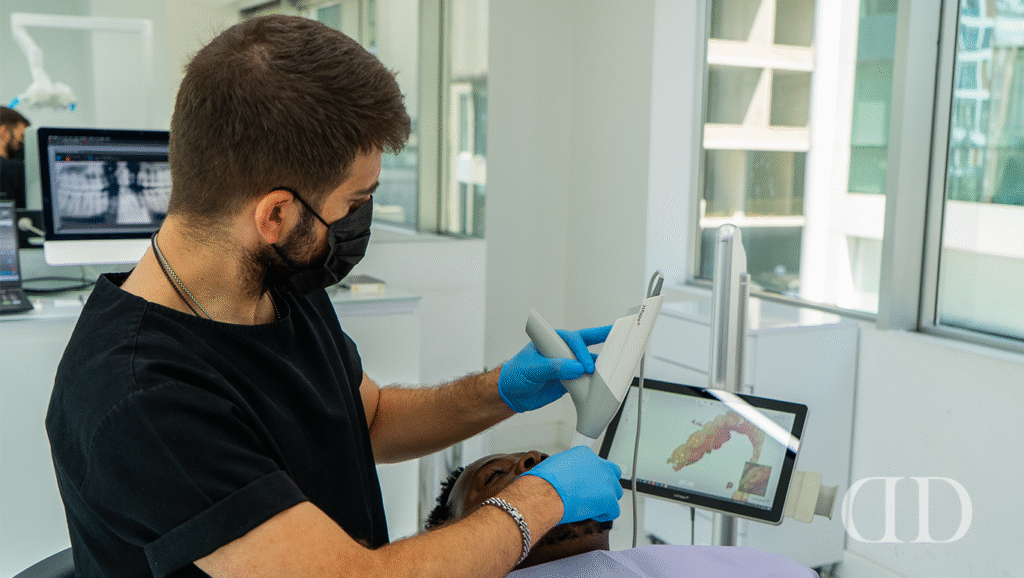
Upon arrival at the clinic, a thorough in-person assessment is conducted, often including high-resolution 3D cone-beam computed tomography (CBCT) scans. This step identifies subtle canal variations or tissue inflammation that may not appear on standard 2D scans. Once verified, the care team arranges all necessary appointments endodontic treatment, impression taking, lab processing, and final fitting to fit within the patient’s travel dates.
Root Canal Treatment
During the first clinical session, the dentist administers local anesthesia to ensure comfort, cleans the infected pulp tissue from within the root canals, disinfects the space, and seals it with a biocompatible filling material (gutta-percha). The main goal is to fully resolve inflammation while preserving the natural tooth root.
Crown Preparation and Placement
Once the endodontic treatment is complete and the tooth shows no post-treatment complications, it is prepared for a restoration. The dentist shapes the outer enamel layer, captures digital or physical impressions, and fits a temporary crown to protect the prepared tooth. The impression is immediately sent to the dental laboratory, where the permanent crown is fabricated from selected materials like zirconia or porcelain.
Final Checks Before Departure
After the custom crown is fabricated, the patient returns for the final trial and bonding appointment. The dentist checks the margin fit, aesthetic integration, and bite alignment (occlusion). Once adjustments are complete, the permanent crown is securely cemented into place. A final post-operative evaluation ensures the patient can travel home comfortably.
How Many Days Do You Need in Turkey for Root Canal and Crown Treatment?
A standard itinerary for receiving a combined root canal treatment and permanent crown in Turkey typically spans 5 to 7 days. This timeframe allows sufficient time for complete clinical care, laboratory processing, and adequate observation between visits.
| Stage | Day Range | Primary Clinical Focus |
| Stage 1: Diagnosis & Endodontics | Days 1–2 | Diagnostic imaging, root canal therapy, and initial tooth preparation. |
| Stage 2: Lab Fabrication & Rest | Days 3–5 | Custom lab creation of the permanent crown; healing and rest period. |
| Stage 3: Fitting & Final Clearance | Days 6–7 | Try-in session, bite adjustment, permanent bonding, and final review. |
Having a dedicated rest period between the endodontic therapy and the final restoration allows tissue around the tooth to settle. It also gives the clinical team an opportunity to monitor the tooth for any lingering sensitivity before the permanent crown is bonded.
Can You Have a Permanent Crown After Root Canal Treatment?
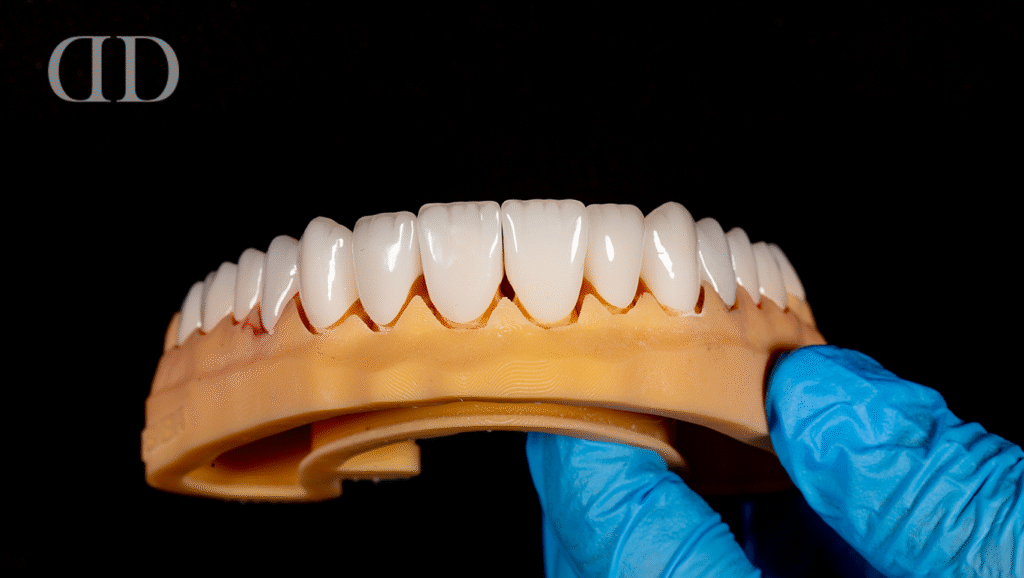
Yes, placing a permanent crown following root canal treatment is standard practice when a tooth has lost significant structural integrity. Root-filled teeth no longer contain living pulp tissue, which can leave them more brittle and susceptible to fractures under normal chewing forces over time.
The clinical decision to fit a permanent restoration depends on the tooth’s post-treatment response:
- Immediate Permanent Placement: If the tooth remains completely asymptomatic following root canal therapy, has sufficient sound structure, and the surrounding tissues show no signs of active inflammation, the permanent crown can be prepared and bonded during the same visit.
- Deferred Placement via Temporary Crown: If the tooth exhibits ongoing post-treatment sensitivity or required complex canal disinfections, the dentist will place a temporary crown instead. This temporary seal protects the tooth structure, maintains chewing function, and allows time for full clinical resolution before a permanent crown is finalized.
What Can Delay Root Canal and Crown Treatment?
While most combined endodontic and restorative care can be finalized within a standard single-trip schedule, certain clinical factors may require extending your stay or staging the treatment across two separate visits to Turkey.
Active Infection
If a tooth presents with extensive infection, tissue swelling, or persistent drainage from the root tip, immediate sealing with a permanent root filling and crown is medically contraindicated. In these cases, the dentist applies an antibacterial intracanal medicated dressing (such as calcium hydroxide) and seals the tooth with a temporary filling. The infection must subside before the final root canal filling and permanent crown can be safely placed.
Complex Root Canal Anatomy
Standard endodontic procedures progress smoothly when root canals are straight and easily accessible. However, teeth with severely curved roots, calcified canals, or unexpected extra canals require meticulous work using specialized endodontic instruments and microscopes. Thoroughly cleaning and shaping these complex structures takes extra clinical time, which can shift subsequent crown preparation appointments.
Previous Root Canal Treatment
Retreating a tooth that received a prior, failing root canal is more complex than treating a tooth for the first time. The clinician must first carefully dismantle old crown materials, extract existing root filling substances, and address underlying recurrent infection. This delicate process often requires multiple sessions before the tooth is stable enough to receive a new permanent restoration.
Additional Dental Procedures
A root canal and crown trip may be delayed if the remaining natural tooth structure requires structural reinforcement or periodontal modification. For instance, if decay extends below the gumline, a minor procedure such as crown lengthening may be needed to expose healthy tooth structure. Similarly, severely damaged teeth may require a post-and-core placement to create a stable anchor for the final crown.
Laboratory and Appointment Requirements
High-quality dental crowns require precise fabrication. While modern CAD/CAM technology speeds up manufacturing, complex aesthetic hand-layering or customized shade matching can take several days in the dental laboratory. Furthermore, if the initial try-in reveals minor bite misalignments or aesthetic discrepancies, the crown must be returned to the lab for adjustments prior to final bonding.
How Much Does Root Canal and Crown Treatment Cost in Turkey?
The cost of a combined root canal and crown treatment in Turkey is significantly lower than in the UK, Western Europe, or North America, primarily due to lower operational overheads and favorable exchange rates rather than any compromise in clinical standards or material quality.
| Region / Country | Average Root Canal Cost | Average Dental Crown Cost | Estimated Total (Combined) |
| United Kingdom | £300 – £700 | £450 – £900 | £750 – £1,600 |
| United States | $700 – $1,500 | $1,000 – $2,200 | $1,700 – $3,700 |
| Turkey | £100 – £250 | £150 – £350 | £250 – £600 |
Note: Pricing varies based on the specific tooth treated (molars require more complex root therapy than front teeth) and the crown material selected (such as monolithic zirconia or layered porcelain-fused-to-zirconia).
When evaluating overall expenses, international patients should consider the combined treatment cost rather than single-procedure fees. Understanding dental tourism costs in Turkey helps patients budget effectively for their entire trip, including clinical care, local transportation, and accommodation.
Planning Root Canal and Crown Treatment in Istanbul
Istanbul is a major hub for international dental care, offering advanced clinical facilities alongside convenient international transport links. Planning treatment in Istanbul allows patients to receive comprehensive endodontic and restorative care in a single, well-managed itinerary.
Dental Treatment in Ataşehir, Istanbul
Our clinic is located in Ataşehir, a modern district on the Asian side of Istanbul known for its contemporary healthcare infrastructure and accessibility. Patients staying in or traveling from nearby surrounding areas such as Ümraniye can easily access our clinic via direct highway routes and public transit options. Ataşehir provides a calm, comfortable environment for patients recovering between their scheduled endodontic and crown appointments.
Frequently Asked Questions
Can I have a root canal and crown during one trip to Turkey?
Yes, most standard cases can be completed in a single 5 to 7-day trip. However, if severe infection or complex root anatomy is present, a staged two-trip plan may be necessary to ensure long-term clinical success.
How many days should I stay in Turkey for root canal and crown treatment?
A stay of 5 to 7 days is recommended. This allows enough time for the initial root canal therapy, digital impressions, custom laboratory fabrication of the crown, final fitting, and necessary post-operative checks.
Can a permanent crown be placed after root canal treatment?
A permanent crown can be placed as soon as the root-filled tooth is fully disinfected, asymptomatic, and stable. If the tooth shows ongoing inflammation, a temporary crown is used first while healing is monitored.
What can delay root canal and crown treatment?
Delays are typically caused by severe periapical infections requiring extended medicated dressings, complex or calcified canal anatomy, the need for retreatment of prior failing root canals, or additional structural procedures like post-and-core buildups.
Can root canal and crown appointments be planned together?
Yes. Clinics structure travel itineraries so that root canal therapy, tooth preparation, and crown impressions occur in the first few appointments, allowing the dental laboratory to fabricate the custom crown while the patient rests.
Does the condition of the tooth affect the treatment timeline?
Yes. Mild pulp inflammation allows for rapid treatment progression, whereas severe infections or extensive structural loss require extra steps to clean the roots and rebuild the tooth base before a final crown can be secured.
How should I plan dental treatment in Turkey around my flight?
It is best to schedule your initial appointment for the day of or the day after arrival. Ensure your return flight is booked at least 24 to 48 hours after your final crown fitting to allow time for bite adjustments and pre-departure evaluation.
Combining a root canal and a permanent crown into a single trip to Turkey is a practical and safe option for most international patients when properly managed. By evaluating pre-travel digital X-rays, coordinating laboratory workflows, and allowing sufficient healing time between clinical steps, high-quality endodontic and restorative care can be achieved within a 5-to-7-day stay. If you are considering care abroad, sharing your recent dental X-rays with a qualified clinical team is the most effective first step toward receiving an accurate preliminary assessment and customized travel plan.
