
Pain When Biting After a Filling: Common Causes and Next Steps

Pain when biting after a filling can happen for several reasons. In some cases, the tooth is temporarily sensitive as it settles after treatment. In others, pain when chewing may indicate that the filling is sitting slightly too high, the tooth’s pulp has become irritated, or another problem needs to be assessed. The pattern, intensity, and duration of the pain are important, but symptoms alone cannot confirm the exact cause.
If your filling hurts when biting, especially if the discomfort persists or becomes more noticeable, a dental examination can help determine whether the tooth simply needs time to settle or requires further treatment.
This symptom can occur after different types of restorative treatment, which is why it is useful to understand the possible causes rather than assuming that all tooth pain after filling is normal.
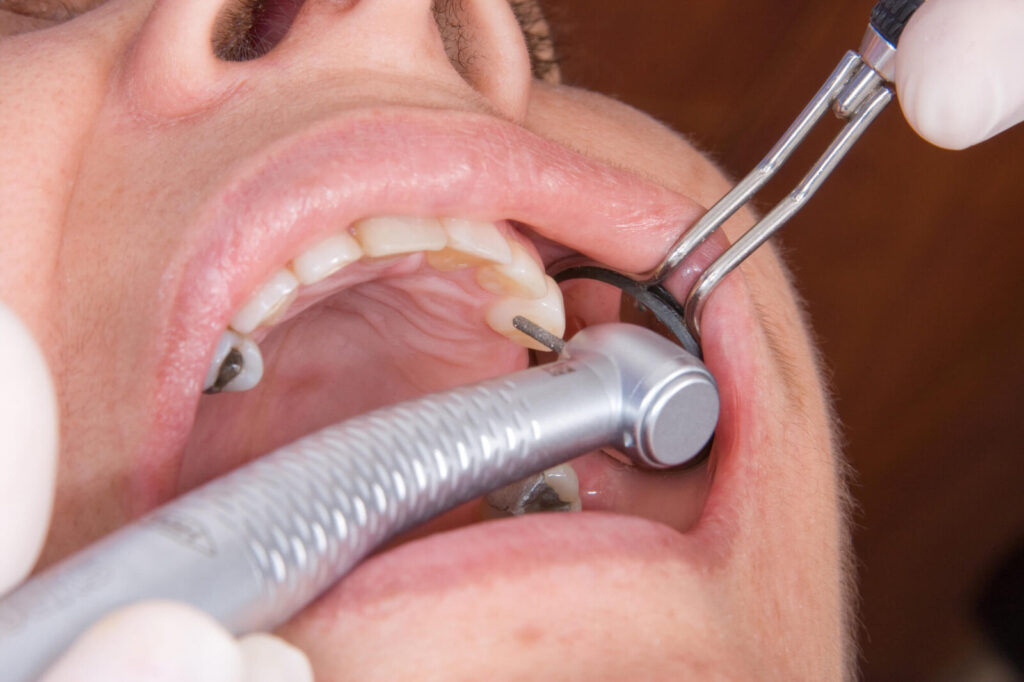
Why Does My Tooth Hurt When Biting After a Filling?
A tooth may feel different after a filling because the procedure can temporarily affect the tooth and surrounding tissues. Mild sensitivity is not necessarily a sign that something has gone wrong. However, pain specifically triggered by biting or chewing deserves attention if it does not gradually improve.
Several possibilities can explain pain when biting after a filling:
- Temporary sensitivity following the procedure
- A filling that is slightly too high and receives excessive pressure when you bite
- Irritation of the dental pulp, particularly after a deep filling
- A crack or another underlying problem affecting the tooth
The appropriate next step depends on the cause. A dentist may assess your bite, examine the tooth and surrounding area, and use dental X-rays when appropriate to understand what is happening.
Temporary Sensitivity After a Filling
Some sensitivity after a dental filling can be temporary. A tooth may react to pressure, temperature, or other stimuli while the tissues inside and around it settle after treatment.
This can be particularly noticeable when eating or drinking something hot or cold. Some people may also experience mild discomfort when chewing. Sensitivity after dental filling does not automatically mean that the filling has failed or that the tooth needs additional treatment.
What matters is how the symptoms develop over time. If the sensitivity is mild and gradually improving, monitoring it may be appropriate. If it persists, becomes stronger, or is accompanied by significant pain, the tooth should be assessed by a dentist.
Premium Dental Care in Turkey
Expert treatments with high-end technology. Get your personalized quote today via WhatsApp.
It is also important to distinguish general sensitivity from pain that occurs specifically when the teeth come together. Pain when chewing after filling can sometimes be related to the way the restored tooth contacts the opposing tooth.
A Filling That Feels Too High
A filling can sometimes feel as though it is slightly higher than the surrounding teeth. This may become obvious when you close your mouth or bite down because the restored tooth contacts the opposing tooth before the others do.

Want trusted dental advice in your Google AI answers?
Add Darya Dental Turkey as a Preferred Source on Google to make our dental guides easier to find in your search results and AI Overviews.
A high filling pain when biting may feel different from ordinary sensitivity. Instead of reacting mainly to temperature, the tooth may hurt when pressure is applied during biting or chewing. You might also notice that the tooth feels as though it “hits first” when you close your teeth together.
If a filling feels too high, a dentist can check the bite and determine whether the restoration is making excessive contact. In some situations, a small adjustment may be appropriate. The need for an adjustment cannot be determined reliably without examining the tooth and its bite.
If you already have a filling that feels too high and the discomfort is not settling, it is reasonable to contact your dentist rather than continuing to put repeated pressure on the tooth.
For more information about fillings, their purpose, and what to expect from restorative treatment, see our dental fillings page.
Pulp Irritation After a Deep Filling
The dental pulp is the living tissue inside a tooth that contains nerves and blood vessels. When decay is deep and close to the pulp, the tooth may be more likely to remain sensitive after it has been restored.
A deep filling can sometimes be followed by sensitivity or discomfort because the pulp has been irritated. This does not mean that every painful tooth needs root canal treatment. The pulp’s condition has to be evaluated clinically.
Persistent or worsening pain, particularly when combined with other symptoms, may indicate that the tooth needs further assessment. A dentist can consider the history of the symptoms, examine the tooth and test its response to different stimuli before deciding whether additional treatment is appropriate.
If further endodontic treatment is needed, this may include root canal treatment. However, pain after tooth filling alone is not enough to determine that a root canal is necessary.
Cracks or Other Problems With the Tooth
Not every symptom that starts after a filling is necessarily caused by the filling itself. A tooth can have a crack, extensive previous damage, recurrent decay, or another underlying problem that becomes noticeable around the same time as restorative treatment.
A cracked tooth, for example, can sometimes cause pain during biting or chewing. The location and timing of the discomfort can provide useful clues, but symptoms cannot reliably identify a crack without a dental examination.
This is why persistent pain when biting after a filling should not automatically be attributed to a “bad filling.” If the discomfort continues, changes, or is difficult to explain, a dentist can assess both the restoration and the tooth beneath it.
The wider range of care available for these concerns can be explored through Darya Dental’s dental treatments section.
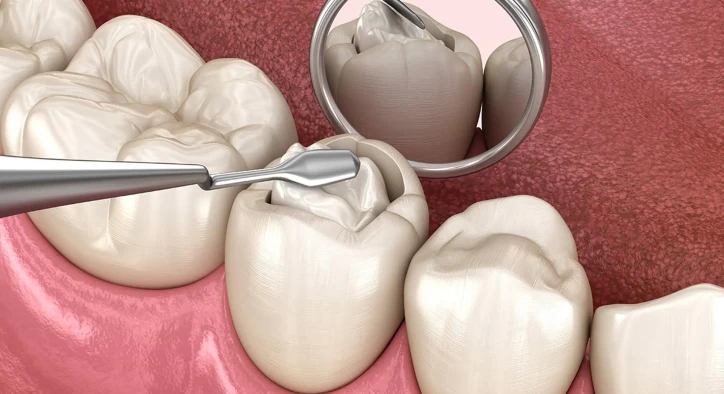
How Long Can Pain After a Filling Last?
There is no single amount of time that applies to everyone. Mild sensitivity after a filling can be temporary and may gradually improve as the tooth settles.
The more important consideration is the direction of the symptoms. If discomfort is becoming less noticeable over time, this can be reassuring. If the pain stays the same, becomes stronger, or develops into a more persistent problem, a dental assessment is appropriate.
The type of discomfort also matters. Sensitivity to cold or heat may have a different cause from pain that occurs every time you bite down. Likewise, occasional mild discomfort is different from severe or persistent pain that interferes with eating.
Rather than relying on a fixed number of days, consider:
| Symptom pattern | What it may mean | Appropriate next step |
| Mild sensitivity that is gradually improving | Temporary post-treatment sensitivity may be possible | Continue monitoring and follow your dentist’s advice |
| Pain mainly when biting down | The bite, restoration, or tooth may need assessment | Arrange a dental check if it persists |
| Filling feels higher than the surrounding teeth | The restoration may be contacting the opposing tooth differently | Ask a dentist to check the bite |
| Pain that persists or becomes more intense | Further evaluation may be needed | Contact a dentist |
| Pain accompanied by other concerning symptoms | Another dental problem may be involved | Seek professional dental assessment |
This does not mean that a particular symptom pattern proves a specific diagnosis. A clinical examination is needed to establish the cause.
When Should Pain After a Filling Be Checked by a Dentist?
Pain after a filling should be checked when it is persistent, worsening, significant, or interfering with normal eating and daily activities. It is also sensible to arrange an assessment if the tooth consistently hurts when you bite or if the filling feels noticeably too high.
A dental check is particularly important if:
- The pain is not gradually improving.
- The tooth continues to hurt whenever you bite or chew.
- The filling feels too high or seems to contact the opposite tooth first.
- Sensitivity becomes more severe or persistent.
- Pain occurs without an obvious trigger.
- The tooth becomes difficult to use for normal eating.
- New symptoms develop after the filling.
The purpose of an examination is not simply to decide whether the filling should be replaced. The dentist needs to determine whether the discomfort is related to the restoration, the tooth’s pulp, the bite, or another condition affecting the tooth.
Depending on the findings, assessment may include a clinical examination, bite evaluation and, where appropriate, dental X-rays.
It is also important not to assume that waiting is always the best option. Some temporary sensitivity can settle naturally, but persistent tooth pain after filling should not be ignored simply because the discomfort began immediately after treatment.
What Can a Dentist Check if a Filling Hurts When Biting?
When a filling hurts when biting, a dentist can assess several possible sources of the discomfort rather than focusing on the filling alone.
The evaluation may include:
- Checking the bite
The dentist can assess how the restored tooth contacts the opposing tooth. This can help identify whether the filling may be interfering with the normal bite. - Examining the filling and tooth
The restoration can be inspected for visible problems, while the surrounding tooth structure can be assessed for signs of damage or other concerns. - Assessing the pulp
If symptoms suggest possible irritation of the tissue inside the tooth, the dentist may perform appropriate clinical tests to evaluate the tooth’s response. - Looking for other causes
Cracks, recurrent decay or other dental problems may need to be considered when the symptoms do not fit straightforward post-treatment sensitivity. - Using X-rays when appropriate
Dental X-rays can provide additional information that cannot be obtained from the visible surface of the tooth alone.
The assessment is therefore based on the combination of symptoms, clinical findings and, when necessary, imaging. This helps avoid assuming that every case of pain when biting after a filling has the same cause.
A restoration that feels slightly high may require a different approach from a tooth with deeper pulp involvement. Similarly, a cracked tooth may need different management from either of these situations.
The goal of the dental check is to identify the reason for the pain and determine whether monitoring, an adjustment, further restorative treatment, or another form of care is appropriate.
Can Pain After a Filling Mean You Need Root Canal Treatment?
Pain after a filling does not automatically mean that you need root canal treatment. A tooth can be temporarily sensitive after restorative treatment, and pain when biting can have several possible explanations.
Root canal treatment may be considered when the dental pulp has been significantly affected and is unlikely to recover without further treatment. However, this cannot be determined from biting pain alone.
A dentist may consider factors such as:
- How long the symptoms have been present
- Whether the pain is improving or worsening
- Whether the tooth reacts to hot or cold stimuli
- Whether pain occurs spontaneously or only with a specific trigger
- How the tooth responds during clinical tests
- Whether there are other findings affecting the tooth
- What is visible on dental imaging, when imaging is indicated
This distinction is important because pain when biting after a filling has multiple possible causes. A high restoration, temporary sensitivity, pulp irritation, a crack, or another dental problem may produce overlapping symptoms.
If examination indicates that the pulp requires endodontic treatment, root canal treatment may be recommended. If the findings point to another cause, a different approach may be more appropriate.
For an overview of this treatment, see our root canal treatment page.
Until the cause is established, it is better to avoid assuming either that the tooth is fine or that it definitely needs a root canal. Professional assessment provides a more reliable answer.
What Should You Do Until the Tooth Is Checked?
If a tooth hurts when biting after a filling, try to avoid repeatedly testing it by biting down on it. Continued pressure may make the tooth more uncomfortable and does not help determine the cause.
Until you can have the tooth assessed:
- Choose softer foods if chewing is uncomfortable.
- Avoid chewing hard or sticky foods on the affected side.
- Keep brushing and cleaning the area gently and regularly.
- Follow any specific aftercare instructions provided by your dentist.
- Monitor whether the pain is improving, staying the same, or becoming worse.
- Arrange a dental assessment if the discomfort persists or is concerning.
Pain medication may be appropriate for some people, but the choice depends on individual circumstances and medical history. If you are unsure which option is suitable for you, ask a healthcare professional or pharmacist.
Most importantly, do not try to adjust or remove the filling yourself. If the restoration feels too high, a dentist can assess the bite and determine whether an adjustment is appropriate.
If symptoms become severe or new concerning symptoms develop, seek prompt professional dental care rather than continuing to monitor the tooth without assessment.
Frequently Asked Questions
Is it normal for a tooth to hurt when biting after a filling?
Some discomfort can occur after a filling, but persistent or worsening pain when biting should be assessed by a dentist. Temporary sensitivity can occur as the tooth settles after treatment, while biting pain can also be associated with the way the filling contacts the opposing tooth or with another problem affecting the tooth.
Why does my filling hurt when I chew?
A filling may hurt when you chew because of temporary sensitivity, a bite that needs checking, irritation inside the tooth, or another dental problem. If the discomfort occurs consistently when you put pressure on the tooth, a dentist can examine the restoration, assess the bite, and determine whether further evaluation is needed.
Can a filling be too high and cause pain when biting?
Yes, a filling that is too high can cause discomfort when biting because the restored tooth may contact the opposing tooth differently. You may notice that the tooth seems to hit first when you close your mouth. A dentist can check the bite and determine whether the filling requires adjustment.
How long should sensitivity after a filling last?
Sensitivity after a filling can be temporary, but there is no universal duration that applies to every tooth. What matters is whether the symptoms are gradually improving. Persistent, worsening, or significant sensitivity should be discussed with a dentist so the underlying cause can be assessed.
When does pain after a filling require a dental check?
Pain should be checked when it persists, worsens, repeatedly occurs when biting or chewing, or interferes with normal eating. A dental assessment is also appropriate if the filling feels too high or if new symptoms develop. An examination can help distinguish temporary post-treatment sensitivity from problems that may need further care.
Does pain when biting after a filling mean I need a root canal?
No. Pain when biting after a filling does not by itself mean that root canal treatment is necessary. A high filling, temporary sensitivity, pulp irritation, a crack, or another dental problem can produce similar symptoms. A dentist may use clinical examination and, when appropriate, X-rays and other tests to determine whether the pulp requires further treatment.
Can a cracked tooth cause pain after a filling?
Yes, a cracked tooth can cause pain during biting or chewing, and the timing may overlap with a recent filling. This does not mean that every tooth with post-filling biting pain is cracked. If symptoms persist or cannot be explained by the filling or bite, a dentist can assess the tooth for cracks and other possible causes.
Pain when biting after a filling is not always a sign that something has gone wrong, but persistent or worsening pain should not be ignored. Temporary sensitivity may improve as the tooth settles, while a filling that feels too high, pulp irritation, a crack, or another dental problem may require professional assessment.
The most useful clues are how the pain behaves, whether it is improving, and whether it occurs specifically when biting or chewing. Because similar symptoms can have different causes, diagnosis should be based on a dental examination rather than symptoms alone.
If you are experiencing ongoing tooth pain after filling, a dental check can help clarify whether the tooth simply needs monitoring or whether further treatment is appropriate. Darya Dental Turkey provides information on dental fillings, root canal treatment, and other dental treatments to help patients understand their treatment options.
