
Child Orthodontics: Pediatric Braces & Early Treatment
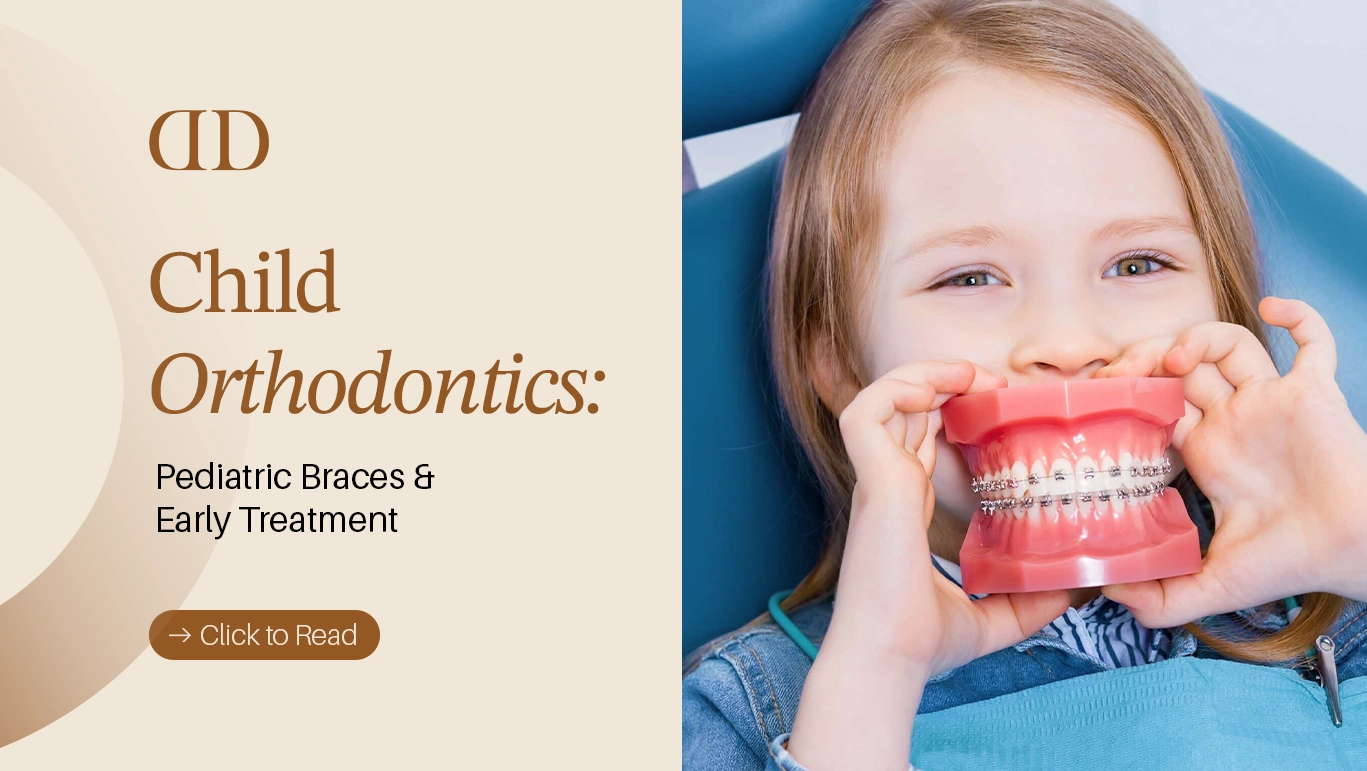

orthodontics is often pictured as a teenage rite of passage metal brackets, colorful elastics, and a brand-new smile in the school yearbook. Yet modern orthodontics is increasingly a “start smart, not just start late” discipline, where early observation and timely intervention can shape how the jaws and teeth develop.

Understanding Orthodontics In Children: Growth Is The Hidden Superpower
In pediatric care, orthodontics is not simply “adult braces, but smaller.” The central difference is biology: children are still growing. In orthodontics, growth can be an ally, because bones and bite relationships are still adaptable. That adaptability is why early assessment can sometimes reduce complexity later sometimes, not always.
It’s also important to separate “early evaluation” from “early appliances.” Many children benefit most from monitoring rather than immediate treatment. A well-timed orthodontics plan often looks like a decision tree: track development, measure risk, and intervene only if the likely benefits outweigh the trade-offs.
From a research perspective, orthodontics deals in probabilities rather than guarantees. Genetics, eruption timing, airway health, and oral habits all influence outcomes. So the most honest early plan is usually a forecast that gets updated as your child grows less like a final blueprint, more like a living map.
Early Orthodontics Screening: Ages, Milestones, And What Clinicians Look For
Parents often ask for a single “perfect age” to start orthodontics. In reality, clinicians think in milestones: the first permanent molars, the mix of baby and adult teeth, and whether the bite is developing symmetrically. Many professional organizations suggest an orthodontic check around age 7 as a helpful time to spot certain developing concerns. You can read the general rationale from the American Association of Orthodontists here: https://aaoinfo.org/orthodontic-treatment/early-orthodontic-treatment/
Why does that window come up in orthodontics discussions? Because some bite problems are easier to address while growth is active. A narrow upper jaw associated with a crossbite, for example, may be more responsive earlier in suitable cases. Meanwhile, other issues like mild crowding may be better handled later when more permanent teeth have erupted.
Also, screening does not automatically mean braces. A very common orthodontics outcome is “watchful waiting” with a clear follow-up plan: periodic exams, photographs, and digital scans, plus specific criteria for when treatment becomes worthwhile. This keeps timing as the main strategy, which is one of the most underrated tools in orthodontics.
Orthodontic treatment is one of many solutions available to improve oral health and smile aesthetics, so you can explore all dental treatments to discover other procedures that may complement your treatment plan.
Why Families Consider Orthodontics Early: Function, Space, Habits, And Confidence
It’s easy to assume orthodontics is only about straightening teeth for aesthetics. But in pediatric settings, early orthodontics conversations often involve function and risk management how the bite fits, how teeth erupt, and how oral habits might influence development.
```html
```
Premium Dental Care in Turkey
Expert treatments with high-end technology. Get your personalized quote today via WhatsApp.
Common reasons families seek an orthodontics opinion early include:
- Crowding or teeth erupting out of position
- Crossbite (front or back teeth biting “the wrong way”)
- Large overjet (upper front teeth positioned far forward)
- Deep bite (upper front teeth covering lower teeth more than expected)
- Open bite (front teeth not meeting when biting down)
- Early loss of baby teeth with space concerns
- Oral habits (thumb sucking, long-term pacifier use, tongue posture concerns)
- Mouth breathing or airway-related concerns (often assessed with other health professionals when needed)
In orthodontics, force patterns matter. An unbalanced bite can concentrate pressure on certain teeth, affect wear patterns, or make cleaning harder. That doesn’t mean every irregular bite requires early action but it explains why clinicians pay attention to more than “crookedness.”
```html  ```
```
Want trusted dental advice in your Google AI answers?
Add Darya Dental Turkey as a Preferred Source on Google to make our dental guides easier to find in your search results and AI Overviews.
Another frequent topic is injury risk. Prominent front teeth can be more vulnerable to chipping during falls or sports. In orthodontics planning, this may be part of the discussion, without turning it into a fear-based decision. The goal is simply to weigh potential benefits against a child’s readiness and overall needs.
Orthodontics Treatment Pathways: Phase 1, Phase 2, Or Strategic Monitoring
Parents sometimes hear “two-phase treatment” and assume it’s inevitable. In orthodontics, phases are not a sales pitch they’re a framework that may fit certain growth patterns. Many children need only one phase later, and some need only monitoring.
Phase 1 Orthodontics (Interceptive Treatment)
Phase 1 often occurs in mixed dentition (a combination of baby and permanent teeth). The goals may include guiding jaw growth, creating space, correcting specific crossbites, or addressing habits that interfere with development. Appliances may be fixed or removable depending on the situation and the child’s ability to cooperate.
Monitoring (The Quietly Important Middle)
After early intervention, there is often a monitoring period while remaining permanent teeth erupt. This stage is not “nothing happens.” In orthodontics, this is where stability is protected and the next steps are timed properly sometimes with retainers or space management if needed.
Phase 2 Orthodontics (Comprehensive Alignment)
Phase 2 usually takes place when most permanent teeth are present. This is where full braces or aligners may be used to refine alignment and bite relationships.
Strategic Monitoring Only
A high-quality orthodontics plan may recommend waiting especially if the bite functions well and the eruption pattern looks favorable. Waiting is an active choice when it’s backed by periodic evaluation and clear criteria.
Here’s a quick comparison table:
| Pathway | Typical Timing | Main Goal In Orthodontics | What It Might Include |
| Phase 1 | Mixed dentition | intercept a developing issue | expanders, limited braces, habit appliances |
| Monitoring | between phases | track growth and eruption | scans, photos, periodic bite checks |
| Phase 2 | mostly permanent teeth | comprehensive finishing | braces or aligners, elastics, detailing |
| Monitoring Only | any stage | avoid unnecessary treatment | scheduled follow-ups, hygiene support |
A useful way to think about orthodontics is that timing can be as powerful as technology.
Pediatric Braces And Modern Orthodontics Options: What Exists Today
When people say “braces,” they usually mean metal brackets. But orthodontics has expanded into multiple appliance types and planning tools. The practical differences often come down to comfort, visibility, hygiene, and suitability for specific tooth movements.
Common orthodontics options for children and pre-teens include:
- Traditional metal braces (durable and widely used)
- Ceramic braces (less visible in some cases, often used in older children)
- Limited braces (targeted brackets for specific early goals)
- Palatal expanders (for selected cases where upper jaw width is a concern)
- Space maintainers (part of orthodontics planning when baby teeth are lost early)
- Clear aligners (in selected cases depending on eruption stage and compliance)
One of the biggest shifts in orthodontics is digital workflow. Many clinics now use digital scans instead of conventional impressions, which can be easier for children with a strong gag reflex. Digital models also improve communication: when kids can see a 3D image of their own teeth, “space” and “crowding” stop being abstract concepts.
At Darya Dental Clinic, an orthodontics plan is typically built around the child’s needs and lifestyle. The “best” appliance is not the newest one; it’s the one that fits the clinical goal and a child’s real-world routine.

Orthodontics In Daily Life: Comfort, Food, School, And Sports
If orthodontics were only about biology, decisions would be simple. But families live in schedules exams, holidays, and sports seasons so daily practicality matters.
Discomfort is often most noticeable after placement or adjustments. Many children describe it as pressure or tenderness rather than sharp pain. Soft foods can help during the first days, and orthodontic wax may reduce irritation from brackets. Most kids adapt surprisingly quickly once braces become routine.
Food rules in orthodontics aim to prevent breakages and delays. Very hard, sticky, or chewy foods can bend wires or pop brackets. Families often succeed with “smart swaps”: sliced apples instead of biting whole apples, softer breads, and careful chewing around hard crusts.
School concerns can be more emotional than clinical. Some children worry about speech changes with expanders or removable appliances. In orthodontics, adaptation is common, but the adjustment window varies. Timing placement away from major presentations can reduce stress, and rehearsing at home can speed confidence.
Sports bring up safety. Many children with braces play contact sports with a properly fitted mouthguard. In orthodontics, mouthguards are less of an accessory and more of a practical tool especially during periods when teeth are actively moving.
Orthodontics, Hygiene, And Enamel: Protecting Teeth During Treatment
Orthodontics can improve alignment, but it can also make cleaning more demanding. Brackets and wires create extra surfaces where plaque can collect, especially near the gumline. That’s why hygiene is not a side note it’s central to keeping enamel strong during treatment.
Many orthodontics patients rely on a straightforward toolkit: a soft toothbrush, interdental brushes, flossing aids, and (when appropriate) fluoride products discussed with a dental professional. The aim is to reduce plaque accumulation so that when braces come off, the teeth look healthy not just straight.
Stability is another long-term theme. Teeth can drift after orthodontics because the mouth is dynamic: chewing forces, tongue posture, and ongoing growth can all influence alignment. Retainers are commonly used to help maintain results. Rather than seeing retention as a burden, it can be framed as protecting the time and effort invested in treatment.
Choosing An Orthodontics Provider: Questions That Reveal Plan Quality
Choosing orthodontics care for a child isn’t just about selecting braces. It’s about the thinking behind the plan, the quality of monitoring, and how well the clinic communicates with both parent and child.
When comparing orthodontics consultations, consider asking:
- What exactly are we trying to change right now, and what happens if we wait?
- Is this likely a one-phase plan, a two-phase possibility, or monitoring only?
- What alternatives exist, and what are the trade-offs for each?
- How will progress be tracked (photos, scans, bite analysis)?
- What should we expect for hygiene routines and school-day comfort?
- How are urgent issues handled (poking wire, loose bracket)?
A strong orthodontics plan usually sounds clear and conditional, not absolute. Language like “if we see X, we’ll recommend Y” often reflects respect for growth variability and a commitment to timing.
For families considering dental travel or treatment planning in Turkey, Darya Dental Clinic emphasizes structured communication and patient-friendly coordination. In pediatric orthodontics, that kind of clarity can be as valuable as any appliance system.
Orthodontics As An Early Conversation, Not A Rushed Commitment
Orthodontics in childhood sits at the intersection of growth, function, habits, and everyday life. Early evaluation can be useful, but early treatment is not automatically the best choice for every child. The most helpful approach is usually a thoughtful assessment that clarifies what is developing, what is stable, and what should be timed later.
If you’re exploring pediatric braces or early treatment, consider the goal of the first visit to be understanding not urgency. A well-planned orthodontics journey tends to feel less like a surprise marathon and more like a mapped trail: you still work for the result, but you know why each step exists.
