Minimal-Prep vs Traditional Veneers: Which Teeth Are Suitable?
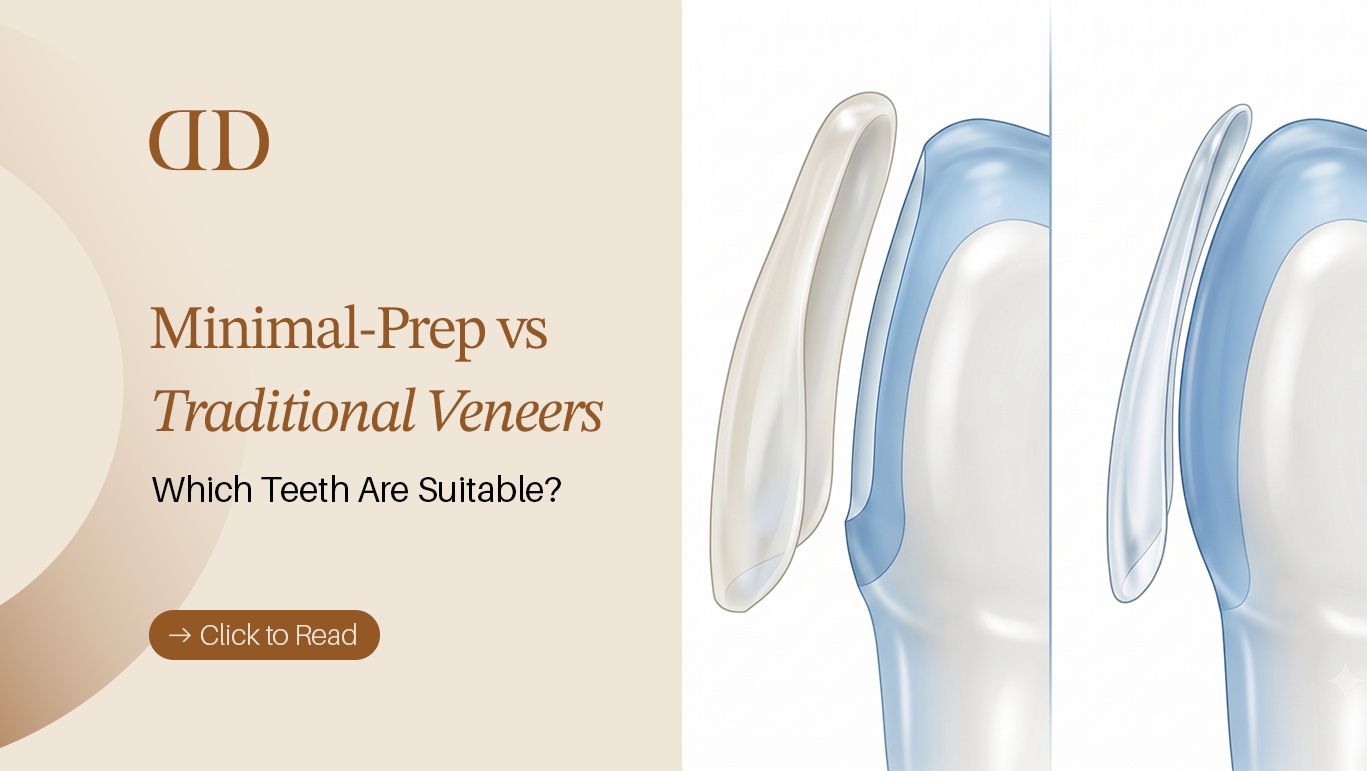

Minimal-prep veneers are suitable for teeth that require subtle aesthetic enhancement with minimal enamel removal, whereas traditional veneers are better suited for teeth needing substantial structural, shape, alignment, or shade corrections. The decision between the two comes down to the existing thickness of your enamel, your natural tooth position, and the degree of visual transformation desired. At Darya Dental Clinic in Istanbul, treatment selection relies on precise digital smile planning to preserve maximum natural tooth structure while achieving optimal cosmetic results.
Choosing the right dental veneer is not a matter of finding a single “best” material, but rather identifying which preparation approach respects your oral anatomy while fulfilling your aesthetic goals. As cosmetic dentistry moves toward conservative preservation, understanding how minimal-prep and traditional veneers interact with natural enamel helps international patients make well-informed decisions about their smile transformations.
What Are Minimal-Prep Veneers?
Minimal-prep veneers are ultra-thin ceramic laminates typically ranging from 0.2 mm to 0.5 mm in thickness that require only micro-reduction of the outermost enamel layer before placement. Unlike aggressive tooth reshaping, minimal preparation removes a negligible amount of surface enamel, usually restricted to minor high spots or contour smoothing, allowing the restoration to sit flush against the tooth line without appearing bulky.
By preserving the structural integrity of the underlying tooth, minimal-prep veneers rely on advanced adhesive resin bonding to fuse directly with natural enamel. Because enamel provides the strongest chemical bond available in restorative dentistry, this conservative method offers high mechanical stability while keeping the natural tooth vitality intact. While closely related to completely non-invasive options, minimal-prep veneers offer slightly more flexibility than no-prep alternatives, as targeted micro-shaping allows the dentist to correct minor surface irregularities, subtle overlaps, or slight spatial discrepancies.
What Are Traditional Veneers?
Traditional veneers are custom-engineered porcelain shells that usually measure between 0.5 mm and 1.0 mm in thickness, requiring controlled removal of the facial enamel to create adequate room for the ceramic layer. During traditional dental veneer preparation, a specialized dentist shapes the front surface and incisal edge of the tooth to ensure the restoration blends seamlessly with the surrounding arch without over-contouring or interfering with the bite.
This comprehensive preparation style is particularly beneficial when addressing severe intrinsic discoloration, pronounced misalignment, chipped or fractured edges, or teeth that require significant altered proportions. By creating a dedicated preparation space, traditional porcelain veneers provide master ceramists with the structural depth needed to mask dark underlying tooth shades, incorporate multi-dimensional translucency, and redesign overall tooth geometry effectively.
Minimal-Prep vs Traditional Veneers: What Is The Difference?
The fundamental difference between minimal-prep vs traditional veneers lies in the volume of enamel removed, the degree of spatial preparation, and the clinical indications each method can address.
Tooth Preparation
The primary distinction in veneer tooth preparation rests on how much hard tissue must be altered:
- Minimal-prep veneers demand minimal tooth preparation, removing only a microscopic layer (0.2 to 0.5 mm) strictly within the outer enamel shell.
- Traditional veneers require moderate enamel preparation (0.5 to 1.0 mm) to accommodate thicker ceramic materials and achieve complex color changes.
Enamel Preservation
Enamel preservation is a critical predictor of long-term bond strength and restorative longevity:
Premium Dental Care in Turkey
Expert treatments with high-end technology. Get your personalized quote today via WhatsApp.
- Conservative veneer preparation leaves almost the entire enamel structure untouched, ensuring maximum surface area for high-strength resin bonding.
- Conventional veneers reduce a larger portion of facial enamel, though skilled prosthodontists take great care to keep the preparation margins comfortably within enamel rather than exposing underlying dentin. Clinical studies published in peer-reviewed restorative dental journals confirm that veneers bonded directly to enamel demonstrate long-term survival rates exceeding 93% to 95% over a 10-year period.
Aesthetic Changes
The scope of cosmetic transformation varies considerably between the two approaches:
- Minimal-prep options excel at subtle refinements, such as closing minor gaps (diastemas), lengthening small teeth, smoothing surface roughness, or brightening uniform light stains.
- Traditional porcelain veneers provide full masking power and geometric flexibility, making them the preferred choice for dark tetracycline staining, heavy fluorosis, rotated teeth, or severe wear.
Tooth Thickness And Available Space
A tooth’s natural position in the dental arch dictates whether space must be created or simply filled:

Want trusted dental advice in your Google AI answers?
Add Darya Dental Turkey as a Preferred Source on Google to make our dental guides easier to find in your search results and AI Overviews.
- If a tooth sits slightly retroclined (tilted inward) or is naturally undersized, minimal-prep techniques can add volume without making the tooth look bulky.
- If a tooth sits forward or is prominent in the smile line, traditional preparation is necessary to shave back the surface, preventing a thick, artificial appearance.
Which Teeth Are Suitable For Minimal-Prep Veneers?
Determining suitability for minimal-prep veneers is a nuanced clinical decision based on tooth geometry, structural integrity, enamel quality, and spatial dynamics within the dental arch. Because minimal-prep techniques involve micro-reduction (0.2 to 0.5 mm), the underlying natural teeth must already possess favorable dimensions and healthy enamel foundations.
At Darya Dental Clinic in Istanbul, Turkey, our prosthodontists evaluate candidacy using high-resolution 3D intraoral scanning and facial digital smile design. This allows us to map whether minimal-prep veneers can achieve your desired aesthetic goals without over-contouring your natural teeth.
Teeth With Minor Shape Or Size Concerns
Minimal-prep veneers are uniquely suited for structural additions rather than significant tooth reduction. If a tooth requires added volume or subtle length extensions, minimal preparation creates the ideal base:
- Microdontia and Peg Laterals: Naturally small or narrow lateral incisors benefit immensely from minimal-prep laminates, as ceramic material can be bonded directly to build proper facial proportions.
- Worn or Chipped Incisal Edges: Teeth with minor edge wear or small surface chips from age or minor trauma can be lengthened and restored seamlessly.
- Gaps and Diastemas: Minor spaces between front teeth can be closed by extending ceramic contours laterally, avoiding aggressive enamel shaving.
Teeth With Suitable Alignment
Spatial position within the dental arch dictates whether a tooth can receive minimal-prep restorations. Candidates typically exhibit:
- Retroclined Teeth: Teeth that tilt slightly inward or sit flat relative to adjacent teeth provide natural clearance for a thin ceramic layer without appearing bulky.
- Minor Rotations: Teeth with very mild axial rotations where micro-contouring of the high edge is sufficient to bring the facial surface into alignment.
- Balanced Arch Curves: Patients whose existing smile arc aligns well with their lower lip profile, requiring only surface refinements rather than position changes.
Teeth With Adequate Enamel
Because minimal-prep veneers depend on high-strength adhesive resin bonding, the presence of healthy, dense enamel is essential:
- Intact Facial Enamel: The front surface must be predominantly natural enamel rather than exposed dentin, providing an ideal substrate for acid-etching and chemical bonding.
- Absence of Large Fillings: Teeth free from extensive composite restorations or historical dental fillings ensure that the underlying structure remains rigid and uniform.
- Strong Structural Integrity: Enamel that has not been compromised by severe acid erosion, bulimia, or heavy mechanical attrition.
Teeth That Do Not Require Major Structural Changes
Minimal-prep options work best when working in harmony with the natural tooth foundation:
- Uniform Light Staining: Teeth with mild yellowing or age-related shade changes that do not require thick opacifying layers to mask dark undertones.
- Symmetrical Tooth Foundations: Teeth that already possess pleasing natural contours and merely require surface smoothing, increased luster, or subtle proportion adjustments.
When Might Traditional Veneers Be More Suitable?
While minimal-prep dentistry offers a conservative option, it is not a universal solution for every cosmetic challenge. Certain clinical conditions demand controlled enamel reduction (0.5 to 1.0 mm) to achieve long-term structural stability, proper tooth alignment, and natural aesthetic depth.
Choosing traditional porcelain veneers is often the more predictable approach when teeth require substantial repositioning, deep color correction, or complete anatomical reshaping.
When More Extensive Shape Changes Are Needed
When a patient desires a comprehensive transformation of tooth geometry, traditional preparation provides the necessary space for custom ceramic shaping:
- Short, Squat Teeth: Lengthening significantly worn or short teeth requires aggressive margin placement to create proper tooth proportions without creating bulky, unnatural contours.
- Irregular Morphologies: Severe developmental enamel malformations or unusually shaped teeth need controlled surface reduction to build a balanced, symmetrical outline.
When More Space Is Required
Ceramic materials require a minimum structural thickness to ensure fracture resistance and proper light reflection. Traditional preparation creates dedicated space in the following scenarios:
- Protruding or Prominent Teeth: Teeth that sit too far forward in the smile line must be shaved back before veneer placement; otherwise, adding ceramic on top would make them look unnatural and feel bulky.
- Severe Overlaps and Crowding: Overlapping teeth require reduction at contact points to establish proper interdental spacing and align the front surfaces neatly.
When Tooth Position Affects Veneer Design
The functional bite (occlusion) and spatial alignment heavily influence restoration design:
- Severe Rotations: A significantly twisted tooth must be re-contoured on its forward-facing edge so the final ceramic veneer sits flat across the smile arch.
- Bite Clearance Issues: When upper and lower teeth meet with minimal clearance, traditional preparation ensures the ceramic restoration does not interfere with chewing forces or cause premature wear on opposing teeth.
When Minimal Preparation Cannot Achieve The Planned Result
Sub-optimal shade masking or compromised bonding surfaces necessitate traditional clinical intervention:
- Deep Intrinsic Discoloration: Teeth stained by tetracycline antibiotics, severe fluorosis, or previous root canal therapy have dark underlying dentin. Minimal-prep veneers (0.2 to 0.5 mm) are often too thin to mask these dark tones without looking chalky or opaque. Traditional veneers provide the required thickness (0.7 to 1.0 mm) for multi-layered ceramic opacifiers.
- Existing Extensive Restorations: Teeth with large, discolored composite fillings or recurrent decay require removal of old restorative materials, creating deep preparation margins that traditional crowns or full-coverage veneers accommodate safely.

Can Veneers Be Placed Without Shaving The Teeth?
Yes, completely prepless restorations often termed no-prep veneers can be bonded directly to natural enamel without any surface shaving or drill intervention. However, it is vital to distinguish between no-prep, minimal-prep, and traditional preparation approaches.
While no-prep veneers eliminate the need for local anesthesia or drill work, their application is strictly limited to teeth that are naturally small, set back in the mouth, or separated by gaps. If applied to normally proportioned or forward-standing teeth without prior reduction, prepless laminates can create an over-contoured, thick appearance that traps plaque along the gumline.
During your consultation at Darya Dental Clinic in Istanbul, our specialists evaluate your natural tooth volume to determine whether a completely non-invasive approach or subtle micro-preparation will yield the most natural, long-lasting result.
How Is The Right Veneer Approach Chosen?
Selecting the ideal veneer preparation method is a customized process that combines digital clinical diagnostic data with artistic smile design. Rather than applying a standard template, cosmetic dentists analyze several anatomical and functional variables during treatment planning:
- Tooth Shape and Proportions: Evaluating length-to-width ratios to determine if material needs to be added (minimal-prep) or shaved back (traditional).
- Tooth Position and Alignment: Assessing spatial distribution in the arch to prevent bulky contours and ensure proper lip support.
- Enamel Condition and Thickness: Verifying that adequate surface enamel remains for high-strength resin bonding.
- Existing Restorations: Checking for old fillings, decay, or structural cracks that might require deeper margin placement.
- Desired Aesthetic Change: Comparing the patient’s starting tooth shade against their goal shade to evaluate ceramic masking requirements.
- Available Space and Occlusion: Mapping bite mechanics during chewing to prevent excessive force on restoration margins.
- Overall Oral Health: Ensuring gums are healthy and free from inflammation such as resolving issues via gum contouring before finalizing preparation lines.
Minimal-Prep vs. Traditional Veneers: Pros and Cons
Every clinical intervention in cosmetic dentistry requires balancing structural tooth preservation against the desired cosmetic outcome. An honest, evidence-based review of the pros and cons of both minimal-prep and traditional porcelain veneers helps patients maintain realistic long-term expectations.
Minimal-Prep Veneers
Potential Benefits
- Maximum Enamel Preservation: Micro-reduction (0.2 to 0.5 mm) preserves almost the entire outer enamel layer, leaving the underlying tooth structure completely intact.
- High-Strength Adhesive Bonding: Fusing directly to intact natural enamel provides the highest chemical bond strength available in restorative dentistry, leading to outstanding long-term retention.
- Painless and Micro-Invasive: Because enamel removal is kept to a microscopic minimum, local anesthesia is rarely required, and post-operative thermal sensitivity is practically non-existent.
- Reversibility Potential: In select cases where minimal-prep designs require zero structural alterations, the procedure may remain close to reversible compared to traditional methods.
Potential Limitations
- Restricted Masking Power: Ultra-thin ceramic layers cannot effectively hide severe internal discoloration, such as dark tetracycline staining or teeth weakened by old root canals.
- Limited Geometric Flexibility: Minimal-prep laminates cannot correct major tooth rotations, deep crowding, or significantly protruding teeth without making the final smile look bulky.
- Risk of Over-Contouring: If applied to normally proportioned or forward-standing teeth without precise micro-shaping, the restorations can create an unnatural, artificially thick appearance near the gumline.
Traditional Veneers
Potential Benefits
- Complete Cosmetic Control: Controlled enamel reduction (0.5 to 1.0 mm) allows master ceramists to completely redesign tooth geometry, alignment, length, and shade gradient.
- Superior Opacification and Depth: The added ceramic thickness allows for multi-layered porcelain that hides deep intrinsic dark spots while reflecting light like natural enamel.
- Seamless Arch Alignment: Shaving back prominent or slightly rotated teeth ensures the final veneer sits completely flush within the dental arch, creating a balanced, symmetrical smile line.
Potential Limitations
- Irreversible Enamel Removal: Permanently shaving the outer enamel layer means the prepped teeth will always require protective restorations, such as custom porcelain veneers or crowns.
- Temporary Post-Op Sensitivity: Mild, temporary sensitivity to hot or cold temperatures can occur for 24 to 48 hours following preparation as the tooth pulp adapts.
- Procedural Complexity: Demands local anesthesia and meticulous clinical execution to ensure preparation margins stay safely within enamel limits.
How Much Does Tooth Preparation Matter for Veneers?
The precise amount of tooth preparation is not an arbitrary choice made by the dentist; it is dictated entirely by your existing tooth position, enamel thickness, and final aesthetic goals.
The primary clinical rule of conservative cosmetic dentistry is simple: remove only as much enamel as necessary to achieve a natural, structurally sound result. Shaving off excess healthy hard tissue without cause compromises structural elasticity. Conversely, under-preparing a prominent or dark tooth results in a bulky, unnatural restoration that traps plaque along the gums.
At Darya Dental Clinic, our prosthodontists utilize digital intraoral scanning and 3D smile architecture to calculate preparation depth down to the exact micrometer. By keeping preparation margins comfortably within natural enamel whenever possible, we ensure maximum bond durability while giving you a beautifully proportioned, long-lasting smile.
Experience Personalized Smile Architecture at Darya Dental Clinic in Istanbul
Choosing between minimal-prep and traditional veneers shouldn’t feel like guessing. At Darya Dental Clinic in Ataşehir, Istanbul, international patients receive individualized clinical evaluations that prioritize long-term oral health alongside cosmetic excellence.
Our specialized cosmetic team combines digital smile simulations with high-grade European ceramic materials to deliver predictable, lifelike transformations. Whether your smile requires minimal micro-shaping or complete structural refinement, our transparent, step-by-step care guarantees a stress-free dental experience.
Frequently Asked Questions About Minimal-Prep vs Traditional Veneers
1. What is the main difference between minimal-prep and traditional veneers?
The fundamental difference lies in the amount of natural enamel removed during preparation. Minimal-prep veneers require only 0.2 to 0.5 mm of surface micro-shaping, whereas traditional veneers require 0.5 to 1.0 mm of controlled enamel reduction to create sufficient space for thicker ceramic material.
2. Which teeth are suitable for minimal-prep veneers?
Minimal-prep veneers are best suited for teeth that are naturally small, slightly set back in the dental arch, worn at the edges, or separated by minor gaps (diastemas). They require healthy, intact enamel and minimal shade correction.
3. Are minimal-prep veneers suitable for everyone?
No. Patients with severely misaligned, overlapping, or forward-protruding teeth, as well as those with deep intrinsic discoloration or large existing fillings, are better candidates for traditional veneers or laminate veneers to achieve proper alignment and shade masking.
4. Do minimal-prep veneers require any tooth preparation at all?
require zero shaving, minimal-prep veneers involve microscopic contouring (0.2 to 0.5 mm) to smooth high spots, refine margins, and ensure the final restoration sits flush against the gum line.
5. Can veneers be placed without shaving the teeth?
Yes, completely prepless restorations can be bonded directly to teeth without shaving, but this approach is strictly suitable for teeth that are undersized, set back, or separated by gaps. Placing prepless veneers on normally proportioned teeth can make them look thick and bulky.
6. Are minimal-prep veneers better than traditional veneers?
Neither option is universally “better”; each serves specific clinical indications. Minimal-prep veneers excel at conserving natural enamel for subtle changes, while traditional veneers provide superior strength, shape flexibility, and masking power for complex transformations.
7. Which veneers are best for small teeth?
Minimal-prep or no-prep veneers are ideal for small teeth (such as peg laterals or microdontia) because ceramic material can be added directly to build proper proportions without removing healthy natural tissue.
8. How much tooth preparation is needed for traditional veneers?
Traditional dental veneer preparation typically requires removing between 0.5 mm and 1.0 mm of facial enamel under local anesthesia, ensuring the final custom porcelain shell blends seamlessly with your smile line.
9. Can traditional veneers be used on any tooth?
As long as the tooth possesses adequate structural health, root support, and sufficient remaining enamel, traditional veneers can be applied to treat structural chips, gaps, severe stains, and mild misalignments.
10. How do dentists choose the right veneer type for my teeth?
During your clinical consultation at Darya Dental Clinic, our specialists analyze digital 3D intraoral scans, your natural bite mechanics, enamel thickness, existing restorations, and target shade to design a custom treatment plan tailored to your facial proportions.
Determining whether minimal-prep or traditional veneers are right for your smile ultimately comes down to preserving your natural tooth anatomy while achieving your aesthetic goals. Minimal-prep techniques offer a micro-invasive way to enhance naturally small or slightly worn teeth, whereas traditional preparation provides the artistic freedom necessary to rebuild heavily discolored or misaligned teeth.
By partnering with the experienced cosmetic specialists at Darya Dental Clinic in Istanbul, Turkey, you receive a personalized, face-driven smile transformation designed for lifelong confidence and structural health.
