
Is Hydrogen Peroxide Safe for Teeth?
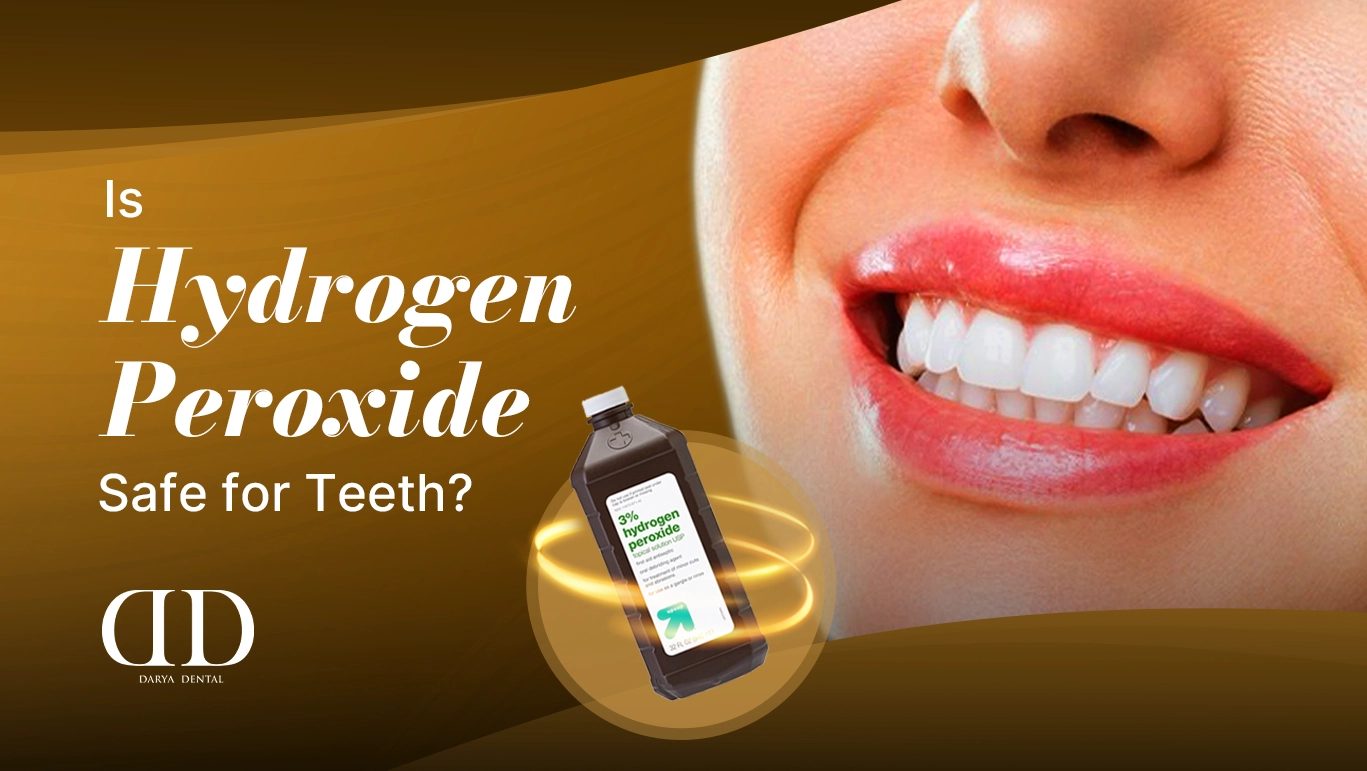

Hydrogen peroxide can whiten natural teeth, but using hydrogen peroxide directly on your teeth is not automatically safe. The safety of peroxide-based whitening depends on the product formulation, concentration, exposure time, frequency of use and the condition of your teeth and gums.
That distinction matters because hydrogen peroxide is a legitimate dental bleaching ingredient, but a household hydrogen peroxide solution is not the same thing as a professionally formulated whitening product. The fact that a bottle contains a familiar percentage does not, by itself, tell you whether that product is appropriate for use in the mouth.
If your goal is simply to make your teeth whiter, there is also an important question behind the question: why are your teeth discolored in the first place? Surface stains from coffee, tea or tobacco may respond differently from discoloration caused by aging, medication, trauma or changes within the tooth.
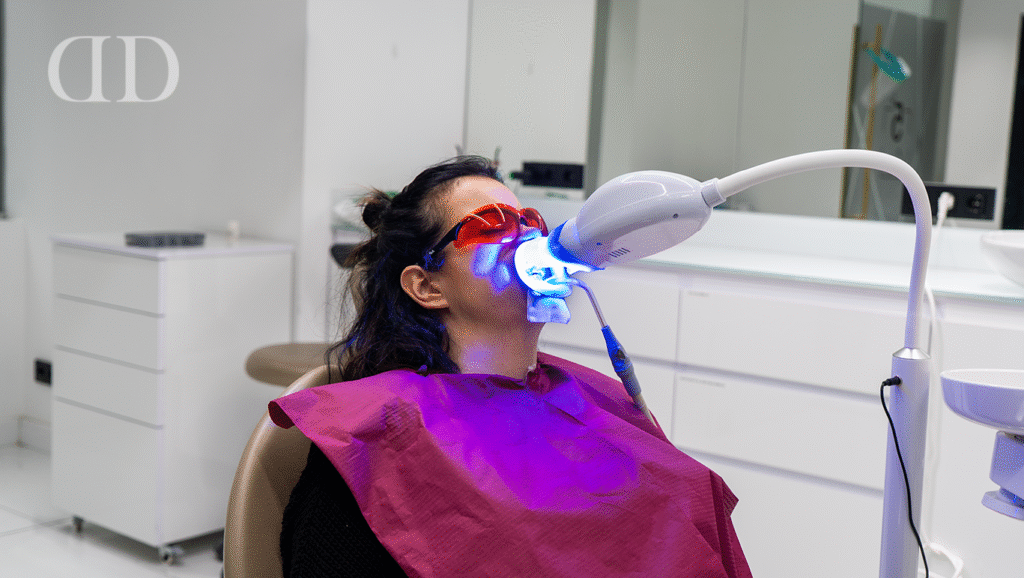
Is Hydrogen Peroxide Safe for Teeth Whitening?
Hydrogen peroxide can be used safely as part of appropriately formulated teeth whitening treatments, but it should not be treated as a universal DIY whitening solution.
The American Dental Association identifies hydrogen peroxide and carbamide peroxide as commonly used bleaching agents. It also reports that temporary tooth sensitivity and gingival irritation are the most common adverse effects associated with vital tooth whitening.
In other words, hydrogen peroxide itself is not the problem. Uncontrolled use is where the concern begins.
A professionally designed whitening treatment takes several variables into account:
| Factor | Why it matters |
| Peroxide concentration | Influences bleaching activity and the potential for sensitivity |
| Product formulation | Determines how the peroxide is delivered and how it interacts with oral tissues |
| Contact time | Longer exposure can increase tissue exposure |
| Frequency | Repeated whitening can increase sensitivity and irritation |
| Tooth condition | Existing sensitivity, enamel defects or exposed dentin can affect tolerance |
| Gum health | Inflamed or exposed gum tissue may be more vulnerable |
| Existing restorations | Crowns, veneers and fillings do not whiten like natural teeth |
This is why copying a whitening recipe from the internet can be very different from using a dental whitening product according to its intended protocol.
How Does Hydrogen Peroxide Whiten Teeth?
Hydrogen peroxide works as an oxidizing agent. During bleaching, peroxide can penetrate dental hard tissues and interact with compounds responsible for tooth discoloration. This is the chemical basis for its use in many professional and at-home whitening systems.
```html
```
Premium Dental Care in Turkey
Expert treatments with high-end technology. Get your personalized quote today via WhatsApp.
Not all tooth discoloration is the same, though.
Some discoloration is extrinsic, meaning it develops on or near the surface of the tooth. Coffee, tea, tobacco and certain foods can contribute to this type of staining.
```html  ```
```
Want trusted dental advice in your Google AI answers?
Add Darya Dental Turkey as a Preferred Source on Google to make our dental guides easier to find in your search results and AI Overviews.
Other discoloration is intrinsic, meaning it is associated with the internal structure of the tooth. Aging, some medications, trauma and developmental changes can contribute to intrinsic discoloration.
Hydrogen peroxide may improve the appearance of both types, but the response depends on the cause and severity of the discoloration.
This is also why professional whitening is not simply a matter of choosing the strongest peroxide available. The appropriate treatment depends on the patient’s teeth, existing restorations, sensitivity history and desired result.
What Percentage of Hydrogen Peroxide Is Safe for Teeth?
There is no single hydrogen peroxide percentage that can be described as universally safe for every person and every dental application.
Concentration matters, but it is only one part of the equation. The formulation, exposure time, frequency, application method and condition of the teeth and gums all affect the risk profile.
The American Dental Association notes that tooth sensitivity can be more prevalent with higher concentrations of active whitening agents, although sensitivity associated with bleaching is generally mild and temporary. Gingival irritation can also occur when peroxide-based gels contact the gums.
Recent research also supports the importance of looking beyond concentration alone. A 2026 umbrella review of 24 systematic reviews and meta-analyses found moderate-certainty evidence that low-to-medium hydrogen peroxide concentrations used for in-office bleaching could produce comparable whitening outcomes to higher concentrations while reducing tooth sensitivity.
That does not mean one percentage is automatically appropriate for everyone. It means that more peroxide is not necessarily a better whitening strategy.
Is 3% Hydrogen Peroxide Safe for Teeth?
A 3% hydrogen peroxide solution should not automatically be considered a safe DIY teeth whitening product simply because the concentration is relatively familiar.
The key question is what the product was formulated for and how it is intended to be used. Household hydrogen peroxide and a professionally formulated dental whitening gel may contain hydrogen peroxide, but they are not interchangeable products.
Using a household solution directly on the teeth can also make it difficult to control how much peroxide reaches the gums, how long it remains in contact with oral tissues and how frequently it is applied.
If you already have sensitive teeth, exposed dentin, gum inflammation, enamel defects or untreated dental problems, experimenting with peroxide at home becomes even less appropriate.
A dental assessment can identify whether whitening is suitable before a bleaching agent is applied.
Is 6% Hydrogen Peroxide Safe for Teeth Whitening?
A 6% hydrogen peroxide concentration cannot be described as universally safe or unsafe without considering the complete treatment protocol.
Research into peroxide-based whitening includes different concentrations, products and application methods. A 2024 systematic review and network meta-analysis of over-the-counter whitening protocols analyzed 37 studies, with 1,932 participants included across the evaluated evidence. The researchers found that peroxide-based whitening products could produce short-term color changes, while also emphasizing the need to consider potential risks when whitening is performed without professional supervision.
The practical takeaway is simple: the number printed on the label is not enough to determine whether a whitening treatment is appropriate for you.
A 6% peroxide product specifically formulated for oral whitening and used according to its instructions is a different situation from taking a 6% solution intended for another purpose and applying it to your teeth.
Does a Higher Concentration Mean Better Whitening?
Not necessarily.
Higher peroxide concentrations can increase bleaching activity, but they can also increase the likelihood of tooth sensitivity and soft tissue irritation. The objective is not to use the strongest possible peroxide. It is to achieve an appropriate whitening effect while keeping the treatment controlled and tolerable.
This relationship is reflected in the current evidence. The 2026 umbrella review of in-office whitening protocols found that low-to-medium hydrogen peroxide concentrations of approximately 25% to 35% could provide whitening outcomes comparable to higher concentrations, with less tooth sensitivity in the evidence reviewed.
That finding is particularly useful because it challenges a common assumption about whitening:
Stronger does not automatically mean better.
The appropriate concentration depends on the whitening system, treatment protocol and individual patient factors.
A systematic review comparing tray-delivered carbamide peroxide and hydrogen peroxide for at-home bleaching also found that both approaches could produce tooth whitening, with no significant difference between the groups in tooth sensitivity or gingival irritation in the analyzed outcomes.
For anyone considering professional whitening, this is why treatment planning matters more than simply asking for the highest available concentration.
What Is the Difference Between Professional and DIY Hydrogen Peroxide Whitening?
The biggest difference is control.
Professional whitening is planned around the patient’s teeth and gums, the cause of discoloration, the selected product and the intended exposure. DIY use often reduces the entire process to one variable: the peroxide percentage.
That is an oversimplification.
Before whitening, existing cavities, gum problems, significant sensitivity and dental restorations may need to be considered. Natural teeth can respond to bleaching, but tooth-colored restorations do not whiten in the same way.
For patients considering a controlled whitening treatment, Darya Dental Clinic’s professional teeth whitening treatment provides a relevant example of how whitening is approached as a dental treatment rather than simply a home chemical experiment.
Hydrogen Peroxide Side Effects on Teeth and Gums
Hydrogen peroxide whitening can cause temporary side effects, particularly tooth sensitivity and gum irritation. These effects are influenced by the concentration of the bleaching agent, how long it remains in contact with the teeth, how frequently whitening is performed, and the individual’s oral health.
This does not mean that peroxide whitening is inherently harmful. It means that whitening should be treated as a controlled dental procedure rather than something where more frequent application automatically produces a better result.
Tooth Sensitivity
Tooth sensitivity is one of the most common concerns associated with peroxide-based whitening.
During bleaching, peroxide molecules interact with compounds responsible for discoloration within the tooth. This process can temporarily make the teeth more responsive to cold, heat, sweet foods or acidic drinks.
Sensitivity is usually temporary, but its intensity varies. People who already have sensitive teeth may be more likely to experience discomfort during or after whitening.
Several factors can influence sensitivity:
- Peroxide concentration
- Duration of each whitening session
- Frequency of treatment
- Existing enamel wear
- Exposed dentin
- Gum recession
- Previous sensitivity
The American Dental Association identifies tooth sensitivity as one of the most common adverse effects of vital tooth bleaching. It also notes that higher concentrations of bleaching agents can be associated with increased sensitivity.
If sensitivity continues after whitening has stopped, becomes severe, or affects a particular tooth rather than the teeth generally, it should not automatically be attributed to the whitening treatment. Tooth decay, cracks, gum recession, exposed dentin and other dental problems can also cause sensitivity.
Gum Irritation
Hydrogen peroxide can irritate gingival tissue when the bleaching agent comes into contact with the gums.
Depending on the level of exposure, a person may notice temporary redness, discomfort or a change in the appearance of the gum tissue. This is one reason professionally formulated whitening systems are designed around controlled application rather than unrestricted exposure.
The American Dental Association lists gingival irritation among the potential adverse effects of peroxide-based whitening.
The risk becomes particularly relevant when someone uses a household hydrogen peroxide solution and applies it directly to the teeth. There may be no mechanism to precisely control where the solution contacts the gums or how long it remains there.
Persistent gum pain, swelling, bleeding or significant irritation after whitening warrants professional assessment rather than repeated attempts to continue the treatment.
Can Hydrogen Peroxide Damage Tooth Enamel?
Hydrogen peroxide is an established bleaching ingredient, so its presence in a dental whitening product does not automatically mean that it will damage enamel.
At the same time, this does not mean that unrestricted peroxide exposure is harmless.
The effect of bleaching depends on factors such as concentration, application time, formulation and frequency. Research into tooth whitening therefore needs to be interpreted in the context of the specific treatment protocol rather than reduced to a simple statement that peroxide is either “safe” or “damaging.”
This distinction is especially important for people who already have enamel erosion, significant wear, cracks or other structural dental problems.
Whitening is designed to change tooth color. It is not a treatment for weakened enamel or structural defects.
If you have an underlying dental problem, addressing that problem first may be more appropriate than attempting to compensate for it with stronger whitening.
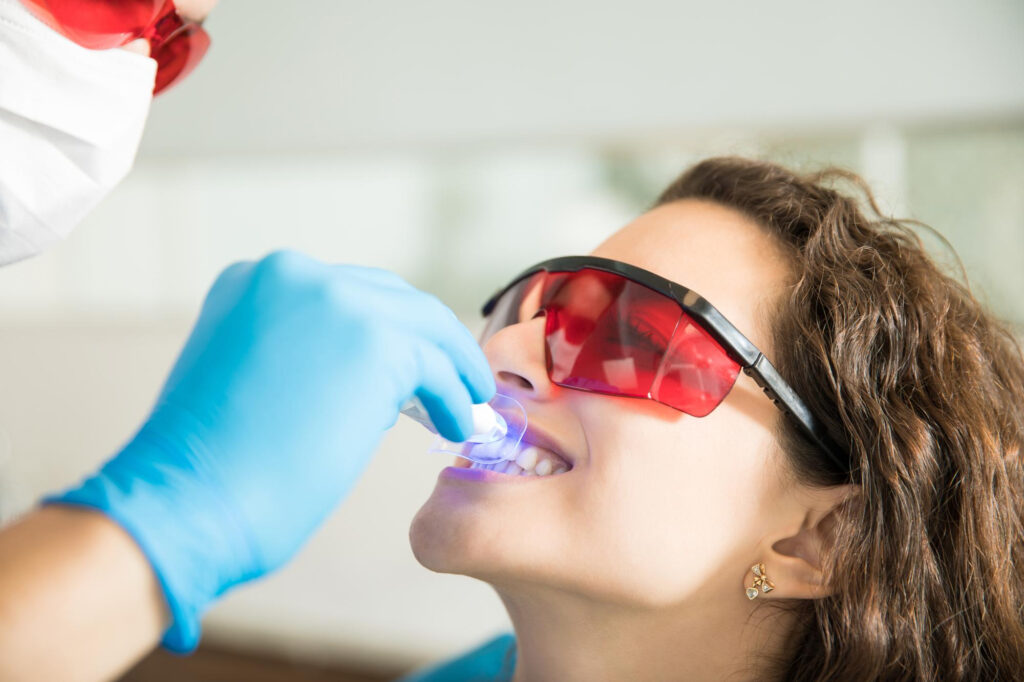
What Happens If Hydrogen Peroxide Is Used Too Often?
Using a peroxide whitening treatment more frequently than recommended can increase the likelihood of sensitivity and gum irritation.
There is also a practical misconception worth correcting: whitening more often does not necessarily mean whitening better.
Once a tooth has reached the shade achievable with a particular treatment, repeatedly exposing it to more peroxide does not guarantee a proportionally greater improvement. It can instead make the treatment less comfortable.
This is why product instructions and professional recommendations matter. The appropriate interval between treatments depends on the whitening system being used and the individual’s response.
If repeated whitening causes sensitivity, the answer is not necessarily to switch to a stronger peroxide concentration. A dentist may need to determine whether the sensitivity is related to whitening or whether another dental condition is contributing to it.
Is Hydrogen Peroxide Mouthwash Safe?
Hydrogen peroxide is used in some commercially formulated mouthrinses, but that does not mean household hydrogen peroxide should automatically be used as a homemade mouthwash.
This distinction is important because a mouthrinse is a formulated oral care product. Its ingredients, concentration, intended use and directions are designed for contact with the mouth.
The American Dental Association notes that hydrogen peroxide is used as an active ingredient in certain mouthrinses and that mouthrinse formulations vary depending on their intended purpose.
A household peroxide solution is not automatically equivalent to an oral rinse simply because both contain hydrogen peroxide.
Can You Use Hydrogen Peroxide as a Mouthwash?
The answer depends on the product.
If hydrogen peroxide is included in a mouthrinse specifically formulated for oral use, the product should be used according to its instructions. A household solution should not be assumed to have the same formulation, safety profile or intended method of use.
Mouthwash also has a limited role in overall oral hygiene. It does not replace brushing with fluoride toothpaste, cleaning between the teeth or professional dental care.
If you are considering hydrogen peroxide mouthwash because of persistent bad breath, bleeding gums or another oral symptom, treating the underlying cause is more important than simply adding another rinse to your routine.
Persistent bad breath, for example, can be associated with oral hygiene problems, gum disease, dry mouth and other conditions. A peroxide rinse may not address the reason the symptom is occurring.
Does Hydrogen Peroxide Whiten Teeth?
Yes, hydrogen peroxide can whiten natural teeth by oxidizing compounds associated with tooth discoloration.
This is why hydrogen peroxide and carbamide peroxide are widely used in dental bleaching products. The effectiveness of whitening depends on factors including the starting tooth shade, cause of discoloration, peroxide formulation, concentration and treatment protocol.
Semrush data shows that “does hydrogen peroxide whiten teeth” has an estimated US monthly search volume of 5,400 and a keyword difficulty of 24, making it a particularly relevant question for this topic.
However, “whitening” does not mean that every tooth will become dramatically lighter.
What Determines How Much Teeth Can Whiten?
Several factors influence the final result:
| Factor | Effect on whitening |
| Type of discoloration | Some stains respond more readily to bleaching than others |
| Starting tooth shade | Initial color affects the visible change |
| Tooth structure | Natural tooth characteristics influence the response |
| Whitening system | Different products use different formulations and protocols |
| Treatment duration | Exposure affects the bleaching process |
| Existing restorations | Restorations generally do not whiten like natural teeth |
| Oral health | Sensitivity, cavities and gum problems may affect treatment suitability |
This is particularly important if you have crowns, veneers or fillings on visible teeth.
Hydrogen peroxide can change the color of natural tooth structure, but dental restorations do not respond to bleaching in the same way. If natural teeth become lighter while restorations remain at their original shade, the difference can become more noticeable.
For this reason, the question should not only be “How white can my teeth become?” It should also be “Will whitening create a consistent shade across my natural teeth and restorations?”
Hydrogen Peroxide and Baking Soda for Teeth Whitening
Hydrogen peroxide and baking soda are frequently mentioned together in DIY teeth whitening discussions.
There is a reason the combination sounds plausible. Hydrogen peroxide acts as a bleaching agent, while baking soda can help remove certain surface deposits because of its mild abrasive properties.
But these are two different mechanisms.
Hydrogen peroxide works primarily through chemical oxidation, while baking soda primarily contributes to the mechanical removal of some surface staining.
Semrush estimates that “hydrogen peroxide and baking soda” has a US monthly search volume of 5,400 with a keyword difficulty of 20, while the more specific phrase “hydrogen peroxide and baking soda teeth whitening” has an estimated volume of 480.
That search demand makes the subject worth addressing, but it does not make a DIY mixture a recommended whitening protocol.
Does Baking Soda Make Hydrogen Peroxide More Effective?
There is not enough reason to assume that mixing household hydrogen peroxide with baking soda automatically creates a better or safer whitening treatment.
Baking soda can contribute to the removal of certain surface stains, but surface stain removal is not the same as bleaching the internal color of the tooth.
The bigger issue is control. A homemade mixture does not provide the same controlled formulation, application method and exposure conditions as a product designed specifically for dental whitening.
Using abrasive materials too aggressively can also be counterproductive. The aim of everyday oral care should be to clean the teeth without unnecessarily traumatizing enamel or gum tissue.
For that reason, combining household ingredients based on an online recipe should not be treated as equivalent to a clinically designed whitening system.
Is Food Grade Hydrogen Peroxide Safe for Teeth?
No. The term “food grade” does not mean that concentrated hydrogen peroxide is suitable for direct application to teeth or gums.
A product’s label describes its specification or intended manufacturing standard. It does not automatically make concentrated hydrogen peroxide an oral whitening product.
This distinction is particularly important because concentrated hydrogen peroxide can irritate or injure biological tissues. Diluting a concentrated product at home also introduces another problem: the final concentration and exposure may not be controlled accurately enough for safe dental use.
For this reason, the high-concentration dilution recipes sometimes presented online should not be used as a substitute for a properly formulated dental whitening product.
Food grade is not the same thing as dental grade, and a product suitable for one purpose should not automatically be repurposed for another.
If whitening is the goal, use a product specifically designed for oral whitening or discuss an appropriate whitening protocol with a dental professional.
Hydrogen Peroxide Toothpaste and Other DIY Whitening Methods
Hydrogen peroxide can also appear in toothpaste and other oral care products.
Again, the important distinction is formulation.
A toothpaste that contains hydrogen peroxide is designed as a complete oral care product, with its ingredients and usage instructions considered together. That is different from adding hydrogen peroxide to toothpaste at home.
The same principle applies to homemade whitening mixtures, peroxide rinses and combinations with baking soda.
The ingredient itself does not determine the safety of the entire application.
Formulation, concentration, exposure and frequency need to be considered together.
This is one of the clearest reasons why a DIY recipe found online should not be treated as equivalent to a dental whitening product.
Hydrogen Peroxide vs Professional Teeth Whitening
The difference between DIY hydrogen peroxide use and professional teeth whitening is not simply the percentage of peroxide involved. The bigger difference is control: the product formulation, application method, exposure time, treatment frequency and condition of the patient’s teeth and gums can all be considered together.
Professional whitening is planned around the patient’s individual situation. Before treatment, a dentist can identify problems such as cavities, gum inflammation, significant sensitivity or damaged teeth that may need attention first.
A professional assessment is also particularly useful when discoloration has an unclear cause. Generalized yellowing associated with aging is different from a single darkened tooth following trauma, and neither situation should automatically be approached with the same whitening protocol.
| Consideration | DIY Hydrogen Peroxide | Professional Whitening |
| Product selection | May be based on household availability | Selected specifically for dental use |
| Concentration | May be chosen without clinical guidance | Considered as part of a treatment protocol |
| Exposure control | Can be difficult to control | Application is more controlled |
| Gum exposure | May be unpredictable | Can be minimized during treatment |
| Existing dental problems | May remain undetected | Can be assessed beforehand |
| Tooth sensitivity | Risk factors may be overlooked | Previous sensitivity can be considered |
| Crowns and veneers | May not be considered | Existing restorations can be evaluated |
| Treatment instructions | Often based on online advice | Based on the selected treatment system |
Professional whitening does not mean that side effects are impossible. Temporary sensitivity and gum irritation can still occur. The advantage is that the whitening process can be selected and managed with the patient’s oral health in mind.
For people considering professional whitening, Darya Dental Turkey provides additional information about its teeth whitening treatment.
When Should You Avoid Hydrogen Peroxide for Teeth?
Hydrogen peroxide whitening may not be appropriate when there is an untreated dental or gum problem.
You should consider a dental evaluation before whitening if you have:
- Persistent tooth sensitivity
- Bleeding or swollen gums
- Untreated cavities
- Cracked or damaged teeth
- Significant enamel erosion or wear
- Exposed dentin
- Gum recession
- A tooth that has suddenly become darker
- Extensive crowns, veneers or fillings
- Unexplained changes in tooth color
This does not mean that everyone with one of these conditions can never have their teeth whitened. It means that the underlying condition should be understood before choosing a whitening method.
For example, gum recession can expose areas of the tooth that are naturally more sensitive. Applying more peroxide will not correct the recession. Similarly, whitening a tooth that has become dark after trauma may not address the reason for the discoloration.
Can You Whiten Teeth If You Have Crowns or Veneers?
You can potentially whiten natural teeth when you have crowns or veneers, but the restorations themselves generally do not change shade in the same way as natural teeth.
This can create a color mismatch.
If a person has visible veneers or crowns and wants a noticeably lighter smile, the timing of whitening and the existing restoration shade should therefore be considered before treatment.
The American Dental Association specifically notes that bleaching does not change the color of tooth-colored restorations in the same way it changes natural tooth structure.
When Should You See a Dentist?
You should seek professional advice when tooth discoloration is unexplained, when whitening causes significant discomfort, or when you have existing dental symptoms.
A dental evaluation is particularly useful when:
- One tooth is significantly darker than the others
- Sensitivity is severe or persistent
- Gums become painful or swollen
- Whitening causes bleeding or significant irritation
- Tooth pain develops during or after whitening
- You have untreated cavities or damaged teeth
- You are unsure whether existing restorations will match the desired shade
Whitening-related sensitivity is often temporary, but persistent symptoms should not simply be dismissed as a normal part of bleaching.
A dentist can determine whether the discomfort is actually related to whitening or whether another condition is responsible.
What Is the Safest Way to Whiten Teeth?
The safest approach is not necessarily the one with the lowest peroxide concentration. It is the approach that uses an appropriate product and protocol for the individual’s teeth and gums.
A sensible whitening process usually starts with identifying the cause of discoloration and checking whether there are dental problems that should be addressed first.
From there, the appropriate option may include a professionally supervised whitening treatment, a properly formulated home whitening system or another cosmetic approach depending on the patient’s situation.
The important point is to avoid treating hydrogen peroxide as a one-size-fits-all ingredient.
Hydrogen peroxide can whiten natural teeth, but the safety of whitening depends on how the peroxide is formulated and used, not simply on its concentration.
Higher peroxide concentration does not automatically mean better whitening. Current evidence indicates that lower or medium concentrations can sometimes achieve comparable whitening outcomes with less sensitivity. PubMed: Hydrogen peroxide concentration and tooth sensitivity
Household or concentrated hydrogen peroxide should not be repurposed as a DIY dental whitening treatment simply because it contains the same active ingredient used in professional products.
Frequently Asked Questions
Is hydrogen peroxide safe for teeth?
Hydrogen peroxide can be safely used as part of appropriately formulated dental whitening products, but household hydrogen peroxide should not automatically be considered suitable for direct application to the teeth. Concentration, formulation, exposure time, frequency and individual oral health all matter.
Does hydrogen peroxide whiten teeth?
Yes. Hydrogen peroxide can whiten natural teeth by oxidizing compounds responsible for discoloration. The degree of whitening depends on the cause of staining, starting tooth shade and the whitening method used.
Is 3% hydrogen peroxide safe for teeth?
A 3% household hydrogen peroxide solution should not automatically be considered a safe DIY whitening treatment. The percentage alone does not establish whether a product is appropriate for oral use.
Is 6% hydrogen peroxide safe for teeth whitening?
A 6% hydrogen peroxide concentration cannot be considered universally safe or unsafe without considering the product formulation, exposure time, application method and individual oral health. Higher peroxide concentrations can also increase the risk of sensitivity.
What percentage of hydrogen peroxide is safe for teeth?
There is no universal percentage that is appropriate for every person and every whitening application. Dental whitening products use specific concentrations as part of defined treatment protocols, and the appropriate choice depends on the product and the individual.
Is hydrogen peroxide mouthwash safe?
Some commercially formulated mouthrinses contain hydrogen peroxide and are designed specifically for oral use. Household hydrogen peroxide should not automatically be used as a homemade mouthwash because its formulation and intended use may be different. American Dental Association: Mouthrinse (Mouthwash)
Can hydrogen peroxide damage tooth enamel?
Hydrogen peroxide is an established bleaching ingredient, so its presence in a properly formulated whitening product does not automatically mean enamel damage. However, inappropriate concentration, excessive exposure or unsuitable use can create unnecessary risks, particularly when teeth already have structural problems.
Can hydrogen peroxide damage gums?
Yes, peroxide can irritate the gums when the bleaching agent remains in contact with gingival tissue. Gum irritation is a recognized side effect of peroxide-based whitening.
Is hydrogen peroxide and baking soda safe for teeth whitening?
Hydrogen peroxide and baking soda are commonly discussed as a DIY whitening combination, but mixing household ingredients does not create a professionally controlled whitening treatment. Baking soda can help remove some surface stains, while hydrogen peroxide acts through chemical oxidation.
Is food grade hydrogen peroxide safe for teeth?
No. The term “food grade” does not mean that concentrated hydrogen peroxide is suitable for direct application to teeth or gums. Concentrated peroxide should not be used as a DIY whitening ingredient or diluted at home for dental use.
Can hydrogen peroxide whiten crowns or veneers?
No. Hydrogen peroxide can whiten natural tooth structure, but crowns, veneers and other tooth-colored restorations do not generally respond to bleaching in the same way. This can create a shade difference between natural teeth and existing restorations. American Dental Association: Teeth Whitening
Can I use hydrogen peroxide to whiten my teeth every day?
Daily use should not be assumed to be safe simply because hydrogen peroxide is used in dental whitening products. Frequency should follow the instructions for the specific whitening product or the guidance of a dental professional. Repeated unnecessary exposure can increase the likelihood of sensitivity and gum irritation.
Hydrogen peroxide can be an effective ingredient for whitening natural teeth, but the safest approach is not to focus on the percentage alone. Product formulation, concentration, exposure time, frequency and individual oral health all influence how a whitening treatment should be used.
DIY use of household or concentrated hydrogen peroxide is not equivalent to professional or properly formulated dental whitening. If you have sensitive teeth, gum problems, unexplained discoloration or visible crowns and veneers, these factors should be considered before whitening.
For people who want a controlled approach to changing their natural tooth shade, professional assessment can help determine whether whitening is appropriate and which treatment method best fits their dental condition. Darya Dental Turkey’s teeth whitening treatment page provides further information about professional whitening options.
