
How Much Does a Single Tooth Veneer Cost?
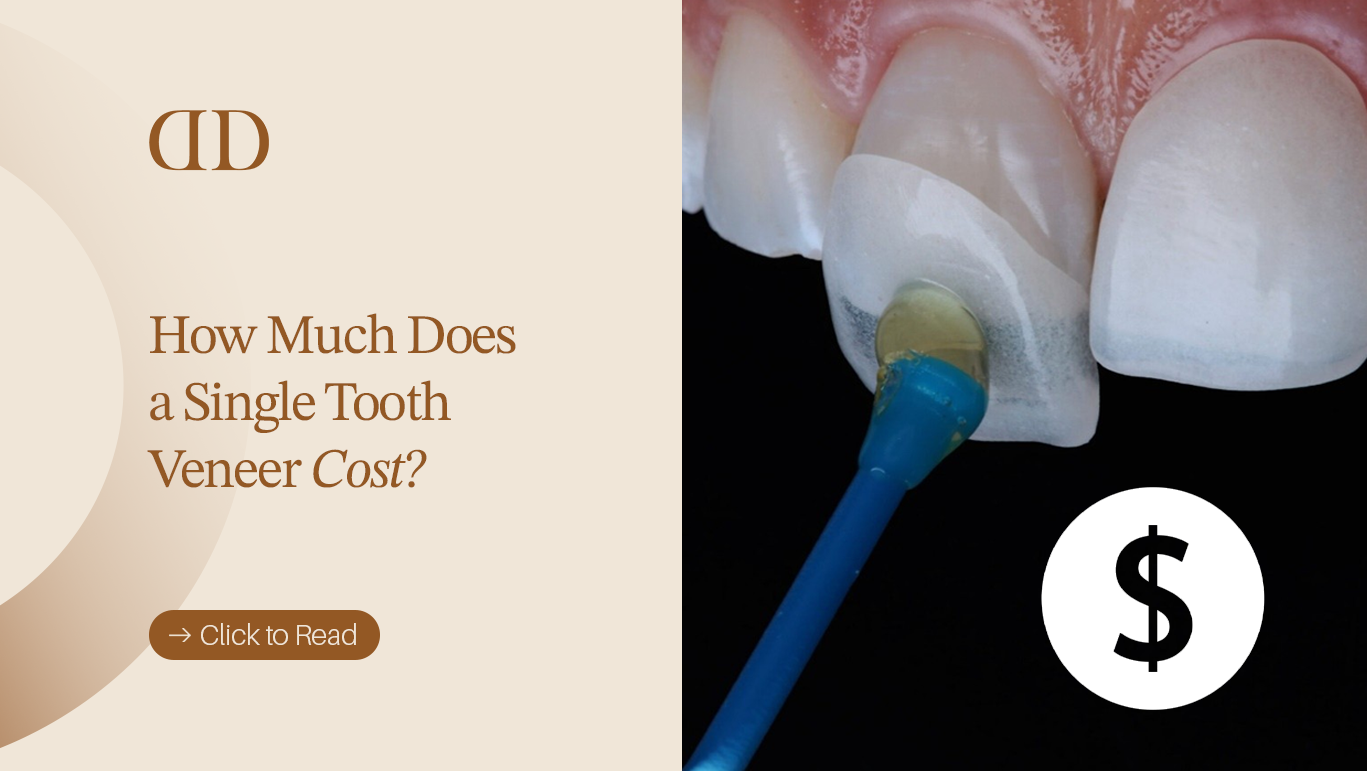

The cost of a single tooth veneer at Darya Dental Turkey is listed at approximately $250 to $350 for a porcelain or E.max laminate veneer, based on the clinic’s existing published pricing. Composite bonding, which may be an alternative for certain minor cosmetic concerns, is listed at $150 to $200 per tooth. These figures are reference prices from the existing cost article, not a guaranteed or personalised quotation. The final fee depends on the material selected, the condition of the tooth, laboratory requirements and any additional treatment needed.
A single veneer can address concerns such as a chipped edge, visible discolouration or an irregular tooth shape. However, not every cosmetic concern requires a veneer. The appropriate treatment depends on the amount of healthy tooth structure remaining, the condition of the surrounding teeth and the patient’s clinical needs. For selected minor cosmetic changes, composite bonding treatment may be considered, while more extensive structural damage may require an assessment for dental crown treatment.
How Much Does One Veneer Cost?
The price of one dental veneer varies according to the restoration type and the work required to produce and fit it. At Darya Dental Turkey, the existing published price ranges provide the following starting point for comparison.
| Treatment option | Published reference price per tooth |
| Composite bonding | $150 to $200 |
| Porcelain or E.max laminate veneer | $250 to $350 |
Prices are taken from Darya Dental Turkey’s existing cost article. They should be reconfirmed with the clinic before publication or use in a treatment decision. They do not represent a confirmed quote for every patient.
A composite bonding procedure uses tooth-coloured resin that is shaped directly onto the tooth. A porcelain veneer is a custom-made restoration, usually fabricated in a dental laboratory, and bonded to the front surface of the tooth.
These treatments are not interchangeable. Although composite bonding may have a lower initial cost, the most suitable option depends on the clinical condition of the tooth, the desired correction and the expected maintenance requirements.
For an accurate estimate, the dentist must assess the tooth and confirm the proposed restoration, material and any additional procedures.
What Affects the Cost of a Single Tooth Veneer?
The cost of a single tooth veneer is influenced by more than the material alone. Several clinical and technical factors can affect the final quotation.
Veneer Material and Laboratory Work
The material plays an important role in the price of a single veneer.
Premium Dental Care in Turkey
Expert treatments with high-end technology. Get your personalized quote today via WhatsApp.
Composite resin can often be shaped directly on the tooth during a dental appointment. Porcelain and other ceramic veneers generally require individual design and fabrication, adding laboratory work to the treatment process.
The specific ceramic selected, the complexity of the restoration and the laboratory arrangements can all influence the price. E.max is a lithium disilicate glass-ceramic material used for certain dental restorations. It should not automatically be assumed that every porcelain veneer uses this material or that every clinic offers the same ceramic options.

Want trusted dental advice in your Google AI answers?
Add Darya Dental Turkey as a Preferred Source on Google to make our dental guides easier to find in your search results and AI Overviews.
When comparing prices, ask which material is included in the quotation and whether the laboratory fee is covered.
Tooth Condition and Preparation Requirements
The condition of the tooth can affect both the treatment choice and its cost.
A small chip in an otherwise healthy tooth may be suitable for composite bonding or a veneer. A tooth with extensive damage, significant decay or a large existing restoration may require a different approach.
The dentist may also need to assess the bite, enamel condition, gum health and the amount of space available for the restoration. Some veneers require enamel preparation, which is irreversible when enamel is removed. The amount of preparation varies according to the tooth and the planned restoration.
If additional treatment is needed before the veneer can be placed, the total cost may increase.
Consultation, Temporary Restorations and Follow-Up
A quotation should explain whether the following items are included:
- Initial dental examination and any required diagnostic imaging.
- Shade selection, impressions or digital scans.
- Laboratory fabrication and material costs.
- Temporary restorations, if clinically necessary.
- Veneer placement and bite adjustments.
- Follow-up appointments and any applicable adjustment fees.
Not every patient requires all these services. The purpose of the checklist is to clarify the scope of the proposed treatment rather than assume that every item will be charged separately.
Single Tooth Veneer Cost by Material
Different veneer materials involve different techniques, fabrication processes and maintenance considerations. The most appropriate option depends on the clinical assessment rather than price alone.
Composite Veneers
Composite resin can be applied directly to a tooth and shaped to improve its appearance. Depending on the case, this may be described as composite bonding or a direct composite veneer.
Composite bonding may be suitable for selected minor chips, small gaps or localised changes in tooth shape. It often requires less tooth preparation than a conventional porcelain veneer, although the procedure varies according to the clinical situation.
Its relatively accessible initial price can make it worth considering when only one tooth needs correction. However, composite resin can stain, wear or chip over time and may require polishing, repair or replacement.
Best considered when: the required correction is limited and the tooth is suitable for a direct composite restoration.
Porcelain and Ceramic Veneers
Porcelain veneers are custom-made restorations bonded to the front surface of teeth. They can be used to change the appearance of selected teeth by modifying their shape, colour or surface characteristics.
Their fabrication requires careful planning, including assessment of the tooth, shade selection and communication with the dental laboratory. Some enamel preparation may be necessary, and the amount depends on the individual case.
Porcelain and ceramic restorations are not maintenance-free. They can chip, fracture or become detached, and their long-term performance depends on factors such as bite forces, oral health and maintenance.
Best considered when: the tooth is clinically suitable for a custom-made ceramic restoration and the planned correction justifies its use.
E.max Veneers
E.max is a brand of lithium disilicate glass-ceramic used in dentistry. It is one of the ceramic options that may be considered for veneers, depending on the tooth and the treatment plan.
Its suitability depends on factors such as the available enamel, restoration design, tooth position, bite and the amount of correction required. The name of the material alone does not determine whether it is the best choice for an individual tooth.
Before accepting a quote, confirm whether it specifies E.max or another ceramic material. The terms porcelain veneer, ceramic veneer and E.max veneer should not automatically be treated as identical product descriptions.
Is One Veneer More Expensive Per Tooth Than Multiple Veneers?
A single veneer can have a higher unit price than a veneer included in a multi-tooth package. However, this depends on the clinic’s pricing structure and the details of the treatment.
Some laboratory and planning costs are associated with each restoration or case. Producing one custom veneer may not offer the same unit-cost advantages as producing several restorations together. Multi-veneer treatment may also involve package pricing that is unavailable for a single tooth.
This does not mean that a single veneer must always cost more per tooth. Clinics calculate fees differently, so the comparison should be based on actual written quotations.
When comparing one veneer with a multi-veneer package, check:
- The price of the restoration itself.
- Whether consultation, scans and laboratory work are included.
- Whether the quote covers one tooth or a specified number of veneers.
- Whether temporary restorations and adjustments are included.
- Whether the package includes travel or accommodation services that are irrelevant to a patient seeking treatment for one tooth.
A lower advertised price is not necessarily the most appropriate option if it covers a different material or a narrower scope of treatment.
Can a Single Veneer Match Your Other Teeth?
A single veneer can be designed to blend with neighbouring natural teeth, but an exact match cannot be guaranteed.
Natural teeth vary in shade, translucency, surface texture and shape. Even teeth that appear to have the same colour may reflect light differently. A ceramic restoration can also respond to lighting differently from natural enamel.
For this reason, shade selection should consider the adjacent teeth, the patient’s existing tooth colour and the characteristics of the selected material. The shape and proportions of the restoration must also be planned in relation to the surrounding teeth.
If the neighbouring teeth are heavily stained or have a noticeably different colour, matching one veneer may require additional discussion about the expected appearance. Whitening may be considered in selected cases, but it does not change the colour of an existing veneer.
Patients should discuss their preferred result with the dentist before treatment begins. The dentist can explain the realistic limitations of matching a single restoration to natural teeth.
What Should a Single Veneer Quote Include?
A written treatment estimate should make it clear what the patient is paying for and what may incur an additional fee.
Use the following checklist when comparing quotations.
| Quotation item | What to confirm |
| Restoration type | Is it composite bonding, a composite veneer, a ceramic veneer or another restoration? |
| Material | Is the specific material named, such as E.max or another ceramic? |
| Examination | Is the initial consultation included? |
| Diagnostics | Are any required X-rays, scans or impressions included? |
| Tooth preparation | Is preparation anticipated, and has this been explained? |
| Laboratory work | Is custom fabrication included in the quoted price? |
| Temporary restoration | Is a temporary veneer needed, and is it included? |
| Fitting and adjustments | Does the fee include placement and necessary bite adjustments? |
| Additional treatment | Are cleaning, gum treatment or restorative procedures charged separately if required? |
| Aftercare | What follow-up, adjustment or repair arrangements apply? |
The quote should also identify the currency, the date of the estimate and any conditions attached to the price.
If treatment is planned in Istanbul, international patients should separately confirm travel, accommodation and local transport expenses where relevant. These costs should not be confused with the dental fee itself.
Is a Veneer the Best Option for One Damaged Tooth?
A veneer is not the only option for correcting a damaged or unattractive tooth. Composite bonding, a dental crown or another restorative treatment may be more appropriate depending on the extent of the damage and the remaining healthy tooth structure.
Composite bonding involves applying and shaping tooth-coloured resin. It may be suitable for selected small chips, minor gaps or localised cosmetic changes.
A veneer covers the front surface of the tooth. It may be considered when a change in the visible surface, shape or colour is needed and the tooth is suitable for this type of restoration.
A dental crown covers more of the tooth and may be recommended when the tooth requires greater structural coverage. Whether a crown is appropriate depends on the extent of damage and the tooth’s clinical condition.
The treatments differ in their preparation requirements, material properties, costs and maintenance needs. A crown should not be assumed necessary for every damaged tooth, just as a veneer should not be assumed suitable for every cosmetic concern.
A dentist should assess the tooth before recommending a treatment. Where decay, gum disease or other oral health problems are present, these may need to be addressed before cosmetic treatment is considered.
Getting a Single Tooth Veneer in Istanbul, Turkey
For international patients considering a single veneer in Istanbul, the main priority should be obtaining a clear treatment plan and a written price estimate before making travel arrangements.
Darya Dental Turkey’s existing cost article lists composite bonding at $150 to $200 per tooth and porcelain or E.max laminate veneers at $250 to $350 per tooth. These published figures provide a starting point for budgeting, but they should be reconfirmed because clinic fees and treatment requirements can change.
Before travelling, patients should clarify the proposed restoration, the material, the expected appointment schedule and whether any additional procedures may be required. They should also ask what happens if the dentist determines that a veneer is not the most appropriate option after examining the tooth.
Patients travelling from abroad may need to account for accommodation, transport and the practicalities of follow-up care. A treatment quotation should distinguish these expenses from the dental procedure itself.
Darya Dental Turkey is located in Ataşehir, Istanbul. The suitability of a single veneer and the final cost should be determined through an individual dental assessment and a clearly itemised estimate.
For a broader comparison of treatment costs, see the existing Composite Bonding and Laminate Veneers Cost in Istanbul, Turkey article.
Frequently Asked Questions
How much does a single tooth veneer cost?
At Darya Dental Turkey, the existing published reference price for a porcelain or E.max laminate veneer is $250 to $350 per tooth. Composite bonding is listed at $150 to $200 per tooth. The final cost depends on the material, the condition of the tooth and the treatment required. These figures should be confirmed with the clinic before making a decision.
Can you get a veneer on just one tooth?
Yes, a veneer can be placed on a single tooth when the tooth is clinically suitable. The dentist must assess the tooth’s condition, surrounding teeth, bite and shade requirements before recommending treatment.
Is one veneer more expensive per tooth than a full set?
It can be, but not in every clinic. Multi-veneer packages may reduce the unit price because of differences in laboratory arrangements, planning costs and package pricing. Compare the actual treatment scope and included services rather than assuming that a larger package is always better value.
What is cheaper, a composite veneer or a porcelain veneer?
Composite bonding or a direct composite veneer generally has a lower initial cost than a custom-made porcelain veneer. The exact difference depends on the clinic, the material and the work involved. Composite may require maintenance or repair over time, so the initial price should not be the only factor in the decision.
Can a single veneer match the colour of natural teeth?
A single veneer can be designed to blend with natural teeth, but a perfect match is not guaranteed. Shade, translucency, surface texture and lighting can affect the appearance. The dentist should assess the neighbouring teeth and discuss realistic expectations before treatment.
Does a single veneer require shaving down the tooth?
Some veneers require enamel removal, while other approaches may involve little or no preparation in selected cases. The amount depends on the tooth’s position, condition, material and restoration design. Because enamel removal is irreversible, the dentist should explain the proposed preparation before treatment.
What additional costs should I expect when getting one veneer?
Potential additional costs include examination, diagnostic imaging, scans, temporary restorations, treatment of existing dental problems and follow-up adjustments. Not every patient needs all these services. Ask for a written estimate that identifies what is included and what may be charged separately.
Is composite bonding a better option than a veneer for one tooth?
Neither option is universally better. Composite bonding may suit a small chip or minor shape correction, while a ceramic veneer may be considered for other cosmetic needs. The appropriate choice depends on the tooth’s condition, the desired result, the amount of preparation required and the patient’s clinical needs.
The cost of a single tooth veneer depends on the restoration type, material, laboratory work and clinical requirements. A published per-tooth price is useful for initial budgeting, but it does not replace an individual treatment estimate.
Before choosing a treatment, confirm the material, the procedures included, any potential additional fees and the expected maintenance requirements. A dentist’s assessment is essential to determine whether a veneer, composite bonding or another restoration is appropriate for the tooth.
Author and Medical Review
Written by: Dt. Sedat
Medically Reviewed by: Darya Ozcan
This content is intended for general informational purposes only and does not constitute personal dental advice, diagnosis, or treatment recommendations. The suitability of dental treatments and the appropriate treatment plan should be determined by a qualified dentist following an individual clinical assessment.
