
Gum Contouring Before Veneers: When It Improves Smile Proportions
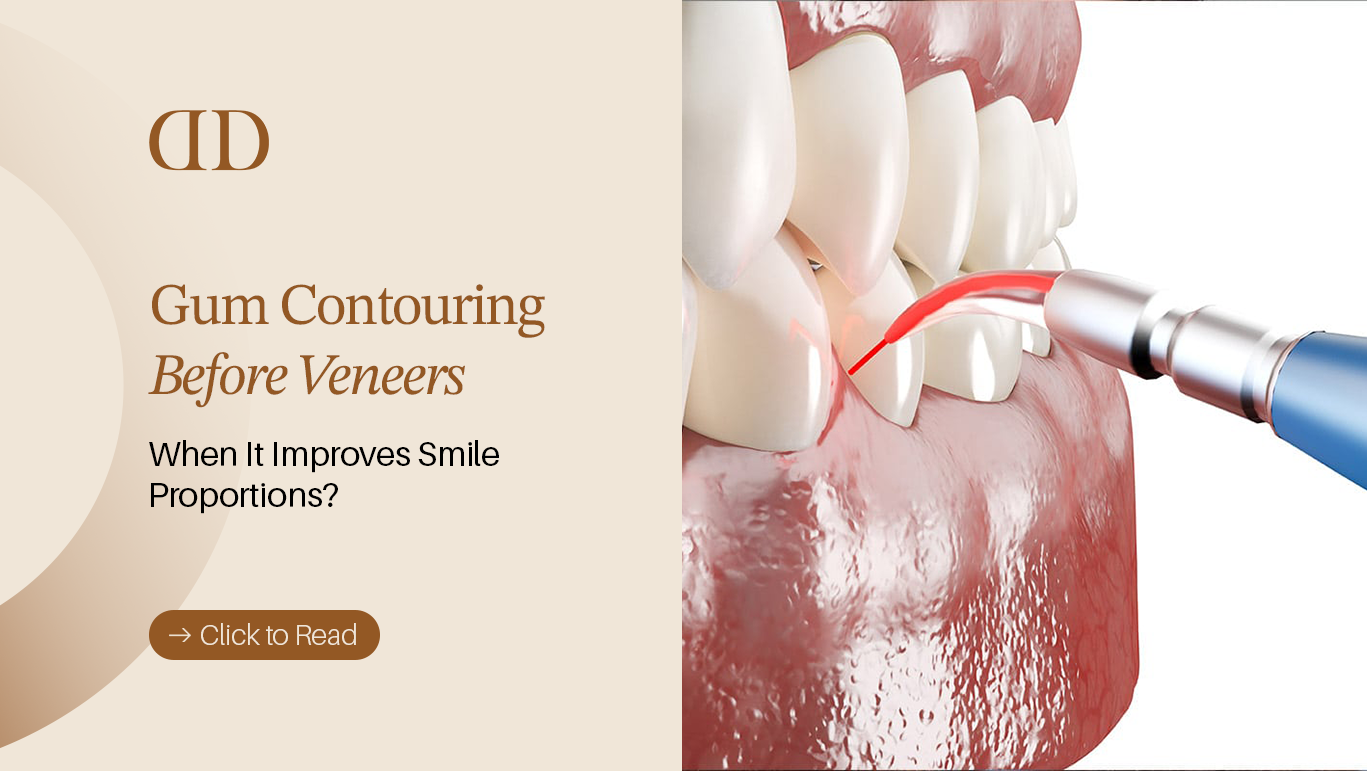

Gum contouring before veneers is a corrective cosmetic dental procedure designed to reshape an uneven, excessive, or asymmetrical gum line to establish ideal tooth-to-gum proportions before placing custom ceramic or porcelain veneers.
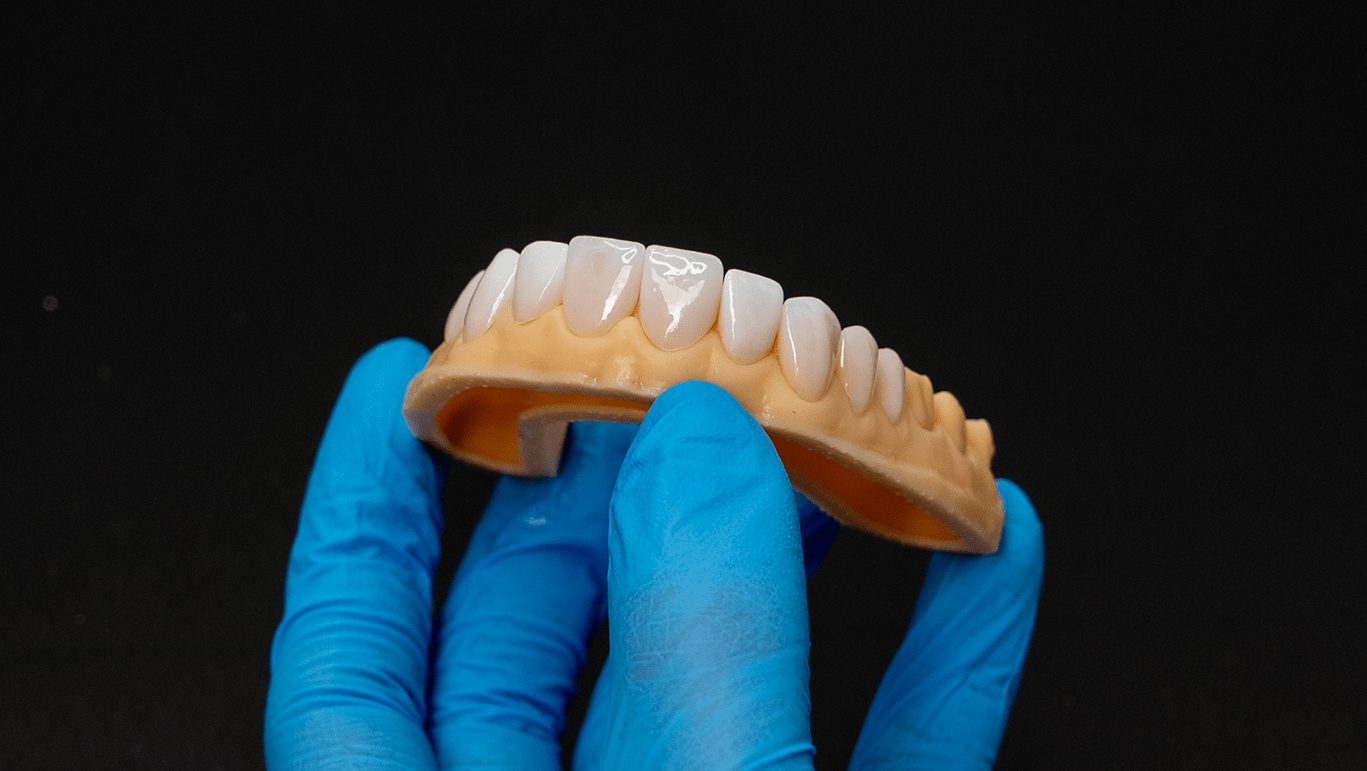
When planning a smile transformation, porcelain veneers can change the color, shape, and overall alignment of your teeth. However, veneers only cover the natural enamel surface of the tooth. If your underlying gum line sits too low, covers too much of your enamel, or dips unevenly across adjacent teeth, simply bonding veneers on top will not fix the underlying structural visual balance. By reshaping the gingival tissue beforehand, your cosmetic dentist creates a symmetrical frame, allowing your new veneers to appear natural, proportionate, and aesthetically pleasing.
Why Gum Contouring May Be Considered Before Veneers
Achieving a harmonious smile requires a balanced relationship between three core components: your lips, your teeth, and your gums. While porcelain veneers alter the tooth structure, the framework holding those teeth the gingival tissue dictates where the top edge of each veneer begins.
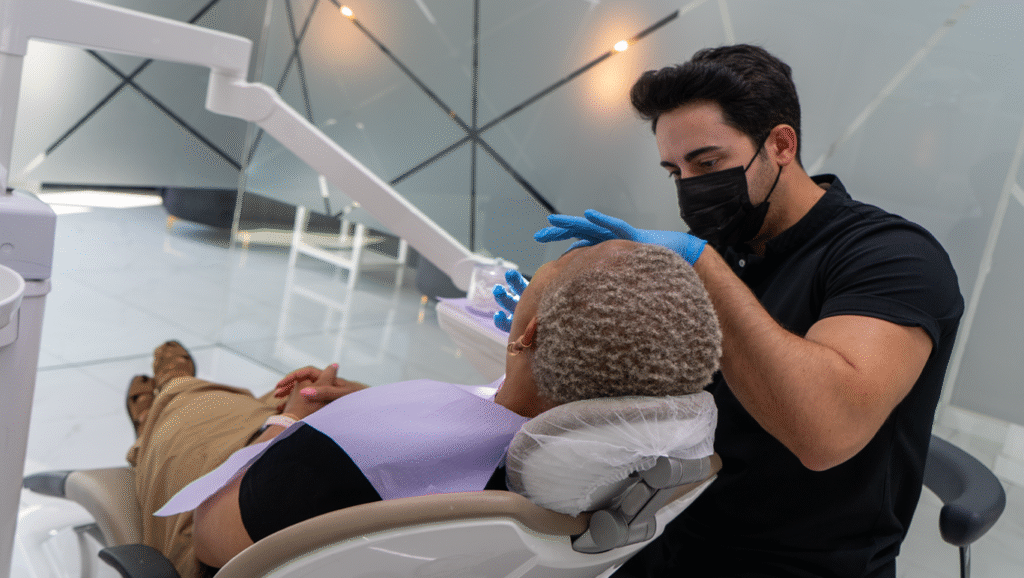
When a dentist evaluates a patient for veneer treatment, they assess the entire oral architecture. If the gum tissue is asymmetrical or sits lower on one central incisor than the other, placing veneers without addressing the gum architecture creates visually mismatched tooth lengths. Performing gingival contouring before veneers ensures that the margins of the restoration sit accurately, avoiding bulky edges or unnatural tooth heights.
The Role of Smile Symmetry in Cosmetic Planning
Visual balance relies heavily on natural symmetry. Studies in aesthetic dentistry show that the central incisors should have nearly identical gum line peaks (known as the gingival zenith). If one side dips lower, even high-grade porcelain restorations will appear off-center or misaligned.
Preserving Long-Term Oral Health
Gingival sculpting prior to veneer placement allows for precise marginal fits. When veneers meet clean, healthy, and properly contoured gum tissue, brushing and flossing become significantly easier, preventing plaque entrapment around the restoration margins over time.
How Gum Line Proportions Affect Veneer Planning
In cosmetic dentistry, smile design is guided by specific mathematical ratios. The ideal width-to-height ratio of a central incisor is generally calculated around 75% to 80%. When excessive soft tissue encroaches on the crown of the tooth, these natural proportions break down.
Gum Line Symmetry
The heights of the gum margins across your front teeth dictate how light reflects across your smile line. During initial veneer planning at Darya Dental Clinic in Istanbul, digital smile design software calculates where the natural zenith of each tooth’s tissue should rest relative to your upper lip line.
Tooth Length and Gum Display
Teeth that appear overly short are frequently normal-sized teeth hidden beneath excess gum tissue (a condition known as altered passive eruption). Rather than aggressive reduction of tooth enamel, removing excess tissue through gum reshaping exposes the natural length of the clinical crown before veneers are measured and fabricated.
```html
```
Premium Dental Care in Turkey
Expert treatments with high-end technology. Get your personalized quote today via WhatsApp.
Gum-to-Tooth Proportions
The ideal smile typically displays minimal gum tissue usually no more than two millimeters when fully smiling. When soft tissue overwhelms the visible enamel, placing veneers alone creates wide, short-looking dental crowns. Adjusting the gum-to-tooth ratio first establishes the vertical height required for long, elegant veneers.
Who May Benefit From Gum Contouring Before Veneers?
Not every patient undergoing cosmetic treatment requires soft tissue modification. However, specific anatomical variations make pre-veneer reshaping a vital step in achieving a predictable, high-end cosmetic result.
```html  ```
```
Want trusted dental advice in your Google AI answers?
Add Darya Dental Turkey as a Preferred Source on Google to make our dental guides easier to find in your search results and AI Overviews.
- Patients with an Asymmetrical Gum Line: Variations in tissue height across adjacent front teeth create an uneven frame.
- Patients with Altered Passive Eruption: Enamel that remained covered by soft tissue during natural adult tooth eruption.
- Individuals Seeking a Balance for Short-Looking Teeth: Excess gingival tissue masking normal tooth length.
- Patients Planning a Full Smile Makeover: Restructuring the upper arch where uniformity across 6 to 10 front teeth is essential.
Uneven Gum Lines
Even minor variances of a single millimeter between central or lateral incisors can alter the visual symmetry of a new set of veneers. Adjusting these subtle dips aligns the entire dental arch before taking optical impressions.
Excessive Gum Display
When a patient displays three millimeters or more of soft tissue upon smiling, reshaping the gingival architecture redistributes the visual weight of the smile from the tissue back to the teeth.
Short-Looking Teeth
When enamel is covered by soft tissue, placing a veneer without prior reshaping limits the ceramic restoration to a short, boxy shape. Crown lengthening or gingival sculpting creates the vertical space necessary for proper tooth anatomy.
Gum Contouring For Gummy Smile And Veneer Planning
A “gummy smile” occurs when an unusually high proportion of gingival tissue shows above the top teeth when smiling. When planning veneers for a patient presenting with excess display, understanding the underlying cause is essential.
If the display is caused by hyperactive lip muscles, alternative or adjunct therapies may be considered. However, when the excess display is caused by anatomical tissue overgrowth, laser gingival sculpting provides a precise solution.
By removing surplus tissue, the clinical crown is revealed, allowing the cosmetic dentist to design porcelain veneers that fit true-to-scale tooth proportions rather than compensating for restricted vertical space.
How Gum Contouring Fits Into Veneer Treatment Planning
Integrating soft tissue manipulation into a cosmetic treatment plan requires careful sequencing to ensure optimal tissue stability and aesthetic precision.
Initial Gum and Tooth Assessment
Your dentist conducts a clinical examination evaluating probing depths, biological width, and tissue thickness. Radiographic imagery ensures that the underlying bone structure supports reshaping without compromising periodontal health.
Evaluating the Gum Line
Using high-definition intraoral photography and digital smile analysis, the dental team maps out the exact millimeter adjustments needed across each individual tooth.
Planning Tooth and Gum Proportions
Digital mock-ups allow patients to preview how altering both the tissue heights and tooth structures simultaneously will impact their overall facial aesthetics.
Coordinating Gum Contouring With Veneers
Once the tissue is adjusted, healing time is allowed so that the new margin settles permanently. Once stable, tooth preparation and final optical impressions are taken, ensuring that the lab crafts ceramic veneers that seat precisely at the new gingival edge.
Does Everyone Need Gum Contouring Before Veneers?
No, not every patient requires gum contouring before receiving porcelain veneers. Soft tissue reshaping is only planned when clinical assessment reveals asymmetrical margins, excess gingival tissue covering the enamel, or an unbalanced tooth-to-gum ratio that interferes with the aesthetic design of the restoration.
If your natural gum line is already symmetrical and displays an ideal proportion of tooth structure typically showing less than two millimeters of tissue when you give a broad smile your treatment can proceed directly to standard veneer planning. During your consultation at Darya Dental Clinic in Ataşehir, Istanbul, digital smile design tools evaluate your specific facial features to determine whether soft tissue modification is necessary or if cosmetic veneers alone can achieve your desired outcome.
Smile Factors and Treatment Planning
The decision to combine tissue sculpting with restorative treatment depends entirely on your existing soft tissue architecture and tooth dimensions.
| Clinical Situation | Need for Gum Contouring | Impact on Veneer Treatment Plan |
| Uneven or Asymmetrical Gum Line | High | Aligning tissue peaks ensures equal tooth heights across central and lateral incisors. |
| Excessive Gum Display (Gummy Smile) | High | Removing surplus soft tissue exposes hidden enamel, creating vertical space for long, natural restorations. |
| Short-Looking Teeth (Altered Passive Eruption) | Moderate to High | Uncovers natural crown length so veneers do not look wide, square, or short. |
| Balanced, Symmetrical Gum Line | Low to None | Restorations are designed and fitted directly to the existing tissue margin. |
Healing and Timing Before Veneer Placement
Understanding the healing process after soft tissue manipulation is critical for international patients traveling to Istanbul for cosmetic dentistry. Tissue stability ensures that the final restoration margins remain accurate over the long term.
Immediate Post-Treatment Phase (Days 1–3)
Modern dental technology, including soft tissue lasers and precision electrosurgery, minimizes post-operative discomfort. The treated area forms a delicate protective layer as minor swelling subsides. Most individuals return to daily routines immediately, provided they avoid harsh, crunchy, or heavily spiced foods.
Margin Stabilization Phase (Days 7–14)
Over the second week, the newly sculpted edge matures. Allowing this tissue to heal completely before capturing digital impressions ensures that the master ceramicist crafts restorations that sit precisely at the new gingival edge, avoiding open margins or unexpected recession later on.
Preparation and Veneer Placement (Weeks 2–3)
Once the tissue edge is stable, final enamel preparation and digital scanning take place. Because the gingival margin is established, your permanent porcelain restorations can be bonded flush with the tissue, creating a smooth transition between tooth and gum.
How Much Does Gum Contouring Before Veneers Cost?
The overall cost of soft tissue sculpting performed before veneer treatment depends on the structural complexity of the procedure and the number of teeth involved. Simple laser recontouring across two central front teeth requires less time and planning than full arch gingival sculpting designed to address significant soft tissue asymmetry.
When planned alongside a comprehensive smile makeover at our Ataşehir clinic in Istanbul, soft tissue modifications are integrated directly into your custom treatment package. Key factors influencing total fees include:
- Treatment Area Scope: Whether adjustments are localized to 1–2 teeth or span 8–10 teeth across the entire aesthetic zone.
- Methodology Used: Advanced diode laser technology versus traditional surgical sculpting.
- Structural Complexity: Simple soft tissue reduction versus treatments requiring minor underlying bone adjustment to maintain healthy biological width.
For detailed breakdown figures regarding standalone soft tissue sculpting, visit our dedicated gum contouring cost guide to explore regional pricing variations and package options.
Gum Contouring Before Veneers in Istanbul
Istanbul has established itself as a premier global hub for advanced cosmetic dentistry, drawing patients worldwide for complete smile transformations. Achieving high-end outcomes requires advanced digital planning and precise clinical execution.
Located in the modern district of Ataşehir, Darya Dental Clinic offers fully integrated cosmetic dental planning. Patients traveling from international destinations or nearby regional centers like Ümraniye can undergo comprehensive digital evaluations combining 3D intraoral scanning, soft tissue analysis, and custom porcelain design under one roof. Placing your treatment with an experienced cosmetic team ensures that soft tissue sculpting and ceramic restoration work in harmony, delivering a balanced, durable smile.
Frequently Asked Questions About Gum Contouring Before Veneers
Do I need gum contouring before veneers?
You only need gum contouring before veneers if your clinical assessment reveals an asymmetrical gum line, excessive tissue covering your enamel, or short-looking tooth crowns. If your natural gum line sits evenly and presents balanced proportions when you smile, your treatment will focus entirely on standard veneer planning without soft tissue modification.
Why is gum contouring done before veneers?
Gum contouring establishes a symmetrical frame and accurate vertical height for your teeth before permanent restorations are designed. Placing veneers over an uneven or low-sitting gum line yields visually mismatched tooth lengths, unnatural proportions, and potentially bulky restoration margins.
Does everyone need gum contouring before veneers?
No, soft tissue sculpting is not a universal requirement for cosmetic veneer treatment. The procedure is recommended on an individual basis following digital smile analysis, digital x-rays, and an assessment of your natural tooth-to-gum ratio.
Can gum contouring improve the appearance of veneers?
Yes, reshaping the soft tissue directly enhances final veneer aesthetics by creating proper smile proportions and symmetrical gingival peaks. By revealing hidden natural enamel before taking impressions, your cosmetic dentist can design porcelain veneers that appear balanced, long, and natural.
When is gum contouring recommended before veneers?
Soft tissue sculpting is recommended when a patient presents with an uneven gum line, excessive gingival display (gummy smile), short clinical crowns caused by altered passive eruption, or a full smile makeover plan that demands exact arch symmetry.
Can uneven gums affect veneer results?
Yes, uneven gums directly alter the visual balance of final veneers. Because ceramic restorations align with your natural tissue line, uncorrected gingival asymmetry causes adjacent veneers to appear unequal in height, compromising the uniformity of your new smile.
Can gum contouring correct a gummy smile before veneers?
Gum contouring effectively corrects a gummy smile when the cause is anatomical tissue coverage over the natural tooth crown. Laser sculpting removes surplus gingival tissue, shifting visual emphasis back to your teeth before your permanent veneers are custom-fitted.
How long should I wait after gum contouring before getting veneers?
Most patients wait between one to three weeks after soft tissue sculpting before taking final optical impressions for veneers. This brief interval allows the gingival tissue margins to heal completely and settle into their permanent positions, ensuring long-term margin precision.
Does gum contouring change tooth proportions?
Gum contouring changes perceived tooth proportions by exposing natural enamel previously hidden beneath excess tissue. The procedure uncovers the structural length of your natural tooth, creating an optimal vertical base for natural-looking porcelain restorations.
Is gum contouring permanent?
Yes, soft tissue reshaping performed on fully erupted adult teeth is a permanent procedure. Once excess gingival tissue is sculpted using precision laser methods or electrosurgery, the natural tissue line maintains its new position around your veneers long-term.
How much does gum contouring before veneers cost?
The cost varies based on the number of teeth requiring adjustment, procedural complexity, and whether minor underlying bone sculpting is required. For detailed pricing structures and package breakdowns, review our comprehensive gum contouring cost guide.
Can I have gum contouring and veneers as part of the same treatment plan?
Yes, soft tissue sculpting and cosmetic veneers are routinely integrated into a unified smile design plan. Sequencing tissue adjustment prior to final restoration design streamlines overall treatment and ensures optimal aesthetic cohesion.
Is gum contouring available in Istanbul?
Yes, advanced laser soft tissue sculpting is widely available at premier cosmetic clinics across Turkey. At Darya Dental Clinic in Ataşehir, Istanbul, international patients receive comprehensive digital planning that combines tissue evaluation with custom porcelain restorations in a single location.
Key Takeaways for Your Treatment Plan
Achieving a natural, long-lasting smile transformation depends on building your cosmetic restorations on a healthy, well-proportioned foundation. While porcelain veneers effectively alter tooth shape, shade, and alignment, soft tissue architecture dictates how those restorations frame your smile line.
- Individualized Assessment: Soft tissue sculpting is never mandatory; it is planned only when physical anatomy requires tissue realignment.
- Proportion Over Tissue Display: Establishing an optimal tooth-to-gum ratio prevents boxy, short restorations and creates vertical space for elegant porcelain veneers.
- Sequencing Ensures Precision: Allowing brief tissue healing between sculpting and impression-taking secures stable restoration margins over time.
- Comprehensive Care in Istanbul: Combining digital soft tissue evaluation with master ceramic fabrication offers an efficient path to complete smile makeovers.
If you are planning a cosmetic transformation, a detailed clinical assessment will determine whether your gum line requires minor adjustments to maximize your results. Contact the team at Darya Dental Clinic in Ataşehir, Istanbul, to arrange your initial digital smile analysis and explore personalized treatment options tailored to your needs.
