
What is Clear Aligner (Invisalign)?

In recent years, clear aligner systems have quietly reshaped the way people think about orthodontic treatment. Once associated only with teenagers and metal brackets, tooth alignment has evolved into a more discreet, flexible, and lifestyle-friendly experience. Today, adults who value aesthetics and comfort are increasingly curious about what clear aligner therapy actually is, how it works, and whether it fits their daily routines.
At its core, a clear aligner is a transparent orthodontic appliance designed to guide teeth into improved positions over time. Unlike traditional braces, these systems rely on a series of removable trays that are custom-made to fit the patient’s teeth. While the concept sounds simple, the science, planning, and biomechanics behind clear aligner treatment are far more nuanced than many people realize.
What Is Clear Aligner?
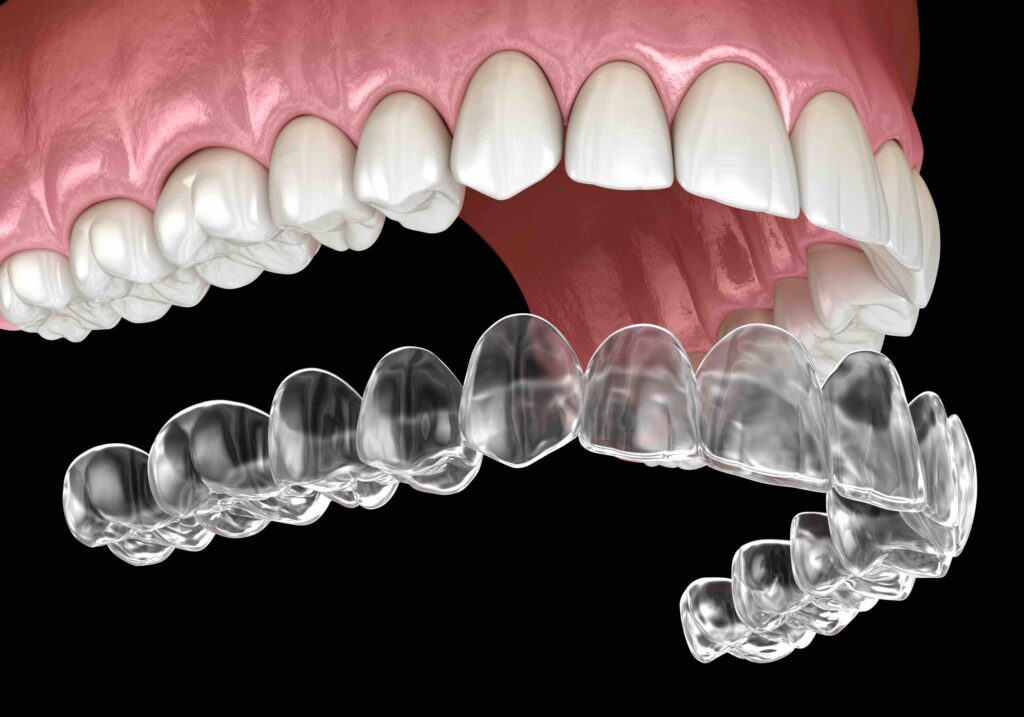
A clear aligner is a removable orthodontic device made from transparent medical-grade material. It is designed to apply gentle, controlled forces to teeth, encouraging gradual movement toward a planned alignment. Each aligner is worn for a defined period before progressing to the next stage, forming what is commonly referred to as clear aligner therapy.
Unlike fixed orthodontic appliances, aligners clear are taken out during eating, drinking, and oral hygiene routines. This removable nature is often cited as one of the most appealing aspects of clear teeth aligners, especially among adults balancing professional and social commitments. However, convenience alone does not define their function or effectiveness.
From a clinical perspective, clear correct aligners and similar systems are the result of detailed digital modeling. Teeth movements are mapped in advance, allowing orthodontists to visualize each phase of the treatment journey. While this planning offers predictability, it also depends heavily on patient compliance and biological response.
Importantly, a clear aligner is not merely a cosmetic accessory. Although appearance is a major motivator, these systems are rooted in orthodontic principles that have been refined over decades. The difference lies not in the goal improved alignment but in the method used to achieve it.
Clear aligners are one of several solutions for improving dental alignment, so you can explore all dental treatments to review other procedures that may be recommended based on your oral health needs.
How Do Clear Aligners Work?
The process behind clear aligner treatment begins long before the first tray is worn. Digital scans or impressions are used to create a virtual model of the teeth. This model allows clinicians to design a sequence of movements, each represented by a specific clear aligner in the series.
Each aligner is engineered to shift teeth incrementally. When worn consistently, the aligner applies targeted pressure to specific areas, guiding teeth toward their next position. Over time, this sequence can address spacing issues, mild to moderate crowding, and alignment irregularities.
Premium Dental Care in Turkey
Expert treatments with high-end technology. Get your personalized quote today via WhatsApp.
Research published by the American Association of Orthodontists highlights that while clear aligners for adults offer flexibility, outcomes are influenced by wear time and case selection. According to orthodontic literature shared via American Association of Orthodontists, patient adherence plays a significant role in achieving expected results.
Another layer often overlooked is biological variation. Teeth do not move identically from person to person. Bone density, periodontal health, and individual anatomy all affect how a clear aligner performs. This is why professional monitoring remains a central component of orthodontist clear aligners protocols.

Want trusted dental advice in your Google AI answers?
Add Darya Dental Turkey as a Preferred Source on Google to make our dental guides easier to find in your search results and AI Overviews.
What Do Invisible Aligners Treat?
Although often described broadly, clear aligners for teeth are typically associated with specific orthodontic concerns. These may include mild spacing, rotational issues, or alignment shifts that occur over time. In adult patients, treatment goals often extend beyond aesthetics to functional balance and long-term stability.
Studies referenced by the National Institutes of Health suggest that invisible aligners can be effective in selected cases when supported by proper diagnosis and planning. An overview of orthodontic biomechanics related to aligners can be found via National Institutes of Health, offering insight into how controlled forces influence tooth movement.
It is important to note that clear aligner therapy is not universally positioned as a replacement for all orthodontic methods. Instead, it represents an alternative that aligns well with certain clinical and lifestyle parameters. Understanding these distinctions helps set realistic expectations and frames clear aligners vs braces as a discussion of suitability rather than superiority.
Who Isn’t Eligible for Aligners?
Although clear aligner systems are often described as versatile, they are not universally suitable for every orthodontic situation. Certain dental and skeletal conditions may limit how effectively clear aligner therapy can guide tooth movement. This does not mean aligners are ineffective; rather, they require careful case selection.
Complex bite discrepancies, significant jaw alignment differences, or advanced periodontal issues may reduce the predictability of clear aligner treatment. In such scenarios, orthodontists often evaluate whether removable systems can deliver the required forces safely and consistently. This is why orthodontist clear aligners protocols emphasize assessment rather than assumption.
Another consideration involves lifestyle and consistency. Because aligners clear are removable, they depend heavily on patient cooperation. Individuals who struggle with routine adherence may find it difficult to achieve the intended progression with clear aligners for adults, even if their dental structure is otherwise suitable.
Benefits of Clear Aligners
One of the most frequently discussed advantages of a clear aligner is its discreet appearance. The transparent design allows many users to undergo orthodontic treatment without drawing attention to their teeth, which is particularly appealing in professional or social settings.
Beyond aesthetics, clear teeth aligners offer practical flexibility. Being removable, they allow normal eating habits and oral hygiene routines to continue with minimal disruption. From an experiential perspective, many patients describe clear aligner therapy as less intrusive than fixed appliances.
Clinics such as Darya Dental Clinic often highlight that the benefits of clear aligner treatment are closely tied to personalization. Digital planning enables tailored movement strategies, aligning clinical goals with individual expectations rather than imposing a standardized approach.
Disadvantages of Clear Aligners
Despite their advantages, clear aligners for teeth also come with limitations that deserve equal attention. Removability, while convenient, introduces a dependency on consistent wear. Without regular use, even well-designed clear correct aligners may not perform as expected.
Another potential drawback involves treatment scope. Certain complex movements such as significant vertical shifts or major bite corrections can be more challenging to manage with a clear aligner alone. In these cases, traditional orthodontic tools may offer greater mechanical control.
Cost perception is another factor often discussed in relation to clear aligners vs braces. While pricing varies widely by region and provider, patients sometimes associate aligners with higher costs, even when the overall value proposition includes comfort, discretion, and planning technology.
Types of Clear Aligners
Not all clear aligner systems are identical. Differences may exist in materials, planning software, manufacturing methods, and clinical protocols. Understanding these variations helps clarify why outcomes and experiences can differ from one provider to another.
Below is a simplified comparison illustrating how different clear aligner treatment approaches may vary conceptually:
| Clear Aligner Type | Planning Approach | Typical Use Focus |
| Standard clear aligners | Digital staging with periodic reviews | Mild to moderate alignment |
| Advanced clear correct aligners | Enhanced force control & refinements | More detailed movement planning |
| Hybrid aligner systems | Aligner + auxiliary methods | Expanded treatment flexibility |
This table does not imply hierarchy but highlights how clear aligners for adults can be adapted to different orthodontic goals. The choice often depends on clinical evaluation, not branding alone.
Clear Aligners vs Braces
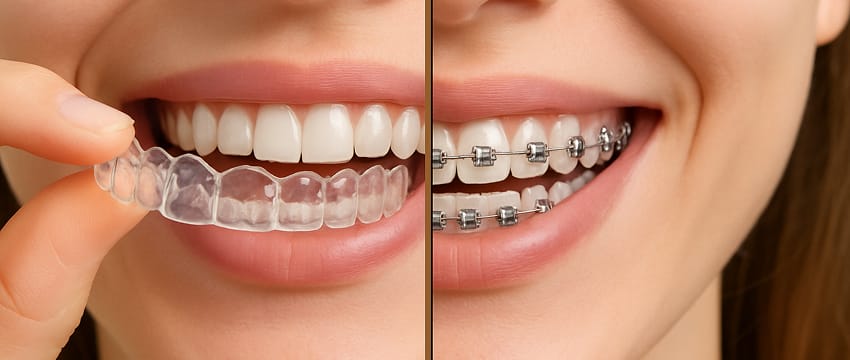
The discussion around clear aligners vs braces is less about competition and more about context. Traditional braces remain a powerful and time-tested solution, particularly for complex orthodontic cases. Clear aligner systems, on the other hand, prioritize discretion and adaptability.
From a patient perspective, clear aligner therapy often feels more integrated into daily life. However, braces may offer advantages in scenarios requiring constant force without reliance on user compliance. This distinction reinforces the importance of individualized assessment rather than generalized preference.
Academic discussions published in orthodontic journals, including summaries accessible through Journal of Orthodontics, emphasize that treatment selection should be driven by biomechanics, not trends.
Does Dental Insurance Cover Aligner Treatment?
Coverage for clear aligner treatment is one of the most common points of curiosity, especially among adults considering orthodontic care later in life. Dental insurance policies vary significantly by country, provider, and even by individual plan structure, making generalizations difficult.
In many cases, insurance does not specifically distinguish between clear aligners for adults and traditional orthodontic appliances. Instead, coverage may be framed under a general orthodontic benefit category. This means that whether a clear aligner is included often depends on broader eligibility rules rather than the appliance itself.
From a practical standpoint, patients often encounter the following scenarios:
- Some plans contribute partially to clear aligner therapy, within a lifetime orthodontic limit
- Certain policies restrict coverage based on age, regardless of whether clear aligners for teeth are used
- International patients may rely more on out-of-pocket planning rather than insurance reimbursement
Clinics such as Darya Dental Clinic often help patients navigate these uncertainties by clarifying treatment structure and documentation, rather than making assumptions about coverage outcomes.
Frequently Asked Questions About Aligners
Instead of short definitions, the questions below explore how people actually think about clear aligner use in real life. Each answer reflects common concerns rather than absolute claims.
1. How noticeable is a clear aligner in daily interactions?
A clear aligner is designed to be visually subtle, but it is not entirely invisible. Visibility can depend on lighting, speech patterns, and personal awareness. Many users report that others notice it far less than expected, particularly in professional settings.
2. Do clear aligners affect speech?
Some people experience temporary changes in pronunciation during the early phase of clear aligner therapy. This usually relates to tongue adaptation rather than the aligner itself. Over time, speech patterns often normalize as the mouth adjusts.
3. Can clear aligners be removed frequently?
Yes, aligners clear are removable, which is central to their appeal. However, frequent removal beyond recommended limits may influence how effectively the clear aligner treatment progresses. Balance, rather than constant removal, is often emphasized.
4. Are clear aligners only cosmetic?
While aesthetics are a major motivation, clear teeth aligners are not purely cosmetic devices. They are designed based on orthodontic principles and may support functional alignment goals when used in appropriate cases.
5. Is a clear aligner suitable for long-term dental stability?
Long-term stability depends on multiple variables, including follow-up strategies and retention planning. A clear aligner can be part of a broader orthodontic approach rather than a standalone solution.
Final Thoughts on Clear Aligner Treatment
The growing interest in clear aligner systems reflects a broader shift in how people approach dental care. Comfort, discretion, and adaptability have become as important as mechanical correction. Yet, clear aligner therapy is not defined by convenience alone; it is shaped by planning accuracy, biological response, and patient engagement.
Rather than asking whether clear aligners vs braces is the “better” option, a more meaningful question is whether a given method aligns with individual expectations and clinical context. This perspective moves the conversation away from trends and toward informed decision-making.
When approached thoughtfully, clear aligners for teeth represent an intersection of technology and human behavior. Their success lies not in promises, but in how realistically they are integrated into everyday life.
