
Can Veneers Fix Crooked Teeth? Benefits and Limitations
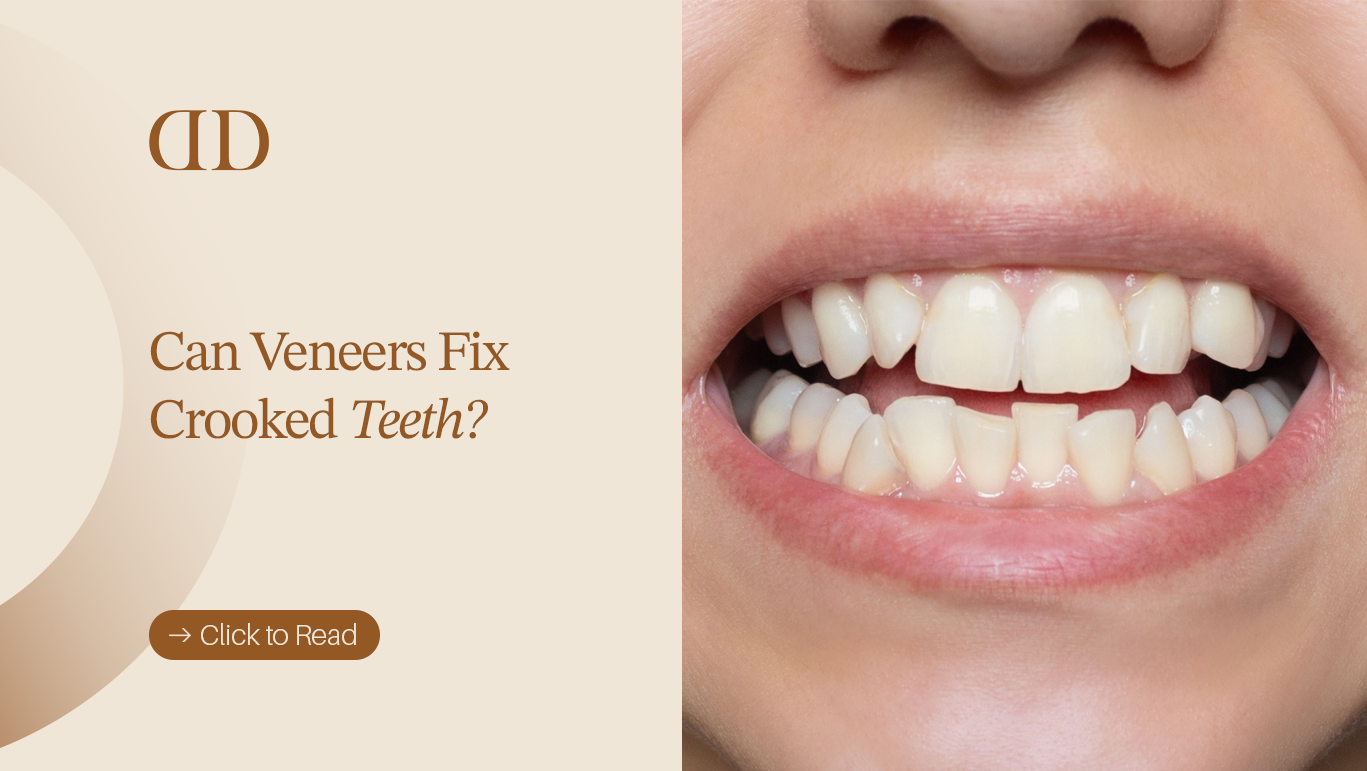

Dental veneers can make mildly crooked teeth look straighter, but they do not physically move teeth or correct underlying bite problems. Veneers are thin coverings bonded to the front surfaces of teeth to improve their visible shape, colour and proportions. They may be suitable for selected cases of minor misalignment, small rotations or uneven tooth shapes. However, significant crowding, severely rotated teeth and bite problems may require orthodontic treatment with braces or clear aligners.
The right treatment depends on whether the concern comes from the position of the teeth, their visible shape, or a combination of both. A dental examination helps determine whether veneers, orthodontics or a combination of treatments is appropriate.
Can Veneers Fix Crooked Teeth Without Braces?
Yes, veneers can sometimes make slightly crooked teeth appear straighter without braces. This is a cosmetic improvement rather than actual orthodontic correction. Veneers change the visible contours of the teeth, while braces and clear aligners gradually move teeth into different positions.
For people with minor irregularities in their front teeth, veneers may help create a more uniform smile. However, the amount of correction possible depends on the original tooth position, available space, enamel condition and how the upper and lower teeth meet.
How Veneers Change the Appearance of Teeth
Dental veneers are custom-made shells, commonly produced from porcelain or composite resin, that cover the front surface of a tooth. Their shape, thickness, colour and contours can be planned to improve the appearance of selected teeth.
For example, veneers may help improve the appearance of:
- Slightly uneven front teeth that differ in shape or length.
- Minor irregularities along the visible edges of teeth.
- Small gaps or disproportionate tooth shapes.
- Mild alignment concerns where the tooth position allows a suitable restoration.
The important distinction is that veneers alter the visible surface rather than the underlying position of the tooth. A tooth that appears straighter after veneer treatment may still occupy the same position in the jaw.
What Veneers Cannot Correct
Veneers cannot move teeth through the jawbone, create the space needed for significant crowding or reliably correct an abnormal bite. They also cannot address every form of tooth rotation or jaw misalignment.
Trying to conceal substantial misalignment with veneers may require excessive alteration of natural tooth structure or produce restorations with unsuitable contours. This can affect appearance, cleaning access and the way the teeth contact each other.
Premium Dental Care in Turkey
Expert treatments with high-end technology. Get your personalized quote today via WhatsApp.
A smile that looks straight is not necessarily a bite that functions correctly. For this reason, cosmetic planning should consider tooth position and oral function together.
When Are Veneers Suitable for Crooked Teeth?
Veneers for crooked teeth may be considered when the irregularity is mild, the teeth and gums are healthy, and the desired cosmetic change can be achieved without compromising the natural tooth structure.

Want trusted dental advice in your Google AI answers?
Add Darya Dental Turkey as a Preferred Source on Google to make our dental guides easier to find in your search results and AI Overviews.
Suitability is not determined by appearance alone. A dentist needs to assess the position of the teeth, the amount of enamel available, gum health, bite alignment and any habits that may place excessive pressure on restorations.
Mild Misalignment and Small Rotations
Veneers may be an option for selected teeth with minor alignment irregularities, particularly when the main concern involves their visible shape or proportions.
For example, a slightly uneven front tooth may appear out of alignment because its edge or contour differs from neighbouring teeth. A carefully planned restoration may improve the visual balance of the smile.
However, a genuinely rotated tooth presents a different challenge. The more pronounced the rotation, the more difficult it may be to create a natural-looking result without removing too much enamel or making the restored tooth appear bulky.
In these cases, orthodontic assessment can help establish whether moving the tooth first would provide a more conservative approach.
Uneven Tooth Shapes and Small Gaps
Not every crooked-looking smile is caused by tooth misalignment. Differences in tooth width, length, shape or spacing can also make teeth appear irregular.
Veneers or composite bonding may help address selected cosmetic concerns when the teeth are otherwise suitably positioned. The choice depends on the extent of the change required, the material used and the condition of the natural teeth.
If gaps result from an underlying bite issue, missing teeth or an abnormal relationship between the jaws, the cause should be evaluated before choosing a cosmetic solution.
When Are Veneers Not the Right Choice?
Veneers may not be the most appropriate first treatment when misalignment affects the position, function or long-term health of the teeth. In these situations, orthodontic treatment may address the underlying problem more directly.
Severe Crowding and Overlapping Teeth
Severe crowding occurs when there is insufficient space for teeth to occupy their intended positions. Overlapping teeth may also make brushing and flossing more difficult.
Veneers do not create additional space or move overlapping teeth apart. Placing restorations over significantly crowded teeth may result in unnatural contours or require substantial enamel removal.
An orthodontic assessment can determine whether braces or clear aligners may help reposition the teeth. Depending on the case, additional treatment planning may be necessary before any cosmetic restorations are considered.
Bite Problems and Significant Tooth Rotation
Bite problems, also known as malocclusion, occur when the upper and lower teeth do not meet in an appropriate relationship. Examples include certain forms of deep bite, crossbite, open bite and other alignment discrepancies.
Veneers change the shape of the restored tooth but do not correct the underlying relationship between the teeth or jaws. If a veneer is exposed to excessive or uneven biting forces, the restoration may be more vulnerable to chipping, cracking or loosening.
Significant tooth rotation can also make veneer placement more complicated because the visible surface may face in an unfavourable direction.
Orthodontic treatment may be recommended when the priority is to improve tooth position or bite function rather than simply alter the visible shape of the smile.
Gum Disease, Tooth Decay and Other Considerations
Healthy teeth and gums are important prerequisites for elective cosmetic treatment. Existing tooth decay, active gum disease or other untreated oral health problems should be assessed and managed before veneers are considered.
Other factors that can influence suitability include:
- Enamel condition: Adequate healthy enamel is important for bonding and long-term restoration planning.
- Teeth grinding or clenching: Repeated excessive forces can increase the risk of veneer damage.
- Bite relationships: Deep bites and other unfavourable contacts may affect the forces placed on restorations.
- Oral hygiene: Plaque control and regular dental care help maintain the health of the teeth and gums around veneers.
A dentist should evaluate these factors before recommending treatment. Veneers are not suitable for every patient, and choosing a different treatment may preserve more natural tooth structure.
Veneers vs Braces vs Clear Aligners
Veneers, braces and clear aligners serve different purposes. Veneers primarily change the visible appearance of teeth, whereas orthodontic treatments are designed to reposition teeth and improve alignment.
| Treatment | Main purpose | Important limitation |
| Porcelain veneers | Improve visible tooth shape, colour and contour | Do not reposition teeth or correct underlying bite problems |
| Composite veneers or bonding | Improve visible shape and minor cosmetic irregularities | Suitability, maintenance and durability depend on the case and material |
| Braces | Move teeth to improve alignment and address suitable bite problems | Treatment time depends on the complexity of the case |
| Clear aligners | Gradually reposition teeth using removable aligners | Not appropriate for every orthodontic problem |
The NHS explains that orthodontic treatment is used to improve the alignment of crooked or crowded teeth and correct suitable bite problems. The American Dental Association also identifies veneers as a cosmetic option for improving the appearance of crooked or misshapen teeth.
The best choice depends on the clinical problem rather than which treatment produces the most attractive appearance in the shortest time.
Veneers may be worth assessing when: the teeth are generally well positioned, the irregularities are minor, and the main concern is visible shape or colour.
Braces or clear aligners may be worth assessing when: teeth overlap substantially, rotations are pronounced, space is limited or the bite needs correction.
A combined approach may be considered when: orthodontic treatment can improve tooth position first, followed by conservative cosmetic treatment for remaining concerns.
The sequence and suitability of any combined treatment must be established through an individual assessment.
Do Veneers Require Enamel Removal?
Many conventional veneer treatments require some enamel removal to create space for the restoration and achieve an appropriate fit and contour. The amount of preparation varies according to the tooth’s original position, the proposed material and the planned result.
Enamel removal matters because natural enamel does not grow back. Conventional veneer preparation is therefore generally considered irreversible, even if a veneer is later replaced or removed.
Some cases may be suitable for minimal-preparation or no-prep veneers. These approaches aim to preserve more natural tooth structure, but they are not appropriate for every tooth or every alignment concern. Adding a veneer without adequate space can make a tooth look bulky or affect its contours.
Before treatment, ask the dentist to explain:
- How much enamel is expected to be removed.
- Whether a no-prep or minimal-preparation option is clinically suitable.
- Whether orthodontic treatment could reduce the need for tooth preparation.
- What maintenance, repair or replacement may be required in the future.
For readers considering a more conservative approach, the dental veneers treatment page provides further information about veneer options. The decision should still be based on an individual clinical assessment rather than the material or technique alone.
What to Expect from Veneer Treatment
Veneer treatment begins with an assessment of the teeth, gums, bite and cosmetic concerns. The purpose is to determine whether the planned changes can be achieved safely and whether veneers are the most appropriate option.
Although the exact process varies, the main stages generally include the following.
1. Dental assessment
The dentist examines the teeth and gums, evaluates the bite and discusses the patient’s expectations. Dental imaging or other diagnostic records may be required when clinically indicated.
2. Treatment planning
The dentist considers the severity of the irregularity, the amount of tooth preparation needed and the suitability of alternative treatments. If tooth movement is necessary, orthodontics may be recommended before cosmetic restorations.
3. Tooth preparation and impressions or scanning
When veneers are appropriate, the teeth may be prepared according to the treatment plan. Impressions or digital scans can be used to record the tooth surfaces and support the fabrication of the restorations.
4. Fitting and bonding
The veneers are checked for fit, shape, colour and contact with the opposing teeth before they are bonded according to the treatment protocol.
5. Maintenance and follow-up
Veneers require ongoing oral hygiene and dental reviews. Depending on the material and circumstances, a veneer may chip, crack, loosen or require repair or replacement over time.
The duration of treatment depends on the number of teeth involved, the type of restoration and whether additional procedures are needed. If orthodontics is recommended first, the overall treatment timeline will be different from a veneer-only plan.
For international patients considering dental treatment in Istanbul, it is also important to plan for appropriate follow-up and to understand how any future repair or replacement would be managed.
Frequently Asked Questions About Veneers for Crooked Teeth
Can Veneers Fix Crooked Teeth Without Braces?
Yes, veneers can make some mildly crooked teeth look straighter without braces. They change the visible shape and contour of the teeth but do not move them into new positions. More significant misalignment may require orthodontic treatment.
Can Veneers Fix Severely Crooked Teeth?
Veneers are generally not the preferred solution for severe crowding or substantial tooth rotation. They cannot correct the underlying tooth positions, and masking significant irregularities may require excessive tooth preparation. An orthodontic assessment can help identify more suitable options.
Are Veneers Better Than Braces for Crooked Teeth?
Neither treatment is universally better because they address different problems. Veneers change the appearance of teeth, while braces move teeth and can correct suitable alignment and bite issues. The appropriate option depends on the clinical findings and the patient’s goals.
Can Veneers Be Placed Over Overlapping Teeth?
Veneers may be possible for selected cases of minor overlap, but they do not correct the overlap itself. Significant crowding can make it difficult to achieve natural contours without excessive enamel removal. Orthodontic treatment may be more appropriate when tooth position is the main concern.
Do Veneers Require Shaving Natural Teeth?
Many conventional veneers require some enamel removal, although the amount varies. Minimal-preparation and no-prep approaches may be possible in selected cases, but they are not suitable for everyone. A dentist should explain the expected preparation and its long-term implications before treatment.
Can Clear Aligners Be Used Before Veneers?
Yes, clear aligners may be used before veneers when orthodontic treatment is appropriate and the teeth need repositioning. Aligning the teeth first may improve the conditions for conservative cosmetic treatment. However, clear aligners are not suitable for every orthodontic problem, and veneers may not be needed after alignment.
Do Veneers Correct Bite Problems?
No, veneers do not correct the underlying jaw or tooth relationships responsible for bite problems. They alter the visible surfaces of teeth and must be planned around the existing bite. Bite problems should be assessed before cosmetic restorations are placed.
Choosing the Right Treatment for Crooked Teeth
Veneers can improve the appearance of mildly irregular teeth, but they are not a substitute for orthodontic correction when teeth need to be moved or the bite requires treatment. The key question is whether the concern comes from tooth position, tooth shape or both.
A dental assessment can help establish whether veneers, braces, clear aligners or a combination of treatments offers the most appropriate approach while considering natural tooth preservation and long-term oral health. At Darya Dental Turkey, treatment suitability should be evaluated individually rather than assumed from the appearance of a smile alone.
This content is intended for general informational purposes only and does not constitute personal dental advice, diagnosis, or treatment recommendations. The suitability of dental treatments and the appropriate treatment plan should be determined by a qualified dentist following an individual clinical assessment.
Author and Medical Review
Written by: Dt. Sedat, Dental Director
Medically reviewed by: Darya Özcan, Founder
