
Can Veneers Be Placed on Lower Teeth?
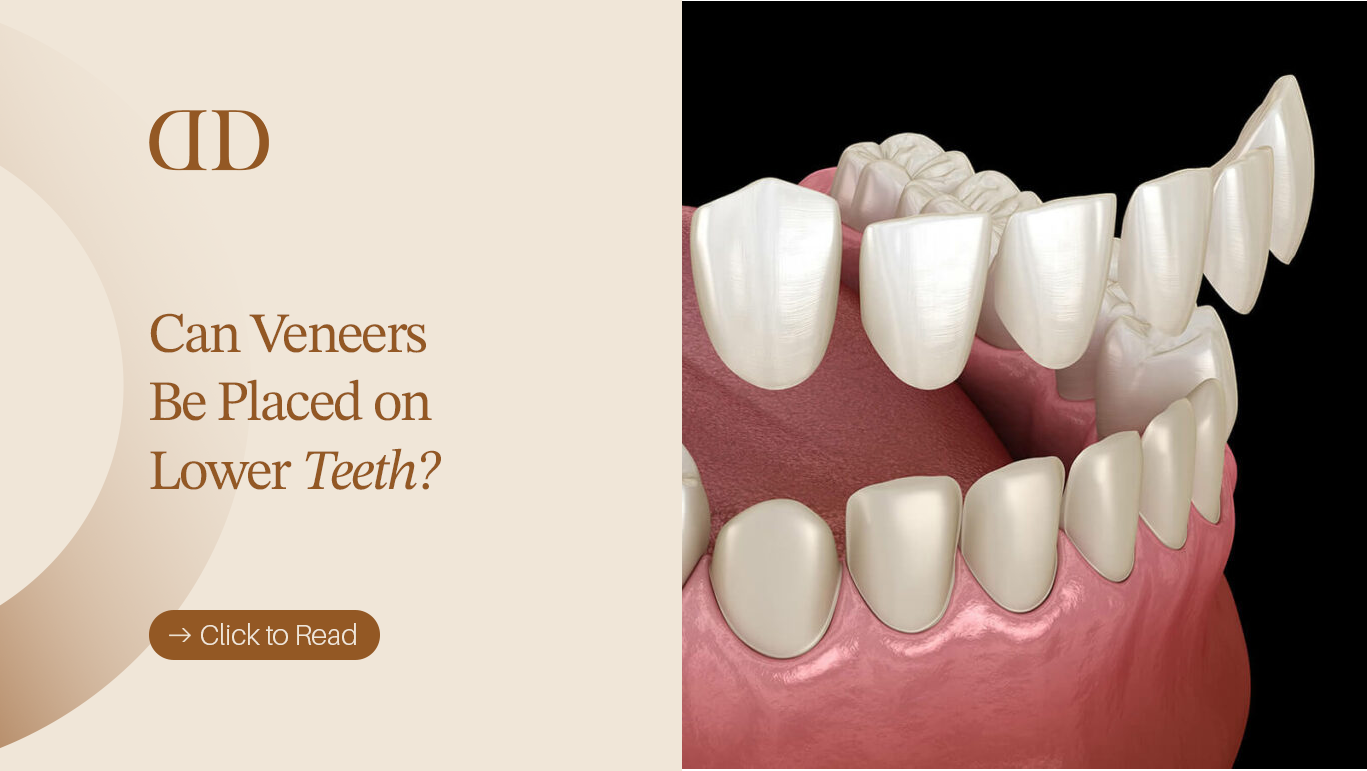

Yes, veneers can be placed on lower teeth when the teeth, gums, available enamel and bite relationship are suitable. Lower teeth veneers can improve the appearance of chipped edges, uneven tooth shapes and discoloration, particularly when the lower front teeth are visible during smiling or speaking. However, treating the lower teeth is not automatically necessary for everyone who receives upper veneers.
The decision depends on more than the desired shade or shape of the teeth. A dentist needs to assess how the upper and lower teeth meet, whether enough healthy enamel is available for bonding, and whether issues such as tooth decay, gum disease or teeth grinding could affect treatment. In some cases, professional whitening, composite bonding or orthodontic treatment may address the concern while preserving more natural tooth structure.
Can You Get Veneers on Your Bottom Teeth?
Yes, veneers can be bonded to the front surfaces of suitable lower teeth, including the lower incisors and other visible front teeth. The same basic principles used for upper veneers apply, but the smaller size and position of many lower front teeth can make treatment planning particularly sensitive to tooth proportions and bite contacts.
Veneers are thin restorations designed to change the colour, shape, length or surface appearance of teeth. Depending on the case, they may be made from porcelain or composite resin. They are different from dental crowns, which cover a larger portion of the tooth.
Not everyone needs lower veneers. If the lower teeth already have a healthy appearance and do not create a noticeable aesthetic mismatch, leaving them untreated may be the more conservative choice. A dentist should recommend treatment based on the condition of the teeth and the patient’s goals rather than a fixed number of veneers.
Why Do People Choose Veneers for Lower Teeth?
Lower veneers may be considered when the appearance of the lower front teeth affects smile balance or when specific cosmetic concerns cannot be adequately addressed with simpler treatments.
Correcting Chips, Uneven Edges and Discoloration
Lower front teeth can develop small chips, worn edges, irregular shapes or discoloration. Veneers may help improve these features by covering the visible front surface with a custom-designed restoration.
The appropriate approach depends on the extent of the problem. Minor chips may require only composite bonding, while some colour concerns can be addressed with professional whitening. Veneers are more likely to be considered when a patient needs a combination of changes to tooth shape, colour or surface appearance.
Before treatment, the dentist should determine whether the underlying tooth structure is healthy enough to support the restoration.
Premium Dental Care in Turkey
Expert treatments with high-end technology. Get your personalized quote today via WhatsApp.
Matching the Appearance of Upper Veneers
Patients who already have upper veneers sometimes consider lower veneers because the natural lower teeth look different in colour or shape. This can be noticeable when speaking, smiling broadly or laughing.
However, the upper and lower teeth do not necessarily need identical restorations. The goal is to achieve visual harmony while preserving healthy natural teeth wherever possible.

Want trusted dental advice in your Google AI answers?
Add Darya Dental Turkey as a Preferred Source on Google to make our dental guides easier to find in your search results and AI Overviews.
Porcelain veneers do not respond to whitening treatments in the same way as natural enamel. If the lower teeth are likely to need whitening, it is generally important to plan that treatment before the final shade of new veneers is selected. The dentist can then assess whether the natural lower teeth provide a suitable colour match or whether another option should be considered.
Improving the Appearance of Visible Lower Teeth
Lower teeth are not equally visible in every person. Lip movement, tooth position, facial anatomy and the way someone speaks can influence how much of the lower dental arch appears.
If the lower front teeth are clearly visible and have noticeable aesthetic irregularities, treatment may help create a more balanced smile. If they are rarely visible and have no functional or health-related concerns, additional veneers may offer limited benefit.
This is why smile design should consider the teeth as a complete system rather than assuming that every visible tooth needs cosmetic treatment.
Are Lower Teeth Suitable for Veneers?
Lower teeth can be suitable for veneers, but a clinical examination is necessary to determine whether the treatment is appropriate. Several factors influence the decision.
Tooth Size and Available Enamel
Lower front teeth are often relatively small, so even a thin veneer can noticeably change their proportions. The dentist needs to consider the available space, the intended thickness of the restoration and the amount of natural enamel remaining.
Enamel is important because adhesive bonding to suitable enamel supports the retention of many veneer restorations. If the enamel is significantly worn, damaged or insufficient, the treatment plan may need to change.
Conventional veneer preparation usually involves removing some natural tooth structure. This change is irreversible because enamel does not regenerate. No-preparation or minimal-preparation veneers may be possible in selected cases, but they are not appropriate for every tooth position or smile design.
Bite Alignment and Contact Between Teeth
Bite alignment is one of the most important considerations when planning veneers on lower teeth. The dentist needs to evaluate how the upper teeth contact the lower teeth when the mouth closes and during movements such as speaking and chewing.
If the bite places excessive force on a veneer, the restoration may be more vulnerable to chipping, fracture or debonding. The dentist should also check whether adding material to the lower teeth would interfere with normal tooth contact.
Veneers are primarily cosmetic restorations. They should not be presented as a universal solution for significant bite problems or severe misalignment. Depending on the underlying issue, orthodontic or restorative treatment may be more appropriate.
Gum Health, Tooth Decay and Existing Restorations
Healthy gums and teeth provide a better foundation for elective cosmetic treatment. Active gum disease, untreated tooth decay and other oral health problems should be assessed before veneers are considered.
Existing fillings or previous dental work may also affect the available bonding surface and the long-term treatment plan. The dentist will need to determine whether the tooth can support a veneer or whether another restoration would be more suitable.
Placing veneers over untreated dental disease does not resolve the underlying problem. Oral health should take priority over cosmetic changes.
Teeth Grinding and Clenching
Bruxism, which involves grinding or clenching the teeth, can increase the forces placed on veneers. Lower front teeth may experience additional contact during these movements, making a bite assessment particularly important.
Grinding does not automatically mean that veneers are impossible, but it can affect treatment suitability and maintenance requirements. Depending on the severity and clinical findings, a dentist may recommend addressing the grinding habit and considering a protective night guard.
The risk of damage should be discussed before treatment. No material can guarantee that veneers will remain free from chips, fractures or other complications under excessive forces.
Do You Need Veneers on Both Upper and Lower Teeth?
No. Receiving upper veneers does not automatically mean that lower veneers are necessary. The decision should depend on the appearance of the natural lower teeth, the patient’s aesthetic priorities, the visibility of the teeth and the relationship between the two arches.
For example, someone with discoloured upper teeth and healthy, naturally proportioned lower teeth may achieve a satisfactory result by treating only the upper arch. Another person may have visible irregularities in both arches that require a broader treatment plan.
| Clinical or aesthetic situation | Possible approach |
| Upper teeth need cosmetic changes, but lower teeth look balanced | Upper veneers alone may be sufficient |
| Lower front teeth have minor chips | Composite bonding may be considered |
| Natural lower teeth are healthy but slightly darker | Professional whitening may be suitable |
| Both arches have visible shape or colour concerns | Individual assessment for treatment of one or both arches |
| Significant crowding or bite problems are present | Orthodontic or other clinically appropriate treatment may be needed |
The final shade, shape and proportions should be planned together when both arches are treated. However, visual coordination does not require identical restorations on every tooth.
A conservative plan aims to address the actual concerns without unnecessarily altering healthy enamel. For more information about treatment options, see Dental Veneers and Different Types of Veneers.
Porcelain vs Composite Veneers for Lower Teeth
Porcelain and composite veneers can both improve the appearance of selected lower teeth. They differ in material properties, fabrication, repair options and clinical indications. Neither option is universally better for every patient.
| Feature | Porcelain veneers | Composite veneers |
| Material | Dental ceramic | Tooth-coloured composite resin |
| Appearance | Can provide detailed shade and translucency matching | Can be shaped and polished to blend with natural teeth |
| Fabrication | Often made outside the mouth before bonding | May be applied directly or fabricated indirectly, depending on the technique |
| Repair | Repair can be more complex if the ceramic fractures | Minor damage may be repairable by adding or reshaping composite |
| Tooth preparation | May require enamel preparation | May require little preparation in selected cases |
| Suitability | Depends on tooth structure, bite and aesthetic requirements | Depends on tooth structure, bite and the size of the correction required |
| Maintenance | Requires regular dental reviews and good oral hygiene | May need periodic polishing, maintenance or repair |
Porcelain veneers may be considered when colour stability and detailed aesthetic matching are priorities. Composite veneers can be useful when a more directly repairable restoration is appropriate. Both materials can experience wear, damage or failure.
The dentist should explain the expected maintenance, limitations and potential need for future replacement for the selected material. The best choice depends on the patient’s clinical condition and treatment objectives, not material preference alone.
What Are the Alternatives to Lower Teeth Veneers?
Veneers are not the only way to improve the appearance of lower front teeth. Depending on the concern, a less invasive treatment may provide an appropriate result.
Professional Teeth Whitening
Professional whitening may be suitable when the main concern is the colour of otherwise healthy natural teeth. It changes the shade of natural enamel without requiring a veneer to cover the tooth.
Whitening cannot correct tooth shape, chips, significant misalignment or structural defects. It also does not whiten existing porcelain or composite restorations in the same way that it whitens natural teeth.
If whitening and veneers are both being considered, the sequence should be discussed with the dentist before the final restoration shade is chosen.
Composite Bonding
Composite bonding involves applying tooth-coloured resin to selected areas of a tooth. It may be suitable for small chips, uneven edges, minor shape irregularities and some limited gaps.
Because bonding can often be performed with little or no removal of healthy enamel, it may be a more conservative option for minor cosmetic concerns. However, composite can stain, wear or chip and may need maintenance over time.
The appropriate technique depends on the size and position of the correction and the forces acting on the teeth.
Orthodontic Treatment
Orthodontic treatment moves teeth into a better position and may be appropriate when crowding, rotation or bite alignment is the main concern.
Veneers can sometimes change the appearance of mild irregularities, but they do not physically reposition the roots of the teeth or correct every underlying alignment problem. Attempting to disguise significant crowding with veneers may require unnecessary removal of healthy tooth structure.
When alignment or bite function is a concern, an orthodontic assessment can help establish whether tooth movement would be a more suitable approach.
What Should You Expect During Lower Veneer Treatment?
Lower veneer treatment should begin with an assessment rather than an assumption that the teeth need cosmetic coverage. The process may involve several stages, depending on the complexity of the case.
- Dental examination: The dentist assesses the teeth, gums, existing restorations and general oral health.
- Bite assessment: The upper and lower teeth are examined during closure and movement to identify potentially problematic contacts.
- Treatment planning: The dentist discusses the intended changes, material options, tooth preparation requirements and possible alternatives.
- Tooth preparation, if necessary: Some veneer designs require removal of a limited amount of enamel. The amount depends on the individual case and restoration design.
- Fabrication and fitting: Depending on the chosen technique, the veneers are made directly or fabricated before being fitted and bonded to the teeth.
- Final checks and follow-up: The dentist checks the fit, appearance and bite contacts, then provides care instructions and arranges reviews when appropriate.
The number of appointments and overall treatment time vary according to the selected material, the extent of treatment and whether other dental procedures are needed.
Before agreeing to conventional veneers, patients should understand that enamel removal is irreversible. They should also discuss the possible need for repairs or replacement in the future.
Questions to Ask Before Choosing Lower Veneers
A consultation is an opportunity to understand whether veneers are necessary and how they may affect the natural teeth. Consider asking:
- Are my lower teeth healthy enough for veneers?
- Is there enough enamel for predictable bonding?
- Will veneers change how my upper and lower teeth meet?
- Could whitening, bonding or orthodontics address my concerns?
- How much natural tooth structure would need to be removed?
- Which material is appropriate for my bite and aesthetic goals?
- What maintenance or protective measures might I need?
- What are the possible complications and future replacement requirements?
Clear answers help patients compare options and understand the long-term implications before committing to an irreversible procedure.
Frequently Asked Questions About Lower Teeth Veneers
Can veneers be placed on lower front teeth?
Yes, veneers can be placed on lower front teeth when the tooth structure, enamel, gum health and bite are suitable. The smaller size of many lower incisors makes careful planning important.
Do you need veneers on your lower teeth if you already have upper veneers?
No, lower veneers are not automatically necessary after upper veneers. If the natural lower teeth have a suitable appearance and do not create a noticeable mismatch, they may not require treatment.
Are lower teeth veneers more difficult to place?
Lower veneers can require careful planning because lower front teeth may have limited space and are involved in the contact between the upper and lower arches. The difficulty depends on tooth anatomy, access, bite alignment and the restoration design.
Do veneers on bottom teeth look natural?
Yes, lower veneers can look natural when their colour, shape, thickness and proportions are planned appropriately. The final appearance depends on the material, the condition of the natural teeth and the quality of the clinical planning and placement.
Can veneers fix crooked lower teeth?
Veneers may improve the appearance of mild irregularities in selected cases, but they do not physically move teeth into a new position. Significant crowding or bite problems may require orthodontic treatment or another approach.
Can you get lower veneers if you grind your teeth?
Possibly, but grinding can increase the risk of veneer damage. A dentist should assess the severity of the grinding, the bite contacts and the available tooth structure before recommending treatment. Protective measures may be appropriate in some cases.
Is teeth whitening enough instead of lower veneers?
Whitening may be sufficient when the main concern is tooth colour and the natural teeth are otherwise healthy. It will not correct chips, shape irregularities or misalignment, and it does not change the colour of existing veneers in the same way as natural enamel.
Making an Informed Decision About Lower Veneers
Veneers can be a suitable option for lower teeth when there is a clear aesthetic reason for treatment and the clinical conditions support it. However, treating both arches is not a universal requirement, and a balanced smile does not always require more restorations.
The most appropriate plan considers tooth structure, enamel preservation, gum health, bite alignment, material selection and long-term maintenance. In some cases, whitening, composite bonding or orthodontic treatment may address the concern with less alteration of the natural teeth.
A qualified dentist should assess these factors before recommending lower veneers. The priority is to choose a treatment that addresses the patient’s concerns while preserving healthy tooth structure wherever possible.
This content is intended for general informational purposes only and does not constitute personal dental advice, diagnosis, or treatment recommendations. The suitability of dental treatments and the appropriate treatment plan should be determined by a qualified dentist following an individual clinical assessment.
Written by: Dt. Sedat, Dental Director
Medically Reviewed by: Darya Ozcan, Founder
