
Black Triangles Between Teeth: Causes and Treatment Options
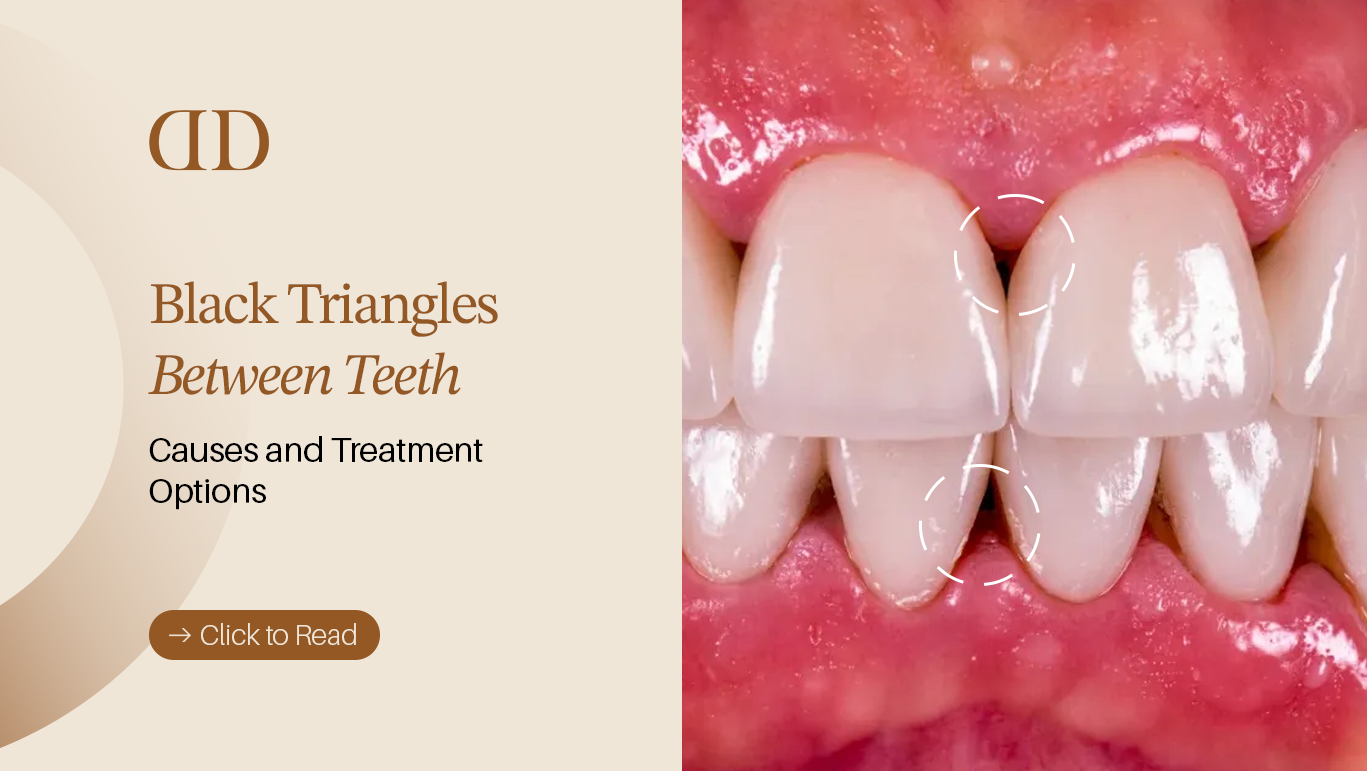

Black triangles between teeth are small, dark-looking spaces that appear near the gum line, usually where the gum tissue does not completely fill the space between two teeth. They are often called open gingival embrasures and can develop because of gum changes, tooth shape, spacing, alignment, or changes following orthodontic treatment. In some cases they are mainly an aesthetic concern; in others, they can be associated with changes that should be assessed by a dentist.
The right way to address black triangles depends on why the space has formed. Depending on the underlying cause and the condition of the teeth and gums, options may include composite bonding, gum contouring, veneers, orthodontic adjustment, or simply monitoring the area.
What Are Black Triangles Between Teeth?
Black triangles between teeth are triangular spaces visible between adjacent teeth, typically just above the gum line. The dark appearance comes from the space itself and the shadow created between the teeth rather than from the teeth becoming black.
A healthy gum normally fills much of the space between neighboring teeth. The small area of gum tissue between two teeth is known as the interdental papilla. When this tissue does not completely occupy the space, an open gingival embrasure can become visible.
Black triangles can be more noticeable in the front teeth because they are highly visible when smiling. They may also become more apparent when tooth edges are relatively close together while the crowns widen toward the gum line, creating a triangular space underneath the contact point.
The appearance alone does not always indicate a dental problem. However, a new or changing gap should not automatically be treated as a cosmetic issue. Gum recession, changes in the supporting tissues, inflammation, tooth movement, or other dental conditions may need to be ruled out before cosmetic treatment is considered.
What Causes Black Triangles Between Teeth?
There is no single cause of black triangles. The shape of the teeth, position of the contact points, gum tissue, supporting bone, and previous orthodontic treatment can all influence whether an open space develops.
Gum recession and loss of interdental tissue
One common reason for black triangles teeth is a reduction in the amount of gum tissue between neighboring teeth. When the interdental papilla does not extend fully toward the contact point, part of the space can become visible.
Gum recession can also expose more of the tooth near the gum line and change the overall appearance of the smile. Recession may be associated with factors such as periodontal disease, trauma from aggressive brushing, naturally thin gum tissue, or other individual factors.
Premium Dental Care in Turkey
Expert treatments with high-end technology. Get your personalized quote today via WhatsApp.
Changes in the supporting bone around the teeth can also affect the amount of tissue available between them. This is one reason a dental assessment can be important when black triangles appear suddenly, become more pronounced, or occur alongside bleeding gums, swelling, sensitivity, mobility, or other changes.
The treatment is therefore not simply about covering the visible space. If there is an underlying gum or periodontal concern, that issue needs to be considered first.

Want trusted dental advice in your Google AI answers?
Add Darya Dental Turkey as a Preferred Source on Google to make our dental guides easier to find in your search results and AI Overviews.
Tooth shape, spacing and alignment
Tooth anatomy is another important factor in black triangles between teeth causes.
Not all teeth have the same shape. Some have a more rectangular appearance, while others are narrower toward the gum line and wider toward the biting edge. When two teeth have a more triangular shape, the contact point may sit farther from the gum line. This can leave a naturally larger space beneath it.
Small differences in tooth position can have a similar effect. Rotation, spacing, or the way neighboring teeth contact one another can influence the size and visibility of the gingival embrasure.
This means that two people with otherwise healthy gums can have very different levels of visible space between their front teeth. In some cases, the issue is primarily related to tooth proportions and alignment rather than a loss of gum tissue.
Cosmetic treatment may therefore focus on changing the visible tooth shape or position rather than attempting to alter the gum itself.
Changes after orthodontic treatment
Black triangles after braces are a recognized cosmetic concern for some people. They can become more noticeable as crowded or overlapping teeth are moved into a straighter position.
When teeth are aligned, the contact points between them can change. A space that was previously hidden by overlapping or rotated teeth may become visible after orthodontic treatment. Changes in tooth position can also alter the relationship between the contact point, gum tissue, and surrounding bone.
The appearance of a black triangle after orthodontic treatment does not necessarily mean that the treatment caused gum disease or damage. Several factors can contribute, including the original tooth position, tooth shape, existing tissue anatomy, and the amount of supporting tissue between the roots.
If a black triangle develops after braces or aligner treatment, the appropriate response depends on its cause. A dentist or orthodontic professional can assess the tooth positions, gum health, and contact areas before deciding whether any further treatment is appropriate.
The key point is that black triangles between teeth treatment should be selected according to the underlying anatomy rather than the appearance of the space alone.
When Should Black Triangles Be Checked by a Dentist?
Black triangles are not always a sign of a dental problem, but they are worth assessing when they are new, changing, or accompanied by other symptoms.
A dentist may recommend an examination if you notice:
- New or increasingly visible spaces between the teeth
- Gum recession or gums that appear to be moving away from the teeth
- Bleeding, swelling, tenderness, or persistent redness around the gums
- Tooth sensitivity near the gum line
- Changes in the position or mobility of a tooth
- Food repeatedly becoming trapped between the teeth
- Changes that developed after orthodontic treatment
- A noticeable change in the appearance of the gums or smile without an obvious explanation
The purpose of an assessment is not simply to determine how to hide the triangle. The dentist can evaluate the gums, teeth, contact points, alignment, and surrounding tissues to identify what is contributing to the space.
If the gums are healthy and the issue is mainly related to tooth shape or alignment, cosmetic treatment may be considered. If there is an active gum or periodontal problem, that should be addressed before cosmetic correction.
How Are Black Triangles Between Teeth Treated?
There is no single treatment that works for every black triangle teeth case. Treatment depends on factors such as the size and position of the space, tooth shape, gum anatomy, alignment, and overall oral health.
Common approaches include composite bonding, gum contouring, and veneers. In some situations, orthodontic treatment or a combination of approaches may be considered.
| Treatment | How it may help | Main consideration |
| Composite bonding | Adds tooth-coloured material to modify tooth shape and reduce the visible space | The amount of correction possible depends on tooth anatomy and the size of the space |
| Gum contouring | Reshapes selected gum tissue where appropriate | It is suitable only for certain gum and tissue configurations |
| Veneers | Can alter the visible shape and proportions of teeth | Requires careful assessment and is not automatically the best choice for a small black triangle |
| Orthodontic treatment | Can change tooth position and contact relationships | May be relevant when alignment contributes to the space |
The goal is to choose the least invasive and most appropriate option for the individual situation rather than assuming that one cosmetic procedure will correct every case.
Composite bonding
Composite bonding for black triangles involves adding tooth-coloured composite material to selected areas of the teeth. By changing the contour or width of the visible tooth surface, bonding may reduce the appearance of a small triangular space.
This approach can be particularly relevant when tooth shape contributes to the open gingival embrasure. For example, if the teeth are relatively narrow toward the gum line, carefully placed composite can change their visible proportions and reduce the amount of dark space.
Composite bonding is generally a conservative cosmetic approach because it can modify tooth shape without requiring the same type of tooth preparation associated with some other restorative procedures. However, it is not appropriate for every black triangle.
The result depends on factors such as:
- The size and location of the space
- The shape and position of the neighboring teeth
- The health of the gums
- The existing contact point between the teeth
- How much composite can be added while maintaining a natural-looking result and appropriate oral hygiene
When the issue is mainly localized and cosmetic, bonding may be one option worth discussing with a dentist. You can learn more about composite bonding for gaps between teeth when considering how this treatment can be used to modify tooth shape and close selected spaces.
An important consideration is that adding material too close to the gum can make cleaning more difficult if the contours are not properly designed. For that reason, the objective should not simply be to fill the visible triangle but to create a shape that remains practical to maintain.
Gum contouring
Gum contouring changes the shape or level of the gum line in selected situations. It may be considered when the appearance of the gingival margin or the distribution of gum tissue contributes to an uneven smile.
For black triangles, however, gum contouring is not automatically appropriate. A triangular space caused primarily by tooth shape or a lack of interdental tissue cannot necessarily be corrected simply by reshaping the gum.
Before considering this approach, the clinician needs to understand the relationship between the gum tissue, teeth, contact points, and supporting structures. Removing or reshaping gum tissue without an appropriate indication could potentially make an area look less balanced rather than improving it.
When gingival architecture is an important part of the cosmetic concern, you can explore gum contouring as a separate treatment option.
The distinction is important: gum contouring is primarily about the shape and position of the gum line. It is not a universal treatment for all gum triangles between teeth.
Veneers and other cosmetic options
Veneers for black triangles may be considered when the shape, proportions, color, or position of several visible teeth are also part of the cosmetic concern.
A veneer covers the visible surface of a tooth and can change its apparent width and contour. In a suitable case, modifying tooth proportions can reduce the visual prominence of a black triangle.
However, veneers are a more extensive cosmetic option than simply adding a small amount of composite to a localized area. They should therefore not be selected solely because a small black triangle is visible.
A dentist may consider factors such as:
- Overall tooth shape and proportions
- Existing restorations
- Tooth color and aesthetic goals
- The size and location of the spaces
- Gum health
- The condition of the teeth
- Whether a more conservative option could achieve the desired change
You can read more about dental veneers when comparing this option with other cosmetic treatments.
In some cases, orthodontic movement may also be relevant, particularly when tooth position is contributing significantly to the space. The appropriate treatment may involve one approach or, depending on the anatomy, a combination of treatments.
The important distinction is that veneers, bonding, gum contouring, and orthodontic treatment address different aspects of the problem. A proper assessment helps determine which one, if any, makes sense for the individual case.
How to Choose the Right Treatment for Black Triangles
The best way to approach how to fix black triangles between teeth is to identify why the space exists before deciding how to change its appearance.
A treatment decision may involve several questions:
- Are the gums healthy?
Any signs of inflammation, recession, or periodontal problems should be considered before cosmetic treatment. - Is tooth shape contributing to the space?
If the teeth are naturally triangular or narrow near the gum line, changing their visible contours may help. - Is tooth alignment involved?
The position and contact relationship of neighboring teeth can influence the size of the gingival embrasure. - Did the space develop after orthodontic treatment?
If so, the current tooth positions and original anatomy may both need to be evaluated. - How extensive is the cosmetic concern?
A small localized space may require a different approach from multiple visible spaces across the smile. - What is the most conservative suitable option?
If several treatments could potentially work, the choice should take into account tooth structure, gum health, maintenance, longevity, and the expected aesthetic result.
For example, composite bonding may make sense when the main issue is localized tooth shape. Gum contouring may be relevant when the gingival architecture is the main contributor. Veneers may be considered when broader changes to tooth shape or appearance are already being planned.
This assessment-led approach is particularly important because the same-looking black triangle can have different underlying causes in different people.
Can Black Triangles Between Teeth Be Prevented?
Not all black triangles between teeth can be prevented. Tooth anatomy, gum shape, supporting bone, and natural changes over time can all influence whether an open gingival embrasure develops.
However, maintaining good oral health can help reduce the risk of gum-related changes that may make these spaces more noticeable.
Helpful habits include:
- Brush twice a day with a soft-bristled toothbrush and avoid overly aggressive brushing.
- Clean between the teeth regularly using an appropriate interdental cleaning method.
- Attend routine dental examinations so changes in the gums and teeth can be identified early.
- Have persistent gum bleeding, swelling, or recession assessed rather than ignoring it.
- Follow professional cleaning and oral-hygiene recommendations when advised.
- After orthodontic treatment, follow the recommended retainer and oral-hygiene routine.
Good oral hygiene cannot change the natural shape of the teeth or guarantee that black triangles will not develop. It is primarily important for maintaining healthy gums and supporting tissues.
If you are considering cosmetic correction, prevention also means avoiding unnecessary treatment. A visible space should first be assessed to determine whether it reflects a cosmetic anatomical variation or an underlying dental or gingival issue.
Frequently Asked Questions
What are black triangles between teeth?
Black triangles between teeth are visible triangular spaces near the gum line between two adjacent teeth. They are also known as open gingival embrasures and occur when the gum tissue does not completely fill the space between the teeth.
They may be related to gum changes, tooth shape, alignment, or changes following orthodontic treatment. Their presence does not automatically mean that there is a dental disease, but a new or changing space may warrant professional assessment.
What causes black triangles between teeth?
Black triangles can be caused by gum recession or reduced interdental tissue, tooth shape and alignment, or changes in tooth position after orthodontic treatment.
The contact point between two teeth, the shape of their crowns, the surrounding gum tissue, and the supporting structures all affect how much space is visible. Because several factors can produce a similar appearance, the cause should be assessed before treatment is selected.
Can black triangles between teeth go away on their own?
Some black triangles may become less noticeable if tooth position or the surrounding tissues change, but they should not be expected to disappear on their own.
If a black triangle is caused by tooth anatomy or a stable relationship between the teeth and gum tissue, it is unlikely to simply disappear. A dentist can determine whether monitoring is appropriate or whether cosmetic or orthodontic treatment could improve the appearance.
Can composite bonding fix black triangles?
Composite bonding can reduce the appearance of some black triangles when tooth shape or the width of the visible tooth surface contributes to the space.
The dentist adds tooth-coloured composite to selected areas to modify the contour of the teeth. It is not suitable for every case, particularly when the main issue involves significant gum or supporting-tissue changes.
The size of the triangle, gum health, tooth proportions, contact point, and ability to maintain good oral hygiene around the restoration all need to be considered.
Are veneers suitable for black triangles between teeth?
Veneers may be suitable in selected cases, particularly when tooth shape or overall smile proportions also need cosmetic modification.
They are not automatically the preferred treatment for a small black triangle. If a localized and more conservative correction could address the concern, other options may be considered first.
A dental assessment can help determine whether veneers are appropriate based on the condition and shape of the teeth, gum health, and the overall aesthetic objective.
Can gum contouring treat black triangles?
Gum contouring can improve certain gum-line irregularities, but it is not a universal treatment for black triangles.
Its suitability depends on the specific gingival anatomy and the reason the space is visible. If the triangle is primarily caused by tooth shape, alignment, or loss of interdental tissue, simply reshaping the gum may not provide the desired result.
For this reason, gum contouring should be considered only after the relationship between the teeth and gums has been assessed.
Can black triangles appear after braces?
Yes, black triangles can become visible after braces or other orthodontic treatment.
As crowded or rotated teeth become aligned, their contact points and positions can change. A space that was previously hidden may become visible once the teeth are straightened.
This does not necessarily mean that orthodontic treatment has damaged the gums. The appearance can be influenced by the original tooth position, tooth shape, existing gum anatomy, and supporting tissues.
If the change is concerning, an orthodontic or dental assessment can help determine whether further treatment is appropriate.
When should I see a dentist about black triangles?
You should consider seeing a dentist if a black triangle is new, becoming more noticeable, or accompanied by gum or tooth symptoms.
Particular reasons to seek an assessment include gum bleeding, swelling, recession, sensitivity, food trapping, tooth mobility, or a noticeable change in tooth position.
Even when the concern is purely cosmetic, an examination can help establish whether the appearance is related to tooth shape, gum anatomy, alignment, or another factor. This makes it easier to choose an appropriate treatment rather than treating the visible space without understanding its cause.
Black triangles between teeth are usually the result of an interaction between tooth shape, alignment, gum tissue, and the supporting structures around the teeth. They can be a normal anatomical variation, develop after orthodontic treatment, or become more noticeable following changes in the gums.
The most appropriate treatment depends on the cause. Composite bonding, gum contouring, veneers, orthodontic treatment, or simple monitoring may each have a role in selected cases. There is no single solution that is appropriate for everyone.
For anyone considering cosmetic correction, the most useful first step is an assessment of the teeth and gums. At Darya Dental in Istanbul/Ataşehir, treatment planning can be approached around the individual cause and the available cosmetic options rather than assuming that one procedure is suitable for every black triangle.
