Are Zirconia Veneers Suitable for a Natural-Looking Smile?
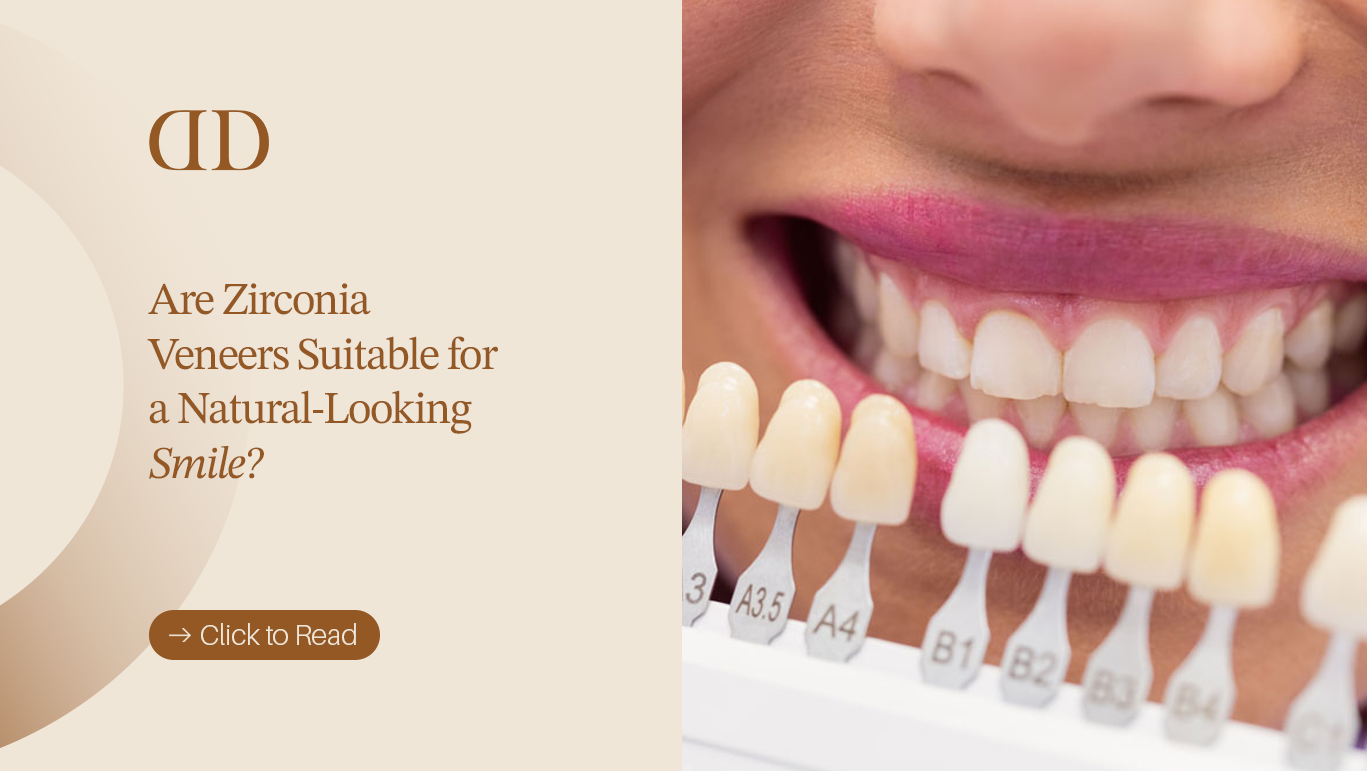

Zirconia veneers can create a natural-looking smile when their translucency, shade, thickness and shape are carefully matched to the patient’s teeth. However, the final appearance depends on more than the material itself. The underlying tooth colour, gum line, surrounding teeth and overall smile proportions also influence the result.
Zirconia is a ceramic material valued for its mechanical properties and its potential for aesthetic dental restorations. Modern translucent zirconia formulations have expanded its aesthetic applications, although different zirconia materials do not all reproduce the optical characteristics of natural tooth enamel in the same way. For some patients, zirconia may be an appropriate option, while other ceramic materials, such as lithium disilicate used in E-Max veneers, may better suit their aesthetic priorities.
Choosing the right veneer material therefore requires a balance between appearance, functional requirements and the preservation of healthy tooth structure. A clinical examination helps determine whether veneers are suitable and which material is most appropriate for an individual smile.
Can Zirconia Veneers Look Like Natural Teeth?
Yes, zirconia veneers can look like natural teeth when the material, colour and restoration design are appropriate for the individual case. Their appearance depends on how light interacts with the ceramic, how closely the shade matches surrounding teeth and how accurately the veneers reproduce natural tooth contours.
Natural teeth are not uniformly white or completely opaque. Their appearance reflects a combination of enamel translucency, the colour of the underlying dentine, surface texture and variations in light reflection. A convincing restoration should account for these characteristics rather than simply create a brighter shade.
Several factors influence whether natural-looking zirconia veneers can be achieved:
- Translucency: The ability of the ceramic to transmit light influences its visual depth and appearance.
- Shade matching: The selected colour should complement the surrounding teeth and the patient’s existing tooth colour.
- Tooth shape: Length, width, contour and incisal edges contribute to a balanced smile.
- Surface texture: Appropriate surface finishing helps the restoration interact with light in a way that resembles natural enamel.
- Gum line and smile proportions: The relationship between teeth and surrounding soft tissues affects the overall aesthetic result.
The material alone cannot guarantee a natural appearance. A carefully selected zirconia formulation and a well-designed restoration can produce a harmonious result, but the outcome remains dependent on the clinical circumstances and the quality of the final restoration.
What Makes Zirconia Veneers Look Natural?
The natural appearance of zirconia veneers is influenced by optical properties, shade selection, restoration dimensions and the design of the teeth. These factors should be evaluated together because a change in one can affect how the entire smile looks.
Translucency and Light Reflection
Translucency describes how much light passes through a material. In natural teeth, enamel allows some light to pass through and interact with the underlying dentine. This creates visual depth that differs from the appearance of a completely opaque surface.
Premium Dental Care in Turkey
Expert treatments with high-end technology. Get your personalized quote today via WhatsApp.
Zirconia is available in different formulations with varying optical and mechanical characteristics. Some newer translucent zirconia materials offer improved aesthetic potential compared with more opaque formulations. Nevertheless, increased translucency can involve trade-offs with other material properties, depending on the composition and design.
The thickness of the restoration also affects light transmission. A thicker ceramic layer may behave differently from a thinner one, even when both are made from the same material. The underlying tooth colour can further influence the final appearance.

Want trusted dental advice in your Google AI answers?
Add Darya Dental Turkey as a Preferred Source on Google to make our dental guides easier to find in your search results and AI Overviews.
For this reason, selecting translucent zirconia involves more than choosing the material with the highest light transmission. The dentist must consider the desired shade, the colour of the prepared tooth, the thickness required for the restoration and the functional demands placed on it.
Natural-looking results depend on finding an appropriate balance between translucency, colour and structural requirements.
Shade Matching and Tooth Colour
Shade matching is an important part of designing natural-looking zirconia veneers. The selected shade should complement the patient’s existing teeth rather than create an isolated, artificial-looking appearance.
Several considerations influence this process:
- Existing tooth colour: The colour of the underlying tooth can affect the appearance of a ceramic restoration.
- Veneer thickness: The amount of ceramic between the underlying tooth and the visible surface influences how the final shade is perceived.
- Adjacent teeth: The veneers should be evaluated in relation to neighbouring teeth, especially when only a few teeth are being restored.
- Natural colour variation: Natural teeth often have subtle differences in shade between the cervical area, middle portion and incisal edge.
- Lighting conditions: The appearance of tooth colour can change under different lighting conditions, making careful shade assessment important.
A very white shade does not automatically produce the most natural result. The goal is to create a colour that suits the patient’s aesthetic expectations while maintaining visual harmony with the rest of the smile.
The underlying tooth colour is particularly relevant when a patient has darkened teeth or existing restorations. The appropriate ceramic material and restoration design depend on the degree of discolouration and the amount of masking required.
Tooth Shape, Surface Texture and Smile Proportions
Even when the shade is well matched, veneers may look unnatural if their shape or surface characteristics do not complement the patient’s teeth.
Tooth length and width affect how individual teeth relate to one another. The shape of the incisal edges, the curvature of the visible surfaces and the transition between neighbouring teeth also influence the overall appearance.
Surface texture matters because natural enamel is not perfectly smooth or uniformly reflective. Appropriate finishing can help create a more realistic interaction with light. Excessively uniform contours or an overly polished appearance may look different from the surrounding natural teeth.
The gum line is another important consideration. The position and health of the gums influence how much tooth structure is visible and how the restorations relate to the soft tissues.
When planning veneers, the dentist should consider the smile as a whole rather than evaluating each restoration in isolation. The intended result should reflect the patient’s facial features, natural tooth characteristics and functional requirements without relying on an identical shape or shade for every individual.
Zirconia Veneers vs E-Max Veneers for a Natural Smile
Zirconia and E-Max are different dental ceramic options. Zirconia is based on zirconium dioxide, while E-Max restorations are commonly made from lithium disilicate glass-ceramic. Both materials can be used in aesthetic dentistry, but their optical properties and mechanical characteristics differ.
The most suitable option depends on the clinical situation rather than a universal ranking of materials.
| Comparison factor | Zirconia veneers | E-Max veneers |
| Material | Zirconium dioxide ceramic | Lithium disilicate glass-ceramic |
| Optical properties | Translucency varies according to the formulation and design | Often offers high translucency and strong aesthetic potential |
| Strength | Depends on the zirconia formulation, thickness and restoration design | Depends on the material, thickness and restoration design |
| Natural appearance | Can look natural with appropriate shade selection and design | Can reproduce natural tooth appearance when the material suits the case |
| Shade matching | Requires consideration of the underlying tooth and surrounding teeth | Requires consideration of the underlying tooth and surrounding teeth |
| Suitability | Depends on tooth structure, bite, aesthetic goals and clinical requirements | Depends on tooth structure, bite, aesthetic goals and clinical requirements |
Which Material Looks More Natural?
E-Max veneers are often considered when translucency and the reproduction of natural enamel characteristics are important aesthetic priorities. Zirconia veneers may also provide a natural appearance, depending on the formulation selected and the requirements of the case.
Neither material is automatically the better option for every patient. The appearance of a finished restoration depends on the ceramic itself, its thickness, shade selection, laboratory fabrication and the characteristics of the underlying teeth.
A dentist may recommend one material over another after assessing the patient’s bite, available tooth structure, colour requirements and desired outcome.
Patients comparing these options can read more about E-Max veneers to understand the material’s characteristics and aesthetic applications.
Who May Be Suitable for Zirconia Veneers?
Zirconia veneers may be considered for people who want to improve the colour, shape or surface appearance of their teeth and whose teeth are clinically suitable for veneer treatment.
Potential candidates may have:
- Tooth discolouration that can be addressed with an appropriate veneer design.
- Minor concerns about tooth shape, proportions or visible surface irregularities.
- Healthy gums and sufficient suitable tooth structure for the proposed restoration.
- A bite that can accommodate veneers without creating unacceptable functional stress.
- A preference for a natural-looking result that can be achieved with the selected ceramic material.
These factors do not establish suitability on their own. The dentist must assess the teeth, gums, bite and individual aesthetic requirements before recommending treatment.
When Might Another Treatment Be More Appropriate?
Veneers are not suitable for every dental concern. In some situations, another treatment may better address the underlying problem.
When only the front surface needs an aesthetic change: An alternative veneer material may be more appropriate if its optical characteristics better match the patient’s teeth and expectations.
When a tooth has extensive structural damage: A crown may need to be considered if the tooth requires more extensive coverage and support. The decision depends on the amount of remaining tooth structure and the clinical findings.
When active decay or gum disease is present: These conditions should be assessed and appropriately managed before elective veneer treatment is considered.
When teeth grinding or clenching is present: Additional assessment is important because repeated forces can increase the risk of restoration damage. The dentist may need to consider protective measures or alternative treatment options.
When preserving healthy tooth structure is a priority: The proposed preparation should be evaluated carefully. Veneer treatment may require irreversible removal of enamel, and the amount of preparation varies according to the individual case and restoration design.
A clinical examination is necessary to determine whether zirconia veneers, another ceramic material or a different type of dental restoration is appropriate.
Zirconia Veneers vs Zirconia Crowns: What Is the Difference?
Zirconia veneers and zirconia crowns are not the same treatment, even though both may use zirconium dioxide ceramic.
A veneer is a restoration that covers the front surface of a tooth to improve its appearance. A crown covers the tooth more extensively and may be considered when a tooth requires greater structural coverage.
The distinction matters because the treatments address different clinical needs and can involve different levels of tooth preparation.
| Feature | Zirconia veneer | Zirconia crown |
| Coverage | Primarily the front surface of the tooth | Covers the tooth more extensively |
| Main purpose | Improving visible tooth appearance | Restoring appearance and function when more extensive coverage is indicated |
| Tooth preparation | Depends on the veneer design and existing tooth structure | Depends on the tooth’s condition and the required crown design |
| Clinical considerations | Aesthetic goals, enamel availability, bite and shade | Remaining tooth structure, functional demands, bite and restoration requirements |
Zirconia crowns should not be used as a direct reference for the appearance or suitability of every zirconia veneer. Zirconia materials differ in composition and optical properties, and the design of the restoration also affects the result.
Patients who require more extensive tooth coverage can read about zirconia crowns to understand how this treatment differs from veneer placement.
For a broader overview of veneer options, the porcelain veneers treatment page explains another category of ceramic restorations.
What Factors Affect the Final Appearance of Zirconia Veneers?
The final appearance of zirconia veneers is influenced by the interaction between material properties, tooth characteristics and the design of the restoration. These factors should be considered together during treatment planning.
| Factor | How it can influence appearance |
| Zirconia formulation | Different formulations have different optical characteristics and mechanical properties. |
| Restoration thickness | Changes how light passes through the ceramic and how the underlying tooth influences its appearance. |
| Underlying tooth colour | Can affect the shade and visual depth of the completed restoration. |
| Shade selection | Influences how closely the veneers match surrounding teeth and the desired smile appearance. |
| Laboratory fabrication | Influences the restoration’s contours, colour distribution and surface characteristics. |
| Surface finishing | Affects light reflection and the visual texture of the ceramic. |
| Tooth shape | Determines how the restoration fits into the proportions of the smile. |
| Gum health and position | Influence the visible tooth proportions and the relationship between the restoration and soft tissues. |
| Bite and functional forces | Affect restoration design and the risk of mechanical complications. |
Why Does Veneer Thickness Matter?
Veneer thickness affects both appearance and the relationship between the restoration and the underlying tooth. Changes in thickness can alter light transmission and the extent to which the underlying tooth colour remains visible.
A thicker restoration may provide different masking characteristics from a thinner one, but the effect depends on the ceramic formulation and the colour of the tooth beneath it. Laboratory findings about thickness and translucency help explain these relationships, although laboratory results cannot guarantee the same outcome in every clinical situation.
Thickness must also be considered alongside tooth preparation. Increasing the thickness of a restoration may require additional space, while reducing thickness too much may not meet the material’s or design’s requirements.
The objective is to select a restoration design that balances optical properties, structural requirements and the preservation of healthy tooth tissue.
Can Zirconia Veneers Hide Dark Tooth Discolouration?
Zirconia veneers may help mask certain types of tooth discolouration, depending on the material’s opacity, thickness and the severity of the underlying colour change.
However, masking a dark tooth and achieving a natural appearance are not always the same objective. A material that blocks more of the underlying colour may also transmit less light, potentially changing the visual depth of the restoration.
The dentist should therefore evaluate the cause and extent of the discolouration before selecting a material. In some cases, alternative aesthetic treatments or a different restoration design may be more appropriate.
How Can You Choose the Right Veneer Material?
Choosing a veneer material requires an individual assessment of aesthetic goals, tooth structure, oral health and functional demands. The decision should not be based solely on which material is considered strongest or whitest.
Clinical Assessment Before Material Selection
Before recommending zirconia or E-Max veneers, the dentist should assess several factors:
- Tooth structure: The amount and condition of the remaining enamel and dentine influence which restoration designs may be appropriate.
- Oral health: Existing decay, gum inflammation and other dental conditions need to be evaluated.
- Bite and tooth contact: The way the teeth meet can influence restoration design and the risk of excessive forces.
- Tooth colour: The existing shade affects material selection and the amount of masking required.
- Aesthetic expectations: The desired shade, translucency, tooth shape and overall smile appearance should be discussed.
- Treatment alternatives: Other veneer materials, whitening or more extensive restorations may be considered depending on the clinical findings.
A treatment plan should explain why a particular option is appropriate and what its limitations may be. This helps patients make informed decisions rather than selecting a material based on a single feature.
Comparing Aesthetic Goals With Functional Needs
Natural appearance and mechanical performance are related but separate considerations. A material with favourable strength characteristics does not necessarily provide the most suitable optical properties for every patient. Similarly, a highly translucent material may not be appropriate for every functional situation.
The dentist must balance the desired appearance with the requirements of the tooth and the patient’s bite. Restoration thickness, preparation requirements, tooth colour and the distribution of biting forces can all influence the choice.
Preserving healthy tooth structure should also remain part of the decision. Veneer preparation can be irreversible, so the expected benefit should be evaluated against the amount of alteration required.
For people considering different ceramic options, the dental veneers treatment page provides a starting point for understanding the broader treatment category.
Frequently Asked Questions About Zirconia Veneers
Are zirconia veneers suitable for a natural-looking smile?
Yes, zirconia veneers can provide a natural-looking smile when the ceramic formulation, shade, thickness and restoration design are appropriate. The result also depends on the underlying tooth colour, neighbouring teeth and the patient’s individual dental characteristics.
Can zirconia veneers look like natural teeth?
Yes, zirconia veneers can resemble natural teeth in colour, shape and surface appearance. However, the degree to which they reproduce natural enamel’s light transmission depends on the specific zirconia material and restoration design.
Are zirconia veneers more natural-looking than E-Max veneers?
Not in every case. E-Max veneers often offer high translucency, while zirconia veneers can also produce natural-looking results with suitable material selection and design. The most appropriate option depends on the patient’s tooth colour, structural requirements, bite and aesthetic goals.
Are zirconia veneers suitable for front teeth?
Zirconia veneers may be suitable for front teeth when the teeth, gums and bite are appropriate for veneer treatment. Because front teeth are highly visible, translucency, shade matching and tooth proportions are particularly important. A clinical examination is needed to determine suitability.
What affects the translucency of zirconia veneers?
Translucency depends on the zirconia formulation, material composition, restoration thickness and other manufacturing and finishing factors. The colour of the underlying tooth can also influence the final visual appearance.
Are zirconia veneers the same as zirconia crowns?
No. A veneer covers the front surface of a tooth, while a crown covers the tooth more extensively. Although both may be made from zirconia, their purposes, designs and tooth preparation requirements differ.
How do dentists decide which veneer material is suitable?
Dentists consider tooth structure, gum health, bite, existing tooth colour, aesthetic expectations and the functional demands of the restoration. They may compare zirconia, E-Max and other options before recommending an individual treatment plan.
Are Zirconia Veneers a Good Choice for a Natural Smile?
Zirconia veneers can be suitable for a natural-looking smile, but their appearance depends on the material formulation, translucency, shade matching, restoration thickness and the design of the teeth. They should not automatically be considered more natural-looking than E-Max veneers or other ceramic alternatives.
The distinction between veneers and crowns is equally important. Veneers address the visible front surface of a tooth, whereas crowns provide more extensive coverage when clinically indicated.
The most appropriate material is the one that meets the patient’s aesthetic expectations while accounting for oral health, bite, functional requirements and the preservation of healthy tooth structure. A dental examination is essential before deciding whether zirconia veneers are suitable for an individual case.
Author and Medical Review
Written by: Dt. Sedat, Dental Director
Medically reviewed by: Darya Özcan, Founder
