
Front Tooth Replacement: Dental Implant vs Maryland Bridge in Istanbul
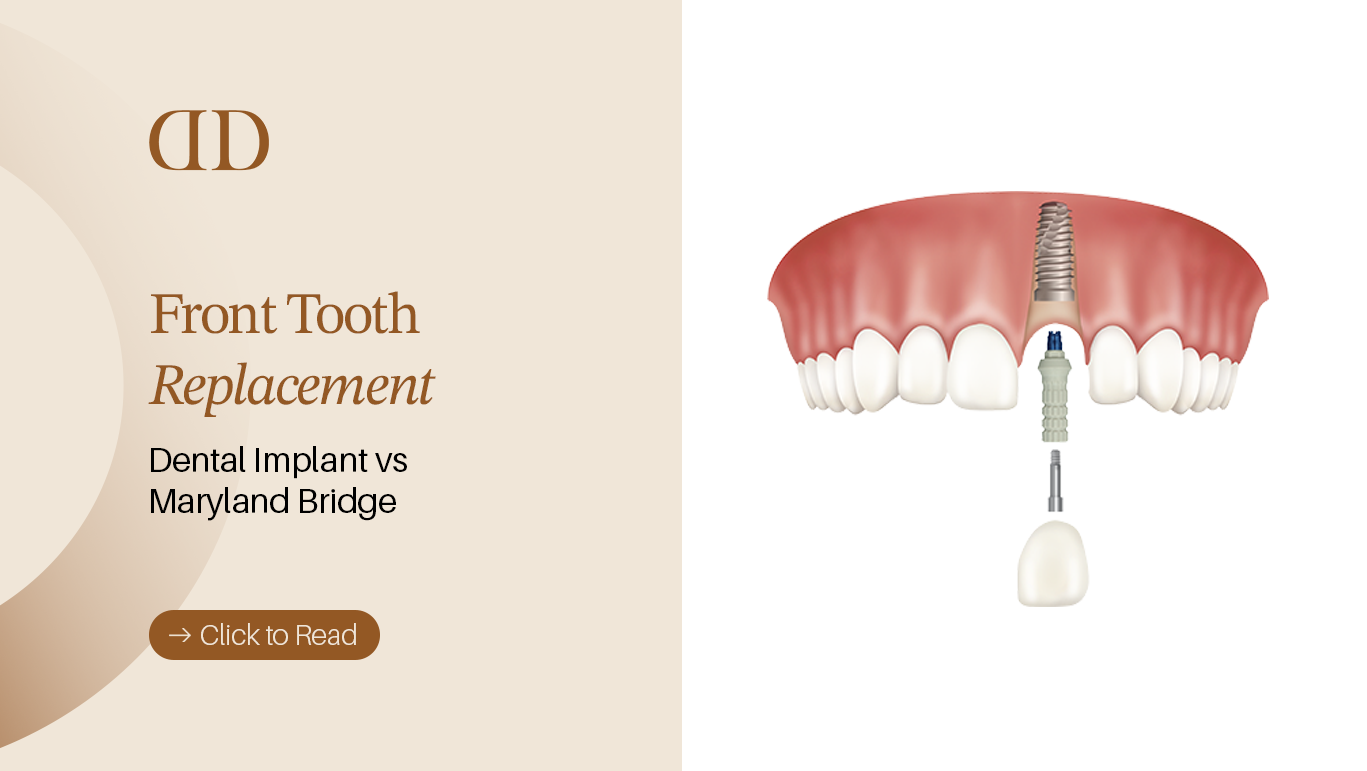

Replacing a front tooth involves evaluating two primary restorative solutions: a dental implant and a Maryland bridge. A dental implant replaces both the tooth root and crown, offering a long-term, independent structure that prevents bone loss. A Maryland bridge attaches a prosthetic tooth to adjacent natural teeth using resin-bonded metal or ceramic wings, serving as a non-invasive, faster alternative that leaves healthy tooth structure intact. The ideal choice depends on your jawbone density, bite alignment, overall oral health, budget, and timeline.
At Darya Dental Turkey, located in Ataşehir, Istanbul, clinical evaluation guides the selection between a front tooth implant and a resin-bonded bridge to restore smile aesthetics and functionality.
Front Tooth Replacement Options at Darya Dental Turkey
Losing an anterior (front) tooth impacts aesthetic confidence, speech articulation, and bite function. Unlike posterior molars, which handle heavy masticatory forces, the front central and lateral incisors require restorations that mimic natural translucent enamel, withstand shear stress, and support surrounding gingival (gum) tissue.
When evaluating missing front tooth options, two clinical approaches stand out:
- Dental Implants: Biocompatible titanium or zirconia posts surgically inserted directly into the alveolar bone, serving as artificial roots for custom porcelain or zirconia crowns.
- Maryland Bridges (Resin-Bonded Bridges): Conservative prostheses featuring a central pontic (false tooth) secured to the lingual (back) surface of adjacent teeth with thin micro-etched wings.
Beyond these primary methods, temporary solutions like removable partial dentures (flippers) or traditional full-coverage bridges exist. However, implants and Maryland bridges remain the leading options for restoring single front teeth while prioritizing tissue preservation and aesthetic outcomes.
Dental Implant vs Maryland Bridge: Key Differences
Understanding how these treatments function structurally, clinically, and aesthetically helps clarify which solution aligns with your needs.
Front Tooth Dental Implant Overview
A front tooth dental implant replaces the entire tooth structure from root to crown. A biocompatible post is placed into the jawbone during a minor surgical procedure. Over a period of three to six months, a process called osseointegration occurs, where the surrounding bone fuses directly to the implant surface.
Key Clinical Characteristics:
- Bone Preservation: Stimulates the jawbone to prevent natural resorption following tooth loss.
- Autonomy: Functions independently without relying on or altering adjacent natural teeth.
- Longevity: Designed to be a long-term solution with proper oral hygiene and regular professional maintenance.
- Gingival Aesthetics: Allows for soft-tissue conditioning using custom temporary crowns to recreate a natural gum contour (emergence profile).
Because the anterior maxilla (upper front jaw) often features thin outer bone walls, bone grafting or soft tissue augmentation may be recommended prior to or during implant placement to ensure optimal aesthetic outcomes.
```html
```
Premium Dental Care in Turkey
Expert treatments with high-end technology. Get your personalized quote today via WhatsApp.
Maryland Bridge Overview
A Maryland bridge also referred to as a resin-bonded bridge or acid-etched bridge is a conservative prosthetic restoration. It consists of a customized ceramic or porcelain-fused-to-metal pontic flanked by subtle retaining wings. These wings are bonded to the back (lingual) surfaces of adjacent supporting teeth (abutments) using high-strength composite resins.
Key Clinical Characteristics:
```html  ```
```
Want trusted dental advice in your Google AI answers?
Add Darya Dental Turkey as a Preferred Source on Google to make our dental guides easier to find in your search results and AI Overviews.
- Non-Invasive Preparation: Requires minimal or no reduction of adjacent tooth enamel, keeping supporting teeth intact.
- Immediate Results: Requires no surgical intervention or extended bone healing phase, making the treatment process significantly shorter.
- Reversibility: Because adjacent teeth remain largely untouched, the procedure can often be reversed or transitioned to an implant later if needed.
- Ideal for Specific Cases: Well-suited for narrow spaces, adolescent patients whose jawbones are still developing, or individuals with insufficient bone volume where grafting is not preferred.
While a Maryland bridge offers an effective conservative solution, its retention relies entirely on the strength of the resin bond and the structural integrity of adjacent supporting enamel.
Candidates for Front Tooth Implants and Maryland Bridges
Determining whether a dental implant or a Maryland bridge is the right option for a missing front tooth depends on individual anatomical, functional, and personal factors. A thorough clinical evaluation, including digital imaging and cone-beam computed tomography (CBCT), helps assess candidacy for each approach.
Who Is an Ideal Candidate for a Front Tooth Implant?
A dental implant is often the preferred solution when long-term stability and bone preservation are primary goals. You may be a strong candidate for an anterior dental implant if you meet the following clinical criteria:
- Sufficient Jawbone Density: Adequate bone volume and height in the maxilla are necessary to fully anchor the titanium post. If bone resorption has occurred, bone grafting treatments may be required before or during placement.
- Fully Developed Facial Bone Structure: Implants are generally recommended for adults whose jawbones have stopped growing (typically ages 18–21 and older) to ensure the post remains aligned with neighboring teeth.
- Healthy Periodontal Tissues: Active gum disease must be treated prior to implant surgery to prevent peri-implantitis and ensure proper healing.
- Good Overall Health: Controlled systemic health, non-smoking status (or willingness to pause smoking during healing), and good oral hygiene significantly support long-term osseointegration.
Who Is an Ideal Candidate for a Maryland Bridge?
A Maryland bridge offers a conservative alternative when surgical placement is not feasible or when preserving natural tooth structure is the main priority. Ideal candidates include:
- Intact Adjacent Teeth: The neighboring teeth (abutments) should have healthy enamel and minimal or no large existing fillings to allow strong resin bonding.
- Minimal Bite Stress: Patients with a favorable occlusion (bite) who do not exhibit severe deep bites, night grinding (bruxism), or heavy anterior forces are better suited for bonded restorations.
- Younger Patients: Teenagers or young adults awaiting complete jaw development can benefit from a resin-bonded bridge as a minimally invasive temporary or medium-term solution.
- Inadequate Bone Volume Without Grafting: Individuals with limited bone density in the front jaw who prefer to avoid bone grafting procedures often choose this option.
Treatment Process for Front Tooth Replacement in Istanbul
Restoring a front tooth involves distinct clinical phases depending on whether an implant or a Maryland bridge is selected. At Darya Dental Turkey in Ataşehir, Istanbul, both pathways are structured to ensure functional alignment and natural-looking aesthetic results.
Dental Implant Procedure Workflow
- Initial Consultation & Digital Planning: Digital X-rays and 3D CBCT scans are taken to assess bone dimensions, root proximity of neighboring teeth, and nerve location.
- Surgical Placement: Under local anesthesia, the implant post is precisely positioned in the jawbone. If bone volume is insufficient, a localized bone graft may be performed concurrently.
- Healing Phase (Osseointegration): Over a period of three to six months, the bone fuses with the implant. A temporary cosmetic tooth (such as a flipper or provisional bridge) is usually provided during this time so you never leave without a tooth in the front area.
- Abutment and Crown Fitting: Once osseointegrated, a custom abutment is attached, followed by a high-translucency zirconia or porcelain crown engineered to match your natural tooth shade.
Maryland Bridge Fitting Process
- Preparation and Impression: The lingual surfaces of adjacent teeth are lightly cleaned and prepared. A precise digital impression is taken to capture the contours of the abutment teeth and the gap.
- Laboratory Fabrication: Technicians craft a custom pontic attached to metal or ceramic wings engineered to fit the back of the neighboring teeth.
- Bonding Procedure: The back of the supporting teeth is micro-etched, and a specialized composite resin cements the bridge wings into place. The bite is carefully checked to ensure no interference during chewing.
This streamlined workflow allows a Maryland bridge to be completed in significantly fewer appointments compared to an implant procedure.
Comparison Matrix: Dental Implant vs. Maryland Bridge
The following table summarizes the primary differences between front tooth implants and Maryland bridges across key clinical and practical dimensions:
| Feature | Front Tooth Dental Implant | Maryland Bridge (Resin-Bonded) |
| Primary Structure | Independent post (artificial root) + crown | Pontic attached via wings to adjacent teeth |
| Adjacent Tooth Preparation | None (neighboring teeth remain untouched) | Minimal or no enamel reduction on lingual surfaces |
| Jawbone Preservation | Yes (stimulates alveolar bone directly) | No (does not prevent underlying bone loss) |
| Treatment Timeline | 3 to 6 months (includes healing time) | 1 to 2 weeks (requires few visits) |
| Surgical Requirement | Yes (minor outpatient procedure) | No (completely non-invasive) |
| Longevity Expectancy | Designed for multi-decade, long-term wear | Typically 5 to 10+ years depending on bond integrity |
| Bite Force Capability | High (transfers force into jawbone) | Moderate (relies on adhesive bond strength) |
| Primary Advantage | Permanent, standalone structural restoration | Conservative, fast, and preserves natural tooth tissue |
Cost Factors for Front Tooth Replacement
Understanding the financial aspects of replacing a front tooth requires looking beyond the immediate price tag to consider long-term value, material choices, and surgical requirements.
Factors Influencing Overall Costs
- Surgical Requirements: If an implant requires preparatory proceduressuch as bone grafting, sinus lifts (for upper posteriors), or soft-tissue shaping these add to the overall treatment scope.
- Material Selection: Premium titanium or full-zirconia implant posts, combined with custom-milled zirconia crowns, carry different material costs than metal-framed or all-ceramic Maryland bridges.
- Number of Clinical Visits: Implants require multiple appointments over several months, whereas a Maryland bridge requires fewer visits, affecting overall lab and clinical time.
- Laboratory Customization: Front teeth demand precise aesthetic shading, translucency, and custom emergence profiles from skilled dental technicians to ensure a seamless match with neighboring teeth.
Cost Impact Comparison
| Cost Factor | Dental Implant Impact | Maryland Bridge Impact |
| Surgical Fees | Higher initial investment due to surgical placement and potential grafting | Lower upfront cost as no surgery or grafting is involved |
| Laboratory Customization | Requires custom abutment and high-aesthetic individual crown | Requires custom-milled central pontic and retaining wings |
| Long-Term Maintenance | Lower lifetime cost due to durability and high long-term success rates | May require periodic rebonding or replacement over time |
Due to individual variations in oral anatomy and treatment goals, exact pricing is determined following a personal clinical assessment rather than fixed online rates.
Local Care and Treatment at Our Ataşehir Clinic
Choosing the right dental clinic for an anterior restoration involves looking at clinical expertise, material quality, and geographic accessibility. Located in Ataşehir on the Asian side of Istanbul, Darya Dental Turkey provides comprehensive restorative and cosmetic dental treatments tailored to both international patients and local residents.
Seamless Access for Local Patients
Our Ataşehir clinic is situated to serve nearby residential and commercial districts across Istanbul. For patients seeking a visit our clinic in Ataşehir, the practice offers direct transit links and straightforward access from surrounding areas, including neighboring Ümraniye, Kadıköy, and Üsküdar. Patients traveling from Ümraniye can reach our Ataşehir facility within minutes via primary connecting roadways, making multi-visit treatments like dental implants or quick Maryland bridge fittings convenient.
Comprehensive Patient Support in Istanbul
International patients visiting Istanbul for front tooth replacement receive end-to-end care designed to streamline their clinical visit:
- Integrated Diagnostics: In-house 3D CBCT scans and digital intraoral scanners eliminate the need for third-party imaging centers.
- Multilingual Support: Patient coordinators assist with scheduling, treatment translation, and post-procedure follow-ups.
- Collaborative Planning: Every anterior restoration is evaluated to harmonize with your facial aesthetics, lip line, and existing occlusion.
Frequently Asked Questions
Is a dental implant better than a Maryland bridge for a front tooth?
A dental implant is generally considered the more durable, standalone solution because it replaces the tooth root, stimulates jawbone preservation, and does not rely on neighboring teeth. However, a Maryland bridge is a non-invasive, faster alternative that requires no surgical intervention and preserves natural enamel. The ideal choice depends on your bone structure, bite, and long-term goals.
How long does a Maryland bridge last compared to an implant?
A Maryland bridge typically lasts between 5 to 10 years or longer before requiring rebonding or replacement, depending on bite pressure and oral hygiene. In contrast, a well-maintained dental implant is designed to be a long-term, multi-decade restoration, with high clinical success rates over time.
Does getting a front tooth implant require bone grafting?
Not always, but bone grafting is common in the front tooth zone. Because the outer wall of the upper jawbone is naturally thin, it often resorbs quickly after tooth loss. If your 3D scan shows insufficient bone density, dental bone grafting treatments may be performed before or during implant placement to ensure long-term stability and optimal gum aesthetics.
How many visits to Istanbul are needed for a front tooth replacement?
For a front tooth implant, treatment typically requires two trips separated by 3 to 6 months to allow for bone healing (osseointegration), though provisional temporary teeth are provided so you are never without a front tooth. A Maryland bridge usually requires only one short visit of 5 to 7 days, as it involves no surgical integration period.
Can I replace a missing front tooth in a single day?
While immediate temporary restorations (such as a temporary flipper or provisional crown) can often be fitted in a single visit so you do not leave with a gap, permanent restorations require adequate time. Implants need structural healing time, and Maryland bridges require precise laboratory custom-milling for long-term bonding success.
Replacing a missing front tooth requires balancing structural durability, soft-tissue aesthetics, and overall oral health. A dental implant provides a permanent, bone-preserving root-and-crown restoration that operates independently of adjacent teeth. Conversely, a Maryland bridge offers a conservative, non-surgical alternative that preserves healthy neighboring enamel and delivers swift results.
During a clinical consultation at Darya Dental Turkey in Ataşehir, Istanbul, detailed 3D imaging and bite analysis determine which approach best aligns with your dental anatomy. Whether you require a permanent implant, conservative resin-bonded bridge, or complementary cosmetic dentistry solutions, our clinical team provides personalized care to restore your smile’s health, stability, and natural appearance.
