
Root Canal or Extraction: How Dentists Decide
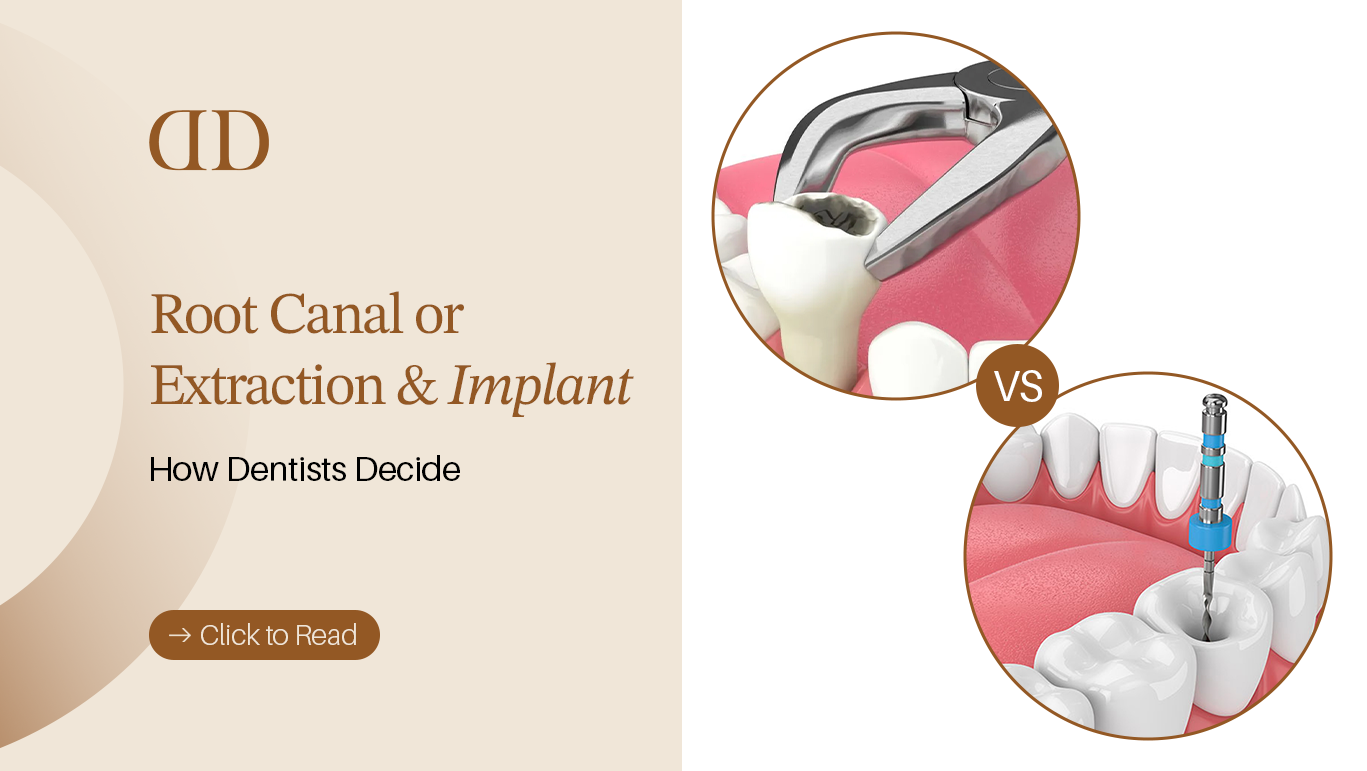

When a tooth is badly damaged, infected, or painful, the choice is not always simply between keeping it or removing it. In many cases, a dentist first evaluates whether the natural tooth can be predictably restored and maintained. If it can, root canal treatment may be considered to preserve the tooth. If the tooth cannot be adequately restored or supported, tooth extraction may be necessary.
The decision depends on factors such as the amount of healthy tooth structure remaining, the presence of cracks or fractures, the extent of infection, previous treatment, and the condition of the surrounding gums and bone. If a tooth cannot be saved, replacement options such as a dental implant may then be considered.
The key question is therefore not simply whether a root canal is “better” than an extraction. It is whether the individual tooth can be saved and whether doing so offers a reasonable long-term treatment option.
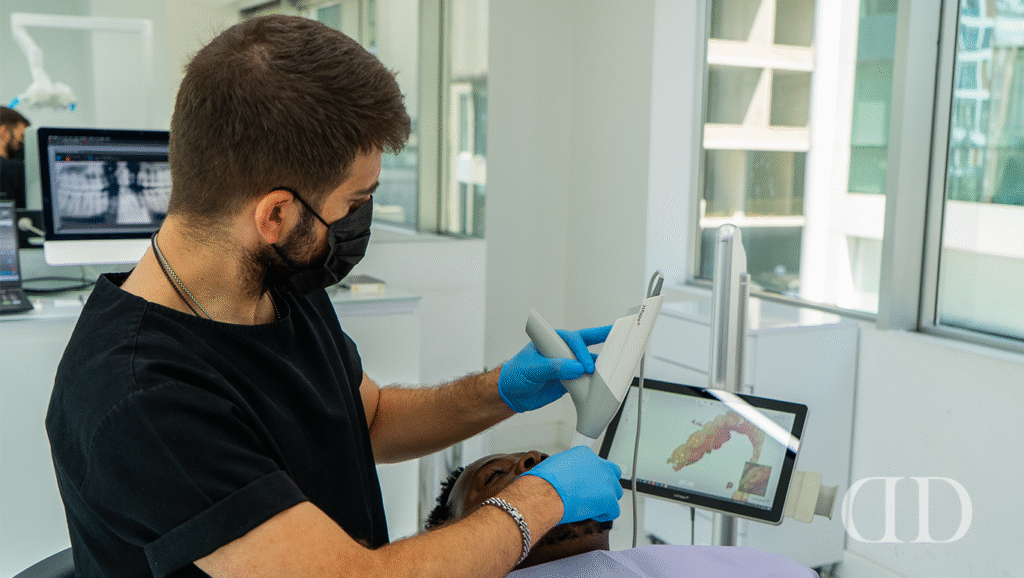
When Can a Tooth Be Saved With Root Canal Treatment?
Root canal treatment is generally considered when the inside of a tooth has become infected or inflamed but the tooth still has enough healthy structure to be restored and function.
The purpose of root canal treatment is to remove infected or damaged tissue from inside the tooth, clean and disinfect the root canal system, and then seal the space. The tooth can subsequently be restored so it can continue to function in the mouth.
However, having an infection does not automatically mean that a tooth needs to be extracted. A tooth may still be a candidate for root canal treatment when:
- The remaining tooth structure can support a suitable restoration.
- The roots and surrounding tissues can be treated appropriately.
- There is no fracture that makes the tooth impossible to restore.
- The tooth has sufficient periodontal support.
- The overall condition of the tooth makes long-term restoration reasonable.
This is why a diagnosis should come before a treatment decision. Pain or infection alone does not determine whether extraction is necessary.
If you want to understand the treatment itself rather than the decision between saving and removing a tooth, you can learn more about root canal treatment.
When Might Tooth Extraction Be Necessary?
Tooth extraction may be considered when a tooth cannot be predictably restored or maintained.
Premium Dental Care in Turkey
Expert treatments with high-end technology. Get your personalized quote today via WhatsApp.
One important consideration is restorability. If too much tooth structure has been lost, there may not be enough healthy material remaining to support a restoration. In other cases, a severe fracture may extend into a part of the tooth that makes preservation impractical.
Extraction may also be considered when the tooth has other significant problems, such as:

Want trusted dental advice in your Google AI answers?
Add Darya Dental Turkey as a Preferred Source on Google to make our dental guides easier to find in your search results and AI Overviews.
- Extensive structural damage
- Certain severe cracks or fractures
- Insufficient support from the surrounding tissues
- Infection associated with a tooth that cannot be predictably restored
- A tooth with a poor overall prognosis after appropriate evaluation
This does not mean that extraction is automatically the next step whenever a tooth has previously received root canal treatment or has an infection. Other treatment possibilities may sometimes need to be considered first.
The goal is to determine whether the natural tooth can be restored and maintained not simply to choose the quickest treatment.
What Factors Do Dentists Consider Before Choosing a Treatment?
There is no single finding that determines the right treatment for every tooth. Dentists typically consider the tooth’s structure, surrounding tissues, history, and overall restorability before recommending root canal treatment or extraction.
Tooth Structure and Restorability
The amount of healthy tooth structure remaining is one of the most important considerations.
A tooth needs enough sound structure to support an appropriate restoration and withstand normal function. If extensive decay, previous restorations, or damage have left very little usable tooth structure, saving the tooth may become more difficult.
This is different from simply asking whether the tooth has an infection. A tooth can have an infection and still potentially be restored. Conversely, treating the infection does not solve a structural problem if the tooth itself cannot adequately support a restoration.
The dentist therefore evaluates whether the tooth can be rebuilt and maintained after treatment.
Cracks and Fractures
Cracks can significantly affect the decision between preserving and removing a tooth.
Not every crack has the same significance. Its location, depth, direction, and effect on the remaining tooth structure all matter. Some damaged teeth may still be treatable, while a severe fracture can make predictable restoration impossible.
This is particularly important because root canal treatment addresses problems within the tooth’s root canal system. It does not automatically repair every structural fracture affecting the tooth.
For this reason, the presence of a crack should be evaluated as part of the overall diagnosis rather than treated as an automatic reason for either root canal treatment or extraction.
Infection and Previous Treatment
The presence and extent of infection are also relevant to treatment planning.
A tooth with infected or inflamed pulp may be evaluated for root canal treatment when the tooth remains structurally restorable. Previous root canal treatment adds another layer to the assessment because the dentist may need to determine why the original treatment did not resolve the problem and whether further treatment is technically and clinically appropriate.
A failed root canal does not necessarily mean that extraction is the only option. In selected cases, root canal retreatment may be considered before extraction.
For information specifically about why root canal treatment can fail and when retreatment may be considered, see root canal retreatment.
Gum and Bone Support
The condition of the tissues surrounding a tooth also matters.
Even when the tooth itself appears treatable, its long-term prognosis can be affected by the amount and condition of the supporting gum and bone. Periodontal problems, bone loss, and other issues affecting tooth support may therefore influence whether preserving the tooth is reasonable.
This is why the decision should not be based only on what can be seen in the visible part of the tooth. The dentist may need to assess the tooth and its surrounding structures together.
The Overall Condition of the Tooth
Finally, dentists consider the tooth as a whole.
A tooth may have several problems at the same time for example, substantial structural loss combined with infection or previous treatment. The interaction between these factors can be more important than any single finding.
The assessment may therefore consider:
| Factor | Why it matters |
| Remaining tooth structure | Determines whether the tooth can be adequately restored |
| Cracks or fractures | May affect whether the tooth can be predictably maintained |
| Infection | Helps determine whether endodontic treatment is appropriate |
| Previous root canal treatment | May require assessment for retreatment or another option |
| Gum and bone support | Affects the tooth’s ability to remain functional |
| Overall restorability | Brings the different findings together to assess whether saving the tooth is reasonable |
The final decision should be based on the condition of the individual tooth rather than on a general rule that root canal treatment is always preferable to extraction, or that extraction is always the better option.
What Happens If the Tooth Cannot Be Saved?
Sometimes a dentist determines that a tooth cannot be predictably restored or maintained. In that situation, extraction may become the appropriate treatment option.
Removing the tooth addresses the immediate problem, but it also creates a missing-tooth space that may need to be considered separately. The next step depends on factors such as the location of the missing tooth, the condition of the surrounding teeth and tissues, and the patient’s overall treatment needs.
Possible replacement options can include a dental implant, a bridge, or a removable prosthesis. The appropriate option is not automatically the same for every patient.
Replacing a Missing Tooth With a Dental Implant
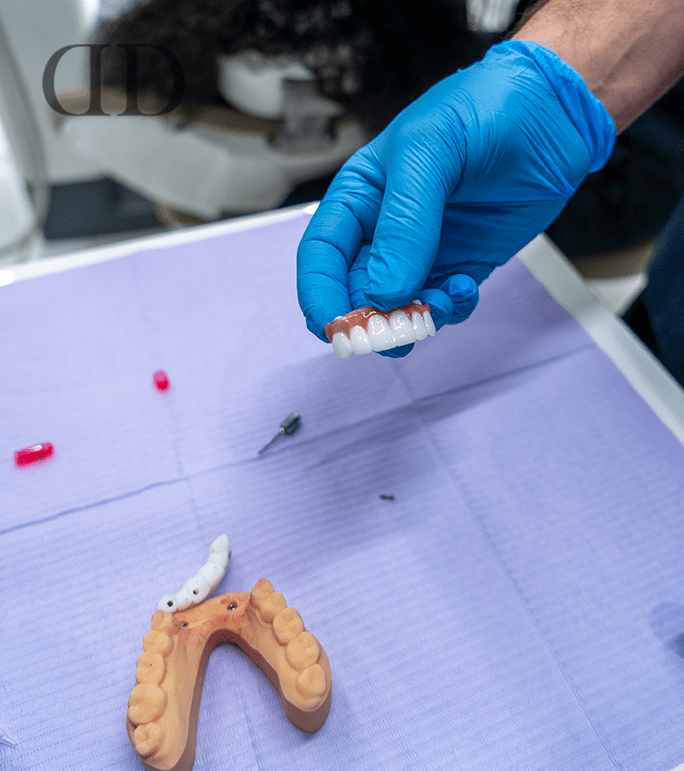
A dental implant can be considered as one way to replace a missing tooth after extraction. Unlike root canal treatment, which aims to preserve the natural tooth, implant treatment is used when the natural tooth is no longer present.
The treatment pathway is therefore fundamentally different:
Natural tooth → diagnosis → restorability assessment → root canal treatment if appropriate
versus:
Non-restorable tooth → extraction → replacement planning → dental implant or another replacement option
An implant may require multiple stages, depending on the condition of the extraction site and the treatment plan. The timing can also vary. In some situations, implant placement may be considered relatively soon after extraction, while in others the site may need additional healing or preparation first.
The important distinction is that a dental implant is not an alternative to root canal treatment for a tooth that can be predictably saved in every situation. It becomes relevant when a tooth is missing or needs to be removed and replacement is being considered.
You can learn more about the replacement option itself on our dental implants page.
When Bone Grafting May Be Considered
The condition of the bone around an extracted tooth can influence future implant planning.
If there is insufficient bone volume or the extraction site has experienced bone loss, additional procedures may sometimes be considered before or as part of implant treatment. Bone grafting is one procedure that may be considered in selected cases, but it is not automatically required for every extraction or every implant.
Whether bone grafting is appropriate depends on the anatomy of the site and the planned treatment. This is why implant planning is normally carried out after assessing the missing-tooth area rather than assuming that the same sequence applies to everyone.
Root Canal vs. Extraction and Implant: Key Differences
Root canal treatment and extraction followed by tooth replacement address different clinical situations.
The first approach aims to preserve the natural tooth. The second begins with removing a tooth that cannot be predictably maintained and then considering how the missing tooth should be replaced.
| Root Canal Treatment | Extraction + Implant | |
| Main goal | Preserve the natural tooth | Replace a tooth that cannot be saved |
| Natural tooth | Retained | Removed |
| Treatment pathway | Root canal treatment followed by appropriate restoration | Extraction followed by implant planning and restoration |
| Timing | Depends on the condition of the tooth and restoration needed | May involve multiple treatment stages |
| Key consideration | Whether the tooth is restorable and can be maintained | Whether replacement is appropriate and the site can support the planned treatment |
This comparison should not be interpreted as a ranking of the two options. The appropriate pathway depends on whether the natural tooth is restorable and what the clinical assessment shows.
For example, a tooth with an infection but adequate remaining structure may be evaluated for root canal treatment. A severely fractured tooth with insufficient structure may instead require extraction, after which replacement options can be discussed.
Can a Failed Root Canal Be Retreated Instead of Extracted?
Yes, in some cases a failed root canal can be considered for retreatment rather than immediate extraction.
A previous root canal does not automatically mean that the tooth must be removed. The dentist first needs to understand why the original treatment did not produce the expected result and whether the tooth remains structurally suitable for further treatment.
Factors that may be relevant include:
- The quality and extent of the previous root canal treatment
- Persistent or recurrent infection
- The presence of untreated or inadequately treated areas
- The condition of the tooth structure
- Cracks or fractures
- The surrounding bone and gum support
- Whether the tooth can be restored after further treatment
If the tooth remains restorable and retreatment is considered appropriate, root canal retreatment may offer another opportunity to preserve the natural tooth.
However, retreatment is not suitable for every failed root canal. If the underlying structural condition of the tooth is poor, extraction may still need to be considered.
For this reason, the question is not simply “Did the root canal fail?” but rather “Why did it fail, and can the tooth still be predictably treated and restored?”
This distinction also helps separate the purpose of this page from our dedicated retreatment content. The focus here is the decision between preserving or removing the tooth, while the retreatment page goes deeper into the causes and management of failed root canal treatment.
How Dentists Make the Final Decision
There is no single treatment that is right for every tooth.
A dentist may consider root canal treatment when the natural tooth has enough healthy structure, adequate support, and a reasonable prospect of being restored and maintained. Extraction may be considered when the tooth cannot be predictably restored, has a significant structural problem, or has other factors that make preservation unsuitable.
The decision may therefore follow a general clinical sequence:
1. Diagnose the problem
The dentist determines what is causing the tooth’s symptoms or damage.
2. Assess restorability
The remaining tooth structure, cracks, fractures, and surrounding tissues are evaluated.
3. Consider treatment possibilities
If the tooth is potentially restorable, root canal treatment or another appropriate treatment may be considered.
4. Evaluate previous treatment when relevant
For a previously treated tooth, retreatment may be assessed if the tooth remains suitable for further treatment.
5. Consider extraction when preservation is not predictable
If the tooth cannot reasonably be restored or maintained, extraction may become the appropriate option.
6. Discuss replacement if the tooth is removed
If extraction is necessary, options such as a dental implant can then be evaluated separately.
This approach keeps the treatment decision focused on the condition of the individual tooth rather than assuming that one procedure is universally better than another.
The most important question is therefore not “Is a root canal better than an extraction?” It is “Can this particular tooth be predictably saved, restored, and maintained?”
When the answer is no, the conversation moves from preserving the natural tooth to managing the missing tooth and considering an appropriate replacement.
Frequently Asked Questions
Is a root canal better than extraction?
Not necessarily. A root canal may be preferable when the natural tooth is restorable and can be reasonably maintained, while extraction may be necessary when the tooth cannot be predictably restored. The appropriate option depends on the condition of the individual tooth.
When does a dentist recommend extraction instead of root canal treatment?
A dentist may recommend extraction when the tooth has insufficient remaining structure, a significant fracture, inadequate supporting tissues, or another condition that makes predictable restoration difficult. An infection alone does not automatically mean that the tooth needs to be extracted.
Can every tooth be saved with a root canal?
No. Root canal treatment can address infection or inflammation inside a tooth, but it cannot make every damaged tooth restorable. The amount of remaining tooth structure, cracks or fractures, supporting tissues, and overall condition of the tooth all influence whether preservation is realistic.
What happens if a tooth cannot be saved?
If a tooth cannot be predictably restored, extraction may be recommended. Once the tooth is removed, the dentist can discuss whether the space should be replaced and which option may be appropriate. A dental implant is one possible replacement option, but it is not automatically suitable for every patient.
Can I get a dental implant after tooth extraction?
Yes, a dental implant can be considered after tooth extraction in appropriate cases. The timing depends on the condition of the extraction site, available bone, healing, and the overall treatment plan. Some cases may require additional preparation, such as bone grafting, before or during implant treatment.
Can a failed root canal be treated again?
In some cases, yes. Root canal retreatment may be considered when a previously treated tooth remains structurally restorable and there is a reasonable basis for further treatment. However, retreatment is not appropriate for every failed root canal, particularly when significant structural problems prevent predictable restoration.
How do dentists decide whether a tooth can be saved?
Dentists assess several factors together, including the remaining tooth structure, cracks and fractures, infection, previous treatment, gum and bone support, and the overall restorability of the tooth. The decision is based on the individual clinical findings rather than on a general rule that root canal treatment or extraction is always better.
The decision between root canal treatment and extraction starts with one central question: Can the natural tooth be predictably saved, restored, and maintained?
If the tooth remains restorable, root canal treatment may be considered as part of a plan to preserve it. If the tooth cannot be predictably maintained, extraction may be necessary. Replacement options, including dental implants, can then be evaluated separately.
A failed root canal also does not automatically mean extraction. In selected situations, retreatment may be considered if the tooth remains suitable for further treatment.
Ultimately, the right choice depends on the diagnosis and condition of the individual tooth. A dental examination is therefore necessary before deciding whether preservation, extraction, or replacement is the most appropriate pathway.
