
The First 48 Hours Post-Extraction: Tooth Extraction Aftercare Guide
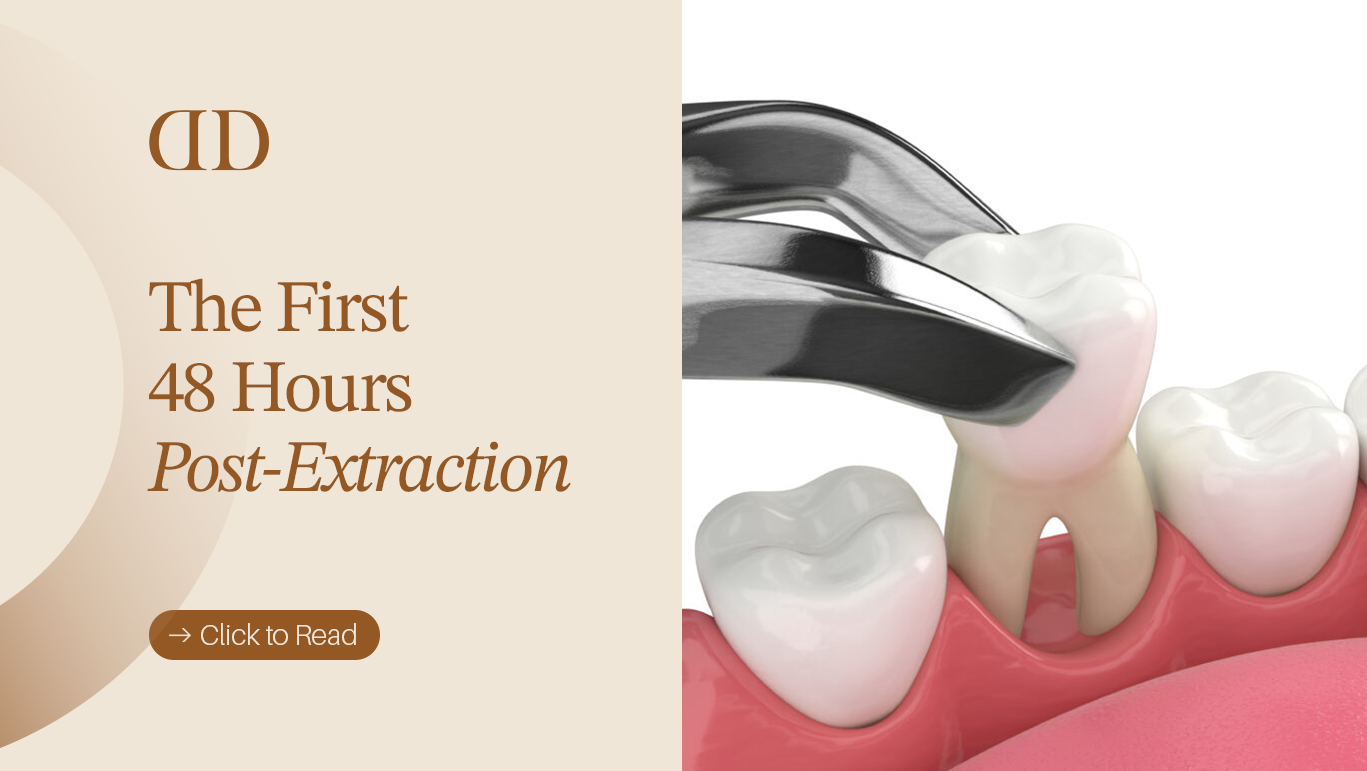

Tooth extraction aftercare in the first 48 hours is mainly about one thing: protecting the blood clot that forms inside the empty tooth socket. That clot acts as a natural protective layer over the underlying bone and nerves and creates the conditions needed for normal healing.
During the first two days, you should control bleeding with gauze, rest, manage pain as directed, eat soft foods, avoid smoking and straws, and keep the extraction site undisturbed. A little bleeding, swelling, and discomfort can be normal. Severe pain, uncontrolled bleeding, breathing difficulties, or signs of infection are not.
Here is what you need to know about those first 48 hours after a tooth extraction, including what to eat, how to clean your mouth, what to avoid, and when to contact your dentist.
Tooth Extraction Aftercare: What to Do in the First 48 Hours
The first 48 hours after a tooth extraction are the most important early phase of recovery. Whether you have had a badly damaged tooth removed or undergone wisdom tooth extraction, your body immediately begins repairing the surgical site.
The process starts with bleeding and blood clot formation. Over time, healing tissue develops within the socket, and the gum gradually closes over the area.
Your job is surprisingly simple: do not interfere with that process.
In practical terms, good tooth extraction aftercare means:
- Keeping firm pressure on the gauze as instructed after the procedure
- Taking prescribed or recommended medication correctly
- Resting and avoiding strenuous physical activity
- Eating soft, comfortable foods
- Avoiding smoking, vaping, straws, and forceful spitting
- Keeping your mouth clean without disturbing the extraction socket
- Monitoring your symptoms for unexpected changes
The exact instructions can vary depending on the complexity of the extraction, your medical history, medications, and whether stitches or sedation were used. For that reason, the instructions provided by your treating dentist should always take priority over general online advice.
Why Aftercare Matters
A tooth extraction leaves behind a socket in the jawbone. Although the procedure may be finished when you leave the dental chair, biological healing is only beginning.
Premium Dental Care in Turkey
Expert treatments with high-end technology. Get your personalized quote today via WhatsApp.
Proper aftercare matters because it can help:
- Protect the developing blood clot
- Reduce unnecessary bleeding
- Control pain and swelling
- Lower the risk of complications
- Keep the mouth reasonably clean during healing
- Make eating and drinking more comfortable
- Help you identify warning signs early
One of the best-known complications after an extraction is alveolar osteitis, commonly called dry socket. It occurs when the extraction socket does not maintain the blood clot needed to protect the underlying tissues during early healing.
Research published in the medical literature reports that dry socket rates vary according to factors such as extraction type and patient risk profile, with substantially higher rates reported after some impacted mandibular third-molar extractions.
That is why seemingly small instructions such as not smoking or drinking through a straw deserve to be taken seriously.
The first 48 hours after tooth extraction are not about speeding up healing; they are about creating the right conditions for your body to heal normally.
Immediate Steps After Tooth Extraction
The first few hours after your procedure require the most attention.
Control bleeding with gauze
Your dentist will usually place gauze over the extraction site. Bite down with steady pressure for the period recommended by your dentist.
The pressure helps control bleeding and supports early clot formation.
If bleeding continues, replace the gauze according to your dentist’s instructions. Avoid constantly removing the gauze to check the socket, as repeated disturbance can interfere with clot formation.
Slight oozing or blood-tinged saliva may occur during the early recovery period. Persistent heavy bleeding is different and should be discussed with your dentist.
Rest after the procedure
This is not the day to test your personal best at the gym.
Rest during the initial recovery period and avoid strenuous exercise, heavy lifting, or activities that noticeably increase your heart rate. Increased physical exertion can contribute to bleeding and throbbing around the extraction site.
When resting, keeping your head slightly elevated may also be more comfortable, particularly if you are experiencing swelling.
Follow medication instructions carefully
Depending on your procedure and medical history, your dentist may recommend or prescribe pain medication.
Take medication exactly as directed. Do not exceed the recommended dose, combine medications without appropriate medical advice, or take someone else’s prescription medication.
If antibiotics have been prescribed for a specific clinical reason, follow the instructions given by your dentist.
Be careful while your mouth is numb
Local anaesthesia can remain effective for several hours after an extraction.
Until normal sensation returns, avoid chewing on the numb side of your mouth and be cautious with hot food and drinks. It is surprisingly easy to bite your cheek, lip, or tongue without noticing.
Do’s and Don’ts in the First 48 Hours
The rules of tooth extraction aftercare are not complicated. The challenge is remembering them when you are tired, hungry, and wondering whether pizza technically counts as a soft food.
It does not. At least not today.
Do:
- Rest during the first day. Give your body time to begin the healing process.
- Keep pressure on the gauze as instructed. This helps control early bleeding.
- Take pain relief correctly. Follow your dentist’s or doctor’s recommendations.
- Drink water. Hydration supports general recovery, but drink directly from a cup rather than through a straw.
- Choose soft foods. Eat foods that require minimal chewing and are unlikely to irritate the socket.
- Sleep with your head slightly elevated. This may help with comfort and swelling.
- Use a cold pack externally if recommended. Apply it according to your dentist’s instructions rather than continuously.
- Keep the rest of your mouth clean. Brush carefully while avoiding direct trauma to the extraction site.
- Watch how your symptoms change. Pain and swelling should follow a generally improving recovery pattern after the expected early postoperative period.
Don’t:
- Do not smoke or vape. Smoking is associated with impaired healing and a greater risk of postoperative complications.
- Do not use a straw. Suction can interfere with the developing blood clot.
- Do not spit forcefully. Gentle handling of the mouth is essential during early healing.
- Do not vigorously rinse your mouth during the first 24 hours unless specifically instructed otherwise.
- Do not touch the socket. Fingers and tongues are both surprisingly persistent offenders.
- Do not eat hard, crunchy, sharp, or sticky foods.
- Do not drink alcohol if it conflicts with your medications or postoperative instructions.
- Do not exercise intensely during the immediate recovery period.
- Do not ignore severe or worsening symptoms.
Managing Pain and Swelling
Pain and swelling after a tooth extraction can be normal, particularly after surgical extractions and wisdom tooth removal.
However, the intensity varies considerably from one person to another.
A straightforward extraction of a mobile tooth is not the same procedure as the surgical removal of an impacted lower wisdom tooth. Comparing your recovery with someone else’s is therefore not especially useful.
How can you reduce swelling after tooth extraction?
A cold pack applied to the outside of the face may help during the early postoperative period. Follow the schedule recommended by your dental team and place a protective layer between the cold pack and your skin.
Swelling can become more noticeable during the first few days before gradually improving. The exact timeline depends on the complexity of the procedure and individual healing response.
What is the best way to manage tooth extraction pain?
The best pain-management strategy is the one recommended for your specific medical situation.
Your dentist may recommend over-the-counter or prescription medication depending on the procedure. Certain medications are not suitable for everyone, particularly people with specific medical conditions, allergies, pregnancy considerations, or potential drug interactions.
At Darya Dental Clinic in Ümraniye, near Ataşehir in Istanbul, Turkey, postoperative recommendations can be tailored to the procedure performed and the patient’s individual health profile.
Pain that is manageable and gradually improving is different from severe pain that suddenly worsens several days after an extraction. The second pattern deserves professional evaluation.
What to Eat After Tooth Extraction
Food becomes unexpectedly interesting after a tooth extraction. Mostly because all the foods you suddenly want seem to be crunchy.
During the first 24 to 48 hours, choose soft foods that are comfortable to swallow and require little chewing.
Suitable options may include:
| Food or drink | Why it may be suitable | What to watch for |
| Yoghurt | Soft and easy to eat | Avoid varieties with hard seeds or crunchy toppings |
| Mashed potatoes | Requires minimal chewing | Allow hot food to cool first |
| Smooth soup | Easy to consume | Avoid very hot temperatures and chunky ingredients |
| Scrambled eggs | Soft and protein-rich | Chew away from the extraction site |
| Applesauce | Smooth texture | Avoid products that irritate your mouth |
| Soft pasta | Easy to chew when well cooked | Avoid spicy or very hot sauces |
| Smoothies eaten with a spoon | Soft and adaptable | Do not use a straw |
| Soft cooked vegetables | Nutritious and gentle | Make sure they are genuinely soft |
Try to chew on the opposite side of your mouth when possible.
Foods to avoid during the early recovery period include nuts, popcorn, crisps, seeds, hard bread, sticky sweets, and anything with small pieces that can become trapped around the extraction site.
Very spicy and extremely hot foods may also cause discomfort.
A simple rule works well here: if a food is hard, sharp, sticky, crumbly, or requires aggressive chewing, give it a little more time.
The Importance of the Blood Clot
The blood clot deserves its own section because it is the quiet hero of tooth extraction recovery.
After a tooth is removed, blood fills the empty socket and begins to clot. This clot protects the underlying bone and nerve endings while supporting the early stages of tissue repair.
If the clot is lost, breaks down prematurely, or fails to develop properly, the socket may become exposed. This can lead to dry socket, which is often associated with significant pain.
How do you protect the blood clot after tooth extraction?
The most important precautions include:
- Avoid smoking and vaping
- Do not drink through straws
- Avoid forceful spitting
- Do not vigorously rinse during the initial 24 hours unless your dentist tells you otherwise
- Keep your fingers and tongue away from the socket
- Avoid strenuous physical activity during the early recovery period
- Follow your dentist’s postoperative instructions carefully
Protecting the blood clot is one of the most important things you can do during the first 48 hours after tooth extraction.
Oral Hygiene After Extraction
You still need to keep your mouth clean after an extraction. The key is to do it gently.
During the first day, avoid directly brushing or disturbing the extraction socket. You can usually clean the other areas of your mouth carefully, depending on the instructions provided by your dentist.
After the initial 24-hour period, your dentist may recommend gentle rinsing, often with warm salt water or another rinse selected for your clinical needs.
The word gentle matters.
Aggressive swishing is unnecessary and can disturb healing tissues. Instead, allow the liquid to move carefully around your mouth and follow your dentist’s instructions about how to let it out.
Do not poke the socket with a toothbrush, toothpick, cotton bud, finger, or other object in an attempt to “clean it.”
A healing extraction socket can look unusual. That does not automatically mean it is infected.
If you are concerned about the appearance, smell, pain level, or healing progress, contact your dental team rather than trying to investigate the socket yourself.
Special Considerations for Wisdom Tooth Removal
Wisdom tooth removal often requires a little more recovery time and attention than a straightforward tooth extraction. This is especially true when a wisdom tooth is impacted, partially erupted, positioned at an angle, or requires surgical removal from the jawbone.
During surgical wisdom tooth extraction, the dentist or oral surgeon may need to make an incision in the gum, remove a small amount of bone, divide the tooth into sections, or place stitches after the procedure. As a result, swelling, jaw stiffness, bruising, and discomfort can be more noticeable.
Is wisdom tooth removal recovery different from a normal extraction?
Yes. Recovery after wisdom tooth removal can be more involved because the procedure itself may be more complex.
| Recovery factor | Simple tooth extraction | Surgical wisdom tooth removal |
| Procedure complexity | Usually lower | May require gum incisions or bone removal |
| Swelling | Often mild | Can be more noticeable |
| Jaw stiffness | Less common | More common |
| Stitches | Not always required | May be required |
| Return to normal diet | Often quicker | May take longer |
| Postoperative monitoring | Usually straightforward | May require closer attention |
These are general comparisons rather than fixed rules. A difficult extraction of another tooth may involve a longer recovery than a simple wisdom tooth removal.
What should you do after wisdom tooth removal?
The basic principles of tooth extraction aftercare still apply:
- Protect the blood clot.
- Rest during the initial recovery period.
- Avoid smoking and vaping.
- Do not drink through a straw.
- Take medications according to professional instructions.
- Eat soft foods.
- Keep your mouth clean without disturbing the surgical site.
- Attend follow-up appointments if recommended.
If stitches have been placed, your dentist will tell you whether they are dissolvable or need to be removed.
Swelling and jaw stiffness can make eating and speaking uncomfortable for a short period. Choose foods that require minimal chewing and do not force your mouth open wider than feels comfortable.
If you are travelling to Istanbul, Turkey, for dental treatment, discuss your postoperative schedule with your dentist before arranging flights or other demanding activities. Recovery time should be considered part of treatment planning, not an inconvenient detail added at the end.
How Long Does It Take to Recover After a Tooth Extraction?
The first 48 hours are the most important early phase, but complete healing takes longer.
For many patients, discomfort begins to become more manageable after the initial postoperative period. However, the extraction socket itself continues healing for weeks, and changes within the underlying bone can continue for considerably longer.
A general recovery timeline may look like this:
| Time after extraction | What you may experience | What you should focus on |
| First few hours | Bleeding, numbness, early discomfort | Gauze pressure, rest, medication instructions |
| First 24 hours | Clot formation and initial swelling | Protecting the socket |
| 24–48 hours | Swelling and discomfort may continue | Soft foods, gentle hygiene, monitoring symptoms |
| Days 3–7 | Gradual improvement is generally expected | Careful return to normal activities |
| Following weeks | Gum tissue continues healing | Oral hygiene and follow-up care |
| Following months | Bone remodelling continues internally | Long-term treatment planning if replacing the tooth |
The exact recovery period depends on several factors, including:
- Which tooth was removed
- Whether the extraction was simple or surgical
- The condition of the surrounding bone and gum
- Whether infection was present
- Your general health
- Smoking status
- Medications
- Age
- Oral hygiene
- How closely postoperative instructions are followed
Feeling better and being completely healed are not the same thing. The gum may appear improved while the bone beneath it is still undergoing repair and remodelling.
This distinction can be particularly important if you are considering a future restoration such as a dental implant.
Can I Go Back to Work After a Tooth Extraction?
It depends on the type of extraction and the work you do.
After a straightforward extraction, some people may feel comfortable returning to light activities relatively quickly. Surgical extractions and wisdom tooth removal can require more recovery time.
Your occupation also matters.
Someone working from a laptop at home has a very different postoperative day from someone working in construction, professional sport, or another physically demanding environment.
If your work involves heavy lifting, strenuous exercise, repeated bending, or other intense physical activity, ask your dentist when it is appropriate to return.
Do not use someone else’s recovery timeline as your personal deadline.
Can I Exercise During the First 48 Hours After Tooth Extraction?
Strenuous exercise is generally avoided during the immediate recovery period.
Exercise can increase blood pressure and circulation, which may contribute to renewed bleeding or throbbing around the extraction site.
This includes more than going to the gym. Running, intense cycling, heavy lifting, high-intensity interval training, and physically demanding work can all place additional stress on the body during early healing.
Follow the timeline recommended by your treating dentist, particularly after surgical or multiple extractions.
A missed workout is easier to recover from than a postoperative complication.
Can I Smoke After Tooth Extraction?
Smoking after tooth extraction is strongly discouraged, particularly during the early healing period.
Smoking can expose the extraction site to heat and chemicals, while the physical action of inhalation may interfere with the healing socket. Smoking is also associated with a higher risk of dry socket and delayed healing.
Vaping should not automatically be considered a harmless alternative during recovery.
If stopping smoking is difficult, discuss this openly with your dentist before the procedure. Your dental team can help you understand the risks and discuss appropriate options for managing the postoperative period.
For international patients undergoing dental treatment at Darya Dental Clinic in Ümraniye, near Ataşehir, Istanbul, Turkey, smoking habits should be discussed during treatment planning because they may influence healing and longer-term treatment outcomes.
Can I Drink Coffee After Tooth Extraction?
Temperature matters as much as the drink itself.
Very hot drinks should generally be avoided during the early recovery period because heat may irritate the extraction area and interfere with comfort.
If your dentist allows coffee, wait until it has cooled to a suitable temperature. Do not drink it through a straw.
Also consider how caffeine affects you personally and whether you have been given specific instructions because of sedation, medications, or your medical history.
Water remains the simplest choice for staying hydrated immediately after an extraction.
Can I Sleep Normally After a Tooth Extraction?
You can sleep after a tooth extraction, but your sleeping position may need temporary adjustment.
Keeping your head slightly elevated during the initial recovery period may help with comfort and swelling. Some patients find that sleeping on an extra pillow or using a more elevated position is useful.
Avoid sleeping directly against the side of a surgical extraction if pressure causes discomfort.
Before going to bed:
- Check that active bleeding is under control.
- Follow your medication schedule.
- Remove gauze unless your dentist has specifically instructed otherwise.
- Keep water and any necessary medication nearby.
- Protect your pillowcase if slight blood-tinged saliva is still present.
If you received sedation, follow the specific instructions given by your dental team regarding supervision, eating, drinking, driving, and sleeping.
Signs You Should Call Your Dentist
Some discomfort, swelling, and mild bleeding can be expected after a tooth extraction. The important question is whether your symptoms are following an expected recovery pattern or moving in the wrong direction.
Contact your dentist if you experience:
- Heavy bleeding that does not improve with appropriate pressure
- Severe pain that is not controlled by recommended medication
- Pain that becomes significantly worse after initially improving
- Increasing swelling rather than gradual improvement
- Pus or other signs of possible infection
- Persistent fever or feeling seriously unwell
- Difficulty swallowing
- Difficulty breathing
- A significant reaction to prescribed medication
- Persistent numbness or altered sensation that concerns you
- Symptoms of dry socket
Breathing difficulties, rapidly increasing facial or neck swelling, or other signs of a potentially serious medical emergency require urgent medical attention.
How do I know if I have dry socket?
Dry socket is typically associated with significant pain that develops or worsens after an extraction rather than following the expected pattern of gradual improvement.
The pain may radiate towards the ear, temple, or other areas of the face. Some patients also notice an unpleasant taste or smell.
You cannot reliably diagnose dry socket by staring at the extraction site in a bathroom mirror.
If your pain becomes severe or unexpectedly worsens after the procedure, contact your dentist for an assessment.
Dry socket is a recognised postoperative complication and can be managed professionally. The key is seeking appropriate care rather than attempting to treat the socket yourself.
What Is Normal After Tooth Extraction, and What Is Not?
Knowing the difference between expected healing and a potential complication can make the recovery period less stressful.
| Symptom | May be expected | Reason to contact your dentist |
| Bleeding | Mild oozing or blood-tinged saliva early on | Heavy or persistent bleeding |
| Pain | Manageable discomfort that follows an improving pattern | Severe or worsening pain |
| Swelling | Some swelling after the procedure | Rapidly increasing or concerning swelling |
| Jaw stiffness | Can occur, especially after wisdom tooth surgery | Severe or persistent limitation |
| Bruising | Possible after surgical extraction | Extensive bruising with other concerning symptoms |
| Taste | Temporary unusual taste may occur | Persistent bad taste with pain, swelling, or discharge |
| Temperature | Minor temporary changes may have several causes | Persistent fever or feeling seriously unwell |
When in doubt, contact your dental clinic. A brief professional assessment is more useful than hours spent comparing extraction socket photographs online.
Frequently Asked Questions
What is the most important thing to do after tooth extraction?
Protect the blood clot. Avoid smoking, straws, forceful spitting, vigorous rinsing, and unnecessary contact with the extraction socket.
How long should I rest after tooth extraction?
Rest during the immediate postoperative period and avoid strenuous physical activity for the period recommended by your dentist. Surgical extractions may require a longer recovery.
When can I brush my teeth after an extraction?
You can generally keep the rest of your mouth clean while carefully avoiding direct trauma to the extraction site. Follow your dentist’s instructions about when and how to clean near the socket.
What foods can I eat during the first 48 hours?
Choose soft foods such as yoghurt, mashed potatoes, scrambled eggs, smooth soups, applesauce, and well-cooked pasta. Avoid hard, sharp, crunchy, sticky, and very hot foods.
When should tooth extraction pain start improving?
The timeline varies according to the complexity of the extraction. Pain should generally follow an improving pattern after the expected early postoperative period. Severe or worsening pain should be assessed by a dentist.
Can I travel after a tooth extraction?
Travel may be possible after some extractions, but the appropriate timing depends on the complexity of the procedure, your health, and the risk of postoperative complications. International patients should discuss travel plans with their dentist before booking flights immediately after treatment.
What should I do during the first 24 hours after tooth extraction?
Protect the extraction socket, rest, control bleeding with gauze as instructed, take medication correctly, drink water without using a straw, and eat soft foods.
Avoid smoking, vaping, forceful spitting, vigorous rinsing, strenuous exercise, and touching the extraction site.
Your dentist’s individual postoperative instructions should take priority over general advice.
What happens if the blood clot comes out after tooth extraction?
Loss or premature breakdown of the blood clot may expose underlying tissues and increase the risk of dry socket.
Do not attempt to replace or manipulate the clot yourself. If you develop severe or worsening pain, contact your dentist for professional assessment.
How can I make my tooth extraction heal faster?
You cannot force the body to heal instantly, but you can support normal healing by protecting the blood clot, avoiding smoking, eating appropriately, maintaining careful oral hygiene, resting, and following professional instructions.
The better question is not “How do I make this heal overnight?” but “How do I avoid interfering with normal healing?”
For most patients, that shift in thinking leads to better postoperative decisions.
Is it normal to have swelling 48 hours after tooth extraction?
Some swelling can be expected after a tooth extraction, particularly following surgical procedures or wisdom tooth removal.
Swelling may become more noticeable during the early postoperative period before gradually improving. Rapidly increasing swelling, breathing difficulties, severe symptoms, or swelling accompanied by signs of infection require professional assessment.
Can I rinse my mouth with salt water after tooth extraction?
Your dentist may recommend gentle warm salt-water rinsing after the initial postoperative period, often beginning after the first 24 hours.
Do not rinse aggressively. Follow the timing and technique recommended by your treating dentist.
How long does the blood clot need to stay after tooth extraction?
The blood clot plays an essential role during early healing and should remain undisturbed while the socket begins forming new tissue.
Rather than trying to monitor exactly how long the clot remains visible, focus on protecting the extraction site and following your dentist’s instructions.
Can I eat normally 48 hours after tooth extraction?
Some patients can gradually introduce more substantial foods after 48 hours, while others need to continue with a soft diet for longer.
The correct timeline depends on your comfort level, the complexity of the extraction, and your dentist’s recommendations. Avoid forcing yourself to eat hard or crunchy foods simply because two days have passed.
Why does my tooth extraction hurt more after three days?
Pain that significantly worsens after initially improving may indicate a postoperative complication such as dry socket and should be assessed by a dentist.
Do not rely on pain alone to make a diagnosis. Contact your dental clinic and describe when the pain started, whether it is worsening, and whether you have other symptoms.
How do I know if my extraction site is infected?
Possible warning signs can include worsening pain, increasing swelling, pus or discharge, persistent fever, or feeling significantly unwell.
However, a healing extraction socket can look unusual without being infected. A professional examination is the appropriate way to determine whether treatment is necessary.
When can I use a straw after tooth extraction?
Avoid straws during the early healing period because suction may interfere with the extraction socket.
Ask your dentist when it is appropriate to resume using a straw, particularly after surgical or wisdom tooth extraction.
Is tooth extraction aftercare different for dental tourists in Turkey?
The biological healing process is the same, but international patients have additional practical considerations.
Flight schedules, hotel arrangements, follow-up care, communication with the clinic, medication planning, and the possibility of postoperative complications should all be considered before travelling.
Patients visiting Istanbul, Turkey, for dental care should receive clear postoperative instructions and know whom to contact if concerns develop after leaving the clinic.
When can a missing tooth be replaced after extraction?
The appropriate timing depends on why the tooth was extracted, the condition of the bone and gum, whether infection was present, and the type of restoration being considered.
Some patients may be candidates for immediate dental implant placement, while others benefit from a period of healing or additional procedures such as bone grafting.
A clinical examination and appropriate imaging are necessary before deciding on the treatment timeline.
A Practical 48-Hour Tooth Extraction Aftercare Checklist
For an easier recovery, keep this simple checklist nearby.
During the first 24 hours:
- Keep pressure on gauze as instructed.
- Rest.
- Take medications correctly.
- Drink water without a straw.
- Eat soft, cool, or comfortably warm foods.
- Avoid smoking and vaping.
- Avoid alcohol when contraindicated by your treatment or medication.
- Do not rinse or spit forcefully.
- Do not touch the extraction socket.
- Avoid strenuous exercise.
During hours 24 to 48:
- Continue eating foods that are comfortable and easy to chew.
- Keep the mouth clean carefully.
- Begin gentle rinsing only if recommended by your dentist.
- Continue avoiding smoking, vaping, and straws.
- Monitor pain and swelling.
- Gradually return to normal activities according to your comfort and professional advice.
- Contact your dentist if symptoms become severe or unexpectedly worsen.