
What Is a Sinus Lift and When Do You Need One?

If you’re exploring dental implants and keep hearing the term sinus lift, you’re not alone. The phrase sounds a bit like aviation engineering, yet it’s actually a clever piece of dentistry designed to solve a very human problem: not having enough upper jawbone to support an implant safely.
What is a Sinus Lift?
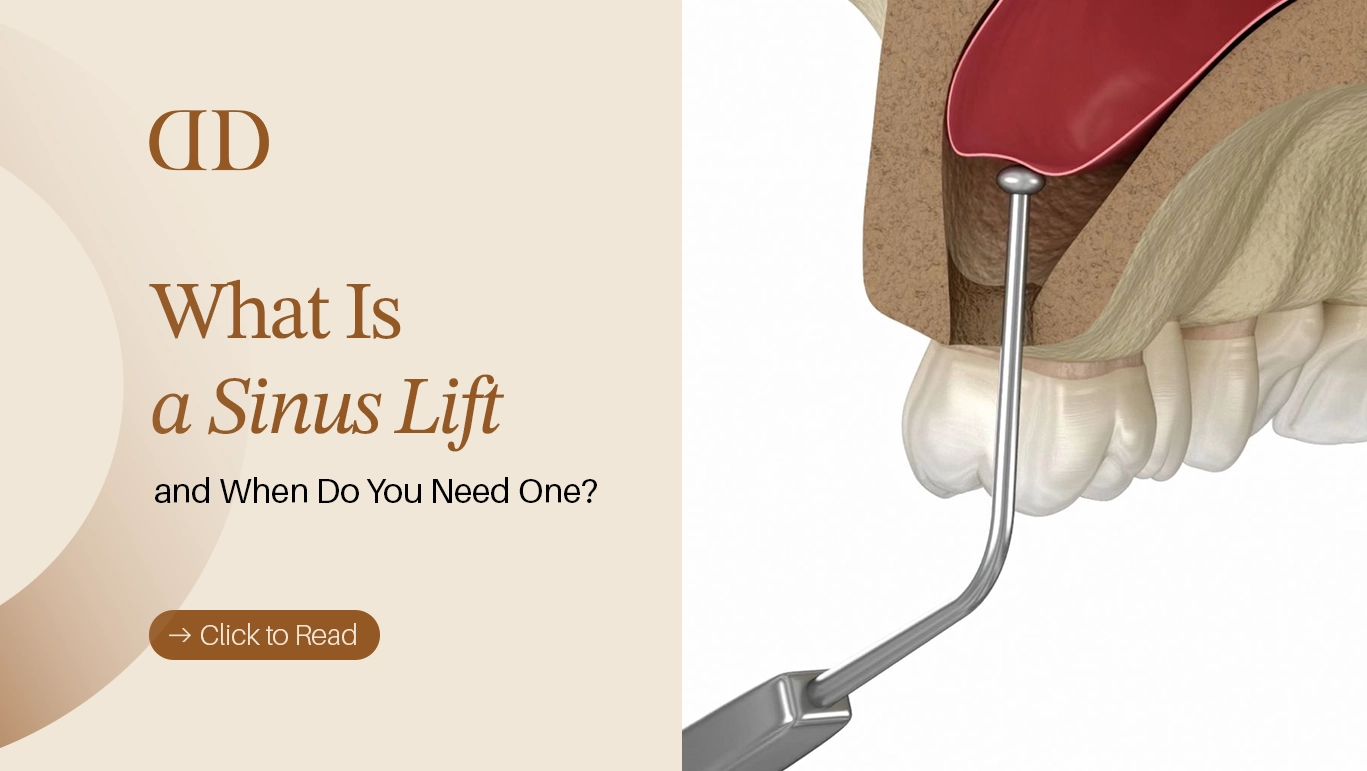
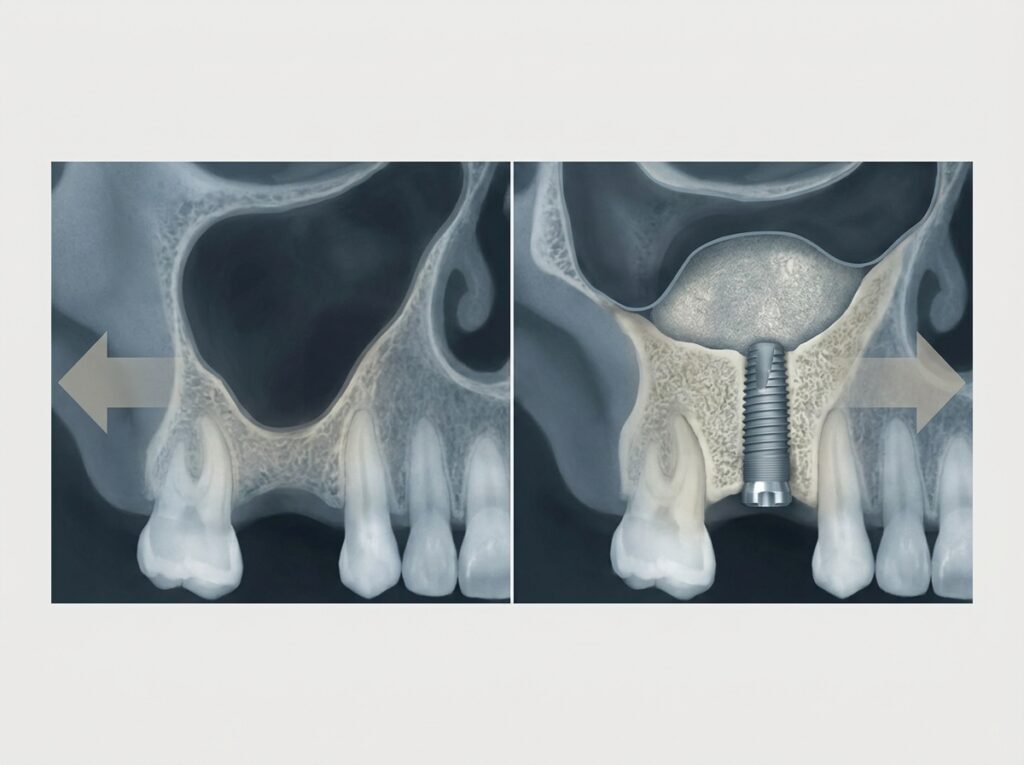
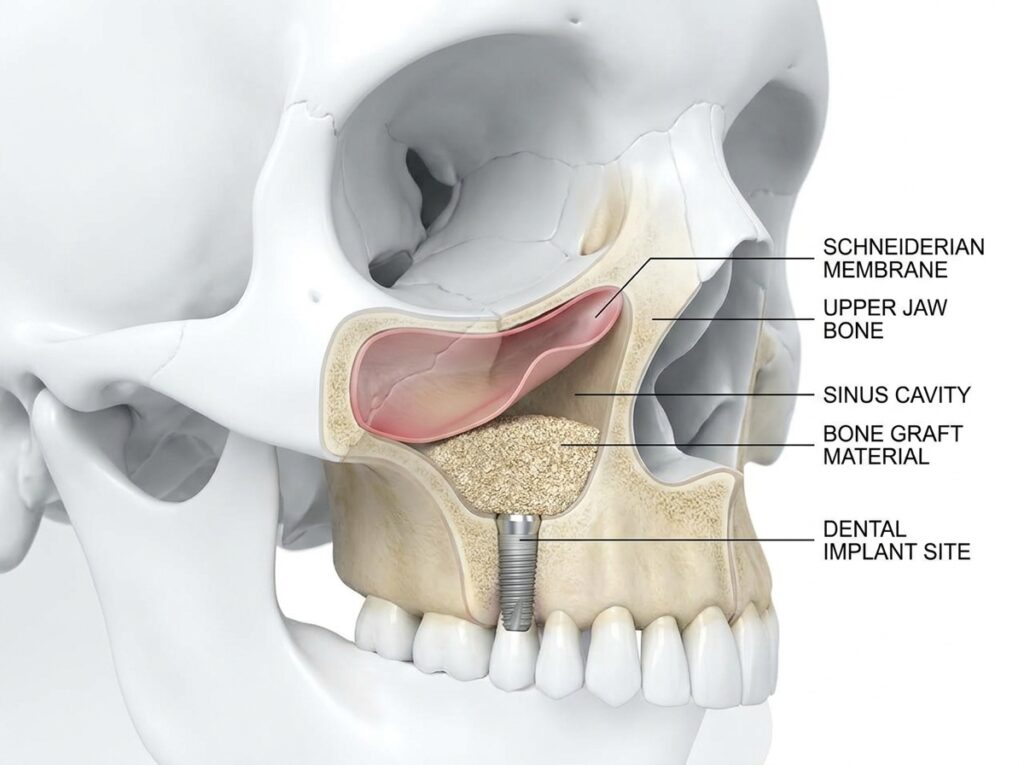
A sinus lift is a surgical technique used to increase bone height in the back of the upper jaw typically where molars and premolars live by gently elevating the sinus membrane and adding bone graft material beneath it. The goal is to create enough stable bone volume for a sinus lift implant plan (meaning implants placed in an area that initially didn’t have sufficient bone).
To picture it: your maxillary sinus is an air-filled cavity above your upper back teeth. When teeth are lost, the jawbone can shrink over time, and the sinus can “pneumatize” (expand slightly), leaving less bone than an implant would ideally need. A sinus lift and bone graft approach aims to rebuild that missing foundation so implants have a stronger long-term chance.
From a biological perspective, bone grafting here works by providing a scaffold for new bone formation. The body remodels graft material over months, replacing parts of it with living bone. This is why timing matters: sometimes implants are placed at the same time, and sometimes they’re delayed until healing is further along.
What is a Sinus Lift Procedure?
The term sinus lift procedure usually refers to the steps a clinician follows to create space under the sinus lining and place graft material. There are two commonly discussed approaches:
- Lateral window technique
A small “window” is created on the side of the upper jawbone, the sinus membrane is carefully lifted, and graft material is added. - Crestal (osteotome) technique
Access occurs through the implant site from the ridge top, often used when only a smaller lift is needed.
Which one is chosen depends on anatomy, residual bone height, sinus shape, and the implant plan. Modern imaging especially cone-beam CT (CBCT) can map sinus contours and bone thickness in three dimensions, which helps reduce guesswork.
People sometimes search for “implant sinus lift surgery” because they want to understand whether implants and lifting happen together. In some situations, implant placement and grafting are performed in the same appointment; in others, the graft is done first and implants follow later. Both strategies exist in clinical practice, and the deciding factor is usually stability and available native bone.
What is a Sinus Lift in Dentistry?
In dentistry, a sinus lift is less about “lifting a sinus” and more about “making room for bone.” The sinus membrane (Schneiderian membrane) is thin and delicate, and the technique relies on gently elevating it without tearing. When performed well, the membrane acts like a protective lining creating a compartment where the graft can mature.
This is why the phrase sinus lift surgery is commonly used: it’s a surgical intervention, not a cosmetic procedure. Yet it can still connect to aesthetic outcomes because implants in the posterior upper jaw influence chewing efficiency and sometimes facial support indirectly.
Premium Dental Care in Turkey
Expert treatments with high-end technology. Get your personalized quote today via WhatsApp.
If you’ve seen searches like “sinus lift before and after face,” it’s usually because people wonder whether rebuilding the upper jaw changes facial appearance. In most cases, the most visible “before and after” relates to restoring teeth (and bite function) rather than the sinus lift alone. Bone grafting happens in a hidden zone, above the gumline, and subtle changes if any tend to be linked to overall implant rehabilitation rather than a single lift.
Why is a Sinus Lift Necessary?
A sinus lift becomes relevant when there isn’t enough vertical bone height in the upper posterior jaw to anchor an implant with confidence. That shortage can happen for several reasons:

Want trusted dental advice in your Google AI answers?
Add Darya Dental Turkey as a Preferred Source on Google to make our dental guides easier to find in your search results and AI Overviews.
- Tooth loss and bone resorption: After extraction, bone can remodel and shrink.
- Sinus expansion (pneumatization): The sinus cavity can enlarge into the space once occupied by bone and roots.
- Periodontal disease history: Long-term inflammation can reduce bone volume.
- Naturally thin bone anatomy: Some people start with less bone in that region.
A key point: the need is not determined by feeling or symptoms; it’s determined by imaging and measurements. A CBCT scan can show residual bone height and sinus anatomy, helping a clinician decide whether a sinus lift bone graft approach is worth considering or whether alternative implant strategies (like short implants or angled implants) might be discussed.
Here’s a simple decision-style snapshot (not a medical rule, just a conceptual map):
| Situation | What clinicians often consider |
| Adequate bone height | Implant without grafting may be possible |
| Borderline bone height | Small graft or crestal lift may be considered |
| Limited bone height | Lateral lift + graft may be considered |
| Complex sinus anatomy | Customized plan; sometimes ENT input |
In other words, sinus lift and bone graft planning is usually about biomechanics: implants need stable bone to handle chewing forces repeatedly over years. Upper molars take substantial load, and poor support can compromise outcomes.
How Much Do Sinus Lifts Cost?
Costs for a sinus lift can vary widely based on geography, clinic protocols, graft material type, whether sedation is used, whether it’s combined with implant placement, and the complexity of the sinus anatomy.
Instead of quoting a single number (which can mislead), it’s more helpful to understand what “makes up” the total:
- Diagnostics: CBCT imaging, clinical planning, surgical guides
- Surgery fees: clinician time, complexity, sterility requirements
- Graft materials: autograft (your bone), allograft (donor), xenograft (animal-derived), or synthetic options
- Membranes/biomaterials: may be used to stabilize or protect the graft
- Medication and follow-ups: varies by clinic protocol
- Implant timing: same-day placement vs staged approach affects total visits and cost structure
Medical organizations have long emphasized that grafting choices and outcomes depend on case selection and technique, not just material branding. If you want a deeper, evidence-oriented overview of sinus augmentation concepts, you can explore background resources from the American Association of Oral and Maxillofacial Surgeons (AAOMS): https://aaoms.org/
At Darya Dental Clinic, patients typically receive a plan that separates components (imaging, grafting, implants, crowns) so the financial picture is clearer and decision-making feels less like decoding a mystery invoice.
How Do They Do a Sinus Lift
A sinus lift procedure generally follows a careful sequence designed to protect the sinus membrane while creating a stable bone compartment. While exact steps differ by technique, the “logic” is consistent:
- Assessment and planning
CBCT is used to assess residual bone, sinus shape, and any anatomical variations. - Access to the site
Either a lateral window is created, or access is made through the crest (implant site). - Membrane elevation
The clinician gently elevates the sinus lining to create space. - Graft placement
Bone graft material is placed beneath the lifted membrane. This is the core of a sinus lift and bone graft plan. - Closure and healing
The area is closed and allowed to heal. In some cases, implants are placed simultaneously; in others, implants come later.
The phrase “implant sinus lift surgery” often implies a combined visit. Whether that happens depends on primary stability how well an implant can “grab” existing bone at placement. If initial bone is too thin, clinicians may prefer a staged approach.
For those who enjoy the science: bone grafts don’t “turn into” bone overnight. The body remodels them through a slow choreography blood supply, cell migration, mineral deposition, and reshaping under functional forces. That’s why healing timelines are discussed so often in implant dentistry.
A sinus lift may be one step within a broader treatment plan depending on your oral health needs, so you can explore all dental treatments to review the available procedures.
How Dangerous is a Sinus Lift
“Dangerous” is a strong word, but it’s an understandable concern because sinus lift surgery happens near an air cavity, and the membrane is delicate. Like many surgical procedures, the risk profile depends on anatomy, technique, clinician experience, and patient-specific factors.
Commonly discussed considerations include:
- Membrane perforation: A small tear can occur during elevation. Management strategies exist and depend on size and location.
- Sinus-related symptoms: Temporary congestion or pressure sensations may occur in some cases.
- Infection risk: As with any surgery, infection is a possibility; sterile protocols and follow-up care aim to reduce this.
- Graft stability: The graft needs to stay protected to mature properly.
- Healing variability: Some people heal faster, others slower biology is personal.
This is also where realistic expectations matter. A sinus lift is not typically described as painful by everyone, but “comfortable” is not guaranteed either. Experiences range from mild discomfort to more noticeable soreness, often influenced by surgical extent and individual sensitivity.
If someone is searching “sinus lift before and after face,” they may be trying to evaluate whether the benefits outweigh perceived risks. A useful way to reframe it: the lift is usually a supporting step that enables implant rehabilitation so the “before and after” is primarily about restored chewing, a complete smile line (when visible), and bite stability rather than a dramatic facial transformation.
FAQ About Sinus Lift
Is a sinus lift always required for upper implants?
No. A sinus lift is typically discussed only when bone height is insufficient in the upper posterior jaw. Some people have enough native bone for implants without grafting, and other strategies may be considered depending on the case.
What’s the difference between sinus lift and bone graft?
A sinus lift is the technique of elevating the sinus membrane to create space; a sinus lift bone graft (or sinus lift and bone graft) refers to placing graft material into that space so new bone can develop.
Can implants be placed at the same time as a sinus lift?
Sometimes, yes. In a combined sinus lift procedure, implants may be placed immediately if there’s enough native bone for stability. If stability is questionable, a staged plan (graft first, implants later) may be chosen.
How long does it take to see results from a sinus lift?
“Results” can mean different things: symptom relief isn’t the goal, but bone maturation is. Bone remodeling is gradual and is typically evaluated over months with follow-up imaging before final implant restoration.
Will a sinus lift change my face?
A sinus lift before and after face change is usually subtle, if noticeable at all, because the graft is placed internally above the upper back teeth. More visible changes are usually linked to completing implant crowns and restoring bite support.
Deciding if a Sinus Lift Fits Your Implant Plan
A sinus lift is one of dentistry’s most practical “architectural fixes” it helps rebuild the missing foundation that upper back implants may need. The science behind it is grounded in anatomy and bone biology, but the decision is personal and case-specific.
If you’re considering implants and have been told you might need a sinus lift, the most helpful next step is typically a detailed evaluation with 3D imaging and a plan that explains options clearly: technique choice, graft type, whether implants are placed the same day, and what healing milestones will be monitored. At Darya Dental Clinic, the emphasis is on making that plan understandable so you’re not just agreeing to a procedure name, but to a rationale you genuinely grasp.
