
Can Veneers Stain or Change Colour Over Time?
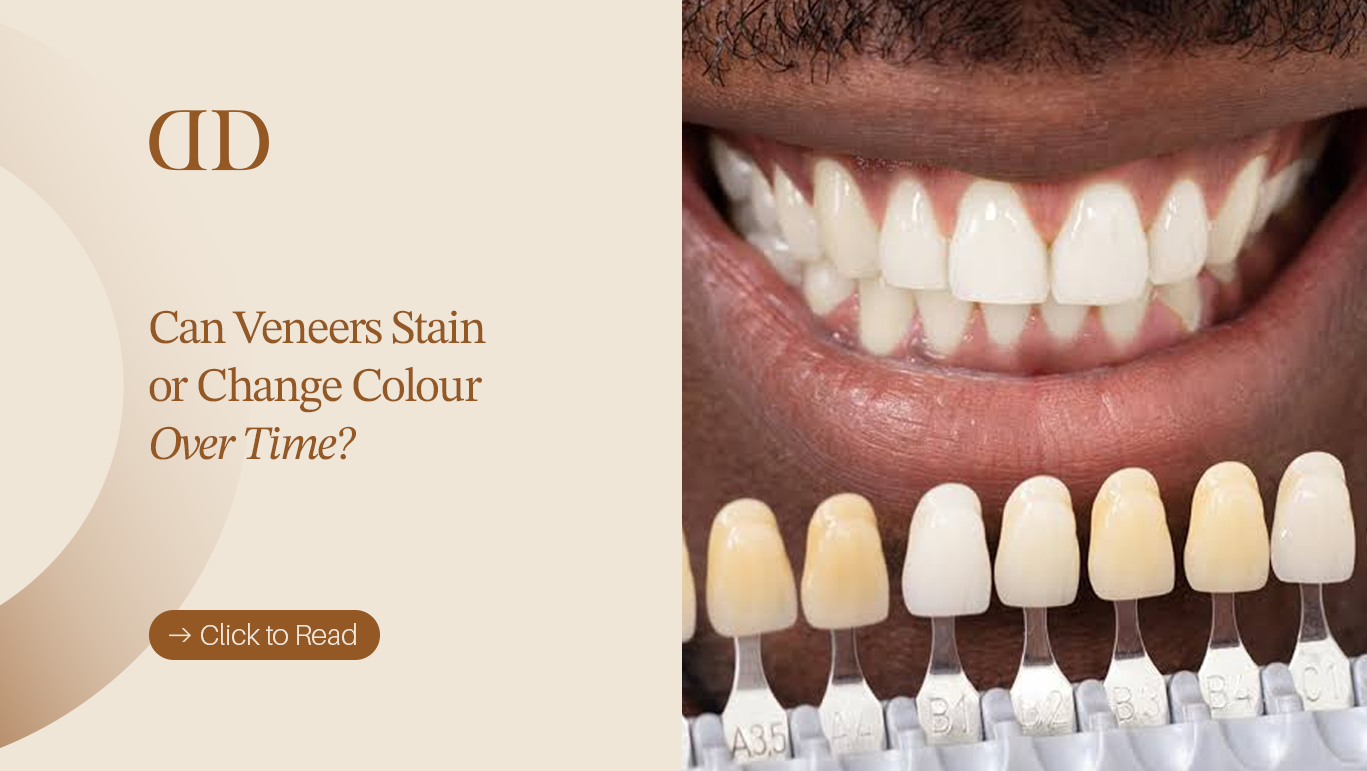

Yes, veneers can appear discoloured over time, but the likelihood and cause depend on the material and the condition of the restoration. Porcelain veneers are generally more resistant to staining than composite resin veneers. However, surface deposits, wear, bonding margins and changes in the colour of surrounding natural teeth can affect the overall appearance of a veneered smile.
A veneer that looks darker does not necessarily mean the veneer material itself has changed colour. The difference may come from staining around its edges, deposits on the surface or natural teeth becoming darker while the restoration retains its original shade.
Understanding the cause is important because professional cleaning, composite polishing, tooth whitening and veneer replacement address different problems. The appropriate option depends on the condition of the restoration and the findings of a dental examination.
Do Porcelain and Composite Veneers Stain Differently?
Porcelain and composite veneers have different material properties, which influence their resistance to staining and their maintenance requirements.
Porcelain veneers are made from dental ceramic and generally maintain their colour well. Composite veneers use tooth-coloured resin materials that may be more susceptible to surface staining, wear and changes in appearance over time.
Neither material should be described as completely immune to every form of discolouration. The condition of the restoration, oral hygiene habits and the health of the surrounding teeth and gums can all influence how a veneered smile looks.
How Resistant Are Porcelain Veneers to Staining?
Porcelain veneers are generally highly resistant to surface staining because their ceramic surfaces are less susceptible to absorbing pigments than many composite resin materials.
Everyday exposure to coffee, tea, red wine and other pigmented foods does not automatically mean that porcelain veneers will become yellow. Nevertheless, plaque, surface deposits and staining around the margins can affect their appearance.
The distinction between the ceramic itself and the surrounding structures is particularly important. A porcelain veneer may retain its original shade while the natural tooth next to it becomes darker. Similarly, discolouration near the gum line may originate from deposits or the bonding margin rather than from the ceramic surface.
```html
```
Premium Dental Care in Turkey
Expert treatments with high-end technology. Get your personalized quote today via WhatsApp.
Porcelain veneers should therefore be assessed according to the location and nature of the colour change rather than assuming that the material has deteriorated.
Why Can Composite Veneers Discolour Over Time?
Composite veneers are made from tooth-coloured resin materials. Their appearance can change as the surface becomes worn, loses some of its original polish or accumulates stains.
```html  ```
```
Want trusted dental advice in your Google AI answers?
Add Darya Dental Turkey as a Preferred Source on Google to make our dental guides easier to find in your search results and AI Overviews.
Coffee, tea, red wine and tobacco can contribute to surface discolouration, particularly when combined with inadequate oral hygiene. The extent of staining varies according to the material, surface condition and individual habits.
In some cases, professional polishing may improve the appearance of a composite veneer by removing certain surface stains and restoring surface smoothness. However, polishing cannot correct every type of colour change, especially when material wear or deeper changes are involved.
| Feature | Porcelain veneers | Composite veneers |
| Stain resistance | Generally high | More susceptible to surface staining |
| Potential colour changes | Surface deposits, marginal staining and surrounding tooth changes can affect appearance | Surface staining, wear and loss of polish may affect appearance |
| Maintenance | Daily oral hygiene and routine dental assessments | Daily oral hygiene, routine assessments and possible professional polishing |
| Corrective options | Cleaning and assessment of the restoration and margins | Cleaning, appropriate polishing or further restorative treatment, depending on the cause |
The most suitable corrective approach depends on the material and the reason for the colour change. Neither cleaning nor polishing guarantees that every veneer can be restored to its original appearance.
What Causes Veneers to Look Discoloured?
A visible colour difference can originate from several places. The veneer surface, bonding margin, underlying tooth and neighbouring natural teeth should be considered separately.
Coffee, Tea, Red Wine and Tobacco
Coffee, tea and red wine contain pigments that can contribute to staining on susceptible dental surfaces. Tobacco use can also contribute to visible deposits and discolouration.
Composite veneers may be more affected by these factors than porcelain veneers, particularly when their surfaces have become rough or worn.
This does not mean that everyone who drinks coffee or tea will develop stained veneers. The result depends on the material, surface condition, oral hygiene and frequency of exposure.
Practical measures include:
- Brush regularly with a soft-bristled toothbrush and fluoride toothpaste.
- Clean between the teeth daily using an appropriate interdental cleaning method.
- Rinse the mouth with water after consuming strongly pigmented drinks when practical.
- Avoid tobacco use, which can affect both oral health and the appearance of the teeth.
- Attend regular dental appointments to assess the condition of the veneers and surrounding tissues.
Whitening toothpaste should not be relied upon to change the original shade of a veneer. Abrasive products may also be unsuitable for certain restorative surfaces, so product selection should be discussed with a dental professional when necessary.
Staining Around Veneer Edges and Bonding Margins
Sometimes, a veneer looks darker near the gum line even though most of its visible surface appears unchanged.
Possible explanations include plaque or calculus deposits, staining around the bonding margin, changes in the surrounding gum tissue or discolouration of the underlying tooth.
The bonding margin is the area where the restoration meets the natural tooth. Its condition can influence the overall appearance, especially when a colour difference becomes visible at the edge.
A dark margin should not automatically be treated as a cosmetic stain. Depending on the findings, the dentist may need to assess the restoration’s fit, the condition of the underlying tooth and the surrounding gum tissue.
Professional cleaning may help when deposits are responsible. If the colour difference persists, further examination may be necessary to determine whether another issue is present.
Changes in the Colour of Natural Teeth
Natural teeth and veneers do not respond to whitening in the same way. This is one of the most important reasons a veneered smile may appear to change colour over time.
Natural teeth can become darker or more yellow due to factors such as ageing, surface staining and other changes in tooth structure. Porcelain and composite restorations do not lighten through conventional bleaching in the same way as natural enamel.
For example, a person with porcelain veneers on the front teeth may later notice that the untreated teeth next to them appear more yellow. The veneers may still have their original shade, but the difference between the restorations and natural teeth has become more noticeable.
This is why shade planning matters both before veneer placement and when considering whitening afterwards.
For additional information about treatment sequencing, see teeth whitening before veneers or crowns.
Surface Deposits, Wear and Material Ageing
Veneers are exposed to everyday oral conditions, including saliva, food, plaque and mechanical forces from chewing. Over time, surface deposits or wear may affect their appearance.
Composite materials may lose some of their original surface polish, making staining more noticeable. Porcelain is generally more resistant to surface staining, but deposits can still accumulate on its surface or around the restoration.
The condition of the underlying tooth and bonding interface can also influence how a veneer looks.
A gradual change may be related to surface staining or wear, while a sudden change deserves closer attention, particularly if it occurs alongside pain, sensitivity, damage or loosening.
The appearance alone cannot always identify the cause. A dental examination is needed when the reason for discolouration is uncertain.
How Can You Prevent Veneer Stains?
Veneer maintenance focuses on keeping the surfaces clean, protecting the restoration and maintaining the health of the surrounding teeth and gums.
Good daily care can reduce the accumulation of plaque and surface deposits, although it cannot eliminate every possible cause of colour change.
Daily Brushing and Interdental Cleaning
Brush twice daily with a soft-bristled toothbrush and fluoride toothpaste. Clean between the teeth every day using dental floss or another suitable interdental cleaning aid.
Pay attention to the areas around the veneer margins, where plaque may accumulate. Gentle, consistent cleaning is preferable to aggressive brushing or using abrasive products in an attempt to make the veneers whiter.
Avoid using household cleaning products or unapproved whitening substances on dental restorations. If you are unsure whether a toothpaste is suitable for your veneers, ask your dentist.
Dietary Habits and Smoking
You do not necessarily need to eliminate coffee, tea or other pigmented foods from your diet to maintain veneers. However, limiting frequent exposure to staining substances may help reduce surface staining, particularly on composite restorations.
Consider the following habits:
- Drink water regularly, especially after consuming pigmented drinks.
- Avoid prolonged or frequent exposure to staining substances when practical.
- Limit sugary foods and drinks to support overall oral health.
- Avoid smoking and other tobacco use.
- Do not bite hard objects or use your teeth to open packaging, as this can damage restorations.
These habits support oral health and help maintain the appearance of veneers. They do not guarantee that the restorations will never stain, chip or require further treatment.
Regular Dental Check-Ups and Professional Cleaning
Routine dental appointments allow the dentist to assess the veneer surfaces, bonding margins, gums and underlying teeth.
Professional cleaning may remove plaque, calculus and certain external stains that cannot be removed effectively through home care. However, the cleaning method should be appropriate for the restorative material.
Professional cleaning is different from tooth whitening. Cleaning removes deposits, whereas bleaching changes the colour of natural tooth structure. Neither procedure can be assumed to restore every discoloured veneer to its original appearance.
The appropriate frequency of dental visits depends on individual oral health needs and the condition of the restorations.
Can You Whiten Veneers That Have Changed Colour?
No, conventional teeth whitening does not lighten existing porcelain or composite veneers in the same way it lightens natural teeth.
The correct approach depends on whether the colour difference comes from surface deposits, the restoration itself, the bonding margin or the surrounding natural teeth.
Cleaning, polishing, whitening and replacement are different procedures. They should not be treated as interchangeable solutions.
| Situation | Possible approach | Important limitation |
| Surface deposits on a veneer | Professional cleaning | May not correct colour changes within the material |
| Surface staining on a composite veneer | Assessment and possible professional polishing | Results depend on the condition of the composite |
| Natural teeth look darker than existing veneers | Assessment of natural tooth colour and shade differences | Whitening changes natural teeth, not veneers in the same way |
| Persistent darkening around a veneer margin | Examination of the margin and underlying tooth | Cleaning alone may not resolve the cause |
| Damaged, loose or persistently discoloured veneer | Clinical assessment and discussion of restorative options | Replacement is not automatically necessary in every case |
When Can Professional Polishing Help?
Professional polishing may improve the appearance of certain composite veneers by removing external stains and smoothing the surface.
However, it is not a universal solution. Polishing cannot reliably reverse material ageing, repair every type of damage or change the intrinsic shade of a restoration.
The dentist should first establish whether the discolouration is on the surface and whether polishing is appropriate for the specific material.
When Might Veneer Replacement Be Considered?
Replacement may be discussed when a veneer has persistent discolouration that cannot be corrected appropriately, significant damage, problems with its fit or another issue affecting its function or appearance.
Before recommending replacement, a dentist should assess the restoration and consider whether a less invasive option is appropriate.
A colour difference alone does not automatically mean that the veneer must be replaced. The decision should be based on the clinical findings, the condition of the restoration and the patient’s needs.
When Should a Dentist Check Veneer Discolouration?
A dental assessment is appropriate when a colour change persists despite routine cleaning or when the cause is unclear.
Pay particular attention to the following situations:
- A dark line or noticeable colour change develops near the gum line.
- One veneer becomes noticeably darker than the others.
- The restoration looks different after professional cleaning.
- A veneer develops a chip, crack or rough edge.
- The veneer feels loose or appears to have changed position.
- Pain, sensitivity or gum changes occur around the restored tooth.
- A sudden colour change develops in a tooth beneath or around a veneer.
These signs do not necessarily indicate a serious problem, but they should not automatically be dismissed as cosmetic staining.
For example, darkening near the margin may be associated with external deposits, but it can also require assessment of the bonding interface and underlying tooth. Similarly, a sudden colour change accompanied by pain or looseness warrants examination rather than an attempt to whiten the area.
A dentist can examine the restoration, assess the surrounding tissues and determine whether cleaning, polishing, monitoring or further treatment is appropriate.
Understanding Colour Changes Before Choosing Treatment
The first step is to identify where the colour difference originates.
If the issue is an external deposit, professional cleaning may be sufficient. If a composite surface has become stained, polishing may be considered. If natural teeth have changed colour while veneers have remained stable, the difference may relate to the contrast between the two.
Where the underlying tooth or restoration may be affected, a clinical examination is more appropriate than relying on whitening products.
For readers who need an introduction to the treatment itself, what a dental veneer is and how it is done explains the basic purpose and placement of veneers. Information about porcelain veneers is also available for readers considering this restoration material.
Frequently Asked Questions About Veneer Staining
Can veneers stain or change colour over time?
Yes, veneers can appear discoloured over time. Composite veneers are generally more susceptible to surface staining than porcelain veneers, while deposits, marginal staining and changes in surrounding natural teeth can affect the appearance of either type.
Do porcelain veneers turn yellow?
Porcelain veneers are generally highly resistant to staining and are less likely to develop surface discolouration than composite veneers. However, deposits around the restoration, changes at the margins and colour changes in neighbouring teeth can make a porcelain veneer appear different over time.
Do composite veneers stain from coffee and tea?
Yes, composite veneers can develop surface stains from coffee, tea and other pigmented substances. The degree of staining depends on the material, surface condition, oral hygiene and exposure habits. Professional assessment and polishing may help in suitable cases.
Can you whiten veneers after they have been placed?
No, conventional whitening products do not bleach existing veneers in the same way as natural teeth. If the surrounding natural teeth have become darker or lighter, a dentist can assess the colour difference and discuss appropriate options.
How do you remove stains from veneers?
The appropriate method depends on the type of veneer and the cause of the staining. Professional cleaning may remove external deposits, while polishing may help certain composite veneers. Persistent discolouration may require further assessment because not every colour change can be corrected through cleaning.
Why do veneers look darker around the gum line?
Possible causes include plaque, calculus, staining around the bonding margin, changes in the surrounding tissues or discolouration of the underlying tooth. A dentist should assess persistent or unexplained darkening rather than assuming that it is only a surface stain.
Can natural teeth change colour while veneers stay the same?
Yes. Natural teeth and tooth-coloured restorations respond differently to ageing, staining and bleaching. Natural teeth may become darker or lighter while existing veneers retain their original shade, making the difference between them more noticeable.
When should a dentist examine discoloured veneers?
A dentist should assess persistent or unexplained colour changes, darkening near the gum line, chips, cracks, looseness, pain or sensitivity. Sudden changes accompanied by other symptoms should not be treated as a purely cosmetic concern.
Veneers can appear discoloured over time, but the cause is not always staining of the veneer material itself. Porcelain veneers generally resist surface staining better than composite veneers, while bonding margins, deposits, material wear and changes in natural tooth colour can affect the overall appearance.
The appropriate solution depends on identifying the source of the colour difference. Professional cleaning may help with external deposits, polishing may benefit some composite restorations, and whitening may be considered for natural teeth when clinically appropriate. Persistent discolouration or changes accompanied by pain, sensitivity or looseness should be assessed by a dentist.
For patients considering veneers or managing existing restorations, understanding these differences can help support realistic expectations and appropriate long-term maintenance.
Author and Medical Review
Written by: Dt. Sedat
Medically Reviewed by: Darya Özcan
