
What Makes a Dental Implant Treatment Plan More Expensive?
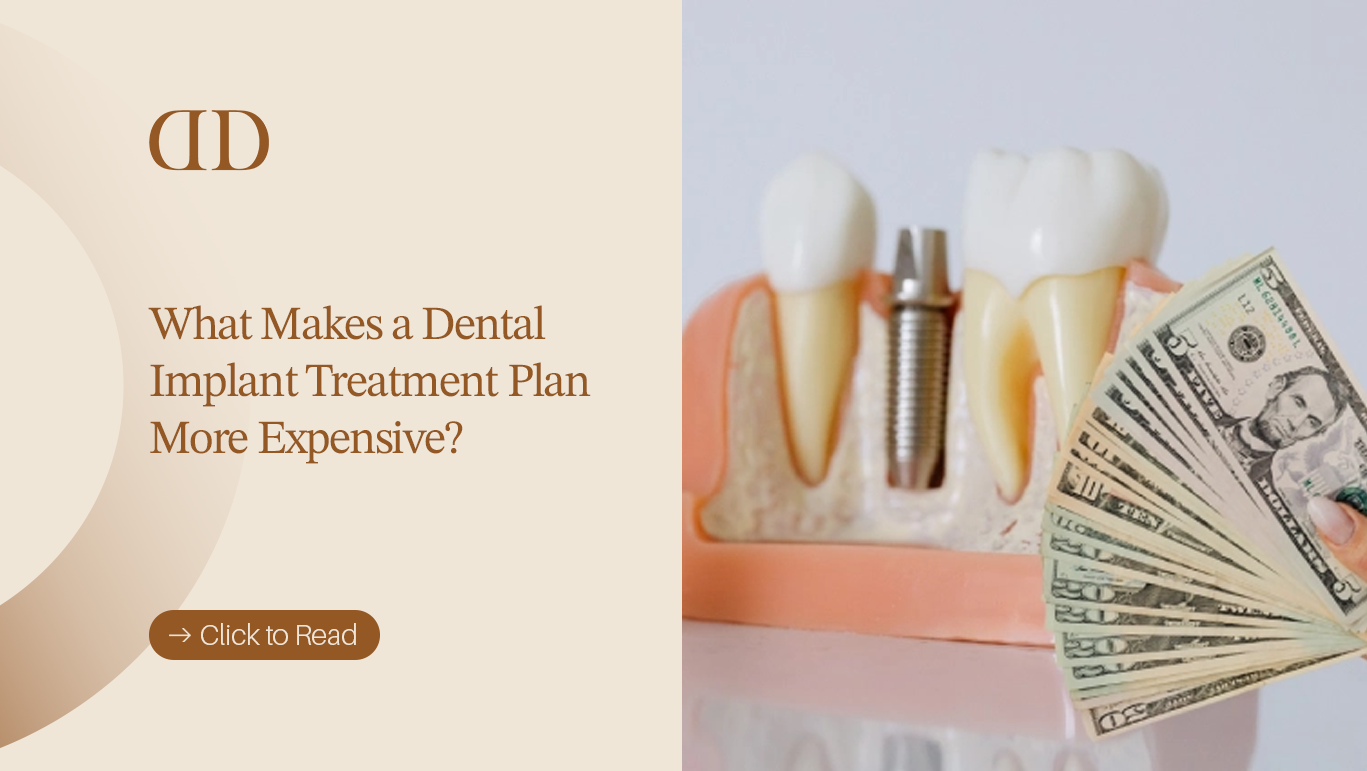

A dental implant treatment plan can become more expensive when it requires more implants, additional surgical procedures, more complex restorations, or extra diagnostic and laboratory work. The important point is that an implant treatment plan is not simply a price for an implant itself. It can include several stages, from examination and imaging to implant placement, restorative components and the final crown or prosthesis.
This is why two patients who both need dental implants may receive very different treatment plans. One patient may have enough healthy bone for straightforward implant placement, while another may require bone grafting or a sinus lift before implants can be placed. The number of teeth being replaced, the type of restoration, implant components, laboratory requirements and overall treatment complexity can also change the scope of treatment.
Understanding these factors makes it easier to interpret a dental implant quote. Instead of comparing only the headline figure, patients can look at what the proposed treatment actually includes and whether two quotations cover the same stages of care.
Why Do Dental Implant Treatment Costs Vary?
Dental implant treatment costs vary because the treatment required is different from patient to patient. A single missing tooth with adequate bone support may involve a relatively straightforward sequence of examination, implant placement and restoration. A patient with several missing teeth, significant bone loss or additional oral health needs may require a considerably more involved treatment plan.
The main factors that affect dental implant cost are therefore related to clinical requirements and the scope of treatment. These can include:
- The number of implants required
- The amount and quality of available bone
- The need for bone grafting
- The possible need for a sinus lift
- Existing gum or dental conditions that need treatment
- The implant system and components selected
- The type and material of the final restoration
- Diagnostic imaging and treatment planning
- Laboratory and customization requirements
- The overall complexity and number of treatment stages
A higher estimate does not automatically mean that a patient is receiving a more expensive version of the same procedure. It may instead reflect additional treatment that is clinically required.
For this reason, the question is often not simply “How much does a dental implant cost?” A more useful question is: “What does my dental implant treatment plan include, and why?”
What Is Included in a Dental Implant Treatment Plan?
A dental implant treatment plan describes the stages and components required to replace one or more missing teeth. Depending on the patient’s oral condition and the planned restoration, it can involve several separate elements rather than one procedure.
The initial assessment may include a clinical examination and diagnostic imaging. Three-dimensional imaging can help evaluate the available bone and support treatment planning. The plan may then specify the number and position of implants, any preparatory procedures, the restorative components and the final prosthesis.
Premium Dental Care in Turkey
Expert treatments with high-end technology. Get your personalized quote today via WhatsApp.
A typical treatment plan may therefore involve:
- Assessment and imaging: The patient’s oral condition and available bone are evaluated before treatment is planned.
- Preparatory treatment: Existing dental or gum problems may need to be addressed before implant placement.
- Implant placement: The implant fixture is surgically positioned in the jawbone.
- Abutment or restorative component: This connects the implant to the final restoration when applicable.
- Final restoration: A crown, bridge or other prosthetic restoration is fabricated to replace the missing tooth or teeth.
- Laboratory and customization work: The restoration may require laboratory fabrication and individual specifications.
- Follow-up and staged treatment: Depending on the case, treatment may involve multiple appointments or stages.
This distinction is important when comparing a dental implant quote. A quotation that lists only an implant fixture may not cover the same treatment as one that includes the abutment, final crown, imaging, laboratory work or additional surgical procedures.

Want trusted dental advice in your Google AI answers?
Add Darya Dental Turkey as a Preferred Source on Google to make our dental guides easier to find in your search results and AI Overviews.
For patients considering treatment abroad, understanding the complete treatment plan is particularly important because different stages may occur across separate appointments.
7 Factors That Can Make an Implant Treatment Plan More Expensive
Several factors can increase the complexity and overall scope of a dental implant treatment plan. These factors do not apply equally to every patient, and the exact requirements should be determined through individual clinical assessment.
The Number of Implants Needed
The number of implants is one of the most direct factors affecting the scope of treatment.
Replacing a single missing tooth generally requires a different treatment approach from replacing several missing teeth. Multiple implants can involve additional surgical placement, restorative components and prosthetic work. Full-arch rehabilitation can require an entirely different treatment plan from an individual tooth replacement.
The important distinction is therefore not simply the number of implants, but what those implants are being used to restore.
A treatment plan should clearly identify the number of implant fixtures being proposed and the restoration associated with them. This helps patients understand why a plan involving several missing teeth may contain more components and treatment stages than a single-tooth case.
For an overview of implant treatment itself, see the dental implants treatment page.
Bone Loss and Bone Grafting
Available bone is another important consideration when planning dental implant treatment. An implant needs suitable bone support, and some patients may have insufficient bone volume in the proposed implant site.
When additional bone is needed, bone grafting before dental implants may become part of the treatment plan. This introduces an additional surgical procedure and associated materials, planning and follow-up.
Bone loss can occur for different reasons, including the loss of a tooth over time. However, the need for grafting cannot be determined accurately from a generic description or an online price. The available bone needs to be evaluated as part of the patient’s clinical assessment and appropriate imaging.
When grafting is included in a treatment plan, patients should check whether it is listed as a separate procedure and whether the quotation explains what is included.
Sinus Lift and Other Preparatory Procedures
In selected upper-jaw cases, a sinus lift may be considered when the available bone beneath the sinus is insufficient for the planned implant treatment.
A sinus lift adds another surgical stage to the treatment process. As a result, it can affect the overall scope and cost of the treatment plan.
Patients should therefore check whether a proposed sinus lift is included in the quoted treatment or listed separately. The procedure is not required for every implant patient, and its necessity depends on individual anatomy and treatment planning.
More detailed information about this procedure is available on the page covering sinus lift before dental implants.
Gum Health and Other Dental Treatment Before Implant Placement
Implant placement is not always the first treatment step. Existing oral health problems may need to be addressed before an implant can be placed.
Depending on the patient’s condition, this may involve treatment related to the gums, remaining teeth or an extraction that is necessary as part of the overall treatment plan.
These additional procedures can increase the scope of treatment because the plan is addressing more than the implant placement itself.
This is another reason why comparing a single implant price without considering the patient’s overall oral condition can give a misleading impression. Two patients may both require an implant, while only one requires additional treatment before placement.
Implant System and Components
A dental implant is not a single component. The treatment can involve an implant fixture, an abutment and a final restoration, with the exact components depending on the treatment plan.
The implant system selected can therefore affect the overall treatment specification. Different systems may have different component designs, restorative options and laboratory requirements. However, the implant brand should not be viewed in isolation from the rest of the treatment.
When comparing an implant quote, patients should check whether the quoted amount identifies the implant system and whether the abutment and other restorative components are included. A quotation that simply states “dental implant” may leave important details unspecified.
This is particularly relevant when two clinics appear to offer similar treatment at different prices. The difference may partly reflect the components included in each quotation rather than a difference in the implant procedure itself.
Crown and Prosthetic Material
The final restoration is another factor that can affect a dental implant treatment plan. An implant replaces the root portion of a missing tooth, while the visible tooth replacement is provided by a crown or another type of prosthetic restoration.
The restoration can therefore have its own material and fabrication requirements. A single crown may be appropriate for an individual missing tooth, while multiple missing teeth can require a bridge or a more extensive prosthetic solution.
Patients comparing quotes should look beyond the word “implant” and check what type of restoration is included. The quotation should make it reasonably clear whether the final crown, bridge or other prosthetic component is part of the proposed treatment.
This distinction can explain some differences between apparently similar dental implant quotes. One quotation may include the implant placement but exclude or separately price the final restoration, while another may present these stages together.
Imaging, Planning, Laboratory Work and Treatment Complexity
Diagnostic imaging and treatment planning are important parts of determining how an implant can be placed and restored. Imaging can provide information about the available bone and relevant anatomical structures, helping the dental team plan the proposed treatment.
The complexity of the case can also influence laboratory work. A straightforward single-tooth restoration and a multi-unit prosthetic restoration do not necessarily require the same level of fabrication and customization.
The number of appointments and treatment stages can also differ. Some cases can be managed through a relatively straightforward sequence, while others require preparatory procedures, staged treatment or additional restorative work.
This means that dental implant treatment complexity is not defined by one factor alone. It is the combined effect of the patient’s clinical condition, the number of teeth being restored, the surgical requirements, the restoration and the planning and laboratory work involved.
Why Can Two Dental Implant Quotes Be So Different?
Two dental implant quotes can be different because they may not describe the same treatment.
The phrase “dental implant” can refer to only one part of the overall treatment. One quote may include the implant fixture and placement, while another may also include the abutment, crown, imaging, laboratory work and follow-up appointments.
Additional procedures can create another difference. If one patient requires bone grafting or a sinus lift and another does not, their treatment plans will naturally have different scopes.
The following comparison illustrates why a headline price should not be considered on its own:
| Treatment factor | Why it can increase the treatment scope | What the patient should check |
| Number of implants | More fixtures can require additional surgical and restorative work | Number of implants included |
| Bone grafting | Adds an additional surgical and material requirement when clinically indicated | Whether grafting is required and separately listed |
| Sinus lift | Adds another upper-jaw surgical stage in selected cases | Whether the procedure is included |
| Restoration | Crown, bridge or other prosthetic solutions can have different requirements | Abutment and final restoration |
| Imaging and planning | Additional diagnostic and planning requirements may be necessary | Whether CBCT and planning are included |
| Laboratory work | Custom fabrication can vary with restorative complexity | What final restoration is being fabricated |
The table does not mean that every additional item automatically makes a treatment medically necessary or that one type of component is universally preferable. It shows why the scope of two treatment plans can differ.
What Should You Check in an Itemized Implant Quote?
An itemized dental implant quote can make it easier to understand what is included and identify differences between treatment proposals.
Before comparing two quotations, check whether they separately identify the major stages and components of treatment.
Useful questions include:
- How many implant fixtures are included?
- Is the implant system or brand specified?
- Is the abutment included?
- Is the final crown or prosthesis included?
- Is bone grafting included if it is clinically required?
- Is a sinus lift included if one is proposed?
- Are extractions or other preliminary treatments included?
- Is diagnostic imaging included?
- Is laboratory work included?
- Are temporary restorations included when applicable?
- How many treatment stages or appointments are anticipated?
- Are follow-up visits part of the quoted treatment?
A written treatment plan is generally more informative than a single total figure because it shows what the patient is actually being quoted for.
For example, if one quotation appears lower but excludes the final crown and another includes the crown, comparing only the two headline figures does not provide a meaningful comparison.
The same principle applies to surgical preparation. If bone grafting is included in one treatment plan but not the other, the difference may reflect different clinical requirements rather than simply a different charge for the same procedure.
Does a Higher Treatment Cost Always Mean a More Complex Case?
No. A higher treatment cost does not automatically prove that a case is clinically more complex.
Cost can vary because of several different elements, including the number of implants, restorative specifications, components, laboratory work, imaging and additional procedures. A quotation may therefore be higher because it includes more items or a different treatment scope.
Likewise, a lower quotation does not automatically mean that treatment is inadequate or that important procedures have been omitted. The key issue is whether the proposed treatment is appropriate for the individual patient and whether the quotations cover comparable services and components.
This is why patients should avoid judging treatment plans solely by their total price. The more useful comparison is between the clinical requirements and the specific items included in each proposal.
A treatment plan should ultimately be based on examination and appropriate imaging rather than a generic online price or a headline package figure.
Dental Implant Treatment Planning for Patients Coming to Turkey
For patients travelling to Turkey for dental implant treatment, understanding the treatment plan before travelling can be particularly important. International treatment involves more than comparing a single quoted figure because the patient may need to coordinate examinations, imaging, surgical procedures, restorative stages and appointments around travel dates.
An initial assessment can help establish which parts of treatment may be required. However, the exact treatment plan should follow appropriate clinical evaluation and imaging rather than being based solely on photographs, a generic package or an online price.
Patients considering treatment in Istanbul can also ask for an itemized explanation of the proposed treatment. This can make it easier to understand which procedures are included, which components are being used and whether additional procedures may be required.
At Darya Dental Turkey in Ataşehir, Istanbul, treatment planning should be understood as an individualized process. The purpose of reviewing the patient’s dental condition is to determine the appropriate treatment stages rather than simply assigning a price to an implant.
For international patients, it is useful to clarify the following before arranging travel:
- What treatment is being proposed?
- How many implants are planned?
- Are additional procedures such as bone grafting or sinus lift required?
- Which restorative components are included?
- Is the final crown or prosthesis included?
- What imaging is required?
- How many appointments or treatment stages are anticipated?
- Could the treatment plan change after an in-person examination?
These questions can help patients distinguish between a quotation for a specific treatment plan and a general package price.
Frequently Asked Questions
Why do dental implant treatment plans vary in price?
Dental implant treatment plans vary because patients can have different clinical and restorative requirements. The number of implants, available bone, need for grafting, restoration type, implant components, imaging, laboratory work and overall treatment complexity can all affect the treatment scope.
What makes a dental implant treatment plan more expensive?
A treatment plan can become more expensive when it requires additional implants, preparatory surgery, bone grafting, a sinus lift, more complex restoration or additional diagnostic and laboratory work. The exact factors depend on the individual treatment plan.
Why do two dental implant quotes differ?
Two dental implant quotes can differ because they may not include the same procedures or components. One quotation may include the implant and final crown, while another may list these separately. Additional procedures and differences in treatment complexity can also affect the total.
Does bone grafting increase the cost of dental implants?
Bone grafting can increase the overall treatment cost because it introduces an additional surgical procedure and may involve additional materials, planning and follow-up. Whether grafting is necessary depends on the patient’s available bone and the proposed implant treatment.
Does a sinus lift make dental implant treatment more expensive?
A sinus lift can increase the treatment cost because it adds an additional surgical stage. It is used only in selected cases where the anatomy and available bone in the upper jaw make it necessary for the planned implant treatment.
Does the number of implants affect the total treatment cost?
Yes, the number of implants can affect the overall treatment scope. More implant fixtures may require additional surgical placement, restorative components and prosthetic work. The final plan also depends on how many teeth are being replaced and the type of restoration required.
Does the implant brand affect the price?
The implant system and its components can be one factor in a treatment quotation. Patients should look at the complete treatment specification rather than comparing brands in isolation, including the implant fixture, abutment, restoration and associated laboratory work.
Does the crown material affect dental implant cost?
The final restoration can affect the treatment cost because different restorative solutions can involve different materials, fabrication processes and laboratory requirements. Patients should check which crown or prosthetic restoration is included in the quotation.
What should be included in a dental implant quote?
A detailed quote should clearly identify the proposed treatment and its major components. Depending on the case, this can include the number of implants, implant system, abutments, final restoration, imaging, preparatory procedures, laboratory work and other relevant treatment stages.
Can the final dental implant cost change after an examination?
Yes, the final treatment plan can change after clinical examination and appropriate imaging. A preliminary estimate may not account for conditions that cannot be fully assessed until the patient’s oral health and available bone have been evaluated.
Can I get an accurate dental implant treatment plan without 3D imaging?
An accurate treatment plan may require diagnostic imaging, including three-dimensional imaging when clinically appropriate. Imaging can provide information needed to assess bone and relevant anatomical structures and to plan implant placement. The exact imaging requirements depend on the individual case.
Is a cheaper dental implant quote always a different treatment?
Not necessarily. A lower quotation does not automatically mean that a different or inadequate treatment is being proposed. However, two prices should be compared based on the procedures, components, restoration, imaging and other services included rather than on the total figure alone.
The cost of a dental implant treatment plan is influenced by the treatment that an individual patient actually needs. The number of implants, bone condition, additional procedures, implant components, restoration, imaging, laboratory work and overall complexity can all change the scope of treatment.
For this reason, comparing dental implant quotes only by their headline prices can be misleading. A more useful approach is to compare itemized treatment plans and establish whether the proposed procedures and components are equivalent.
For patients considering dental implant treatment in Turkey, the same principle applies. A personalized treatment plan should be based on clinical assessment and appropriate imaging, with the proposed treatment stages and inclusions clearly explained before treatment begins.
