
Teeth Name Chart
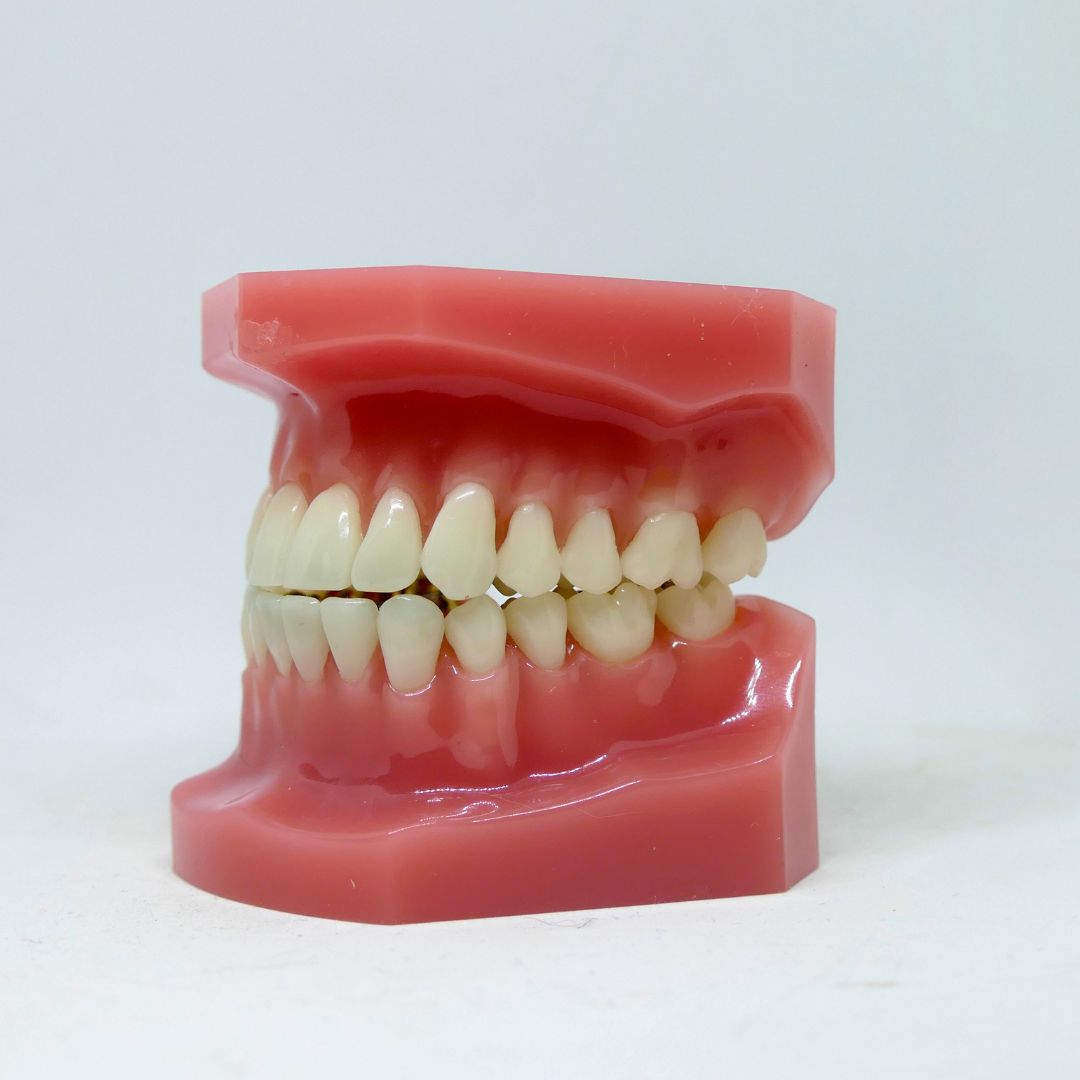

Understanding Human Teeth: Names, Functions, and Eruption Ages
Teeth play a vital role in our daily lives, from chewing food to aiding in speech and maintaining facial structure. The human mouth contains different types of teeth, each with a specific function and timeline for eruption. This article explores the names of teeth, their purposes, and when they typically emerge, based on a detailed diagram of maxillary (upper) and mandibular (lower) teeth.
Teeth Names and Eruption Ages
| Tooth Type | Location | Eruption Age |
|---|---|---|
| Central Incisor | Maxillary | 7-8 Years |
| Lateral Incisor | Maxillary | 8-9 Years |
| Canine (Cuspid) | Maxillary | 11-12 Years |
| First Premolar | Maxillary | 10-11 Years |
| Second Premolar | Maxillary | 10-12 Years |
| First Molar | Maxillary | 6-7 Years |
| Second Molar | Maxillary | 11-13 Years |
| Third Molar | Maxillary | 17-32 Years |
| Central Incisor | Mandibular | 6-7 Years |
| Lateral Incisor | Mandibular | 7-8 Years |
| Canine (Cuspid) | Mandibular | 9-10 Years |
| First Premolar | Mandibular | 10-12 Years |
| Second Premolar | Mandibular | 11-12 Years |
| First Molar | Mandibular | 6-7 Years |
| Second Molar | Mandibular | 11-13 Years |
| Third Molar | Mandibular | 17-32 Years |
Maxillary Teeth (Upper Teeth)
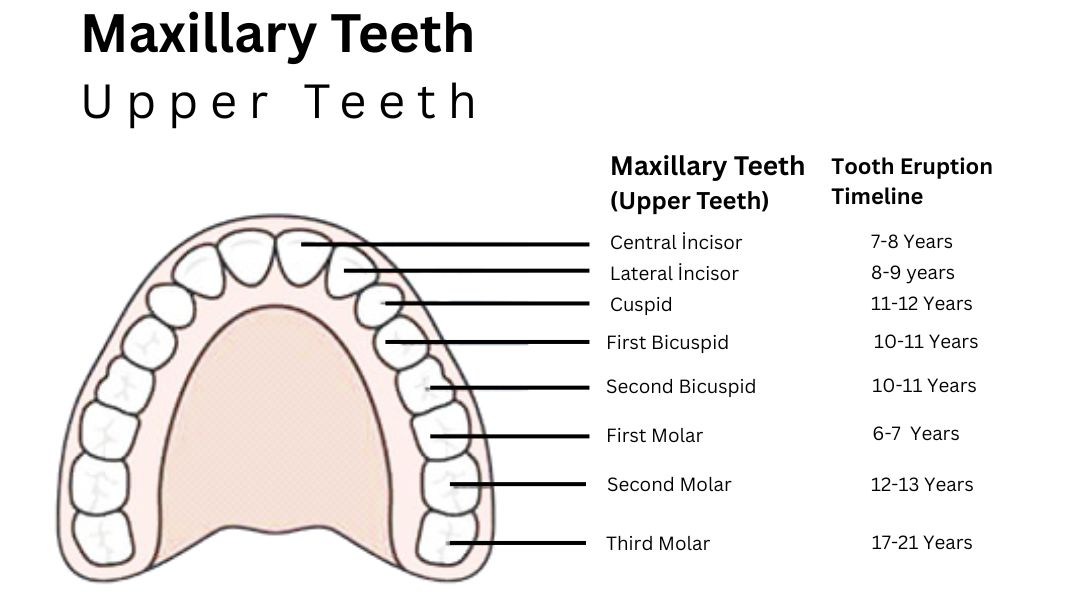
The upper teeth, also known as maxillary teeth, are located in the upper jaw. The diagram lists the following types of upper teeth, along with their eruption ages:
- Central Incisor (7-8 Years)
The central incisors are the two front teeth in the upper jaw. They are the first permanent teeth to erupt, typically between 7 and 8 years of age. Their primary function is to bite and cut food into smaller pieces. They also play a significant role in speech and aesthetics, contributing to a person’s smile. - Lateral Incisor (8-9 Years)
Positioned next to the central incisors, the lateral incisors erupt between 8 and 9 years. Like the central incisors, they are designed for biting and cutting food and contribute to the overall appearance of the smile. - Canine (Cuspid) (11-12 Years)
The canines, also known as cuspids, are the pointed teeth located on either side of the lateral incisors. They typically erupt between 11 and 12 years. Canines are designed for tearing food, such as meat, and they also help guide the jaw during chewing movements. Their sharp, pointed shape makes them ideal for gripping and ripping. - First Premolar (10-11 Years)
The first premolars, which erupt between 10 and 11 years, are located behind the canines. Premolars have a flatter surface compared to canines and are used for crushing and grinding food, aiding in the initial stages of digestion. - Second Premolar (10-12 Years)
The second premolars erupt slightly later, between 10 and 12 years, and are positioned behind the first premolars. They serve a similar function to the first premolars, assisting in chewing by crushing and grinding food. - First Molar (6-7 Years)
The first molars are the first permanent molars to erupt, typically between 6 and 7 years. They are larger and have a broader chewing surface, making them essential for grinding food into smaller pieces for swallowing and digestion. - Second Molar (11-13 Years)
The second molars erupt between 11 and 13 years and are located behind the first molars. Like the first molars, they are designed for grinding and chewing, further breaking down food. - Third Molar (17-32 Years)
Commonly known as wisdom teeth, the third molars erupt much later, between 17 and 32 years. These teeth are also used for grinding, but many people have them removed due to misalignment or lack of space in the jaw.
Mandibular Teeth (Lower Teeth)

The lower teeth, or mandibular teeth, are located in the lower jaw. The diagram lists the following types of lower teeth:
- Central Incisor (6-7 Years)
The mandibular central incisors are the first permanent teeth to erupt in the lower jaw, typically between 6 and 7 years. They function similarly to their upper counterparts, biting and cutting food while aiding in speech and aesthetics. - Lateral Incisor (7-8 Years)
The lateral incisors in the lower jaw erupt between 7 and 8 years. They assist the central incisors in biting and cutting food. - Canine (Cuspid) (9-10 Years)
The mandibular canines erupt between 9 and 10 years. Like the upper canines, they are used for tearing food and guiding jaw movements during chewing. - First Premolar (10-12 Years)
The first premolars in the lower jaw erupt between 10 and 12 years. They help crush and grind food, working in tandem with the upper premolars. - Second Premolar (11-12 Years)
The second premolars erupt between 11 and 12 years and serve the same crushing and grinding function as the first premolars. - First Molar (6-7 Years)
The mandibular first molars erupt between 6 and 7 years, simultaneously with the upper first molars. They are crucial for grinding food during chewing. - Second Molar (11-13 Years)
The second molars in the lower jaw erupt between 11 and 13 years, assisting in the grinding process alongside the first molars. - Third Molar (17-32 Years)
The mandibular third molars, or wisdom teeth, erupt between 17 and 32 years. Their function is similar to the upper third molars, but they are often removed due to potential complications.