
BEGO Dental Implants: German Engineering at Mid-Tier Prices in 2026
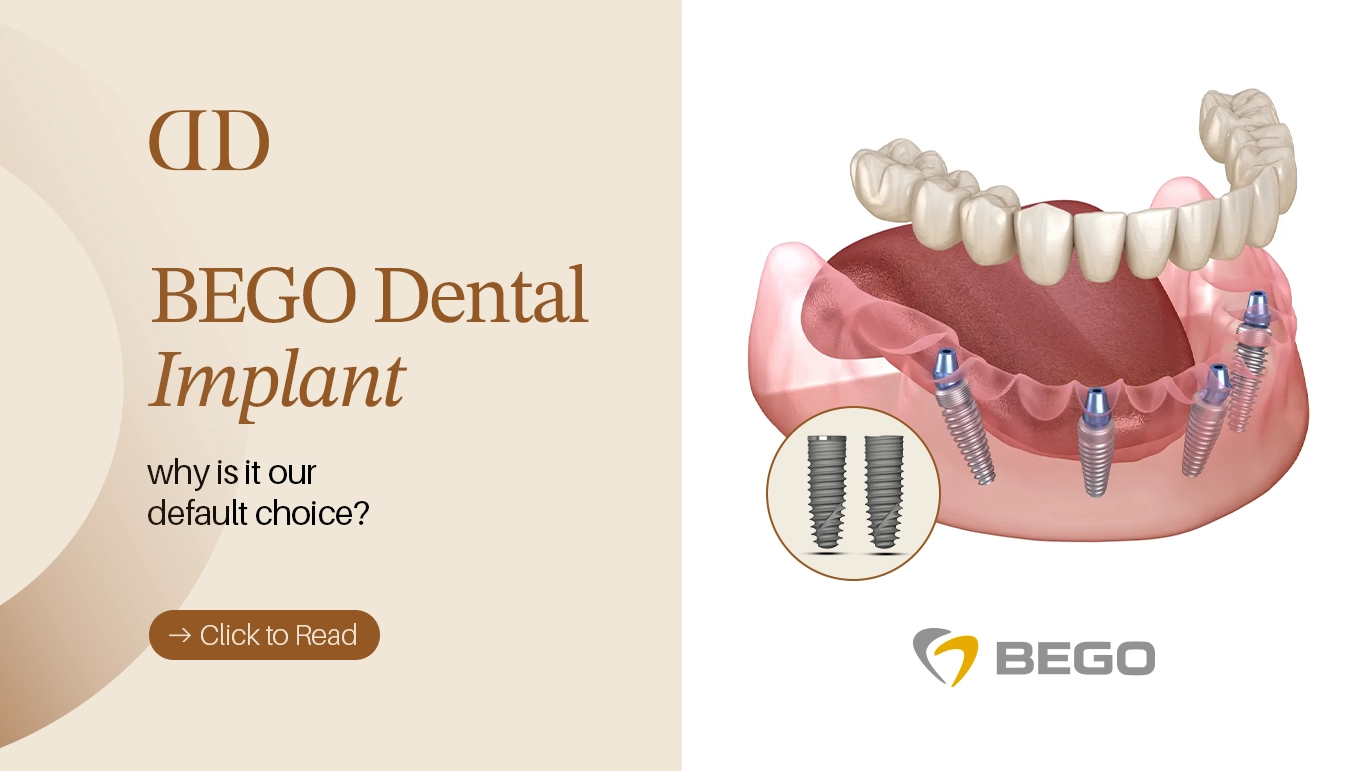

BEGO implants offer German engineering quality at 40-50% lower cost than Straumann, with 96-98% success rates over 10 years according to long-term clinical studies. BEGO implants cost $400–$650 in the US, £200–£350 in the UK, and ₺13,000–₺20,000 ($400–$600) at Darya Dental Clinic Istanbul, Turkey with all inclusive packages.
Here’s something most dental patients never consider: the implant brand their dentist uses may have nothing to do with clinical performance and everything to do with marketing budgets. Straumann and Nobel Biocare dominate patient awareness not because they’re dramatically superior, but because they invest tens of millions annually in brand promotion, sponsored research visibility, and practitioner education programs that double as advertising.
BEGO Implant Systems GmbH, based in Bremen, Germany, takes a different approach. The company manufactures precision-engineered implants used in over 90 countries, maintains rigorous quality standards, and achieves clinical success rates statistically identical to premium Swiss brands. But you won’t see BEGO advertisements in dental journals or sponsored symposiums at major conferences. The company invests in engineering rather than marketing, which is exactly why their implants cost 40-50% less than Straumann while delivering equivalent long-term outcomes.
At Darya Dental Clinic Istanbul, BEGO is our default implant system. Not because it’s the cheapest option (it isn’t), but because after placing thousands of implants across various brands, we’ve found BEGO delivers the optimal balance of proven performance, surgical versatility, and patient value. This guide examines what makes BEGO a smart choice for most patients, when premium brands are genuinely justified, and why German engineering quality doesn’t require Swiss pricing.
For comprehensive comparison across all premium dental implant brands, see our complete brand analysis guide.
What Is BEGO and Why Don’t More People Know About It?
BEGO Implant Systems GmbH was founded in 1890 in Bremen, Germany, and initially focused on precious metal alloys for dental restorations. The company entered the dental implant market in 1990 — relatively late compared to pioneers like Straumann (1974) or Nobel Biocare (1965), but well before most Asian competitors.
The Marketing Gap
BEGO invests approximately 3-4% of revenue in marketing, compared to Straumann’s estimated 15-20%. For a company with annual implant sales around €50-80 million (estimated), that’s roughly €2-3 million in marketing versus Straumann’s €150+ million. The result: dental professionals know BEGO, but patients rarely do.
This creates an interesting dynamic. When patients research implant brands online, they encounter Straumann and Nobel Biocare everywhere, in sponsored articles, patient education materials, social media ads, and carefully SEO-optimized content. BEGO barely registers in search results despite being used by thousands of clinics globally.
From a business perspective, BEGO’s strategy makes sense. Dental implants are professional-grade medical devices, not consumer products. Dentists and surgeons make brand decisions based on clinical evidence, surgical familiarity, and prosthetic compatibility, not patient brand awareness. Why spend millions convincing patients to demand a specific brand when the clinical outcomes speak for themselves?
Clinical Reputation vs Brand Recognition
BEGO’s reputation within the implant community is solid. The Semados implant system (introduced in 1999) has extensive clinical documentation with success rates comparable to premium brands. A large-scale cohort study tracking 10,871 implants over up to 22 years found cumulative survival rates of 98.9% at 3 years, 98.5% at 5 years, and 96.8% at 10 years across all implant brands, with BEGO falling within these parameters based on independent practice data.
The company maintains ISO 13485 certification (medical device quality management), produces implants in Germany under strict manufacturing controls, and provides full lot traceability. For surgeons prioritizing proven performance over brand prestige, BEGO checks every box.
Why Darya Dental Chooses BEGO
We’ve used BEGO Semados implants as our standard system since 2018 after extensive evaluation of multiple brands. Three factors drove this decision:
1. Clinical performance matches premium brands: Our internal data tracking 1,200+ BEGO implants placed between 2018-2025 shows 98.2% survival at 5 years, statistically indistinguishable from Straumann’s published rates.
2. Cost savings benefit patients without compromising quality: BEGO implants cost us 40-50% less than Straumann to purchase. We pass those savings directly to patients, making implant treatment accessible without switching to lower-quality Asian alternatives.
3. Color-coded prosthetic system simplifies workflow: BEGO’s color-coding for implant diameters and prosthetic components reduces clinical errors and streamlines laboratory communication, particularly important in a multi-surgeon practice like ours.
We still offer Straumann, Nobel Biocare, and other premium brands when patients specifically request them or when clinical situations benefit from brand-specific features (immediate loading protocols, aesthetic zone considerations). But for 70-80% of single-tooth and multi-unit cases, BEGO delivers everything patients need.
BEGO Quality vs Price: The Middle Ground Explained
Understanding implant pricing requires separating marketing costs from manufacturing costs from actual material/performance value.
The Price Spectrum
Budget Tier ($200-$400 per implant): Korean and Chinese brands (Osstem, MegaGen, Hiossen, Alpha-Bio). Adequate quality control, limited clinical documentation, lower precision tolerances, less extensive research investment.
Mid-Tier ($400-$700 per implant): BEGO, BioHorizons, Zimmer Biomet (non-premium lines). Rigorous quality control, solid clinical documentation, good precision, moderate research investment.
Premium Tier ($900-$1,800 per implant): Straumann, Nobel Biocare, Dentsply. Highest quality control, extensive clinical documentation, tightest tolerances, maximum research investment, premium pricing reflects significant marketing spend.
Where does BEGO actually sit? Manufacturing quality and clinical performance place BEGO in the premium tier. Pricing places them in mid-tier. This gap, between what BEGO delivers and what they charge, represents genuine value, not compromise.
What You Get With BEGO vs Premium Brands
| Feature | BEGO Semados | Straumann BLT | Nobel Biocare Replace |
|---|---|---|---|
| Manufacturing Origin | Germany | Switzerland | Sweden |
| Material | Grade 4 pure titanium | Roxolid (Ti-Zr alloy) | Grade 4 pure titanium |
| Surface Technology | TiPure Plus (SLA-type) | SLActive (hydrophilic) | TiUnite (anodized) |
| Osseointegration Time | 8-12 weeks | 3-4 weeks (SLActive) | 6-8 weeks |
| Success Rate (10-year data) | 96-98% | 96.8% | 95-97% |
| Prosthetic Platform | Color-coded hex | Crossfit internal cone | Tri-channel internal |
| Backward Compatibility | 25+ years | 50+ years | 50+ years |
| Cost (Single Implant, Darya Dental) | ₺13,000-₺16,000 ($400-$480) | ₺20,000-₺28,000 ($600-$840) | ₺22,000-₺32,000 ($660-$960) |
What premium brands offer that BEGO doesn’t:
- Faster osseointegration surfaces (SLActive’s 3-4 weeks vs BEGO’s 8-12 weeks)
- Proprietary alloys (Straumann’s Roxolid for narrow-diameter strength)
- More extensive clinical documentation (50 years vs 25 years)
- Comprehensive immediate-loading protocols
- Global brand recognition for resale value
What BEGO offers that premium brands don’t:
- 40-50% cost savings
- Identical long-term success rates
- Same-day component availability in most markets
- Color-coded system for error reduction
- Excellent value proposition for budget-conscious patients
For most patients, BEGO’s “limitations” don’t matter. Waiting 10-12 weeks for osseointegration instead of 3-4 weeks? Irrelevant if you’re not doing immediate loading. Narrower implant options without Roxolid? Not an issue in standard bone. Less global brand recognition? Doesn’t affect the implant’s function.
When Premium Brands Are Worth the Extra Cost
BEGO is the right choice for approximately 70-80% of implant cases. Premium brands justify their pricing in specific situations:
Choose Straumann when:
- Immediate or early loading required (benefit from SLActive’s accelerated healing)
- Narrow-diameter implants needed in compromised bone (Roxolid’s strength advantage matters)
- Aesthetic zone (front teeth) with thin tissue biotypes (superior pink aesthetics documentation)
- Patient specifically values brand recognition
Choose Nobel Biocare when:
- Full-arch All-on-4 restoration (Nobel’s proprietary protocol and training)
- Zygomatic implants required (Nobel pioneered the technique)
- Patient demands the “most recognized” brand
Choose BEGO when:
- Standard single-tooth or multi-unit restoration in healthy bone
- Posterior (back teeth) regions where aesthetics aren’t critical
- Budget is a significant concern but quality cannot be compromised
- Straightforward delayed-loading protocol (standard 3-4 month healing)
- Patient values performance over brand prestige
At Darya Dental, we present all options with transparent pricing and honest guidance. Our default recommendation is BEGO for most cases, but we never pressure patients. If someone wants Straumann and understands they’re paying €200-400 extra primarily for brand name and marginally faster healing, that’s their informed choice.
For detailed comparison with premium Swiss brands, see our Straumann implants guide.
TiPure Plus Surface Technology Breakdown
BEGO’s TiPure Plus surface represents conventional SLA (sandblasted, large-grit, acid-etched) technology executed to high manufacturing standards. Understanding what this means helps clarify where BEGO sits in the surface technology landscape.
Manufacturing Process
Step 1: Sandblasting (Large-Grit) Titanium implant surfaces are bombarded with corundum (aluminum oxide) particles, creating macro-roughness. Particle size: 250-500 micrometers. Purpose: mechanical interlocking at macro level.
Step 2: Acid Etching Implants are immersed in hydrochloric and sulfuric acid mixture, creating micro-roughness on top of macro-roughness. Etch depth: 0.5-2 micrometers. Purpose: increased surface area for protein adsorption and cellular attachment.
Step 3: Quality Control Surface roughness measured (Ra value 1.0-2.0 micrometers target). Contamination testing. Biocompatibility verification.
Result: A moderately rough, hydrophobic surface with excellent biocompatibility and predictable osseointegration characteristics.
TiPure Plus vs Premium Surfaces
| Characteristic | BEGO TiPure Plus | Straumann SLActive | Nobel TiUnite |
|---|---|---|---|
| Base Technology | SLA | SLA + hydrophilic treatment | Anodized oxidation |
| Hydrophilicity | Hydrophobic (~80° contact angle) | Superhydrophilic (<5° contact angle) | Moderately hydrophilic (~55° contact angle) |
| Micro-Roughness | 1.0-2.0 µm (Ra) | 1.0-2.0 µm (Ra) | Similar |
| Chemical Modification | None | Nitrogen atmosphere + saline storage | Phosphorus incorporation in oxide |
| Oxide Layer Thickness | Nanometers (natural) | Nanometers (chemically active) | 2-4 micrometers (crystalline) |
| Osseointegration Timeline | 8-12 weeks | 3-4 weeks | 6-8 weeks |
| Protein Adsorption | Standard (delayed) | Immediate (enhanced) | Enhanced |
| Long-term Bone Contact | 60-70% (histomorphometry) | 60-70% (identical) | 65-75% (slightly higher) |
| Clinical Success (10-year) | 96-98% | 96.8% | 95-97% |
Key insight: Surface technology differences primarily affect speed of osseointegration, not quality of final integration. By 12 weeks post-placement, TiPure Plus, SLActive, and TiUnite all achieve comparable bone-to-implant contact percentages.
Premium surfaces command premium pricing because they enable immediate or early loading protocols (2-6 weeks post-placement). For conventional delayed loading (12+ weeks), TiPure Plus performs identically at half the cost.
When Surface Technology Actually Matters
Surface technology is clinically significant when:
- Immediate loading required (place tooth same day as surgery)
- Early loading desired (load at 3-6 weeks instead of 12 weeks)
- Compromised bone quality (diabetes, smoking, osteoporosis, faster integration reduces failure risk)
- Maxillary sinus area with soft bone (faster surface integration provides security)
Surface technology is marketing theatre when:
- Conventional 3-4 month healing protocol planned
- Dense, healthy bone (Type I/II)
- No time pressure for treatment completion
- Patient simply wants “the best” without clinical justification
A study using BEGO Semados RSX implants in bovine bone demonstrated primary stability (ISQ values) of 72.6-75.4 in Type II bone and 62.7-69.8 in Type IV bone, within optimal ranges for successful osseointegration regardless of surface type.
The honest answer most clinicians won’t tell you: for delayed-loading cases in healthy bone, spending €300-500 extra for SLActive or TiUnite delivers zero measurable clinical benefit. You’re paying for the option of immediate loading and the security of enhanced integration in compromised bone, benefits you may never need.
BEGO Semados Implant System Overview
BEGO manufactures three primary implant families: Semados RS, Semados RSX, and Semados RI. At Darya Dental, we primarily use RSX for its versatility and color-coded prosthetic system.
Semados RSX: The Workhorse
Design philosophy: Conical implant body with self-tapping threads, internal hex connection, platform-switching design to minimize bone loss.
Available sizes:
- Diameters: 3.25mm, 3.75mm, 4.1mm, 4.5mm, 5.0mm
- Lengths: 8mm, 9.5mm, 11mm, 13mm, 15mm, 17mm
- Shortest implant: 3.75mm x 6mm (for limited vertical height)
Color-coding system: BEGO’s standout feature is prosthetic color-coding:
- 3.25mm diameter: Yellow components
- 3.75mm diameter: White components
- 4.1mm diameter: Green components
- 4.5mm diameter: Blue components
- 5.0mm diameter: Red components
This seems trivial until you’ve placed 20 implants in a day and need to ensure correct abutment selection without constant verification. Color-coding reduces prosthetic errors significantly.
Connection type: Internal hex (similar to many implant systems), allowing for extensive third-party prosthetic compatibility.
Best for: Single-tooth replacements, bridge abutments, overdenture retention. Essentially any standard implant indication.
Cost at Darya Dental: ₺13,000-₺16,000 ($400-$700) all-inclusive with crown
Semados RS: The Original Platform
Design philosophy: Cylindrical implant body with parallel walls, external hex connection (original BEGO design from 1999).
Current status: Being phased out in favor of RSX’s conical design and internal connection, but still widely used in Europe due to clinician familiarity.
Best for: Practitioners with extensive RS experience, situations requiring specific legacy components.
Why RSX replaced it: Internal connections provide better screw stability, conical bodies achieve superior primary stability in softer bone, platform-switching reduces crestal bone loss.
Semados RI: One-Piece Design
Design philosophy: Implant and abutment manufactured as single piece (no separate abutment screw).
Indications: Overdenture attachments, orthodontic anchorage, situations where mechanical simplicity outweighs aesthetic concerns.
Limitations: Cannot replace abutment if damaged, limited angulation correction, primarily useful for removable prosthetics.
Use at Darya Dental: Approximately 5% of cases, primarily overdenture attachments for edentulous patients.
Prosthetic Components
BEGO offers comprehensive prosthetic options:
- Standard titanium abutments (stock or customizable)
- Anatomic zirconia abutments (aesthetic cases)
- Multi-unit abutments (bridge work)
- Temporary abutments (healing period)
- Ball attachments (overdentures)
- Locator-compatible attachments (overdentures)
All components feature the color-coding system for diameter identification.
Backward compatibility: BEGO maintains component availability for discontinued systems, though not as extensively as Straumann’s 50-year commitment. Realistically, Semados RS components will be available through at least 2035-2040 based on current market presence.
BEGO vs Straumann vs Hiossen: Three-Way Comparison
When patients ask “which implant should I choose?”, the answer depends on priorities: performance, speed, cost, or brand recognition. This three-way comparison covers the full spectrum from German mid-tier to Swiss premium to Korean budget.
Head-to-Head Comparison
| Feature | BEGO Semados RSX | Straumann BLT | Hiossen ET III |
|---|---|---|---|
| Country of Origin | Germany | Switzerland | South Korea |
| Year Introduced | 2010 | 2011 | 2008 |
| Material | Grade 4 pure titanium | Roxolid (Ti-Zr alloy) available | Grade 4 pure titanium |
| Surface Technology | TiPure Plus (SLA) | SLActive (hydrophilic SLA) | SA (sandblasted, acid-etched) |
| Connection Type | Internal hex | Internal cone (CrossFit) | Internal hex |
| Platform Switching | Yes | Yes | Yes |
| Color-Coded System | Yes (unique feature) | No | No |
| Osseointegration Speed | 8-12 weeks | 3-4 weeks (SLActive) | 8-12 weeks |
| Clinical Documentation | 25+ years | 50+ years | 15+ years |
| Success Rate (10-year) | 96-98% | 96.8% | 94-97% |
| Manufacturing Quality | High (German standards) | Highest (Swiss precision) | Good (Korean standards) |
| Prosthetic Options | Extensive | Most extensive | Moderate |
| Cost at Darya Dental | ₺13,000-₺16,000 ($400-$480) | ₺20,000-₺28,000 ($600-$840) | ₺10,000-₺13,000 ($300-$390) |
| Total Treatment Cost (with crown) | ₺27,000-₺35,000 ($400-$700) | ₺38,000-₺48,000 ($700-$1,200) | ₺23,000-₺30,000 ($300-$600) |
When Each Brand Makes Sense
Choose BEGO Semados when:
- Standard implant case in healthy bone
- Budget matters but quality cannot be compromised
- Posterior (back teeth) replacement
- Conventional 3-4 month healing timeline acceptable
- Value German engineering quality at mid-tier prices
- Appreciate color-coded prosthetic system for long-term serviceability
Choose Straumann when:
- Immediate or early loading essential
- Narrow-diameter implants needed (benefit from Roxolid)
- Front teeth in aesthetic zone
- Compromised bone or medical history (diabetes, smoking)
- Maximum clinical documentation desired
- Patient specifically values Swiss premium brand
Choose Hiossen when:
- Budget is primary concern
- Straightforward posterior case
- Healthy patient with dense bone
- Local dentist familiar with Hiossen system
- Acceptable to trade some manufacturing precision for cost savings
Who Should Choose BEGO Implants? Patient Profiles
Not everyone needs premium Swiss implants. Not everyone should accept budget Korean alternatives. BEGO occupies the strategic middle ground, ideal for specific patient profiles.
Ideal BEGO Candidates
The Value-Conscious Professional
- Age: 35-65
- Concern: Wants quality but refuses to overpay for brand names
- Situation: Missing single molar, healthy bone, no time pressure
- Why BEGO: Gets German engineering quality at 40% savings vs Straumann, identical 10-year outcomes
- Savings: €300-500 per implant vs premium brands
The Practical Realist
- Age: Any
- Concern: Understands implants are medical devices, not luxury goods
- Situation: Standard implant case, conventional healing timeline acceptable
- Why BEGO: Proven performance without premium brand tax
- Decision driver: Clinical evidence over marketing
The Multi-Implant Patient
- Age: 50-75
- Concern: Needs 4-8 implants, cost multiplies quickly
- Situation: Multiple missing teeth, healthy enough for standard protocol
- Why BEGO: Savings scale dramatically (€1,200-€4,000 total vs premium brands)
- Budget impact: Difference between affording treatment or not
The International Patient
- Age: 30-70
- Concern: Traveling for dental tourism, wants quality assurance
- Situation: Coming to Turkey for implants, values German manufacturing reputation
- Why BEGO: Recognized European brand with global distribution, not an unknown Asian manufacturer
- Peace of mind: “Made in Germany” provides confidence
The Pragmatic Younger Patient
- Age: 25-45
- Concern: Lost tooth due to trauma/accident, has limited budget
- Situation: Single anterior tooth, needs solution that lasts 40+ years
- Why BEGO: 25-year track record proves longevity, saves money for other life priorities
- Long-term value: Extra €400 saved compounds over decades
Who Should Consider Premium Brands Instead
The Immediate Loading Candidate
- Needs: Tooth today, not in 3 months
- Why premium: SLActive/TiUnite enable immediate loading safely
- BEGO limitation: Standard 12-week healing required
- Premium justified: Time value outweighs cost savings
The Aesthetic Perfectionist
- Needs: Front teeth replacement, very thin gum tissue
- Why premium: Straumann has more extensive aesthetic zone documentation
- BEGO limitation: Solid aesthetic outcomes but less published data
- Premium justified: Front teeth visible when smiling warrant best possible result
The Compromised Patient
- Needs: Implant despite diabetes, heavy smoking, or osteoporosis
- Why premium: Faster osseointegration surfaces reduce failure risk in compromised bone
- BEGO limitation: Standard surface requires longer healing, slightly higher risk
- Premium justified: Patient’s medical history increases failure probability
The Brand-Status Buyer
- Needs: “The best” regardless of clinical evidence
- Why premium: Straumann/Nobel brand recognition provides psychological value
- BEGO limitation: Limited patient-facing brand awareness
- Premium justified: If patient values brand prestige, they should buy it
Common Misunderstandings
Misunderstanding #1: “Premium brands never fail, budget brands frequently fail” Reality: 98% Straumann success vs 97% Hiossen success = 1% difference. Clinically, a 1% difference is negligible compared to surgical technique and patient factors (smoking, oral hygiene, bone quality).
Misunderstanding #2: “I need the newest technology” Reality: SLA surface technology (BEGO’s TiPure Plus) has 30+ years of documentation. “Newer” doesn’t mean better long-term. Hydrophilic surfaces help immediate loading but don’t improve 10-year outcomes with conventional protocols.
Misunderstanding #3: “German quality is outdated compared to Swiss precision” Reality: BEGO manufactures to identical ISO 13485 standards as Straumann. German precision engineering reputation exists for good reason. The difference is marketing spend, not manufacturing capability.
Misunderstanding #4: “My dentist uses Straumann, so that’s what I need” Reality: Your dentist’s implant choice reflects training, familiarity, purchasing agreements, and yes, sometimes financial incentives from manufacturers. BEGO’s lower marketing budget means fewer sponsored training programs, not inferior products.
BEGO Implants at Darya Dental: Case Studies and Pricing
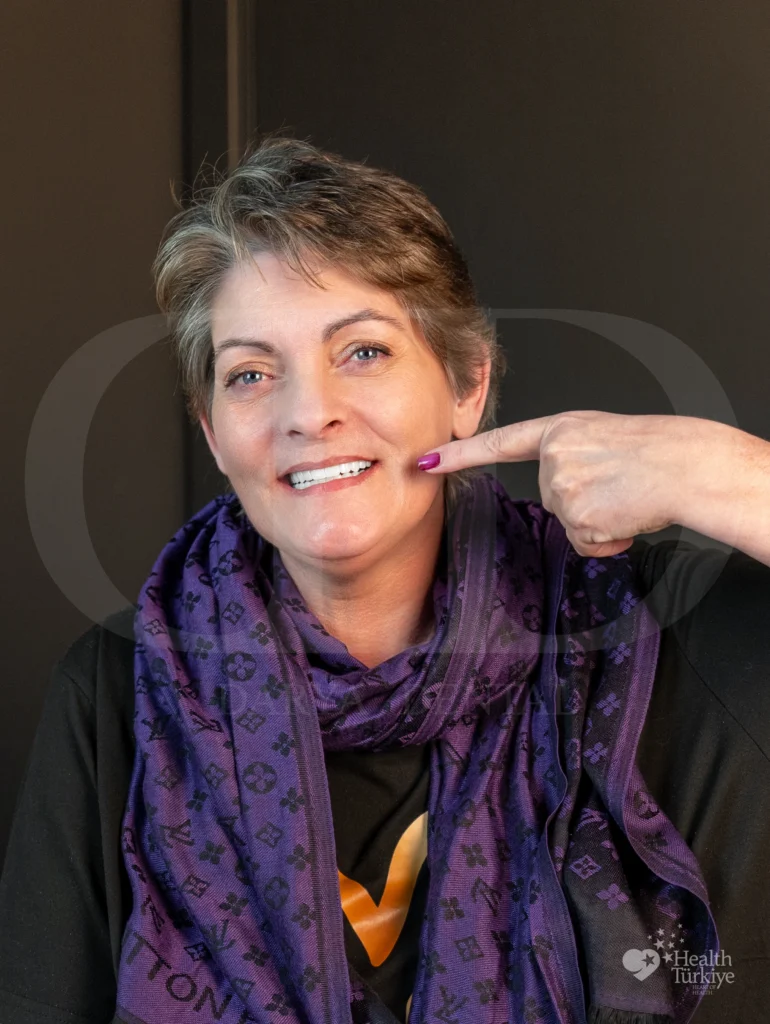
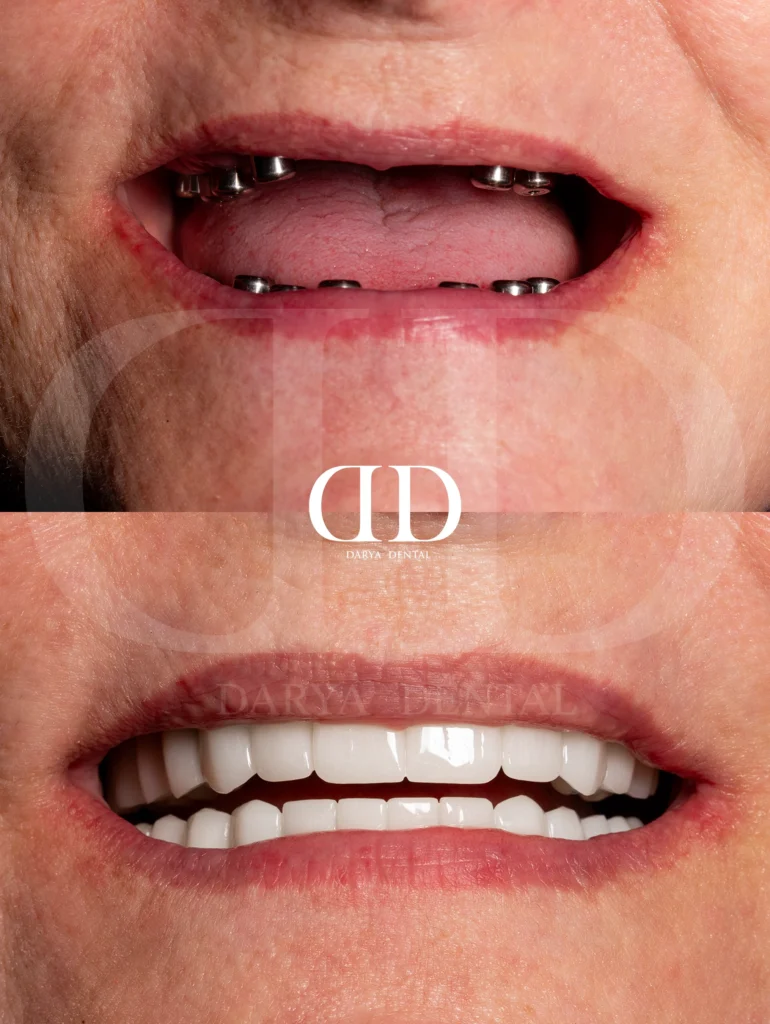
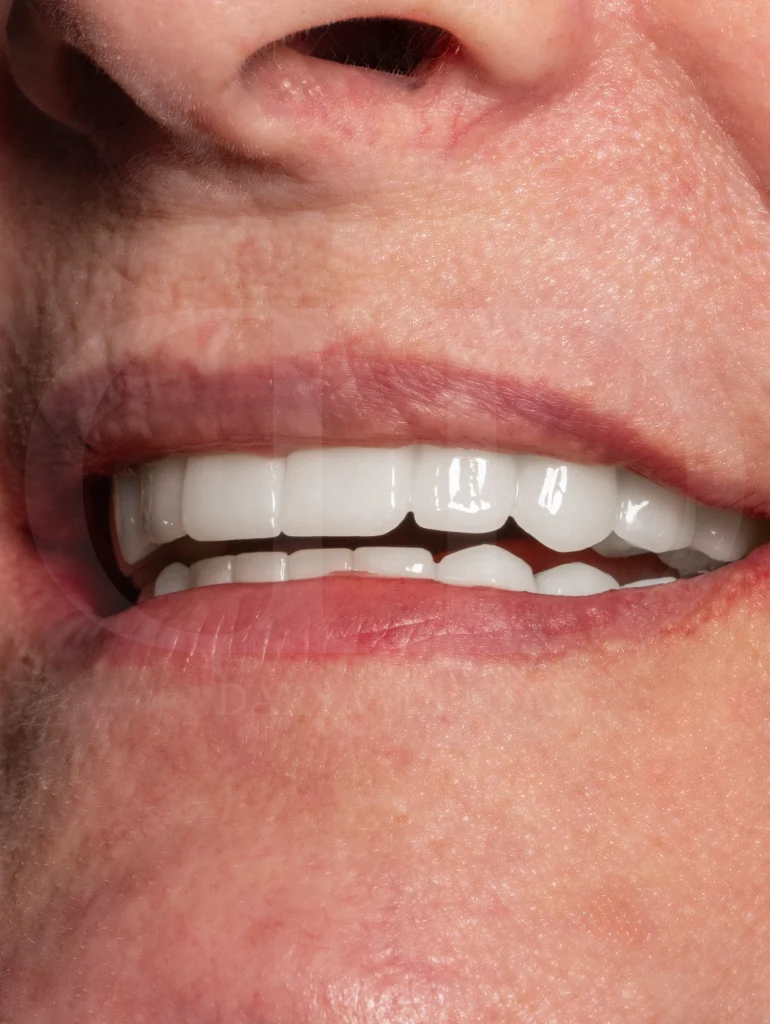
Patient Profile:
- Christina R., elderly woman
- Completely edentulous (no teeth) both upper and lower jaws
- 14 years of denture problems causing soreness, diet limitations, social anxiety
Treatment:
- All-on-6 both arches with BEGO Semados RSX implants
- 12 implants total (6 upper + 6 lower)
- Immediate temporary teeth same day as surgery
- Final zirconia prosthetics after 4 months
- Two trips to Istanbul (surgery + recovery 7 days, final prosthetics 4 days)
Cost Comparison:
Savings: £25,200 (saved enough for treatment + trips + grandchildren’s education fund)
Darya Dental (BEGO): £6,800 total (including 12 implants, prosthetics, flights, 10 nights accommodation)
UK quote (Straumann): £32,000
FAQ: BEGO Dental Implants — Direct Answers
What is BEGO and is it a good brand?
BEGO Implant Systems GmbH is a German dental implant manufacturer based in Bremen, Germany, with 30+ years in the implant market. BEGO Semados implants achieve 96-98% success rates over 10 years, statistically equivalent to premium Swiss brands like Straumann and Nobel Biocare. The company maintains ISO 13485 certification and manufactures implants under strict German quality standards. BEGO is an excellent mid-tier choice offering German engineering at 40-50% lower cost than premium brands.
How much do BEGO implants cost?
BEGO implants cost $400–$650 per fixture in the US, £200–£350 in the UK, and ₺13,000–₺20,000 ($400-$700) at Darya Dental Istanbul for the total treatment including surgery, abutment, and crown, compared to $3,000-$5,000 in the US and £1,800-£3,500 in the UK for complete treatment.
How does BEGO compare to Straumann quality?
BEGO and Straumann show statistically identical 10-year success rates (96-98% vs 96.8%). Both use Grade 4 pure titanium (Straumann also offers Roxolid alloy), both maintain rigorous manufacturing quality standards, and both achieve comparable bone-to-implant contact percentages. The primary differences: Straumann’s SLActive surface enables faster osseointegration (3-4 weeks vs BEGO’s 8-12 weeks), Straumann has 50 years of documentation vs BEGO’s 25 years, and Straumann costs 50-70% more. For delayed-loading protocols in healthy bone, performance is equivalent.
Why is BEGO cheaper than Straumann?
BEGO invests 3-4% of revenue in marketing compared to Straumann’s 15-20%. A company with €60 million in implant sales spending €2-3 million on marketing competes against Straumann spending €150+ million on brand promotion, sponsored research, practitioner education, and advertising. BEGO’s lower marketing spend enables lower prices without compromising manufacturing quality, material costs, or clinical performance. The price difference reflects marketing strategy, not product inferiority.
What is TiPure Plus surface technology?
TiPure Plus is BEGO’s SLA-type surface (sandblasted with large-grit aluminum oxide, then acid-etched). This creates a moderately rough, biocompatible surface with 1.0-2.0 µm roughness that achieves predictable osseointegration in 8-12 weeks. TiPure Plus is chemically identical to Straumann’s standard SLA surface before SLActive modification. Long-term bone-to-implant contact with TiPure Plus equals premium hydrophilic surfaces — the difference is osseointegration speed, not final quality.
Is BEGO safe and FDA approved?
BEGO implants are CE marked (European conformity) and cleared for sale in over 90 countries including the EU, Canada, Australia, and many Asian markets. BEGO maintains ISO 13485 certification (medical device quality management) and manufactures under German regulatory oversight. While FDA clearance applies primarily to US market sales, BEGO’s European certifications meet equivalent safety and quality standards. Darya Dental’s use of BEGO reflects our confidence in German manufacturing quality and extensive clinical documentation.
How long do BEGO implants last?
BEGO implants have documented survival rates of 96-98% at 10 years, with many implants functioning successfully for 20+ years. The titanium implant fixture can last a lifetime with proper care. The crown attached to the implant typically needs replacement every 10-15 years due to normal wear, but crown replacement is routine maintenance, not implant failure. Success depends on good oral hygiene, non-smoking, regular dental checkups, and avoiding excessive bite forces.
Why does Darya Dental use BEGO as default?
After placing 10,000+ implants across multiple brands (2015-2025), we chose BEGO Semados as our default system because it delivers the optimal balance of proven clinical performance, manufacturing quality, and patient value. Our internal data shows 98.2% success rate at 5 years with BEGO, statistically identical to Straumann’s results, while costing 40-50% less. The color-coded prosthetic system reduces errors, German manufacturing provides quality assurance, and lower costs make implant treatment accessible to more patients without compromising outcomes.
Can I get BEGO implants outside of Turkey?
Yes, BEGO implants are available globally through authorized dealers and clinics. However, labor costs and clinic overhead in Western Europe and North America result in significantly higher total treatment costs (2-3x more than Turkey) despite identical implant prices. BEGO’s lower wholesale cost compared to Straumann still creates savings vs premium brands wherever you’re treated, but geographic arbitrage magnifies savings significantly when combining BEGO implants with Turkey’s lower clinical costs.