
Immediate vs Delayed Dental Implants in Turkey: Which Timeline Is Safer?
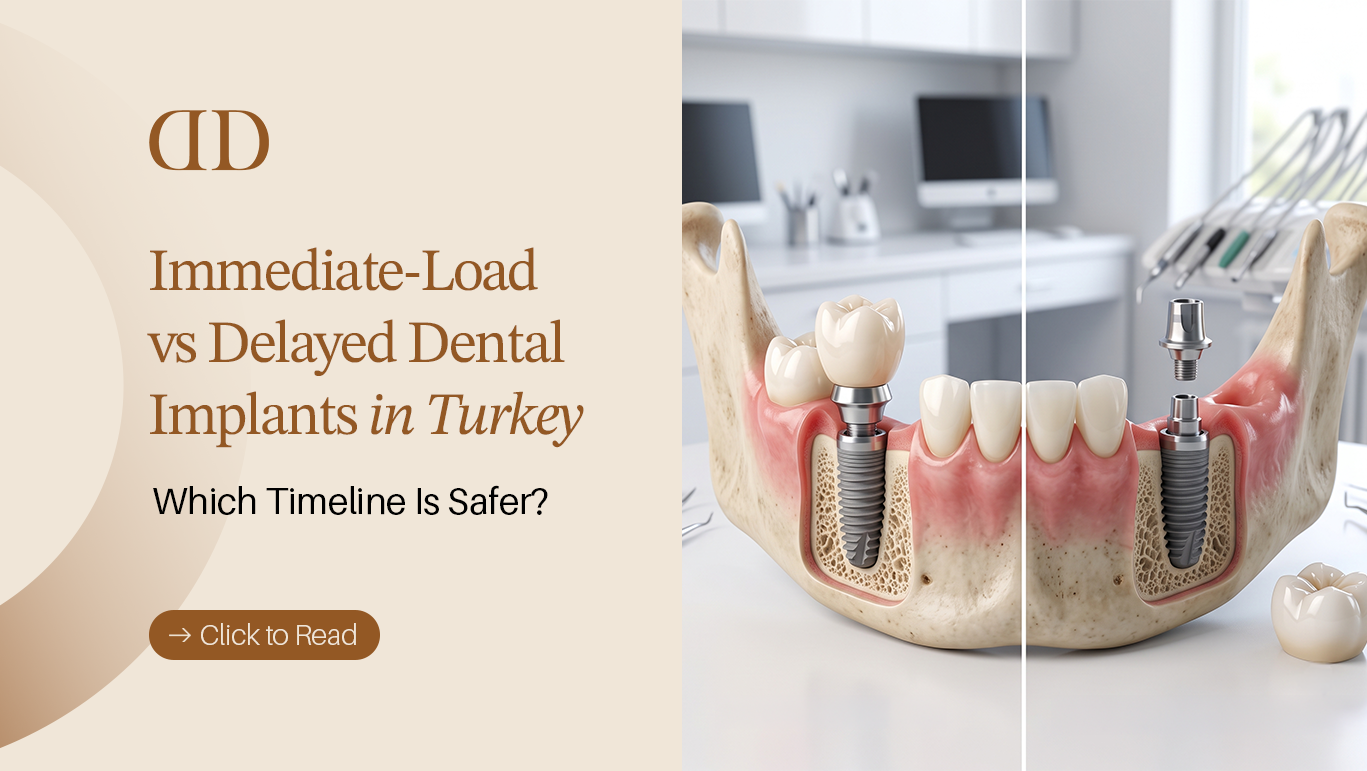

When facing a tooth extraction, the single most critical decision you and your oral surgeon will make isn’t just which implant brand to choose it is when to place the implant and when to attach your new tooth.
The direct answer to whether immediate or delayed dental implants are better comes down to clinical safety: immediate dental implants offer a faster, single-stage result when primary bone stability is exceptionally strong, whereas delayed dental implants remain the safer, highly predictable gold standard whenever active infection, severe bone loss, or compromised soft tissue is present. Neither timeline is universally “better” the right protocol depends entirely on your specific anatomical conditions.
At Darya Dental Clinic in Istanbul, Turkey, we approach this choice not as a marketing shortcut, but as a precise surgical calculation. Understanding the biological differences between immediate placement, delayed placement, immediate loading, and delayed loading empowers you to make an informed choice for your long-term smile reconstruction.
Immediate Placement vs. Immediate Loading: Understanding the Terminology
In modern implantology, patients and online discussions frequently mix up two distinctly separate clinical concepts: implant placement timing (when the titanium post enters the bone) and implant loading timing (when the prosthetic tooth is attached). Clarifying this terminology is essential before evaluating your treatment plan.
What Is Immediate Dental Implant Placement?
Immediate dental implant placement (often called an immediate extraction socket implant) occurs during the exact same surgical appointment as your tooth extraction. Once the natural tooth root is gently removed, the surgeon cleanses the socket and immediately threads the titanium fixture into the fresh site.
What Is Immediate Loading of Dental Implants?
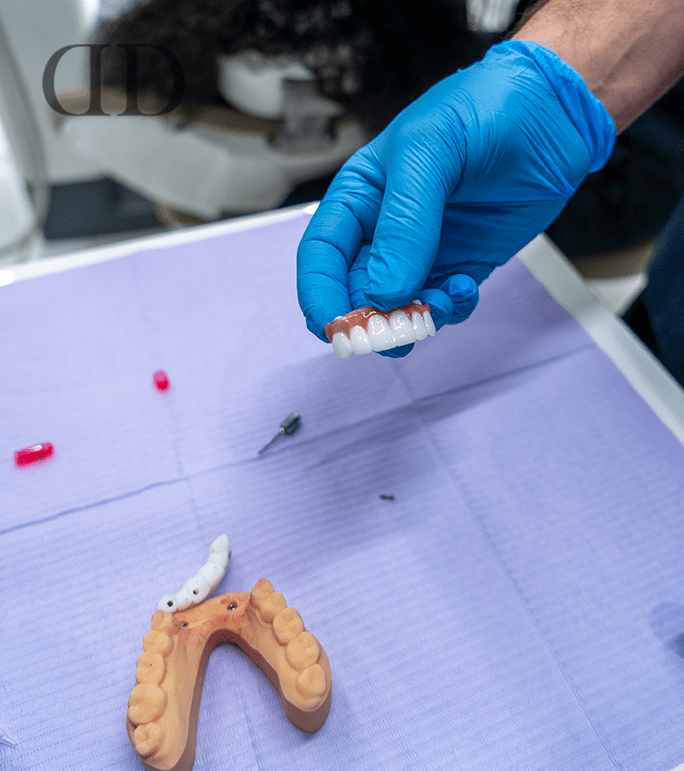
Immediate loading refers to fixing a provisional (temporary) crown, bridge, or full-arch restoration onto the titanium post within 48 hours of surgical placement often on the same day. This protocol allows you to leave the clinic with functional, aesthetic temporary teeth while the underlying bone heals.
What Is Delayed Dental Implant Placement?
Delayed implant placement involves extracting the tooth and allowing the extraction socket to heal completely typically for 3 to 6 months before placing the titanium post. This approach allows new natural bone to fill the socket gap, creating a dense, fully healed ridge.
What Is Delayed Loading of Dental Implants?
Delayed loading is the traditional, conventional protocol where the placed implant post is left completely undisturbed beneath or at the gumline for 3 to 6 months. During this period, a biological process called osseointegration takes place, allowing living bone cells to fuse directly with the titanium surface before any chewing forces or final crowns are applied.
Can an Implant Be Placed Immediately but Loaded Later?
Yes, and in fact, this is one of the most common and safest surgical approaches! A surgeon can perform an immediate implant placement after extraction to preserve local jawbone structure, but opt for delayed loading. In this scenario, the implant is covered with a healing cap or buried under the gumline to osseointegrate safely for 3 to 4 months while you wear a non-load-bearing temporary bridge or removable appliance.
```html
```
Premium Dental Care in Turkey
Expert treatments with high-end technology. Get your personalized quote today via WhatsApp.
Dental Implant Timing After Tooth Extraction
The surgical timing between tooth extraction and implant fixture placement is generally categorized into three clinical windows:
- Immediate Implant Placement (Day 0): Performed in the same session as tooth removal. It eliminates the need for a second surgical procedure and preserves the natural bony architecture and gingival papillae around the socket.
- Early Implant Placement (4 to 8 Weeks): Performed after initial soft tissue healing (4 to 8 weeks) or partial bone healing (12 to 16 weeks). According to clinical consensus reviews published by the International Team for Implantology (ITI), early placement at 4 to 8 weeks allows clear resolution of acute socket infections while preserving soft tissue volume for optimal flap closure.
- Delayed Implant Placement (3 to 6 Months+): Performed after complete ridge preservation and bone regeneration. Recommended when severe periapical infection was present, or when substantial bone grafting is required to rebuild an eroded jaw ridge before an anchor can be anchored.
Immediate vs Delayed Dental Implants: Which Is Safer?
When patients ask which timeline is safer, the scientific consensus is clear: safety is determined by individual clinical conditions and primary implant stability, not speed. According to peer-reviewed systematic reviews in the Journal of Clinical Periodontology, both immediate and delayed placement protocols achieve high long-term success rates exceeding 95% when surgical candidacy criteria are strictly observed.
```html  ```
```
Want trusted dental advice in your Google AI answers?
Add Darya Dental Turkey as a Preferred Source on Google to make our dental guides easier to find in your search results and AI Overviews.
Key clinical factors evaluated by the surgical team at Darya Dental Clinic include:
- Primary Implant Stability: To safely place an immediate implant (and especially to load it immediately), the titanium screw must achieve a insertion torque of at least 35 Ncm (Newton centimeters) or an Implant Stability Quotient (ISQ) score above 65–70. Without high primary mechanical stability, micromotions can disrupt delicate vascular formation and cause fibrous tissue encapsulation instead of solid bone fusion.
- Bone Quality and Bone Volume: Immediate placement requires sufficient intact bone beyond the apex (tip) of the extraction socket to anchor the post securely. If severe periodontitis has destroyed the surrounding bony walls, delayed placement with guided bone regeneration (GBR) is vastly safer.
- Gum and Soft Tissue Health: Immediate loading in the aesthetic front zone requires a thick gingival biotype to prevent future gum recession and metal show-through.
- Infection at the Extraction Site: Placing an immediate implant into an active, purulent periapical abscess dramatically increases the risk of early implant failure. Active infections must be cleared first.
- Bite Forces and Parafunctional Habits: Patients who suffer from severe bruxism (nighttime teeth grinding) generate excessive lateral forces that can compromise an immediately loaded provisional restoration.
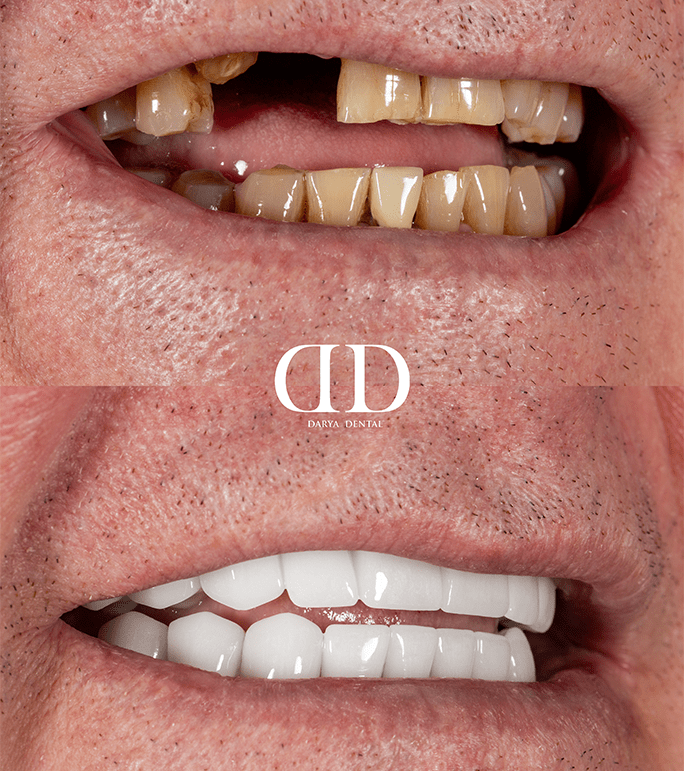
Who May Be Suitable for Immediate Dental Implants?
Immediate implant placement and immediate loading offer clear biological and aesthetic benefits, but they are not suitable for every patient. Ideal candidates must meet specific clinical standards during their initial evaluation:
- Sufficient Bone Density and Volume: The jawbone must have adequate height, width, and trabecular density beyond the tooth apex to anchor the titanium implant with a minimum initial insertion torque of 35 Ncm.
- Healthy Soft Tissue and Gingival Architecture: The surrounding gum tissue must be free of active periodontal disease, with an intact keratinized gum envelope to support immediate aesthetic contouring.
- Clean Extraction Sockets: The extraction site must be clear of extensive infection, active purulent exudate, or large cystic lesions.
- Favorable Occlusal Conditions: The patient’s bite mechanics must allow a temporary crown to be kept entirely out of direct biting contact (occlusal relief) during the critical early healing window.
When Is Delayed Implant Placement Recommended?
Delayed dental implant placement remains the most predictable, biologically sound, and clinically safe protocol when compromised tissue conditions are present. Choosing a delayed approach is not a setback; it is a clinical safety measure that prevents premature implant failure.
Delayed placement is strongly recommended in cases of:
- Severe Bone Loss or Resorption: When periodontitis or trauma has destroyed the bony walls of the socket, leaving insufficient natural bone to anchor the post securely.
- Active Periapical or Periodontal Infection: When an active infection is present, placing titanium into the site risks bacterial colonization of the implant surface. Delayed placement allows complete socket sterilization and bone remodeling.
- Complex Grafting and Sinus Lifts: When extensive Guided Bone Regeneration (GBR), block grafting, or a sinus lift is required to rebuild the structural foundation before insertion.
- Poor Primary Stability Potential: If the socket anatomy is wider than the standard implant diameter, preventing the screw from locking securely into native bone.
Immediate Load Dental Implants in Turkey
Receiving immediate load dental implants in Turkey at Darya Dental Clinic in Istanbul allows international patients to combine rapid aesthetic restoration with experienced maxillofacial surgical care.
How Immediate Loading Works
Immediate loading works by locking the titanium screw so tightly into dense jawbone that tiny micro-movements (below 50–150 microns) are completely prevented during early vascular healing. Once high stability is verified with digital torque measurement tools, a temporary acrylic crown is custom-milled and fitted within 24 to 48 hours.
Temporary Teeth After Implant Placement
The immediate temporary tooth serves two purposes: it restores your natural appearance so you never leave the clinic with a gap, and it shapes the surrounding gum margins for a perfectly natural aesthetic. However, this temporary crown is deliberately adjusted so it does not touch the opposing teeth when chewing, protecting the healing bone post underneath.
Immediate Loading for Single-Tooth vs. Full-Arch Restorations
- Single-Tooth Implants: Require absolute occlusal clearance. They work best in non-chewing zones or anterior teeth where biting forces can be strictly controlled.
- Full-Arch Restorations (All-on-4 / All-on-6): Allow for much predictable immediate loading because multiple implants are cross-arch splinted together with a rigid temporary frame, distributing biting forces evenly across all posts.
Immediate All-on-4 Dental Implants in Turkey
For patients missing all teeth in an arch or suffering from advanced, non-restorable tooth decay, immediate All-on-4 dental implants in Turkey offer a transformative full-mouth solution.
How Immediate Loading Works With All-on-4
The All-on-4 protocol utilizes four strategically positioned implants: two straight implants in the anterior region and two implants tilted at angles up to 45 degrees in the posterior region. By angling the rear implants, the surgeon anchors them in dense anterior bone, avoiding the sinus cavities in the upper jaw and nerve canals in the lower jaw.
Because these four anchors are immediately joined together by a continuous fixed bridge, they reinforce one another. This mechanical rigid cross-arch stabilization allows patients to receive a fixed set of functional temporary teeth within 24 to 72 hours of surgery.
Transitioning to Final Restorations
Patients wear their immediate temporary All-on-4 bridge for 3 to 6 months while osseointegration occurs. Once the jawbone has fused completely around all titanium posts, the patient returns to Darya Dental Clinic to receive their final, permanent restoration typically crafted from high-strength monolithic zirconia or layered ceramic supported by a titanium framework.
Immediate vs Delayed Dental Implant Treatment Timeline
Understanding the exact timeline differences between protocols helps international patients organize their medical travel efficiently.
Treatment Timeline Comparison Table
| Stage / Phase | Immediate Placement Protocol | Delayed Placement Protocol |
| Initial Visit (Day 1) | 3D CBCT Scan, Medical Exam & Planning | 3D CBCT Scan, Medical Exam & Planning |
| Extraction & Surgery | Tooth extracted & implant placed in Session 1 | Tooth extracted; socket prepared for healing |
| Provisional Phase | Temporary crown attached within 24–48 hours | Removable partial denture or healing cap placed |
| Bone Integration Window | 3 to 4 months osseointegration | 3 to 6 months socket healing + 3 to 4 months post-placement |
| Final Restoration Visit | Second visit to fit final Zirconia crown | Visit 2: Implant placement / Visit 3: Final crown placement |
| Total Calendar Time | 3 to 4 Months overall | 6 to 9 Months overall |
How Osseointegration Affects the Timeline
Osseointegration is the biological process where living bone cells form a structural connection directly to the microscopic titanium surface of the implant. According to clinical consensus studies in the International Journal of Oral & Maxillofacial Implants, complete biological fusion requires a minimum of 12 to 16 weeks, regardless of whether the initial placement was immediate or delayed. Faster placement does not bypass biological healing; it simply completes the surgical phase earlier.
How Many Trips to Turkey Are Needed for Dental Implants?
Planning travel logistics is a key consideration for international patients seeking treatment in Istanbul.
Trip Breakdown for Immediate Implants (2 Visits)
- Visit 1 (3 to 5 Days in Istanbul): Consultation, 3D CBCT scanning, extraction, immediate implant placement, and attachment of temporary restoration.
- Healing Window (3 to 4 Months): Patient returns home while osseointegration takes place under normal daily activities.
- Visit 2 (5 to 7 Days in Istanbul): Digital intraoral impressions, laboratory milling, trial fitting, and permanent placement of final Zirconia crowns or E-Max crowns.
Trip Breakdown for Delayed Implants (2 to 3 Visits)
- Visit 1 (1 to 2 Days): Extraction and ridge preservation/bone grafting (if required locally beforehand, this visit can occur at home).
- Visit 2 (3 to 5 Days in Istanbul): Placement of titanium implant post after 3 months of socket healing.
- Visit 3 (5 to 7 Days in Istanbul): Placement of final permanent crowns after osseointegration is verified.
Frequently Asked Questions About Immediate and Delayed Dental Implants
1. What is the main difference between immediate and delayed dental implants?
Immediate dental implants are placed into the jawbone during the exact same appointment as tooth extraction, whereas delayed dental implants are placed 3 to 6 months after extraction, allowing the socket and surrounding bone to heal completely first.
2. Are immediate dental implants safe?
Yes, immediate dental implants are safe and boast success rates exceeding 95% when primary bone stability (insertion torque ≥35 Ncm) is achieved and the extraction site is completely free of infection. If bone quality is poor or severe infection is present, a delayed placement protocol is much safer.
3. What is the difference between immediate placement and immediate loading?
Immediate placement refers to putting the titanium implant screw into the socket right after tooth extraction. Immediate loading refers to attaching a temporary crown or bridge onto that implant screw within 48 hours of surgery. An implant can be placed immediately without being loaded immediately.
4. Can I get a dental implant immediately after tooth extraction in Turkey?
Yes, if your 3D CBCT bone scan shows sufficient native bone volume, high density, and no active socket infection, our surgeons at Darya Dental Clinic can perform an immediate implant placement during your initial visit to Istanbul.
5. How long do dental implants take to heal before final crowns are placed?
Biological bone fusion (osseointegration) requires 3 to 4 months for most standard implants, and up to 6 months in complex cases requiring bone grafting or sinus elevation. Once integrated, permanent Zirconia crowns or E-Max crowns are custom-fitted.
6. How many trips to Turkey are needed for immediate load dental implants?
Immediate load protocols typically require 2 visits to Istanbul. Visit 1 (3 to 5 days) covers extraction, immediate post placement, and temporary tooth fitting. Visit 2 (5 to 7 days, scheduled 3 to 4 months later) involves fitting your permanent, final restorations.
7. Who is not a suitable candidate for immediate load dental implants?
Patients with severe jawbone loss, active periodontal disease, unchecked diabetes, heavy smoking habits, active tooth root infections, or severe bruxism (teeth grinding) are generally not candidates for immediate loading, as these conditions compromise primary stability.
8. What happens if an immediate implant does not achieve enough initial stability?
If the surgeon measures insertion torque below 35 Ncm during placement, the immediate loading protocol is aborted for safety. The implant is fitted with a submerged protective cap beneath the gums to heal undisturbed under a conventional, non-load-bearing temporary appliance.
Choosing the Safer Timeline for Your Smile
Deciding between immediate vs delayed dental implants should never be treated as a speed contest. While immediate load implants offer rapid visual gratification and fewer surgical appointments, delayed placement remains a safe, highly predictable clinical foundation for complex anatomical cases.
At Darya Dental Clinic in Ataşehir, Istanbul, our promise is grounded in surgical integrity: we evaluate your jawbone architecture, primary stability, and soft tissue health to select the exact timeline that guarantees long-term durability, structural safety, and a naturally radiant smile.
Take the first step toward restoring your teeth with confidence. Contact Darya Dental Clinic today to submit your X-rays or request a personalized 3D digital consultation with our maxillofacial team.
