From Digital Scan to Final Placement: The Step-by-Step CAD/CAM Crown Experience
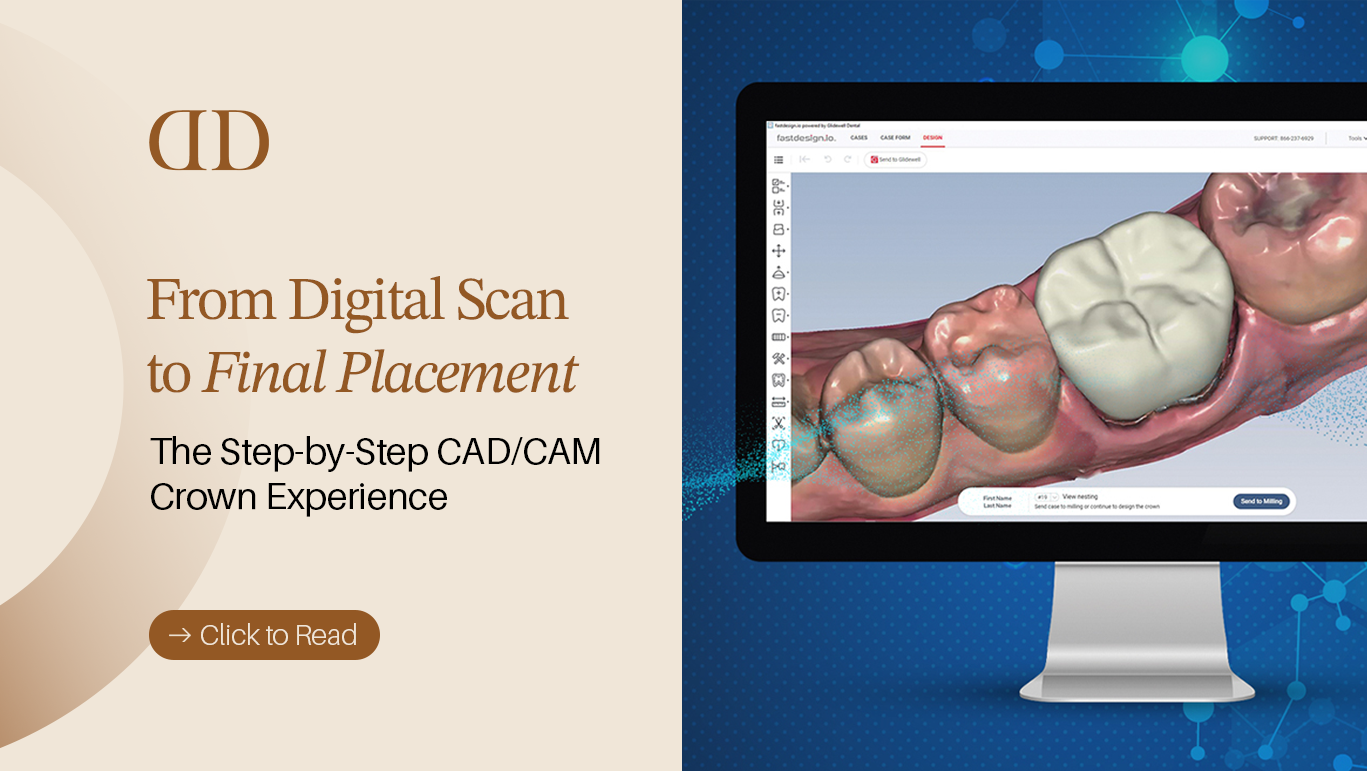

A CAD/CAM crown (Computer-Aided Design and Computer-Aided Manufacturing dental crown) is a high-precision, custom-crafted prosthetic restoration designed and fabricated using digital 3D scans and chairside milling technology. Unlike traditional crowns that require physical putty molds and weeks of waiting, a digital CAD/CAM dental crown allows dentists to scan, design, and bond a permanent porcelain or ceramic restoration in a single visit or over a streamlined 24-to-48-hour timeline.
At Darya Dental Clinic, located in Ataşehir, Istanbul, digital dentistry is not just a modern feature it is the foundation of our clinical workflow. By utilizing intraoral 3D scanners and state-of-the-art milling systems, we eliminate uncomfortable tray impressions, temporary crowns, and lengthy multi-week delays. Whether you are traveling to Turkey for a single tooth restoration or a full digital smile transformation, understanding the CAD/CAM tooth crown experience helps you appreciate how technology yields superior accuracy, aesthetic naturalness, and long-term durability.
What Is A CAD/CAM Crown?
A CAD/CAM crown is a modern dental crown produced through a fully digital workflow. The acronym CAD stands for Computer-Aided Design, while CAM stands for Computer-Aided Manufacturing. In dentistry, this means every stage from measuring your prepared tooth to sculpting its physical shape is handled by specialized software and automated milling machinery.
Traditional dental crown fabrication relies on physical impression materials (such as alginate or silicone trays) that must sit in the mouth for several minutes. These molds are then sent to an external laboratory where technicians pour plaster models and build the crown by hand. While effective, traditional methods introduce multiple opportunities for micro-errors, distortion, and human inaccuracy.
In contrast, CAD/CAM technology dentistry captures thousands of optical data points per second using a hand-held digital scanner. The software builds an exact 3D virtual model of your mouth, allowing our prosthodontists at Darya Dental Clinic to design the ideal custom dental crown with micrometer-level precision. Once finalized, the computer sends the digital file to a chairside or in-house milling unit, which carves the crown out of a solid, high-purity ceramic or zirconia block within minutes.
How CAD/CAM Technology Works
The clinical operation of CAD/CAM dentistry relies on three integrated digital components working in perfect synchronization:
- Digital Acquisition (3D Digital Scan): An intraoral scanner projects light onto the prepped tooth and surrounding gums, capturing microscopic contours without messy impression putty.
- Computer-Aided Design (CAD Software): Specialist software processes the optical scan into a interactive 3D mesh. The clinician or digital technician manipulates the virtual crown, adjusting occlusal contact points, edge thickness, and marginal fit against adjacent teeth.
- Computer-Aided Manufacturing (CAM Milling): The software transmits the 3D design to an automated milling machine. High-speed diamond burs carve the physical crown from a solid ceramic ingot (such as lithium disilicate or monolithic zirconia) with extreme accuracy.
Benefits Of Digital Crown Technology
Choosing a digital crown procedure over traditional approaches offers multiple clinical and patient-centered advantages:
- Elimination of Putty Molds: Patients no longer experience gagging or discomfort associated with traditional physical impression trays.
- Exceptional Marginal Fit: Digital scans eliminate material shrinkage or distortion, ensuring the crown seals perfectly against the tooth root to prevent secondary decay.
- Speed and Efficiency: Same day CAD/CAM crown placement is possible, allowing busy international patients to complete treatment without wearing fragile temporary crowns for weeks.
- Material Density: Monolithic ceramic and zirconia blocks are factory-manufactured under extreme pressure, providing higher structural uniform strength than hand-layered dental porcelain.
- Real-Time Adjustments: Bite alignment and contact areas can be modified on-screen before the physical crown is ever milled, ensuring optimal occlusion.
Who Is A Good Candidate For A CAD/CAM Crown?
Digital crown restorations are suitable for a wide range of restorative and cosmetic dental needs. Because modern high-strength ceramics like E-Max Crowns (lithium disilicate) and Zirconia Crowns can be processed through CAD/CAM milling, this technology caters to both front smile zone aesthetics and heavy-duty back molar restorations.
Common Dental Conditions Treated
A CAD/CAM dental crown is typically recommended when a tooth has lost significant structural integrity but retains a healthy root foundation. Common clinical indications include:
Premium Dental Care in Turkey
Expert treatments with high-end technology. Get your personalized quote today via WhatsApp.
- Severely Decayed Teeth: Large cavities that exceed the structural limits of traditional Dental Fillings.
- Fractured or Chipped Teeth: Traumatic fractures that compromise function or visual appeal.
- Post-Root Canal Protection: Teeth that have undergone Root Canal Treatment become brittle over time and require a full-coverage crown to prevent structural cracking under chewing pressure.
- Worn Enamel: Advanced attrition or erosion caused by acid reflux or severe nighttime teeth grinding (bruxism).
- Replacing Failing Traditional Restorations: Upgrading old, leaky porcelain-fused-to-metal (PFM) crowns that exhibit dark gray metallic lines along the gumline.
When Traditional Crowns May Be Preferred
While CAD/CAM dentistry accommodates over 90% of crown restorations, certain complex clinical scenarios may still warrant traditional laboratory techniques or hybrid approaches:
Clinical Note: If a patient requires an extensive, multi-unit curved Dental Bridge spanning multiple missing teeth, or presents with deep subgingival margins (prep lines extending far beneath the gumline where optical scanners cannot reach cleanly), hand-layered laboratory techniques or specialized surgical crown lengthening may be combined with digital scanning to ensure ideal structural margins.

Want trusted dental advice in your Google AI answers?
Add Darya Dental Turkey as a Preferred Source on Google to make our dental guides easier to find in your search results and AI Overviews.
The CAD/CAM Crown Process Step By Step
Understanding what happens during a digital crown procedure helps demystify the appointment and highlights the speed of digital dentistry. At Darya Dental Clinic in Istanbul, the step-by-step CAD/CAM experience is designed around patient comfort, transparency, and surgical accuracy.
1. Digital Oral Examination
Every treatment begins with a comprehensive oral health evaluation. Our prosthodontists conduct a physical check-up alongside 3D digital X-rays or CBCT scans to confirm the tooth root and surrounding jawbone are completely healthy. If active decay is present, it is meticulously removed under local anesthesia, and the natural tooth core is built up with a supportive dental resin base.
2. Conservative Tooth Preparation
To ensure the new ceramic crown fits seamlessly without feeling bulky, the natural tooth must be shaped. Because CAD/CAM ceramics possess high flexural strength even at minimal thicknesses, our dentists practice ultra-conservative tooth preparation. We preserve as much natural enamel as possible, shaping gentle, smooth shoulder margins that the 3D intraoral scanner can clearly distinguish.
3. 3D Digital Scan (Digital Impression)
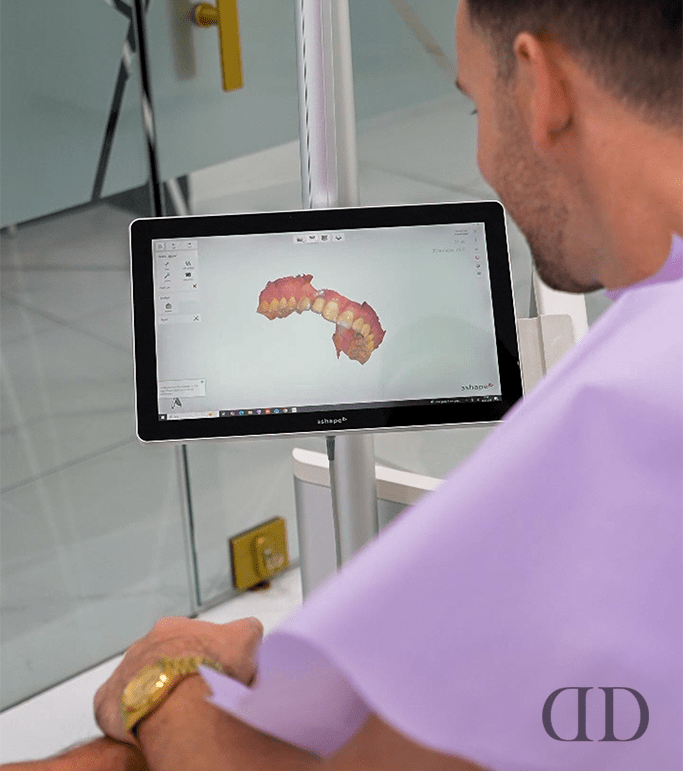
Once the tooth is prepared, the traditional impression tray is replaced by a slim, ergonomic intraoral camera. The dentist guides the scanner over your teeth, projecting a safe light source that captures thousands of images per second. Within 60 to 90 seconds, a continuous 3D digital model of your upper and lower arches appears live on a touchscreen monitor right before your eyes.
4. Computer-Aided Crown Design
Using advanced dental CAD software, our clinician or in-house digital technician designs your custom crown. The software automatically calculates the ideal anatomical shape, biting grooves, and contact points based on your adjacent teeth and opposing bite alignment. We can adjust the tooth length, shape, and surface texture on screen, tailoring the crown to blend harmoniously with your natural smile line.
5. In-House Milling Process
Once the digital design is finalized, the data is sent wirelessly to our high-precision milling machine. A solid, pre-colored ceramic or zirconia block is loaded into the chamber. Dual diamond-coated burs carve the block according to the CAD file, sculpting internal fitting surfaces and external contours with sub-millimeter accuracy. This milling phase typically takes between 12 to 20 minutes.
6. Crown Try-In And Adjustments
After milling, the crown undergoes crystallization and glazing in a high-temperature porcelain furnace to achieve its final strength, natural translucency, and smooth sheen. The dentist places the crown onto your prepped tooth to verify:
- Marginal Fit: Ensuring a flush, gap-free seal along the gumline.
- Occlusion: Checking your bite mechanics with articulation paper to prevent high spots.
- Shade Integration: Confirming the color and light reflection match neighboring natural teeth under natural light.
7. Final Crown Placement
Once you and your dentist approve the fit and appearance, the tooth is isolated and cleaned with a mild conditioning gel. A permanent, light-cured resin adhesive cement is applied inside the crown. The restoration is seated onto the tooth, and a curing light is applied to chemically bond the ceramic shell to your natural enamel. Any micro-excess cement is cleared away, leaving a smooth, high-strength restoration ready for immediate functional use.
Advantages Of Choosing CAD/CAM Crowns
Investing in a CAD/CAM dental crown delivers distinct performance advantages over conventional manual labor laboratory techniques. When structural restorations are designed using optical precision software, both long-term health and short-term patient comfort improve exponentially.
Greater Precision
Traditional physical molds can warp, tear, or shrink slightly during transportation to an off-site laboratory. A digital dental scan eliminates these physical vulnerabilities by translating physical contours into pure, non-deformable 3D numerical coordinates. The computer-driven design calculates marginal fit down to single-digit micron tolerances, creating an airtight seal against the prepped tooth that dramatically reduces the risk of recurrent sub-crown decay.
Comfortable Digital Impressions
For individuals with sensitive gag reflexes or narrow arches, holding thick silicone trays filled with impression putty in the mouth for several minutes can trigger severe discomfort. Intraoral optical wand scanners are compact and non-invasive. Scanning can be paused at any instant without losing data, offering a relaxed and dignified diagnostic experience.
Natural Appearance
Modern CAD/CAM ceramic and monolithic zirconia blocks are engineered with pre-shaded optical gradients that mirror natural dentin and enamel transitions. Rather than looking opaque or chalky, a custom dental crown milled in-house reflects ambient light naturally, allowing it to blend imperceptibly alongside neighboring natural teeth.
Reduced Treatment Time
The most notable patient benefit is speed. Traditional crown pathways require two to three weeks, multiple office visits, and the annoyance of wearing temporary plastic crowns that frequently loosen or leak. A same day CAD/CAM crown condenses this timeline into a single streamlined visit, allowing international patients to save valuable time during their stay in Istanbul.
Long-Term Durability
Because CAD/CAM blocks are manufactured under intense industrial pressure and temperature conditions before milling, they possess a homogenous internal structure free of microscopic air bubbles or internal structural flaws. Research indexed by the National Center for Biotechnology Information (NCBI) confirms that monolithic CAD/CAM ceramic and zirconia restorations demonstrate exceptional fracture resistance and flexural strength, routinely exceeding 400 to 1200 MPa depending on material selection.
CAD/CAM Crown Vs Traditional Crown
To clearly see how modern digital workflows compare to traditional dental techniques, consider this side-by-side feature comparison:
| Feature / Metric | CAD/CAM Crown (Digital) | Traditional Dental Crown |
| Impression Method | 3D Optical Digital Scan | Physical Putty / Alginate Molds |
| Patient Comfort Level | Very High (No gagging) | Moderate to Low |
| Marginal Accuracy | Extremely High (Micron precision) | High (Prone to material distortion) |
| Number of Dental Visits | Typically 1 (or 2 short visits) | Usually 2 or 3 visits |
| Manufacturing Location | In-House Milling Unit | External Dental Laboratory |
| Total Treatment Time | Same-Day to 24-48 Hours | 2 to 3 Weeks |
| Temporary Crown Needed? | No (or minimal duration) | Yes ( worn for several weeks) |
Treatment Time Comparison
Traditional crowns require an initial tooth preparation appointment, an uncomfortable impression, placement of a temporary restoration, a two-to-three-week waiting window while an off-site lab hand-crafts the crown, and a second appointment for cementation. By contrast, a chairside crown created via CAD/CAM technology collapses the entire manufacturing cycle into less than two hours.
Accuracy Comparison
Manual laboratory fabrication relies on plaster models poured from physical impressions. Each transfer stage from tray removal to wax-up casting presents potential dimensional shifting. Digital dentistry removes these physical transfer steps. The 3D scan translates directly into the milling bur path, achieving unmatched adaptation along the gumline.
Patient Comfort
Beyond eliminating messy impression materials, digital crown workflows prevent the frustration of lost or broken temporary crowns. Patients no longer need to worry about sensitive prepped teeth exposing themselves while waiting weeks for a laboratory delivery.
Longevity
Both restoration types can last many years, but the superior structural density of factory-sintered CAD/CAM ceramic ingots minimizes the risk of micro-chipping or surface wear over time, offering exceptional long-term ROI for the patient.
Recovery And Aftercare Following CAD/CAM Crown Placement
Because CAD/CAM crown procedures are conservative and precise, recovery is remarkably swift. Following simple post-operative guidelines ensures your new restoration remains stable, comfortable, and functional for decades.
What To Expect During The First Days
- Mild Sensitivity: Once the local anesthetic fades, you may feel minor temperature sensitivity in the surrounding gum tissue or prepared tooth. This is a natural response to tooth shaping and adhesive light-curing, typically resolving within 24 to 72 hours.
- Bite Adaptation: Your jaw muscles may take a day to adjust to the new tooth surface. If your bite feels slightly “high” or uneven when chewing, your prosthodontist at Darya Dental Clinic can perform a simple micro-adjustment in a few seconds.
Eating Recommendations
During the first 24 hours while the resin cement reaches its absolute maximum chemical cure strength:
- Avoid biting into extremely hard objects like hard candies, ice cubes, or unpeeled nuts.
- Avoid overly sticky foods (such as hard caramels or chewing gum) directly on the newly placed crown.
- Chew primarily on the opposite side of your mouth for the first evening.
Oral Hygiene Tips
A CAD/CAM tooth crown cannot decay, but the underlying natural tooth root and surrounding gum tissue remain vulnerable to plaque and periodontal disease. Maintain these simple daily habits:
- Brushing: Brush twice daily using a soft-bristled toothbrush and a non-abrasive fluoride toothpaste.
- Flossing: Floss daily around the crown margins. Glide the floss gently through the contact area rather than snapping it aggressively down onto the gumline.
- Avoid Abrasives: Do not use harsh charcoal pastes or abrasive whitening powders, which can micro-scratch the protective ceramic polish over several years.
Follow-Up Appointments
For international patients traveling to Istanbul, our dental team conducts a final clinical check-up before your flight home to verify bite alignment and gum response. For local patients from districts like Ümraniye or Ataşehir, routine biannual dental cleanings and evaluations are recommended to monitor the health of your restoration long-term.
How Much Does A CAD/CAM Crown Cost In Turkey?
Navigating the financial aspects of modern restorative dentistry reveals why so many international patients choose Turkey for their care. The cost of CAD/CAM crown in Turkey is significantly more accessible than in the UK, Western Europe, or the United States, without compromising medical quality or technology standards.
What Affects The Cost?
Several clinical factors influence the definitive fee for a digital crown restoration:
- Material Choice: High-translucency glass-ceramics like E-Max Crowns and high-density Zirconia Crowns carry different raw material and milling costs.
- Number of Restorations: Restoring a single chipped tooth differs in scope from a multi-unit Smile Makeover or full-arch restoration.
- Preparatory Treatments: If a tooth requires preliminary care such as a Root Canal Treatment or localized Gum Contouring these supportive treatments are addressed during the initial plan.
- Digital Technology: Clinics utilizing in-house 3D milling units eliminate third-party laboratory markup fees, passing those operational savings directly to patients.
Why Many International Patients Choose Istanbul
Patients traveling to Istanbul for a CAD/CAM crown in Turkey experience savings of up to 60% to 70% compared to Western fee schedules. This price difference is not caused by lower quality standards. Instead, it stems from favorable currency exchange rates, lower local operating overheads, and competitive medical tourism infrastructure supported by the Turkish Ministry of Health. At Darya Dental Clinic, patients receive genuine, internationally certified ceramic materials milled on European-standard CAD/CAM machines at transparent, flat-rate package pricing.
Why Choose Darya Dental Turkey For CAD/CAM Crowns?
Selecting where to undergo a digital restoration is as vital as choosing the technology itself. At Darya Dental Clinic, located in Ataşehir, Istanbul, our digital dentistry framework eliminates guess-work and unnecessary physical delays, bringing clinical perfection to every step of your care.
Advanced Digital Dentistry Infrastructure
We invest continuously in premium 3D optical intraoral scanners, high-resolution CBCT tomography, and chairside CAD/CAM milling units. By executing an end-to-end digital workflow, we maintain total control over marginal adaptation, emergency turnaround times, and structural safety.
Experienced Prosthetic Team
Our restorative treatments are designed and evaluated by specialized prosthodontists with extensive experience in digital smile architecture. We do not rely on automated default settings; every digital crown design is individually customized to reflect the patient’s unique facial proportions, natural bite kinematics, and aesthetic goals.
Premium Internationally Certified Materials
We exclusively utilize original, medical-grade ceramic and monolithic zirconia blocks imported from industry-leading European and American manufacturers. Every restoration placed at Darya Dental Clinic comes with an official material passport detailing its origin, serial batch, and structural warranty.
Personalized Treatment Planning & Transparent Pricing
Every smile is different. We provide clear, itemized digital treatment plans with no surprise fees or hidden lab markups. Whether you need a single posterior molar restoration or a full-arch digital makeover, our quotes remain definitive.
Convenient Location in Ataşehir, Istanbul
Situated in the modern hub of Ataşehir, Darya Dental Clinic offers seamless accessibility for both local patients from neighboring districts like Ümraniye and international visitors arriving via Istanbul Airport (IST) or Sabiha Gökçen Airport (SAW). Our international patient care division coordinates private transfers, bilingual consultation support, and flexible appointment scheduling to make your dental trip stress-free.
Frequently Asked Questions About CAD/CAM Crowns
1. What is a CAD/CAM crown?
A CAD/CAM crown is a custom dental crown designed on a computer screen using 3D digital oral scans and carved out of a solid ceramic or zirconia block using automated chairside milling machinery.
2. How long does CAD/CAM crown treatment take?
The active fabrication phase takes between 15 to 30 minutes in the clinic milling unit. Including digital scanning, shade matching, and final adhesive bonding, the complete procedure can often be finalized on the same day or within 24 to 48 hours for multi-unit cases.
3. Is a CAD/CAM crown better than a traditional crown?
Yes, in terms of accuracy, patient comfort, and speed. CAD/CAM crowns eliminate messy impression putty, reduce the risk of mold distortion, and deliver micrometer-precise marginal fits that protect natural tooth root structures better than manual plaster models.
4. Are digital dental scans accurate?
Extremely accurate. Intraoral 3D scanners project non-radiation light waves to record thousands of surface points per second, achieving accuracy within single-digit micron tolerances.
5. Does getting a CAD/CAM crown hurt?
No. Tooth preparation and scanning are conducted under localized anesthesia, ensuring a completely pain-free experience. Some patients may notice mild, temporary temperature sensitivity for a few days post-bonding.
6. Can I eat normally after the procedure?
Yes. Once the final resin adhesive is light-cured, the chemical bond reaches full structural stability instantly. However, we advise avoiding hard candies or excessively sticky foods during the first 24 hours while local gum tissue settles.
7. How long do CAD/CAM crowns last?
With consistent oral hygiene, daily flossing, and regular professional dental cleanings, a monolithic CAD/CAM ceramic or zirconia crown routinely lasts 15 to 20 years or longer.
8. How much does a CAD/CAM crown cost in Turkey?
While precise costs depend on the material selected (e.g., E-Max vs. Zirconia) and total units needed, receiving a digital crown at Darya Dental Clinic in Istanbul typically saves international patients 60% to 70% compared to UK, European, or US dental fees.
9. Can international patients complete treatment in one visit?
Yes. Thanks to our in-house digital scanning and milling workflow, international travelers can easily complete their CAD/CAM crown treatment within a single short visit to Istanbul.
10. Are CAD/CAM crowns made on the same day?
Yes. Same-day chairside milling allows us to prepare, scan, manufacture, and permanently cement your custom ceramic restoration in a single clinical appointment.
11. What materials are used for CAD/CAM crowns?
High-strength lithium disilicate glass-ceramics (such as E-Max) and monolithic zirconia blocks are the primary materials used due to their superior flexural strength, biocompatibility, and natural optical translucency.
12. Is a CAD/CAM crown suitable for front teeth?
Absolutely. Modern multi-layered CAD/CAM ceramic ingots offer exceptional translucency and pre-shaded color gradients that mirror natural enamel light reflection, making them ideal for the anterior visible smile zone.
Reconstruct Your Smile with Digital Precision
Advanced digital dentistry has transformed restorative treatments from a lengthy, uncomfortable process into an efficient, highly accurate, and rewarding experience. By combining intraoral 3D scanning with state-of-the-art CAD/CAM milling, Darya Dental Clinic delivers permanent crowns that look completely natural, fit perfectly, and stand the test of time.
If you are dealing with a fractured, decayed, or worn tooth, do not let traditional, multi-week treatments hold you back. Experience the comfort and speed of modern digital smile architecture in the heart of Istanbul.
Contact Darya Dental Clinic today to request your free remote 3D consultation and discover how easily a custom CAD/CAM crown can restore your smile.
