Clinical Sterilization and CAD/CAM Safety at Darya Dental
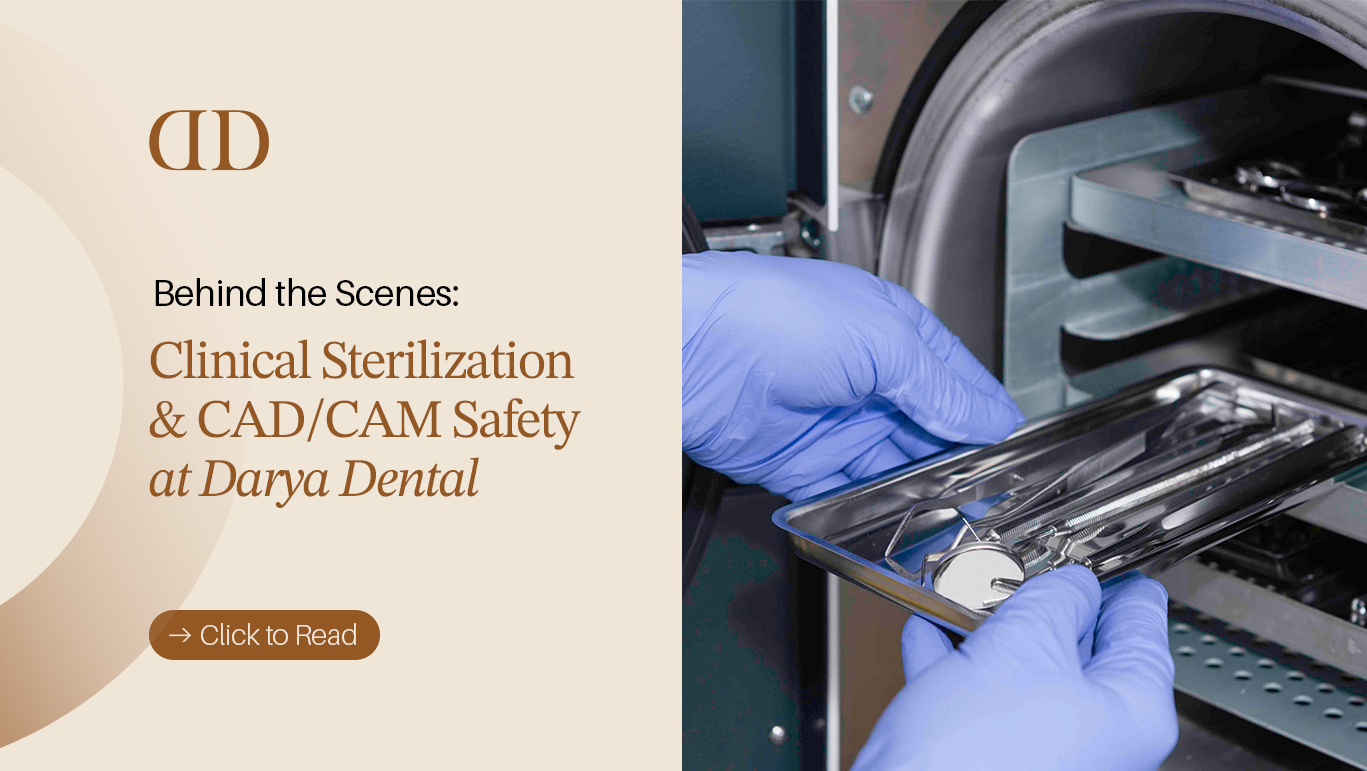

When choosing a dental provider, patient safety and clinical excellence are the absolute cornerstones of a successful experience. At Darya Dental Turkey, located in the vibrant district of Ataşehir, Istanbul, we believe that world-class dental care is built on two primary foundations: uncompromising clinical sterilization standards and advanced CAD/CAM technology. By merging rigorous hygiene protocols with state-of-the-art digital dentistry, we ensure that every visitor receives exceptionally precise, comfortable, and safe dental treatments. Whether you are visiting us locally or traveling internationally for a smile makeover, our clinic leverages modern workflows to redefine what patient-first dental care looks like in Turkey.
What Is Clinical Sterilization in Dentistry?
Sterilization in a medical and dental context represents the highest possible standard of contamination control. In daily practice, maintaining absolute hygiene is not merely about having a clean-looking environment; it is about establishing systematic, scientifically verified protocols that completely eliminate microbial threats. For patients seeking, understanding these underlying measures provides the ultimate peace of mind.
What Is the Clinical Definition of Sterility?
Clinical definition of sterility: Sterility refers to the complete absence of all viable microorganisms, including highly resistant bacterial spores, viruses, fungi, and vegetative bacteria. Unlike simple sanitization or disinfection, which merely reduce the number of pathogens to a safe level, a sterile state means there is a zero probability of active microbial life surviving on a treated surface or instrument.
In modern digital dental clinic Istanbul standards, achieving this level of sterility is non-negotiable. Every instrument that enters a patient’s mouth must meet this rigorous clinical baseline to guarantee safety.
Why Is Sterilization Important in Dental Clinics?
Implementing strict sterilization in dental clinic environments is vital for several clinical reasons:
- Preventing Cross-Infection: Active dental environments involve exposure to saliva and blood. Rigorous cross infection control keeps both patients and clinical staff safe from pathogens.
- Ensuring Dental Clinic Safety: High-quality clinical standards prevent complications or secondary infections following invasive procedures, such as the placement of dental implants.
- Maintaining Dental Equipment Sterilization: Sophisticated dental handpieces, scaling tips, and surgical tools must be treated with care to preserve their functionality while ensuring they are completely free of biological debris.
Dental Clinic Sterilization Techniques at Darya Dental
To consistently deliver safe dental treatment Istanbul, Darya Dental employs a multi-tiered instrument processing workflow. If you have ever wondered “what are your dental clinic sterilization techniques?” or “how are dental instruments cleaned and sterilized?”, the process can be broken down into five critical steps.
Cleaning and Preparing Dental Instruments
Before sterilization can occur, all reusable instruments must undergo thorough pre-cleaning. This step removes organic debris, proteins, and biological residues that could otherwise shield microorganisms during the thermal sterilization cycle.
- Decontamination: Instruments are soaked in a specialized enzymatic solution immediately after use.
- Ultrasonic Cleaning: We utilize automated ultrasonic baths to dislodge microscopic particles from hinges, crevices, and textured handles.
- Rinsing and Inspection: Each instrument is rinsed with purified water and meticulously inspected under high lighting for absolute cleanliness.
Disinfection and Infection Control Procedures
Clinical surfaces such as dental chairs, treatment lights, delivery units, and structural countertops cannot be placed into an autoclave. For these areas, we utilize medical-grade, high-level chemical disinfectants. After every single patient session, the treatment room undergoes a complete wipe-down protocol, targeting all touchpoints to eliminate the risk of cross-contamination.
Autoclave Sterilization of Dental Instruments
The gold standard of dental instrument sterilization is saturated steam under pressure. At Darya Dental, we utilize advanced Class B autoclave sterilization units.
Premium Dental Care in Turkey
Expert treatments with high-end technology. Get your personalized quote today via WhatsApp.
These autoclaves utilize a vacuum pump to extract air from the chamber, allowing high-pressure steam to penetrate deeply into wrapped instrument packs and hollow dental handpieces. By exposing the tools to precise temperatures (typically $134^\circ\text{C}$) for designated holding times, we ensure that even the most resilient bacterial spores are completely destroyed. Each autoclave cycle is digitally monitored, logged, and verified using chemical and biological indicators.
Sterile Storage and Instrument Preparation
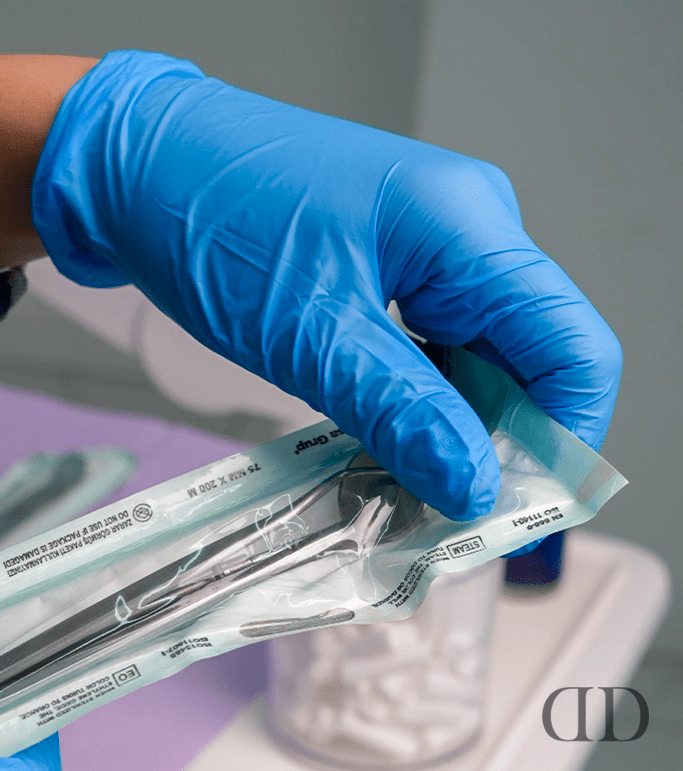
Once the autoclave cycle is complete, instruments remain sealed within their sterile, medical-grade pouches. These pouches feature color-changing indicator strips that verify successful sterilization.

Want trusted dental advice in your Google AI answers?
Add Darya Dental Turkey as a Preferred Source on Google to make our dental guides easier to find in your search results and AI Overviews.
We store these sealed packs in dust-free, temperature-controlled cabinets. They are only opened directly in front of the patient immediately before the treatment begins, ensuring a continuous chain of sterility from the autoclave to the chairside.
Single-Use Materials and Cross-Infection Control
Wherever clinically possible, we prioritize single-use, disposable materials. Items such as suction tips, protective barrier films, syringe needles, and patient drapes are disposed of safely immediately after use. This hybrid approach combining meticulous autoclave sterilization of surgical steel with premium disposable barriers forms a highly effective shield against cross-infection.
Cleaning, Disinfection, and Sterilization: What Is the Difference?
In discussions about dental clinic hygiene, terms like cleaning, disinfection, and sterilization are sometimes used interchangeably. However, in professional dental safety protocols, they represent distinctly different tiers of microbial control.
Cleaning vs Disinfection vs Sterilization
| Process | Main Purpose | Dental Clinic Application | Target Microorganisms |
| Cleaning | Removing visible debris, dust, and organic matter. | Preparing instruments and wiping down non-clinical surfaces. | Does not kill pathogens; physically removes them. |
| Disinfection | Reducing active pathogenic microorganisms to a safe level. | Disinfecting clinical surfaces, patient chairs, and large equipment. | Kills most vegetative bacteria and viruses, but not bacterial spores. |
| Sterilization | Complete destruction of all microbial life forms. | Processing reusable dental instruments and surgical tools. | Eliminates all microorganisms, including highly resistant spores. |
Cleaning
This is always the foundational step. Without physical cleaning to remove biological barriers, subsequent disinfection or sterilization cycles cannot achieve maximum efficacy.
Disinfection
We apply intermediate-to-high-level chemical disinfectants across our modern clinical environment to keep non-critical surfaces safe between patient appointments.
Sterilization
Reserved for critical and semi-critical instruments that contact broken skin, bone, or mucous membranes. This is the absolute peak of clinical hygiene.
How Does Darya Dental Maintain a Safe Clinical Environment?
At Darya Dental Turkey, we believe that maintaining a safe clinical environment requires a proactive, systematic culture. Rather than performing hygiene protocols as an afterthought, safety is integrated directly into our daily operational design.
Our clinical teams undergo continuous training in international infection control in dentistry guidelines. We actively monitor air quality, maintain strict water-line disinfection protocols to prevent biofilm buildup within dental units, and conduct regular internal audits. By implementing these rigorous clinical sterilization standards, we create a secure space where patients can focus entirely on achieving their dream smiles.
What Is CAD/CAM Technology in Dentistry?
The integration of CAD/CAM (Computer-Aided Design and Computer-Aided Manufacturing) has completely transformed the landscapes of restorative and cosmetic dentistry treatments. But what is CAD CAM in a clinical context, and how does it elevate the patient experience?
What Does CAD Mean in Dentistry?
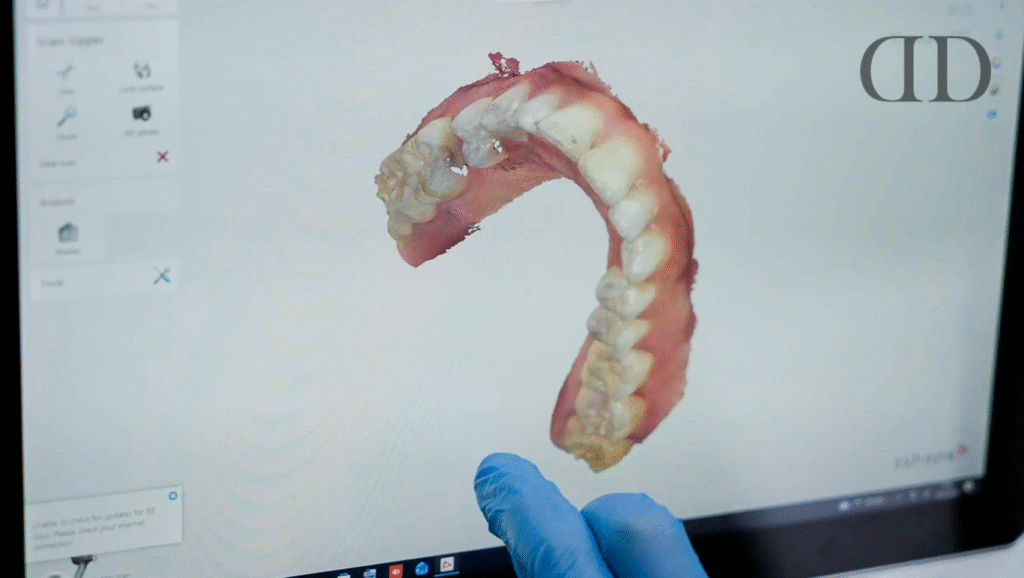
CAD stands for Computer-Aided Design. Instead of using traditional, uncomfortable putty trays to take dental impressions, we utilize high-definition intraoral scanners to capture a highly accurate 3D digital model of your teeth. Our dentists and dental technicians then use advanced software to design custom dental restorations with micrometer-level precision.
What Does CAM Mean in Dentistry?
CAM stands for Computer-Aided Manufacturing. Once the digital design of your restoration is finalized, the data is sent directly to an in-office milling machine or high-precision 3D printer. These computerized systems carve the restoration out of high-strength ceramic, zirconia, or composite blocks with flawless accuracy.
How Do CAD and CAM Work Together?
The CAD CAM dental technology workflow connects the clinical chairside directly to the manufacturing process. The entire transition from digital scan to physical restoration is completely digital, reducing manual errors, optimizing material strength, and dramatically accelerating treatment times.
How Is CAD/CAM Used at Darya Dental?
At Darya Dental, we have fully embraced the digital dental workflow to offer our patients streamlined, premium care.
Digital Scanning and Treatment Planning
Using comfortable, high-speed intraoral scanning, we capture the exact contours of your teeth within minutes. This eliminates the gag reflex commonly associated with traditional impression materials, making the diagnostic stage highly comfortable.
Computer-Aided Dental Design
Our design software allows us to customize every aspect of your new teeth including shape, alignment, surface texture, and bite anatomy to match your unique facial structure. This ensures a highly natural aesthetic and optimal chewing comfort.
Computer-Aided Manufacturing
Our precise CAD CAM system mills durable, highly biocompatible restorations directly from premium blocks. This technology enables us to deliver outstanding consistency and structural integrity.
Quality Control Before Final Placement
Before any restoration is bonded, our clinical team performs a rigorous quality control check. We verify marginal fit, contact points, and color harmony to ensure that your restoration looks beautiful and is engineered to last.
Which Dental Treatments Can Use CAD/CAM Technology?
CAD/CAM technology has vastly expanded the capabilities of modern restorative dentistry. At our digital dental clinic Ataşehir, we utilize digital workflows to design and fabricate several highly sought-after restorations:
Dental Crowns
By implementing advanced software, we design custom dental crowns that fit perfectly over damaged teeth. We offer highly aesthetic options, including biocompatible zirconium crowns and translucent, providing both strength and natural beauty.
Dental Veneers
For patients looking to transform their smiles, we use CAD/CAM to create ultra-thin porcelain veneers and laminate veneers. These restorations fit seamlessly over the front surfaces of the teeth, correcting discoloration, minor misalignment, or gaps with minimal tooth preparation.
Dental Bridges
Replacing missing teeth is made simpler and more accurate with CAD/CAM-engineered dental bridges. The technology ensures that the bridge spans the gap perfectly, distributing bite forces evenly across the supporting teeth or implants.
Smile Makeover Treatments
A comprehensive smile makeover combines multiple restorative and cosmetic treatments. Utilizing digital dental technology, we can visually plan your entire smile transformation before the treatment even begins, ensuring predictable, gorgeous results.
What Are the Benefits of CAD/CAM Dentistry for Patients?
Choosing a clinic equipped with CAD CAM dentistry offers distinct advantages over traditional manual methods.
Traditional vs CAD/CAM Dental Workflow
| Treatment Stage | Traditional Workflow | CAD/CAM Workflow |
| Impression | Conventional, messy silicone/alginate putty trays. | Fast, comfortable 3D intraoral scanning. |
| Design | Manual wax-ups on stone plaster models. | Precision 3D software modeling. |
| Production | Multi-day laboratory casting and baking. | Rapid, computer-controlled milling in hours. |
| Turnaround Time | Typically requires multiple visits and temporary crowns. | Often enables significantly faster restoration delivery. |
| Precision & Fit | Subject to minor manual errors and material shrinkage. | Micrometer-level digital accuracy for a perfect fit. |
Digital Precision: Eliminating the physical expansion and contraction of plaster models ensures an incredibly snug, comfortable fit for your restorations.- Efficient Treatment Workflow: Fewer appointments are needed, and clinical time is optimized, allowing you to maximize your time exploring Istanbul.
- Personalized Dental Restorations: Each crown or veneer is custom-sculpted to harmonize perfectly with your natural teeth and facial aesthetics.
- Aesthetic and Functional Planning: Digital tools allow us to test your occlusion (bite) virtually, preventing joint discomfort and long-term wear.
- Improved Patient Experience: No messy putties, less time spent in the dental chair, and highly predictable results make for a stress-free journey.
How Do Sterilization and Digital Dentistry Work Together?
Sterilization and digital technology are not isolated pillars; rather, they interact dynamically to elevate clinical safety.
[Traditional Putty Impression] ➔ High Risk of Material Cross-Contamination
[Digital Intraoral Scan] ➔ Zero Physical Material, Easily Sanitized Wand, Enhanced Safety
Traditional physical impressions travel back and forth between the clinical room and the dental laboratory, creating multiple touchpoints for potential cross-contamination. In contrast, a digital impression consists of secure, electronic data sent via the cloud. The intraoral scanning wand itself features disposable or fully autoclavable tips, dramatically reducing biological contact points. By minimizing physical handling and material transport, digital workflows significantly strengthen our overall infection control barriers.
Advanced Clinical Workflows: Elevating Safety & Design
At Darya Dental Turkey, our commitment to your dental health goes far beyond standard dental practices. By looking closer at how digital technology and infection control merge, we can see how modern dentistry is designed to protect you while delivering a seamless cosmetic and restorative experience.
Step-by-Step: The Lifecycle of a Dental Instrument at Darya Dental
To understand how we achieve absolute clinical safety, it helps to follow the precise journey of a reusable dental instrument (such as a mirror, explorer, or surgical handpiece) through our dedicated sterilization center. We strictly separate our sterilization workflow into clean and dirty zones to completely prevent any chance of cross-contamination.
1. The Receiving & Decontamination Stage (Dirty Zone)
Immediately after your treatment is completed, used instruments are collected in sealed, puncture-proof containers and transported directly to our decontamination area.
- Enzymatic Soaking: Instruments are submerged in a medical-grade enzymatic solution. This breaks down proteins, saliva, and blood at a molecular level.
- Manual Debridement: If necessary, trained clinical assistants perform targeted cleaning under protective barriers to ensure no micro-particles remain on the surfaces.
2. Ultrasonic Cleaning & Micro-Debris Removal
Even after soaking, microscopic particles can cling to hinges and knurled instrument handles.
- We place the instruments into automated ultrasonic cleaning baths.
- These devices use high-frequency sound waves to create millions of microscopic bubbles that collapse violently (a process called cavitation). This safely blasts away debris from hard-to-reach joint areas where manual brushes cannot penetrate.
3. Drying, Inspection, and Pouching
Moisture is the enemy of sterile storage, as dampness can allow bacteria to penetrate packaging over time.
- Thorough Drying: Every instrument is dried completely using medical-grade compressed air or lint-free towels.
- Visual Inspection: Instruments are checked under magnification for structural integrity and absolute cleanliness.
- Medical-Grade Sealing: Clean instruments are placed inside sterilization pouches made of thick paper and plastic film. The pouches are hermetically sealed using a professional thermal sealing machine.
4. Saturated Steam Autoclaving (The Sterilization Phase)
The sealed pouches are loaded into our advanced Class B autoclaves. Unlike older Class N or S autoclaves, Class B units are designed with a fractionated pre-vacuum cycle.
- The machine extracts all air from the chamber and the hollow cavities of the instruments.
- Saturated steam is injected under high pressure, raising the internal temperature to $134^\circ\text{C}$ ($273^\circ\text{F}$).
- This heat and pressure are maintained for a strict, electronically controlled period to ensure that every single pathogen, spore, and virus is destroyed.
5. Secure Storage (Clean Zone)
Once the autoclave cycle finishes and the dry cycle completes, the pouches are removed.
- We inspect the chemical indicator strip on the outside of each pouch; it must change color completely to prove the correct temperature and pressure parameters were reached.
- The sterile pouches are then dated, logged, and organized in specialized UV-C storage cabinets, ready to be opened only at the start of your next appointment.
Inside Our CAD/CAM Studio: From Digital Impression to Custom Restoration
While our clinical sterilization protocols protect your health, our CAD/CAM technology guarantees the long-term structural success and aesthetics of your smile. Let’s look at the actual clinical and laboratory steps involved in crafting a custom zirconia or ceramic restoration at Darya Dental.
Phase 1: High-Definition Intraoral Scanning
The process of getting a crown or veneer used to involve sitting with a mouth full of cold, foul-tasting impression putty for up to five minutes.
- We use a slender, ergonomic intraoral scanner equipped with a high-speed camera.
- The scanner captures thousands of continuous 3D structural images of your teeth per second.
- A perfect, color-accurate 3D digital model of your dental arch appears instantly on our chairside monitor.
Phase 2: Computer-Aided Design (CAD)
Using the captured digital model, our dentists or in-house dental designers utilize highly specialized dental software to design your restoration.
- Anatomic Alignment: We match the shape of the new restoration to align seamlessly with your existing teeth, taking into account your specific bite and facial midline.
- Margin Configuration: The software allows us to design the margins (where the crown meets the gumline) with a precision of just a few micrometers. This prevents food trapping and future decay.
- Bite Analysis: The software simulates how your upper and lower teeth will chew together, ensuring perfect functional comfort and preventing jaw joint (TMJ) strain.
Phase 3: Computer-Aided Manufacturing (CAM)
Once the digital blueprint is finalized, the data file is sent to our state-of-the-art milling machine.
- Material Selection: A solid block of premium, pre-shaded zirconia, E-Max, or composite resin is loaded into the milling chamber.
- Precision Carving: Robotic diamond-coated burs mill the block, carving out the exact shape defined by the CAD software. This process operates under a constant stream of sterile water or dry-milling air to ensure the material maintains its structural integrity.
- Sintering & Glazing: If zirconia is used, the restoration is placed into a high-temperature sintering furnace to reach its final, incredibly durable strength. It is then hand-painted, glazed, and polished to match the natural translucency of your teeth.
Why Patients Love Digital Dentistry: Real-World Advantages
If you are considering traveling to our digital dental clinic Istanbul for a procedure like a smile makeover or zirconium crowns, the clinical benefits of CAD/CAM directly translate into a vastly superior patient experience.
- Fewer Appointments & No Temporary Crowns: Traditional crowns require you to wear a fragile, uncomfortable temporary crown for up to two weeks while a manual lab fabricates the final piece. With CAD/CAM, we can often complete restorations in record time, sometimes even offering same day dental restorations depending on the complexity of your case.
- Perfect Fit on the First Try: Because digital scans do not distort like physical impressions, CAD/CAM restorations slide into place with incredible ease. This means less time sitting in the dental chair while the dentist manually grinds down high spots.
- Biocompatibility and Durability: The ceramic blocks used in computerized milling are manufactured under highly controlled industrial conditions. This makes them significantly denser and stronger than porcelain mixed by hand in a traditional lab, reducing the risk of chipping or cracking over the years.
- Highly Aesthetic Customization: We can mimic the natural gradations of color, opacity, and light reflection of your natural enamel, ensuring your crown or veneer blends in beautifully.
How Darya Dental Accommodates Visitors from Ümraniye and Beyond
While our clinical headquarters are located in the modern and highly accessible district of Ataşehir, we take great pride in serving patients from all over the city, as well as those coming from nearby neighboring regions.
If you are searching for a high-tech dental clinic near Ümraniye, Darya Dental Turkey is just a short drive or public transit trip away. We have designed our appointment scheduling to accommodate patients traveling from nearby districts.
By utilizing CAD/CAM dentistry Ataşehir workflows, we minimize the total number of visits you need to make to our clinic. What might take four or five appointments at a traditional clinic can often be completed in just one or two highly efficient visits at our office, saving you valuable time, transit hassle, and energy.
International Standards in the Heart of Istanbul
Your health, safety, and confidence are the driving forces behind everything we do. By maintaining the absolute highest benchmarks in clinical sterilization and surrounding our patients with the world’s most advanced digital dental technology, Darya Dental Turkey bridges the gap between science, safety, and artistry.
Whether you are visiting us from Ümraniye for a routine treatment or flying into Istanbul for a life-changing smile makeover you can step into our clinic knowing that behind the scenes, every single detail is engineered to protect your health and perfect your smile. Contact us today to schedule your digital consultation!
Frequently Asked Questions
What is the clinical definition of sterility?
The clinical definition of sterility refers to the complete absence of all viable microorganisms, including highly resistant bacterial spores, fungi, viruses, and vegetative bacteria. In dental medicine, a sterile state means there is a zero probability of active microbial life surviving on a treated surface or instrument, ensuring maximum patient safety during procedures like placing.
What sterilization techniques are used in dental clinics?
Modern dental clinics employ a combination of techniques, including enzymatic pre-cleaning, ultrasonic debris removal, chemical surface disinfection, and saturated steam sterilization using Class B autoclaves. This multi-tiered approach ensures that both reusable surgical instruments and clinical touchpoints are completely safe and free of pathogens.
How are dental instruments sterilized?
Dental instruments are sterilized through a strict multi-step process:
- They are soaked in enzymatic solutions to break down organic proteins.
- They undergo ultrasonic cleaning to dislodge microscopic debris.
- They are rinsed, dried, and visually inspected.
- They are hermetically sealed in medical-grade sterilization pouches.
- They are placed in a Class B autoclave, where high-pressure steam at $134^\circ\text{C}$ destroys all microbial life.
How does Darya Dental prevent cross-infection?
At Darya Dental Turkey, we prevent cross-infection by strictly separating our sterilization workflow into distinct “dirty” and “clean” zones. We utilize Class B autoclaves with digital cycle logging, perform high-level chemical disinfection on all clinical surfaces after every patient, prioritize single-use disposable materials, and utilize digital workflows that reduce physical contact with materials.
What is CAD/CAM in dentistry?
CAD/CAM (Computer-Aided Design and Computer-Aided Manufacturing) is a state-of-the-art dental technology used to design and fabricate highly precise dental restorations. This includes dental crowns, porcelain veneers, inlays, onlays, and bridges. It replaces traditional, manual plaster-and-wax laboratory methods with a fully digital, streamlined workflow.
What is the difference between CAD and CAM?
- CAD (Computer-Aided Design) refers to the digital phase where a 3D model of your teeth captured via an intraoral scanner is imported into specialized software to design your restoration with micrometer-level precision.
- CAM (Computer-Aided Manufacturing) is the physical production phase where the digital design is sent to an automated milling machine or 3D printer, which carves or prints the restoration out of premium ceramic, composite, or zirconia blocks.
How does CAD/CAM technology work?
The workflow begins with a fast, comfortable 3D scan of your mouth using an intraoral wand. The resulting digital model is used to design your customized restoration on a computer. Once finalized, the design file is sent to an in-office milling machine that carves the restoration out of a high-strength block. The restoration is then sintered, glazed, polished, and clinically bonded to your tooth.
Which dental treatments can use CAD/CAM technology?
CAD/CAM technology is highly versatile and commonly utilized for:
- Zirconium crowns and E-Max crowns
- Porcelain veneers and laminate veneers
- Custom-engineered
- Comprehensive, digitally-planned treatments
Is CAD/CAM dentistry safe?
Yes, CAD/CAM dentistry is incredibly safe and hygienic. By capturing digital impressions with an intraoral scanner, we eliminate the need for physical putty impression trays, which can harbor bacteria and require physical transport between the clinic and an external lab. The digital files are transferred securely via the cloud, significantly reducing cross-contamination risks.
What are the benefits of CAD/CAM dentistry?
Patients benefit from exceptional fit and precision, highly aesthetic and natural-looking restorations, and significantly faster treatment times. Because the digital workflow is highly efficient, it often eliminates the need for uncomfortable temporary crowns and reduces the overall number of clinical visits required.
Does CAD/CAM technology affect dental treatment costs?
While CAD/CAM systems require a substantial initial clinical investment, the technology optimizes treatment times, reduces physical material waste, and eliminates external laboratory shipping costs. These efficiencies allow Darya Dental to offer premium, long-lasting digital restorations at highly competitive prices.
How does digital dentistry improve the patient experience?
Digital dentistry replaces unpleasant, gag-inducing physical impression pastes with quick, comfortable optical scans. It allows you to preview your treatment outcome digitally before it begins, reduces your time spent sitting in the dental chair, and delivers restorations that fit flawlessly on the first try.
Is dental treatment in Istanbul safe for international patients?
Yes, receiving dental treatment in Istanbul is highly safe, provided you choose a clinic that adheres to international medical standards. At Darya Dental, we fully comply with Turkish Ministry of Health regulations and global infection control guidelines, ensuring our sterilization and digital technology meet or exceed international standards.
Where is Darya Dental Turkey located?
Darya Dental Turkey is located in the modern, upscale district of Ataşehir, Istanbul. Our clinic features advanced dental technology, a dedicated sterilization center, and a highly experienced clinical team ready to assist with both local and international patient journeys.
Is Darya Dental accessible from Ümraniye?
Yes, Darya Dental is highly accessible for patients traveling from Ümraniye and surrounding areas. Our location in Ataşehir is easily reached via major highways and public transit. Thanks to our streamlined CAD/CAM workflows, we can complete many treatments in fewer visits, saving our Ümraniye patients valuable time and travel effort.
