Visa Requirements for Dental Patients Traveling to Turkey

When it comes to traveling to Turkey, especially for dental treatments, most patients are surprised by how structured yet flexible the entry process can be. Turkey has become a global hub for dental tourism, not only because of its advanced clinics like Darya Dental Clinic but also due to its relatively accessible visa system and patient-friendly travel policies.
But here’s the real question most people ask: What do visa rules actually look like when your purpose is dental treatment? The answer is layered, and it depends on nationality, treatment duration, and even how you plan your journey.
Patients who are still deciding which procedure fits their needs can explore all dental treatments before aligning treatment duration with their visa and travel plans.
Understanding Entry Rules for Traveling to Turkey as a Dental Patient
Before diving into visa types, it’s important to understand how Turkey categorizes incoming travelers. Whether you are coming for tourism or medical treatment, the country often treats dental visitors under the “tourism + health services” umbrella.
In many cases, patients planning traveling to Turkey for dental procedures do not require a separate “medical visa.” Instead, they enter under a standard tourist visa or visa-free regime depending on their nationality.
For official and updated entry rules, travelers usually refer to governmental sources such as:
Republic of Turkey Ministry of Foreign Affairs – Visa Information
UK Government Travel Advice – Turkey Entry Requirements
These sources confirm that visa eligibility is largely nationality-based rather than treatment-based, which simplifies the process for dental travelers.
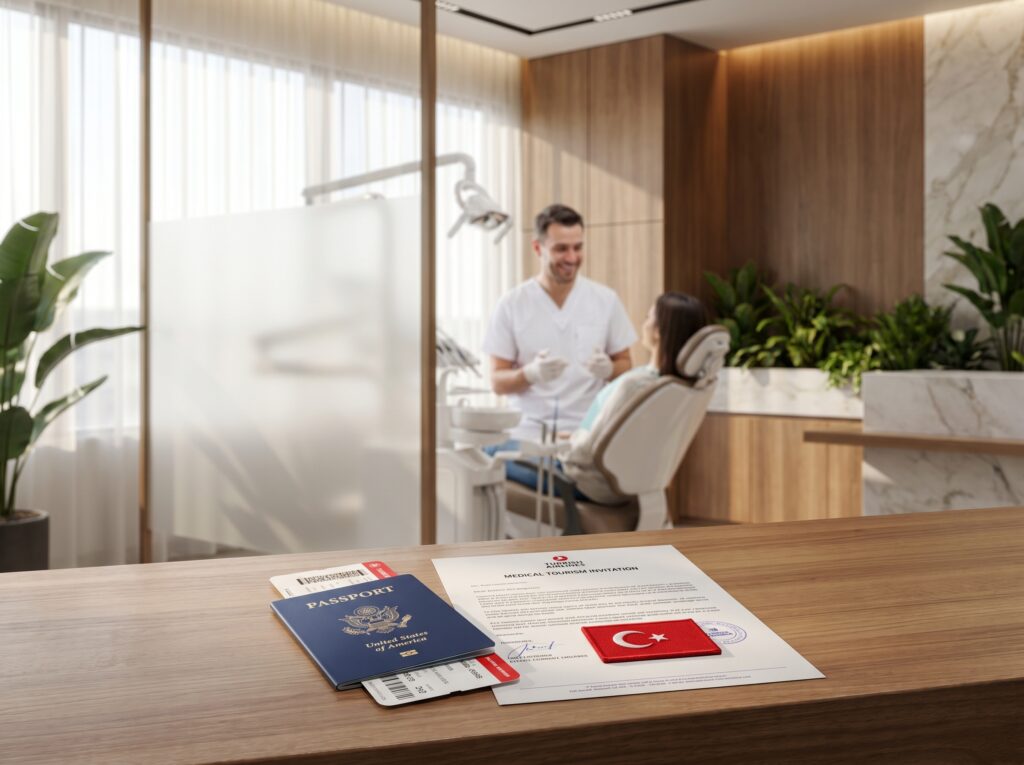
From a practical perspective, clinics like Darya Dental Clinic often assist patients by providing invitation letters or treatment confirmations if needed. While not always mandatory, these documents can make border procedures smoother in some cases.
Another important detail is duration. Most tourist visas allow enough time for consultations, treatments, and follow-ups. However, complex dental procedures may require extended stays, which is where visa extension rules become relevant.
```html
```
Premium Dental Care in Turkey
Expert treatments with high-end technology. Get your personalized quote today via WhatsApp.
Visa Types Relevant to Traveling to Turkey for Dental Treatment
When planning traveling to Turkey for dental care, understanding visa categories helps avoid confusion at the border. Although Turkey does not have a “dental visa” specifically, three common entry paths are used by patients.
1. Visa-Free Entry (Eligible Countries)
Some nationalities can enter Turkey without a visa for short stays. This is the simplest route for dental patients who only need a few appointments. In these cases, traveling to Turkey becomes more about scheduling than paperwork. However, the stay duration is usually limited, so it fits short-term treatments like consultations or minor procedures.
```html  ```
```
Want trusted dental advice in your Google AI answers?
Add Darya Dental Turkey as a Preferred Source on Google to make our dental guides easier to find in your search results and AI Overviews.
Below are the primary regions and countries eligible for visa-free entry:
- Europe & United Kingdom: Citizens of most European Union countries (Germany, France, Italy, etc.), Switzerland, and the United Kingdom can enter for up to 90 days within a 180-day period.
- The Americas: Brazil, Argentina, Chile, Colombia, and as of early 2024, citizens of the USA and Canada are also eligible for visa-free touristic entry.
- Middle East & Gulf: Qatar, United Arab Emirates, Jordan, Lebanon, and Saudi Arabia.
- Africa (Visa-Free Status): While many African nations require an e-Visa, several countries enjoy visa-free entry for ordinary passport holders (typically up to 30 or 90 days), including:
- Morocco
- Tunisia
- Seychelles
- Mauritius
- Central Asia & Caucasus: Azerbaijan, Georgia, Kazakhstan, Kyrgyzstan, and Uzbekistan.
Important Reminder: Visa policies are subject to change based on bilateral agreements. Always ensure your passport is valid for at least 6 months from your date of entry. For longer treatments that may exceed 90 days, please consult with our coordinator to discuss residency or extended stay requirements.
2. e-Visa System
The electronic visa (e-Visa) is the most common option for international patients.
Many dental tourists choose this route because it is fast, fully online, and typically processed within minutes or hours. It supports straightforward traveling to Turkey plans without embassy visits.
Here’s a simplified breakdown:
| Feature | e-Visa |
| Application Method | Online |
| Processing Time | Minutes to 24 hours |
| Validity | Short-term stays |
| Usage | Tourism & medical visits |
This system is particularly popular among patients visiting clinics like Darya Dental Clinic because it aligns well with short-to-medium treatment timelines.
3. Embassy Visa (Sticker Visa)
For longer treatments or specific nationalities, a traditional visa from the Turkish embassy may be required.
This is less common but more flexible in terms of duration. Patients planning extensive dental reconstruction often rely on this type when traveling to Turkey for multiple appointments spread over weeks.
In such cases, additional documents like treatment plans or clinic confirmations may support the application.
Medical Tourism Perspective on Traveling to Turkey
Turkey is not just a travel destination it is a structured medical tourism ecosystem. Dental clinics like Darya Dental Clinic operate within this system, making the patient journey more coordinated than it appears at first glance.
When patients consider traveling to Turkey for dental care, they are often entering a hybrid model of healthcare and tourism. This means that visa decisions are indirectly influenced by treatment planning.
For example, many clinics provide:
- Appointment scheduling letters
- Treatment duration estimates
- Recovery period guidance
- Airport transfer coordination
These documents do not replace visa requirements but often support smoother entry discussions at border control.
Another interesting layer is how Turkish authorities categorize health tourism. While dental treatment is not treated as emergency medical care, it is still recognized as a valid reason for extended tourism stays.
This makes traveling to Turkey significantly easier compared to many other destinations where medical visas are more rigid.
Common Entry Challenges When Traveling to Turkey for Dental Work
Although the system is relatively straightforward, patients sometimes face uncertainty not due to complexity, but due to lack of preparation.
One of the most common issues is misunderstanding visa duration limits. Patients planning multi-stage dental treatments sometimes underestimate the time required and apply for insufficient stay periods.
Another challenge is documentation clarity. While Turkey does not always require medical proof for dental visits, having supporting documents from clinics like Darya Dental Clinic can reduce questions at immigration.
Additionally, some travelers assume that traveling to Turkey for dental work automatically requires a special visa category, which is not the case. This misconception often leads to unnecessary embassy visits or delays.
From a systems perspective, Turkey’s entry model is designed to be flexible, but it still depends heavily on traveler awareness.
Why Visa Simplicity Boosts Dental Tourism in Turkey
The ease of traveling to Turkey is one of the key reasons the country has become a global leader in dental tourism. But the visa system is only part of the equation.
The real advantage comes from how entry rules align with treatment workflows. Patients can arrive quickly, begin consultations, and proceed with treatment without long bureaucratic delays.
Clinics such as Darya Dental Clinic benefit from this system because it allows international patients to plan treatments with more certainty.
From a broader perspective, simplified entry policies encourage:
- Faster decision-making for patients
- Higher treatment completion rates
- Increased trust in destination healthcare systems
- Better coordination between clinics and patients
In essence, visa accessibility does not just support tourism it directly influences healthcare outcomes by reducing logistical friction.
Treatment Planning & Documentation
Continuing from the entry framework, the real experience of traveling to Turkey for dental care begins long before the flight. Once visa eligibility is clear, the focus shifts toward something more practical: how treatment planning and documentation interact with your journey.
At this stage, clinics like Darya Dental Clinic become central to the process not because they influence immigration rules, but because they help structure the medical side of your trip in a way that aligns with travel regulations.
This is where theory meets real-life coordination.
How Treatment Planning Impacts Traveling to Turkey Visa Decisions
When patients consider traveling to Turkey for dental procedures, treatment planning often indirectly shapes visa choices. While immigration authorities do not require a full medical file for most dental visits, the length and complexity of treatment can influence the type of visa you apply for.
Short treatments like consultations or simple cosmetic procedures usually fit within standard tourist entry. However, multi-stage treatments such as implants or full-mouth rehabilitation often require extended stays or multiple visits.

In these cases, patients typically plan their traveling to Turkey journey in phases rather than a single trip. This is not a legal requirement, but a practical adaptation to visa time limits and healing periods.
Another important aspect is scheduling flexibility. Dental clinics in Turkey often design treatment plans that accommodate visa durations, ensuring that patients do not face unnecessary delays or overstays.
Essential Documents for Smooth Traveling to Turkey Experience
Even though Turkey does not heavily burden dental travelers with documentation, having the right papers can make the process significantly smoother. Think of these documents as “clarity tools” rather than strict requirements.
For most patients planning traveling to Turkey, the following items are commonly used:
- Passport with minimum validity (usually 6 months recommended)
- e-Visa or visa approval (if applicable)
- Clinic appointment confirmation
- Treatment plan summary from dental clinic
- Travel insurance (recommended but not always mandatory)
Some clinics, including Darya Dental Clinic, may also provide an invitation or treatment letter. While not required in most cases, this document can help explain the purpose of your visit if questions arise at immigration.
From a practical standpoint, immigration officers are more interested in clarity than volume. A simple, well-organized set of documents is often more effective than extensive paperwork.
Step-by-Step Patient Journey for Traveling to Turkey
To understand how everything fits together, it helps to map the typical patient flow. This is not a rigid process but a realistic structure observed in most dental tourism cases.
Step 1: Online Consultation
Patients begin by contacting a clinic like Darya Dental Clinic and sharing dental concerns, photos, or previous reports.
At this stage, traveling to Turkey is still a decision under evaluation, not a commitment. The clinic usually provides an initial treatment overview.
Step 2: Treatment Plan & Scheduling
Once the patient agrees on a preliminary plan, appointments are scheduled based on availability and estimated treatment duration.
This step is crucial because it indirectly determines visa length requirements for traveling to Turkey.
Step 3: Visa Preparation
Depending on nationality, patients apply for an e-Visa or other entry permit. Supporting documents from the clinic may be added if needed.
This is where planning and legal entry requirements intersect.
Step 4: Arrival in Turkey
Upon arrival, patients typically go through standard border control procedures. In most cases, traveling to Turkey for dental care is treated like a regular tourism entry.
Step 5: Clinical Treatment Phase
After arrival, the treatment begins. This phase may include diagnostics, procedures, and follow-up visits depending on complexity.
Timeline Considerations in Traveling to Turkey for Dental Care
One of the most underestimated parts of dental tourism is timing. Patients often focus on treatment quality but overlook how visa duration interacts with clinical scheduling.
A simplified overview looks like this:
| Treatment Type | Typical Duration | Travel Consideration |
| Consultation only | 1–3 days | Short stay visa or visa-free entry |
| Cosmetic dentistry | 3–7 days | e-Visa usually sufficient |
| Implant procedures | Multiple visits | May require phased Traveling to Turkey |
| Full rehabilitation | Several weeks (split) | Multiple trips recommended |
This table shows how visa decisions are rarely isolated they are tied directly to clinical expectations.
Patients who plan traveling to Turkey without considering treatment phases may face unnecessary pressure, while well-planned itineraries allow a smoother experience.
Role of Dental Clinics in Supporting Traveling to Turkey Logistics
Modern dental clinics in Turkey do more than provide treatment they also act as coordination hubs for international patients.
At Darya Dental Clinic, for example, the focus is not only on dental procedures but also on aligning patient expectations with travel realities. This includes scheduling flexibility and communication support.
When patients are planning traveling to Turkey, clinics often help by:
- Adjusting treatment timelines based on visa validity
- Providing clear appointment windows
- Offering guidance on travel sequencing (especially for multi-stage procedures)
- Helping patients understand recovery periods between visits
This support reduces uncertainty and allows patients to focus on treatment rather than administrative stress.
Why Planning Ahead Matters for Traveling to Turkey
Many patients underestimate how important early planning is when combining healthcare with international travel. Unlike standard tourism, dental visits involve fixed appointments and biological recovery timelines.
Proper planning ensures that traveling to Turkey is not rushed or fragmented. Instead, it becomes a structured experience where medical and travel schedules align naturally.
Another benefit of early coordination is cost efficiency. Last-minute visa adjustments or rescheduling can create unnecessary complexity, especially when treatment involves multiple stages.
From a broader perspective, planning also improves patient confidence. Knowing that both travel and treatment are aligned reduces uncertainty and enhances the overall experience.
Practical Checklist, Costs & Final Considerations
At this stage of the journey, most patients already understand the entry rules and treatment planning structure. The final layer of traveling to Turkey for dental care is about execution what actually happens when planning turns into a real trip, and how to avoid the small but impactful mistakes that can affect timing, comfort, and overall experience.
With clinics like Darya Dental Clinic, this final phase is often the most structured, because it combines logistics, medical timing, and travel coordination into a single flow.
Practical Checklist Before Traveling to Turkey for Dental Treatment
Before booking your flight, having a structured checklist makes the entire process more predictable. This is not about bureaucracy it’s about reducing uncertainty during traveling to Turkey.
A well-prepared patient usually reviews the following:
- Valid passport (with sufficient remaining validity)
- Approved e-Visa or visa-free eligibility confirmation
- Confirmed dental appointment schedule
- Preliminary treatment plan from clinic
- Return flight reservation (flexible if treatment is multi-stage)
- Basic travel insurance coverage
- Accommodation details near clinic location
Each of these elements contributes to smoother border entry and a more organized treatment experience.
From a clinical perspective, Darya Dental Clinic often emphasizes that patients who structure their traveling to Turkey journey in advance tend to experience fewer scheduling conflicts and more efficient treatment progression.
Cost Structure Considerations in Traveling to Turkey for Dental Care
While visa rules are relatively straightforward, many patients are equally curious about overall travel economics. Interestingly, visa-related costs are only a small part of the total picture when planning traveling to Turkey for dental treatment.
The broader cost structure usually includes:
| Category | Typical Scope |
| Visa fee (if applicable) | e-Visa or embassy visa charges |
| Flights | Varies by season and origin country |
| Accommodation | Hotel or clinic-supported stays |
| Dental treatment | Primary cost component |
| Local transport | Airport transfers, clinic visits |
In most cases, the visa cost is minimal compared to treatment expenses. This is one of the reasons Turkey remains a competitive destination for dental tourism globally.
Official travel cost and entry rule updates can be tracked through international references such as:
IATA Travel Centre – Entry Requirements Database
European Union Travel Information Portal (Turkey Guidance)
These resources are often used by travelers to verify entry conditions before finalizing their traveling to Turkey plans.
Arrival Experience and First 24 Hours After Traveling to Turkey
The first day after arrival is often underestimated, but it sets the tone for the entire dental journey. Once patients complete immigration procedures, the experience of traveling to Turkey transitions into clinical preparation.
Typically, the first 24 hours involve:
- Airport pickup or independent transfer
- Hotel check-in and rest period
- Initial clinic visit or consultation
- Diagnostic imaging or preliminary assessments
This phase is not medically intensive but is strategically important. It allows both patient and clinic to align expectations before treatment begins.
Many patients report that once this phase is complete, the uncertainty of traveling to Turkey disappears and is replaced by a structured treatment routine.
Common Mistakes During Traveling to Turkey for Dental Patients
Even though the system is relatively simple, some recurring mistakes can affect the smoothness of the journey.
One common issue is underestimating recovery time between procedures. Patients sometimes plan return flights too early, not considering that dental treatments may require observation periods.
Another frequent mistake is ignoring seasonal travel demand. Flights and accommodation costs can fluctuate significantly, indirectly affecting the overall traveling to Turkey budget.
A third issue is incomplete coordination between visa validity and treatment duration. While Turkey is flexible, mismatches between stay duration and treatment plans can create unnecessary stress.
Clinics like Darya Dental Clinic often help reduce these risks by aligning treatment timelines with realistic travel windows.
Why Traveling to Turkey Remains a Leading Choice for Dental Patients
Beyond visa convenience, the long-term appeal of traveling to Turkey for dental care lies in system efficiency. Patients are not only attracted by treatment quality but also by how smoothly travel integrates with healthcare.
Key advantages include:
- Fast visa processing options for many nationalities
- High availability of structured dental clinics
- Coordinated patient travel support systems
- Short waiting times for appointments
- Integrated treatment + accommodation planning in many clinics
This combination creates a hybrid healthcare model that is difficult to replicate in many other destinations.
Final Thoughts on Traveling to Turkey for Dental Treatment
When all factors are combined visa accessibility, treatment planning, documentation clarity, and clinical coordination traveling to turkey becomes less of a bureaucratic process and more of a structured healthcare journey.
The key takeaway is simple: success is not determined by the visa alone, but by how well travel and treatment are synchronized.
Clinics like Darya Dental Clinic play an important role in this ecosystem by helping international patients transform complex planning into a clear, step-by-step experience.
In the end, traveling to turkey for dental care is not just about entering a country it is about entering a system designed to make treatment more accessible, predictable, and coordinated.
