The Best Dental Implants for Older Adults: Top Brands & Costs
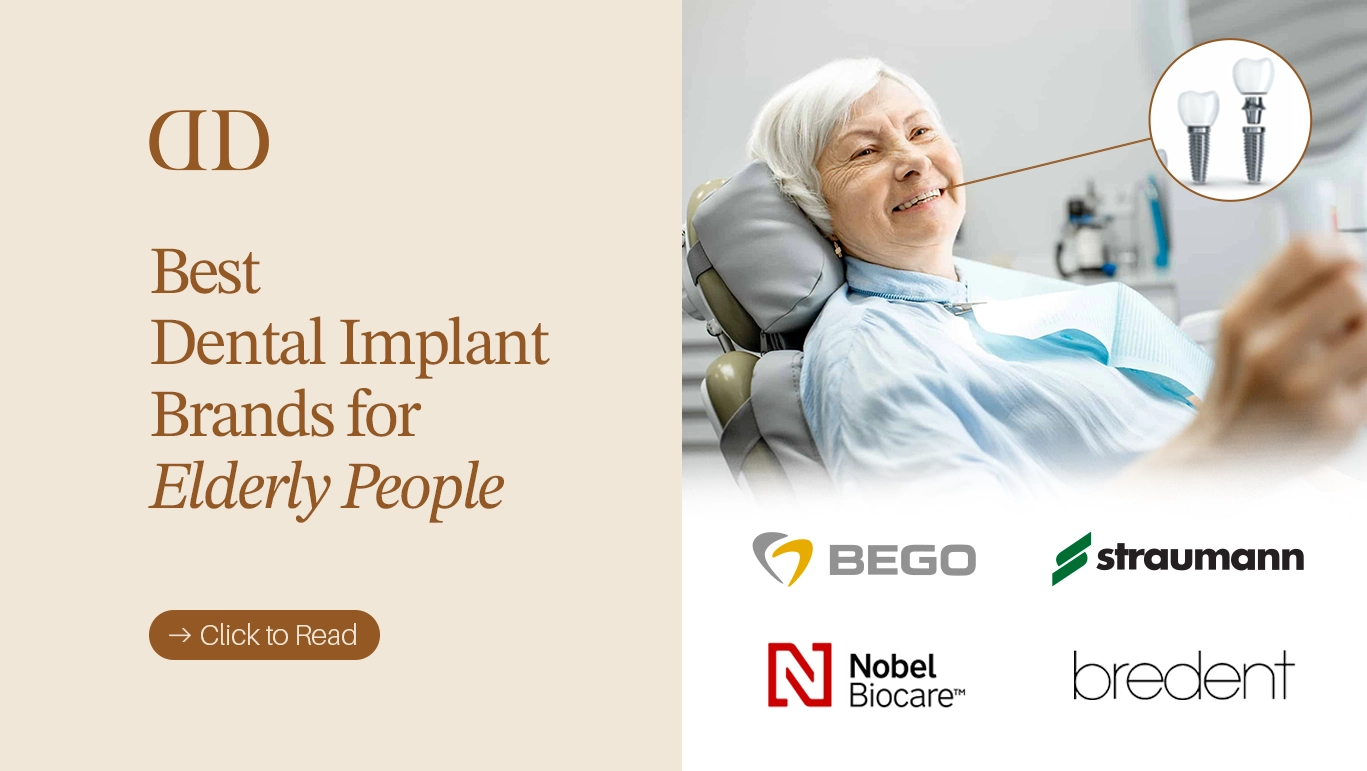

If you’re over 60 and exploring your implant options, the most clinically supported choices for elderly patients are Straumann Roxolid, Zimmer Biomet Trabecular Metal, Nobel Biocare All-on-4, and BioHorizons Laser-Lok — each engineered to address specific challenges that come with age-related changes in bone density, healing response, and systemic health. Studies show Straumann Roxolid allows placement in bone 20% thinner than traditional titanium implants, making it a standout option for seniors dealing with age-related bone loss. A 2025 systematic review and meta-analysis published in Clinical Oral Implants Research, analyzing 27 studies and 3,892 implants, found that patients over 75 years of age achieved a five-year implant survival rate of 96.8% — a number that should lay to rest any assumption that age makes implants unreliable. The real question is not whether implants work in older adults, but which brands and protocols are best matched to your specific anatomy, health profile, and restoration goals.
Readers moving from brand research to clinical planning can review our dental implant treatment options, including the procedure, suitability factors, recovery, and available solutions.
How to Choose the Best Dental Implant Brand for Your Needs
Bone Quality Comes First
Not all implant brands are equal when it comes to elderly patients, and selecting the right system requires matching implant technology to the specific physiological variables at play. The most important factor is bone quality. Age-related bone loss — both in density and in ridge volume — reduces the surface area available for osseointegration, which is the process by which the implant fuses with the jawbone in the weeks after placement. Implants with advanced surface technologies that accelerate early bone contact are better suited to patients who cannot rely on optimal bone as a safety net. Primary stability in the first six to eight weeks is especially critical, and implant design choices should be optimized around that window.
Systemic Health and Medications
The second variable is systemic health. Diabetes, cardiovascular disease, osteoporosis, and polypharmacy are all common in patients over 60 and each influences how the body responds to implant surgery. Well-controlled diabetes is not a contraindication to implant therapy, but it does shift the clinical calculus toward implant systems with a demonstrated track record in metabolically complex patients. A complete medication review before treatment is non-negotiable — particularly for patients on bisphosphonates, anticoagulants, or immunosuppressants.
Single Tooth vs. Full Arch: Different Problems, Different Solutions
The third factor is the restoration type required. A single missing front tooth has entirely different engineering demands than a full-arch reconstruction on a resorbed jaw. Our full comparison of the top dental implant brands covers the broader landscape if you want to orient yourself before reading the condition-specific guidance below. The sections that follow focus specifically on what the clinical evidence says works best for the most common scenarios elderly patients face.
Best Implants for Low Bone Density:
Low bone density is the most common structural challenge in elderly implant patients, and two brands have developed purpose-built engineering responses to it.
Straumann Roxolid: Narrower Implants, Less Grafting
Straumann Roxolid is a titanium-zirconia alloy, a proprietary material that is approximately 50% stronger than conventional Grade IV titanium while maintaining full biocompatibility with human tissue. Because the alloy is stronger, Straumann can manufacture narrower implant bodies without compromising structural integrity under functional load. Narrower-diameter implants (as small as 3.3 mm, compared to the standard 4.1 mm) can be placed in ridge widths that would otherwise require bone grafting, which is the primary clinical benefit of Roxolid for elderly patients. The practical result is that Roxolid-based treatment planning can often eliminate grafting procedures that would add months to treatment time and additional surgical risk for older adults. Our detailed Straumann implant guide covers the full Roxolid and SLActive surface data in depth.
Zimmer Biomet Trabecular Metal: Engineering Around Severe Resorption
Zimmer Biomet’s Trabecular Metal Technology takes a fundamentally different approach: rather than working around compromised bone, it works with it. Trabecular Metal uses a porous tantalum structure that closely mimics the architecture of natural cancellous bone, allowing both bone and soft tissue to grow directly into the implant and create a mechanical interlock rather than relying on surface adhesion alone. Tantalum also has one of the highest coefficients of friction of any implant material, contributing to immediate primary stability in the critical early post-surgical window. For patients who have experienced significant alveolar bone resorption and where some level of grafting is unavoidable, Trabecular Metal implants are among the most reliable options for achieving durable integration in challenging sites.
Which One Is Right for You?
These two systems are not mutually exclusive. In complex full-mouth implants cases for elderly patients, a clinician may use Straumann Roxolid narrow-diameter implants in the anterior aesthetic zone while Zimmer Biomet components address the posterior where bone volume is most severely compromised. What matters most is that your treatment provider has access to both systems and the diagnostic imaging; specifically cone beam CT; to inform that decision rationally rather than by default.
Premium Dental Care in Turkey
Expert treatments with high-end technology. Get your personalized quote today via WhatsApp.
Best Implants for Full Mouth Restoration for Seniors
For elderly patients who have lost most or all of their teeth, the clinical question shifts from individual implant design to full-arch biomechanics and surgical efficiency.
Nobel Biocare All-on-4: The Most Documented Full-Arch Protocol
Nobel Biocare All-on-4 is the most extensively documented full-arch implant protocol in clinical literature. The approach uses four implants, two placed vertically in the anterior jaw and two placed at an angle of 30 to 45 degrees in the posterior, to support a fixed prosthetic arch without bone grafting in most cases. The angled posterior implants distribute mechanical load across a wider footprint of available bone while avoiding the maxillary sinuses in the upper jaw and the inferior alveolar nerve in the lower jaw, both of which are common anatomical obstacles in patients with advanced bone resorption. Patients who would otherwise need six to twelve months of bone grafting and recovery can often receive a fixed set of teeth on the day of surgery. Nobel’s implant portfolio, including the NobelActive and NobelParallel Conical Connection systems most commonly used in All-on-4 cases, is covered in our Nobel Biocare implant guide.

Want trusted dental advice in your Google AI answers?
Add Darya Dental Turkey as a Preferred Source on Google to make our dental guides easier to find in your search results and AI Overviews.
Straumann Pro Arch: SLActive Surface for Faster Healing
Straumann Pro Arch is Straumann’s equivalent full-arch protocol and is widely considered the closest clinical competitor to All-on-4 in terms of outcomes and patient selection criteria. It uses a similar angled implant configuration but incorporates Straumann’s SLActive surface, a chemically modified hydrophilic surface that accelerates osseointegration and is particularly valuable in elderly patients whose cellular healing response may be slower due to age or systemic conditions. The choice between Nobel All-on-4 and Straumann Pro Arch in practice tends to come down to surgeon training, laboratory familiarity with the prosthetic components, and jaw-specific anatomical factors rather than any meaningful gap in clinical performance.
Full-Arch Options at a Glance
| Full Arch Solution | Brand | Implants Per Arch | Bone Grafting Typical | Same-Day Provisional Teeth |
|---|---|---|---|---|
| All-on-4 | Nobel Biocare | 4 | Not required in most cases | Yes |
| Pro Arch | Straumann | 4 | Not required in most cases | Yes |
| All-on-6 | Straumann / Nobel | 6 | Sometimes required | Yes |
For a personalized cost estimate based on your jaw anatomy and treatment needs, the dental implant cost calculator provides a useful starting point before your consultation.
Best Implants for Diabetic Elderly Patients
What the Research Actually Says About Diabetes and Implants
Diabetes is among the most researched systemic risk factors in implant dentistry, and the clinical picture has evolved meaningfully over the past decade. A 2025 clinical trial found that diabetic patients were approximately 8 times more likely to experience implant loss than their non-diabetic counterparts, but this elevated risk applied to patients with poorly controlled glucose levels. Multiple independent studies have since confirmed that well-controlled diabetic patients, with HbA1c maintained below 7%, achieve implant survival rates comparable to healthy individuals.
Why Surface Technology Matters More for Diabetics
At the brand level, the distinction for diabetic patients comes down to surface technology and how it supports the extended osseointegration timeline that uncontrolled or borderline glucose creates. Elevated blood glucose impairs the cellular signaling involved in bone formation, meaning the critical early integration window, where osseointegration failure is most likely, can be longer and more fragile. Straumann‘s SLActive surface, a chemically modified hydrophilic version of their standard SLA roughened surface, has been studied specifically in metabolically compromised patients and has shown clinically meaningful reductions in integration time compared to conventional surfaces.
BioHorizons Laser-Lok: Protecting the Soft Tissue Seal
BioHorizons Laser-Lok technology addresses a different but equally important dimension of diabetic implant risk: long-term peri-implant health. Laser-Lok uses precisely engineered microchannels cut by laser into the implant collar to physically interlock with both crestal bone and connective tissue, creating a tight biological seal around the implant collar. This seal reduces the pathways for bacterial infiltration, which is clinically significant because diabetes already amplifies the systemic inflammatory response to bacterial challenge. For diabetic elderly patients, an implant collar that resists soft tissue breakdown is not a cosmetic detail but a meaningful structural protection against the most common long-term failure pathway in this population.
The Protocol Matters as Much as the Brand
The clinical protocol around the implant matters as much as the brand itself. For diabetic elderly patients, glycemic control should be optimized before surgery, healing intervals are typically extended by four to six weeks compared to the standard protocol, and the post-placement maintenance schedule should be more frequent than for non-diabetic patients. A reputable implant clinic will not skip these steps regardless of how straightforward the surgical placement appears.
Best Implants for Front Teeth in Seniors
The Aesthetic Zone Is More Complex in Older Adults
Front tooth implants in elderly patients introduce challenges beyond bone density alone. Gum recession, thin tissue biotype, and years of bone remodeling following tooth loss create a more complex aesthetic environment in older adults than in younger patients. Achieving a natural-looking result in the visible smile zone requires the right implant diameter, careful soft tissue management, and a restoration that handles aging tissue gracefully over time.
Narrow-Diameter Implants for Thin Anterior Ridges
Narrow-diameter implants are frequently indicated for front teeth because the bone ridge between the central and lateral incisors is typically thinner than in the molar region. Straumann Roxolid narrow-body implants perform particularly well here, combining the structural strength needed to support functional load with the reduced footprint that works within a thinner anterior ridge. Tissue-level implants, which position the implant-to-crown connection at or near the gum line rather than below it, can simplify soft tissue management in the aesthetic zone and reduce the risk of recession exposing the implant collar over time.
When to Consider Zirconia for Front Teeth
Zirconia implants are worth considering specifically for seniors with thin, translucent gum tissue, where the grey metallic body of a titanium implant can create a darkening effect visible through the gum margin. Zirconia is tooth-white in color and eliminates that visual artifact entirely. The tradeoff is that zirconia implants are typically one-piece systems, which reduces restorative flexibility compared to two-piece titanium options. Our titanium versus zirconia implant guide covers the aesthetic and biomechanical differences in full detail. For most elderly patients requiring single anterior tooth replacement, a narrow-diameter Straumann Roxolid implant paired with a precision-fabricated E-Max crown remains the most clinically predictable combination.
Implant Failure Causes in Elderly Patient
Periodontal History and Bone Grafting as Risk Predictors
Understanding what drives implant failure in older adults is as important as knowing which brands perform best, because most failure pathways are preventable with the right pre-treatment protocols. A long-term follow-up study tracking 245 patients and 1,256 implants in the International Journal of Oral and Maxillofacial Implants found an overall survival rate of 92.9%, with a history of periodontal disease identified as one of the strongest predictors of failure. Implants placed in sites where bone augmentation had been performed prior to or during surgery showed reduced longevity compared to those placed in native bone, reinforcing the clinical value of treatment planning that minimizes the need for grafting whenever possible.
Smoking: The Single Biggest Behavioral Risk Factor
Smoking is the most consistently documented behavioral risk factor across studies in elderly implant patients. A 2025 clinical trial found that smokers faced 3.5 times the risk of developing peri-implantitis (p = 0.01) compared to non-smokers, and that implants are at their highest risk of loss within the first four years of function. Patients who lost an implant were nine times more likely to have done so within that early window, a finding with direct implications for how aggressively post-placement maintenance should be structured, particularly in elderly patients who may already be managing other systemic risk factors simultaneously.
Age Alone Is Not the Problem
A 2018 systematic review by Schimmel et al. analyzing data from over 60 studies found that patients over 75 years of age achieved implant survival rates of 97.3% at one year and 96.1% at five years, confirming that advanced age in itself is not a meaningful driver of implant failure when patients are properly assessed and managed. The clinical takeaway from this body of evidence is consistent: most implant failures in elderly patients trace back to modifiable risk factors, smoking, uncontrolled diabetes, untreated periodontal disease, and inadequate maintenance, not to age itself.
Read more: Dental Implant Aftercare: How to Make Your Implants Last a Lifetime
How Darya Dental Selects the Right Implant for People Over 50
Pre-Treatment Assessment for Patients Over 50
At Darya Dental, patients over 50 undergo a more detailed pre-treatment assessment than younger implant candidates. This is not because implants are more uncertain in older adults, the clinical evidence above makes the opposite case clearly, but because the range of variables that affect long-term outcomes is wider and deserves more deliberate evaluation. Every patient begins with cone beam CT imaging, which provides a three-dimensional map of available bone volume, density, and proximity to anatomical structures including nerve canals and sinus cavities. Systemic health review includes a complete medication audit, with specific attention to bisphosphonates, anticoagulants, and immunosuppressants that interact with surgical healing.
Matching the Implant System to the Patient
For patients managing diabetes, we coordinate with their physician to align implant surgery with optimized glycemic windows, and we extend the standard healing interval before loading the final prosthesis. For patients with significant bone volume loss, treatment planning includes a transparent explanation of whether grafting is indicated, what the realistic alternatives are, and how each pathway affects treatment duration and final outcomes. Our implant systems span Straumann, Nobel Biocare, BEGO, and Zimmer Biomet, selected for specific clinical scenarios rather than standardized preference. The Straumann versus BEGO comparison provides useful context on how different implant systems compare across the clinical performance and cost spectrum.
Why International Patients Choose Darya Dental for Complex Cases
Darya Dental operates on a one-patient-at-a-time protocol, and all prosthetic components are fabricated in our in-house laboratory using Ivoclar Vivadent, VITA, and E-Max materials, eliminating the outsourcing delays that complicate complex multi-step treatments for international patients. With a 4.9-star Google rating, over 2,000 international patients treated from more than 15 countries, and 450 to 600 implants placed annually, Darya Dental has the clinical volume and brand portfolio to match the right implant system to each patient over 50, not the cheapest or most convenient one. To reach us directly, contact us on WhatsApp at +90 530 567 97 11 or email [email protected].
Cost Comparison: Dental Implants for Seniors — Turkey vs USA vs UK
| Treatment | Turkey | USA | UK |
|---|---|---|---|
| Single Implant (titanium, SLA surface) | From €450 | $3,000 – $5,000 | £2,000 – £3,500 |
| Narrow-Diameter Implant (Roxolid) | From €550 | $3,500 – $5,500 | £2,500 – £4,000 |
| All-on-4 Full Arch | From €4,500 | $20,000 – $30,000 | £15,000 – £20,000 |
| All-on-6 Full Arch | From €5,500 | $25,000 – $35,000 | £18,000 – £25,000 |
USA and UK figures reflect market averages. Turkey prices are reduced from standard international quotes; final pricing is confirmed following CT assessment and consultation.
Frequently Asked Questions
Are dental implants safe for people over 70?
Yes. A 2025 meta-analysis covering 3,892 implants found that patients over 75 achieved a five-year survival rate of 96.8% — comparable to, and in this study actually higher than, the rate observed in the 65 to 75 age group. Age alone is not a clinically meaningful contraindication to implant treatment. What matters is bone quality, systemic health status, and the protocols used around the procedure.
What is the best dental implant brand for seniors with bone loss?
Straumann Roxolid is the most clinically supported option for patients with reduced bone density, as its titanium-zirconia alloy allows narrower implant bodies that fit in thinner ridges without grafting. For patients with more severe bone resorption, Zimmer Biomet Trabecular Metal is preferred, as its porous tantalum structure promotes direct bone ingrowth into the implant body.
What is the best dental implant for full mouth restoration in elderly patients?
Nobel Biocare All-on-4 and Straumann Pro Arch are the two most widely used and clinically documented full-arch protocols for elderly patients. Both use angled posterior implants to work within resorbed jawbone, avoid grafting in most cases, and allow fixed provisional teeth to be delivered on the day of surgery. The choice between them is typically determined by jaw anatomy and the surgeon’s training.
Can elderly patients with diabetes get dental implants?
Yes, provided blood glucose is well controlled. Research shows that patients with HbA1c maintained below 7% achieve implant survival rates comparable to non-diabetic patients. Implant systems with advanced surface technology — Straumann SLActive for accelerated osseointegration and BioHorizons Laser-Lok for superior soft tissue attachment — are particularly well matched to diabetic patients.
What is Straumann Roxolid?
Roxolid is Straumann’s proprietary titanium-zirconia alloy, approximately 50% stronger than conventional Grade IV titanium. This strength allows Straumann to manufacture narrow-diameter implants (3.3 mm) that can be placed in ridge widths roughly 20% thinner than standard implants require, reducing the need for bone grafting in patients with age-related bone resorption.
What is Nobel Biocare All-on-4 and is it suitable for elderly patients?
All-on-4 is a full-arch implant protocol that uses four implants — two placed vertically in the front and two angled at the back — to support a complete set of fixed teeth without bone grafting in most cases. It is specifically well suited to elderly patients because it is engineered around the diminished posterior bone typical of long-term edentulism, and patients receive provisional fixed teeth on the day of surgery.
What is BioHorizons Laser-Lok?
Laser-Lok is a surface treatment on the collar of BioHorizons implants that uses laser-machined microchannels to physically interlock with both crestal bone and connective tissue. This creates a biological seal at the implant collar, reducing the pathways for bacterial infiltration and helping maintain healthy peri-implant tissue over time — an especially relevant feature for elderly patients with diabetes or a history of periodontal disease.
What causes dental implant failure in elderly patients?
The most consistently documented risk factors are smoking, uncontrolled diabetes, a prior history of periodontal disease, and biofilm accumulation on the prosthesis. A 2025 clinical study found that smokers had 3.5 times the risk of peri-implantitis and that implants were nine times more likely to be lost within the first four years of function than after that period. Most failure causes in elderly patients are preventable with appropriate pre-treatment screening and structured maintenance.
Is Zimmer Biomet a good option for elderly patients with osteoporosis?
Zimmer Biomet Trabecular Metal is one of the best-studied implant systems for patients with osteoporosis-related bone changes. Its porous tantalum structure mimics cancellous bone architecture and allows tissue to grow into the implant, compensating for reduced bone mineral density through mechanical interlock rather than surface adhesion alone. For elderly patients on bisphosphonate therapy, close coordination with their physician is essential before implant planning.
Medical Disclaimer: The information in this article is intended for general educational purposes only and does not constitute medical advice. Dental implant suitability is determined by individual health status, bone anatomy, systemic conditions, and clinical assessment by a qualified implant surgeon. Always consult a licensed dental professional before making any treatment decision. Clinical survival rates cited here are drawn from peer-reviewed studies and reflect population-level data; individual outcomes may vary. Patients taking bisphosphonates, anticoagulants, or immunosuppressants should disclose all medications to their treating clinician before proceeding with implant therapy.
