
Dental Treatment in Turkey for New Zealand Patients: Costs, Travel & Aftercare
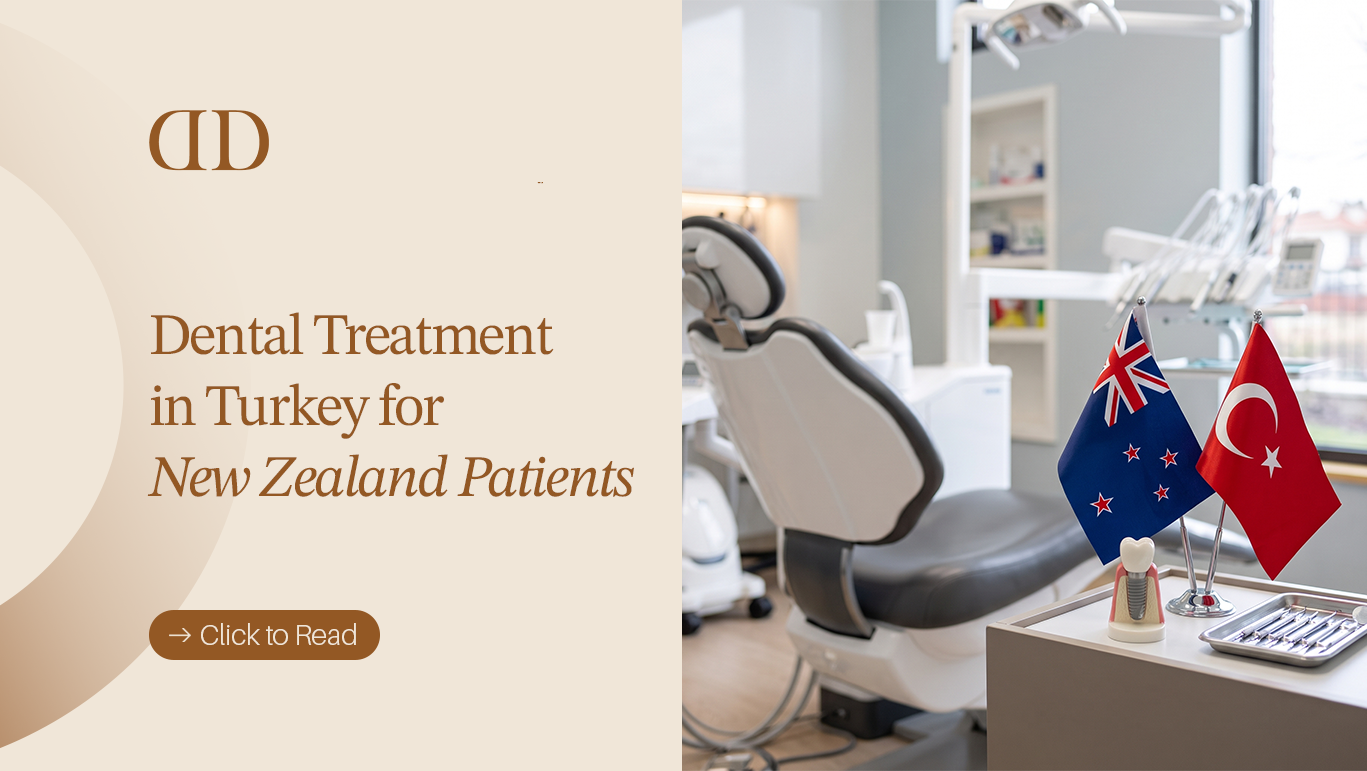

Dental treatment in Turkey for New Zealand patients can include dental implants, veneers, crowns, bridges and other restorative or cosmetic procedures. For patients travelling from New Zealand, however, choosing treatment abroad involves more than comparing a clinic’s treatment price with the cost of dentistry at home. Flights, accommodation, insurance, treatment time, possible additional procedures and follow-up care should all be considered before making a decision.
For New Zealand patients, the most useful approach is to evaluate the complete treatment journey: whether the proposed treatment is clinically appropriate, how the clinic is selected, what records are needed before travelling, how long the stay may be, and what happens after returning home.
The existing Darya Dental Turkey pathway can help international patients explore treatment options and arrange an initial assessment before travelling. Treatment-specific information is also available for procedures such as dental implants and dental veneers.
Why Do New Zealand Patients Consider Dental Treatment in Turkey?
New Zealand patients considering dental treatment Turkey New Zealand generally need to weigh clinical suitability, treatment access, overall cost and the practical demands of travelling a long distance for dental care.
Turkey is an established destination for international dental patients, but travelling overseas for treatment is still a significant decision. The right choice depends on the individual treatment plan and the patient’s ability to manage travel, appointments and follow-up after returning to New Zealand.
Dental treatment costs and affordability
Cost is one of the reasons patients investigate dental tourism Turkey New Zealand, but the quoted dental treatment price should not be considered in isolation.
A meaningful comparison should include:
- The proposed dental procedure and its scope
- Any diagnostic procedures required
- Additional treatments that may be necessary
- Laboratory or restorative components
- Flights from New Zealand
- Accommodation in Istanbul
- Travel insurance
- Local transportation
- Medication or other treatment-related expenses
- Potential costs associated with a second visit
The final cost can therefore be different from the headline price of a treatment package.
For example, a patient researching Turkey dental treatment cost NZD should convert the relevant treatment estimate into New Zealand dollars while also calculating the travel-related expenses. Exchange rates can change, so an NZD figure should be treated as an estimate rather than a permanent price.
Premium Dental Care in Turkey
Expert treatments with high-end technology. Get your personalized quote today via WhatsApp.
It is also important to compare like with like. A dental implant treatment plan, for instance, may involve several separate components, while a veneer quotation may refer to a different scope of treatment. Comparing only the number displayed beside a procedure can therefore give a misleading impression of value.
Treatment access and waiting times
Another consideration is access to the required treatment. Patients may investigate treatment abroad when they want to understand different treatment pathways, appointment availability or the possibility of coordinating several procedures during one trip.

Want trusted dental advice in your Google AI answers?
Add Darya Dental Turkey as a Preferred Source on Google to make our dental guides easier to find in your search results and AI Overviews.
However, treatment suitability should come before scheduling convenience.
A dental plan should be based on an examination and appropriate diagnostics rather than on the patient’s preferred treatment alone. A procedure that appears suitable from photographs may change after a clinical examination reveals factors affecting the treatment plan.
This is particularly relevant for complex treatments such as implants. Bone condition, existing teeth, gum health and other clinical factors can affect whether implant treatment is appropriate and how it should be staged.
Patients researching a dentist in Turkey for New Zealand patients should therefore ask how the clinic assesses cases before treatment and what happens if the initial plan needs to change after an in-person examination.
Why total trip cost matters
For someone travelling from New Zealand, the total financial commitment can be substantially broader than the dental bill.
A useful way to assess dental treatment in Turkey for New Zealand patients is to divide the expected expenditure into four categories:
| Cost category | What to consider |
| Dental treatment | Consultation, diagnostics, procedures, laboratory work and any additional treatment |
| Travel | Flights, airport transfers and local transportation |
| Accommodation | Number of nights required for the planned treatment schedule |
| Contingency | Possible additional appointment, procedure or second trip |
This approach is particularly important for long-haul travel. If treatment requires a second visit, the cost of another flight and additional accommodation may materially change the overall calculation.
The same principle applies to treatment timelines. A plan that looks financially attractive at first may be less suitable if the patient cannot realistically accommodate the required appointments or recovery period.
What Dental Treatments Can New Zealand Patients Have in Turkey?
The range of procedures available to an international patient depends on their individual dental condition and treatment requirements. Common areas investigated by New Zealand patients include implants, veneers, crowns, bridges and restorative dentistry.
The key distinction is that these treatments address different dental needs. Veneers are primarily associated with changes to the visible appearance of teeth, crowns restore and protect individual teeth, while implants replace missing tooth roots and support a restoration.
Dental Implants and Full-Arch Treatments
Dental implants Turkey New Zealand is a treatment search typically associated with missing teeth and tooth replacement.
A dental implant is placed into the jawbone to act as an artificial tooth root. It can subsequently support a crown, bridge or, in appropriate cases, a full-arch restoration.
Implant treatment is different from veneers or crowns because it may involve multiple stages and, depending on the case, a longer overall treatment timeline.
Some patients may be suitable for individual implants, while others may require treatment involving several missing teeth or a full arch. The appropriate approach depends on clinical assessment rather than the number of teeth a patient wishes to replace.
For patients travelling from New Zealand, implant planning also requires particular attention to the possibility of more than one trip. Not every implant case follows the same schedule, and some treatments may require healing time between surgical and restorative stages.
Dental Veneers and Smile Makeovers
Patients searching for veneers Turkey New Zealand are often interested in improving the appearance of their smile.
Dental veneers are thin restorations placed on the front surfaces of teeth. Depending on the individual case, they may be considered for changes involving tooth shape, colour or certain aesthetic concerns.
Veneers are not simply an alternative to crowns. They involve different treatment principles and are not appropriate for every tooth or every patient.
Before travelling, patients should understand:
- Which teeth are being considered for veneers
- What preparation, if any, is required
- What material is proposed
- Whether existing dental problems need to be addressed first
- How the final appearance will be planned
- How many appointments are expected
A smile makeover may also involve a combination of procedures rather than veneers alone. The treatment plan should therefore explain what is actually being recommended and why.
Dental Crowns and Bridges
Dental crowns Turkey New Zealand is another common area of international dental treatment research.
A crown is a restoration designed to cover and restore a damaged or weakened tooth. A bridge can be used to replace one or more missing teeth by connecting a restoration to supporting teeth or, depending on the treatment design, implants.
Crowns and bridges may be considered for restorative rather than purely cosmetic reasons. Their suitability depends on the condition of the teeth, supporting structures and overall oral health.
For international patients, it is useful to ask for the proposed treatment plan in writing and clarify which teeth will receive crowns or other restorations before travelling.
General and Restorative Dentistry
Dental treatment abroad is not limited to cosmetic dentistry or implants. Depending on the patient’s needs, treatment planning may include restorative procedures and other forms of general dental care.
The priority should be to establish the underlying dental needs first. Cosmetic treatment should not be viewed as a substitute for addressing active dental problems.
For a New Zealand patient, an online assessment can provide useful preliminary information, but it does not replace the clinical examination required to confirm the final treatment plan.
How to Prepare for Dental Treatment in Turkey from New Zealand
Good preparation is especially important when travelling a long distance for dental treatment. Having relevant records available before the trip can help the dental team understand the case and determine what further assessment may be required.
New Zealand patients should also consider travel insurance, medical tourism considerations and the practical arrangements needed if treatment takes longer than originally anticipated.
Dental records, X-rays and photographs
Before travelling, patients may be asked to provide available dental records, X-rays and photographs.
Useful information can include:
- Recent dental X-rays
- Existing treatment records
- A list of current dental concerns
- Previous implant or restorative treatment details
- Clear photographs of the teeth and smile
- Information about previous dental procedures where relevant
These records can support a preliminary assessment and help identify questions that should be addressed before the patient travels.
They should not, however, be treated as a substitute for an in-person examination. The final treatment plan may change after clinical assessment and diagnostic imaging in Istanbul.
Online consultation and preliminary treatment plan
An online consultation can help establish whether the requested treatment may be appropriate and what information is needed before travelling.
For an international patient, this stage is useful for clarifying:
- The main dental concern
- The treatment options being considered
- What records or images are required
- Whether additional diagnostics may be needed
- The likely number of appointments
- Whether one or more trips may be required
- What follow-up arrangements should be discussed before departure
Patients can use Darya Dental Turkey’s online dental consultation pathway to begin this process.
A preliminary plan should be understood as exactly that: preliminary. Treatment recommendations can change when the dentist performs an examination and reviews appropriate diagnostic information in person.
Travel insurance and medical tourism considerations
Travel insurance deserves separate attention when arranging dental treatment abroad New Zealand.
Patients should check their policy carefully rather than assuming that overseas dental treatment is automatically covered. In particular, they should understand whether planned medical or dental treatment is covered, whether complications are treated differently from routine treatment, and whether exclusions apply to travelling specifically to receive treatment.
Travel arrangements should also account for the possibility that the clinical schedule may change.
Before leaving New Zealand, patients should have access to their treatment information and know how they will communicate with the clinic during and after their stay. It is also sensible to establish what documentation they will receive before returning home, particularly if the treatment involves implants or other complex restorative work.
For longer-term planning, patients should consider what will happen after they return to New Zealand. Follow-up does not necessarily end when the flight home begins, and arrangements for communication, records and local dental care should be discussed before treatment starts.
How Does the Dental Treatment Process Work?
For New Zealand patients, dental treatment Turkey travel from New Zealand requires more planning than a routine dental appointment at home. The process should be organised around the clinical treatment plan, the required appointments and the time needed for each stage.
Although the exact sequence varies by treatment, international dental care generally involves four broad stages: preparation before travelling, clinical assessment in Istanbul, treatment and laboratory work, and final fitting before departure.
Before travelling
The process begins before the patient leaves New Zealand.
After an initial enquiry or online consultation, the dental team can review available photographs, X-rays and other relevant records. This helps establish the patient’s main concerns and identify whether further information is needed.
Before booking travel, patients should have a clear understanding of:
- The proposed treatment
- Which teeth or areas are being treated
- The expected number of appointments
- The approximate length of the stay
- Whether additional procedures may be necessary
- Whether treatment may require more than one trip
- What records and documentation will be provided
- What follow-up arrangements are available after returning to New Zealand
Travel should ideally be booked only after the expected clinical schedule has been discussed.
This is particularly important for complex treatment. A patient travelling specifically for implants, for example, should not assume that an implant can always be placed and permanently restored during a single short visit.
Clinical examination in Istanbul
Once the patient arrives in Istanbul, the preliminary plan can be assessed against an in-person clinical examination and appropriate diagnostics.
This stage matters because photographs and previous records cannot provide the same information as a direct examination.
The dentist may need to evaluate factors such as:
- The condition of existing teeth
- Gum and periodontal health
- Bone condition where implant treatment is being considered
- Existing restorations
- Bite and occlusion
- The overall condition of the mouth
- Findings from diagnostic imaging
The final treatment plan should reflect these findings.
For patients considering an Istanbul dental clinic for New Zealand patients, this is an important point to clarify before travelling: an online estimate is not necessarily the same as the final clinical treatment plan.
Treatment and laboratory phase
The next stage depends on the selected treatment.
For restorative or cosmetic procedures, treatment may involve tooth preparation, impressions or digital records, temporary restorations where required, laboratory production and subsequent fitting.
Implant treatment can involve a different sequence because the implant and final restoration may not be completed at the same time.
Laboratory work is also an important part of restorative treatment. Patients should understand what type of restoration is being proposed and, where relevant, what material and manufacturer are being used.
For implant cases, asking about implant brand and traceability can be particularly useful. Patients should retain documentation that may be needed for future dental care.
Final fitting and departure
Before returning to New Zealand, the patient should have the opportunity to review the completed treatment and receive relevant documentation.
Depending on the treatment, this may include information about:
- The procedures performed
- Restorative materials
- Implant specifications where applicable
- Care and maintenance instructions
- Follow-up recommendations
- Warranty documentation where provided by the clinic
- Records that can be shared with a New Zealand dentist
Patients should also understand what to do if they experience a concern after returning home.
Having this information before departure can make subsequent communication with both the overseas clinic and a local New Zealand dentist easier.
How Long Do New Zealand Patients Need to Stay in Turkey?
There is no single number of days that applies to every New Zealand patient. The required stay depends on the treatment, clinical findings, laboratory schedule and whether additional procedures are needed.
For this reason, patients should treat any advertised timeline as a general planning estimate rather than a guarantee.
Veneers and crowns
Veneers and crowns may often be organised within a relatively short treatment period when the teeth are suitable and no significant additional treatment is required.
However, the number of appointments can vary. An initial examination may identify problems that need to be addressed before the definitive restoration is fitted.
For a patient travelling from Auckland or another part of New Zealand, it is therefore better to plan around the clinic’s proposed appointment schedule rather than book a return flight based solely on a generic treatment duration.
Implants
Implant treatment may require a longer overall timeline than veneers or crowns because implant placement and the final restoration can involve separate stages.
In some cases, healing is required before the definitive restoration can be fitted. Additional procedures may also affect the schedule.
This means that dental implants Turkey New Zealand planning should begin with one important question:
Does the proposed treatment require one trip or more than one trip?
The answer depends on the individual case and the treatment protocol. Patients should ask for the expected stages before committing to flights and accommodation.
Full-arch implant treatment
Full-arch implant treatment can involve several clinical and restorative steps and should therefore be planned particularly carefully by international patients.
The overall schedule may depend on the patient’s oral health, implant requirements, restorative design, laboratory work and healing considerations.
Because of the distance between New Zealand and Türkiye, patients considering full-arch treatment should discuss the complete treatment pathway before travelling, including what happens if an additional appointment or second visit becomes necessary.
A short treatment window should not be prioritised over appropriate clinical planning.
How Much Does Dental Treatment in Turkey Cost for New Zealand Patients?
The cost of dental treatment in Turkey for New Zealand patients should be calculated as a total trip budget rather than a dental-treatment figure alone.
There is no single price that applies to all patients because treatment costs vary according to the procedure, number of teeth, clinical complexity, materials and additional procedures.
The most useful approach is to separate the expected costs into treatment, travel and contingency categories.
Treatment cost
The dental component may include more than the procedure itself.
Depending on the treatment, patients may need to account for:
- Consultation and diagnostic assessment
- Dental treatment
- Laboratory work
- Temporary restorations where required
- Final restorations
- Additional procedures identified during examination
When comparing treatment plans, patients should make sure they understand what is included and what may be charged separately.
This is particularly important when comparing quotes from different clinics. Two apparently similar prices may represent different treatment scopes.
A New Zealand patient should therefore ask for a written treatment plan that identifies the procedures being proposed.
Flights and accommodation
For dental tourism from Auckland to Turkey, flights and accommodation can form a meaningful part of the overall budget.
Airfare can vary significantly according to travel dates, booking time, airline, routing and availability. It is therefore not appropriate to treat a particular airfare as a fixed cost.
Accommodation costs likewise depend on the length and timing of the stay.
Patients should calculate:
Total trip cost = dental treatment + flights + accommodation + local travel + insurance + contingency costs
This gives a more realistic basis for comparing overseas treatment with treatment available in New Zealand.
Additional procedures and contingency costs
A preliminary treatment plan may change after the clinical examination.
For example, a patient may require additional diagnostic work or another procedure before the originally discussed treatment can proceed. In implant cases, clinical findings can also influence the treatment sequence.
International patients should therefore avoid budgeting so tightly that there is no allowance for an unexpected clinical or travel-related expense.
A contingency budget can be particularly relevant when travelling from New Zealand because returning home is considerably more complicated than travelling locally for an additional dental appointment.
Patients should also ask what happens if treatment takes longer than initially expected and whether an additional stay or second trip could be necessary.
NZD comparison methodology
When evaluating Turkey dental treatment cost NZD, patients should use a consistent comparison method.
A simple framework is:
| Comparison | Questions to ask |
| Dental treatment | What procedures are included in the quoted treatment? |
| Materials | What restoration or implant materials are proposed? |
| Diagnostics | Are examinations and necessary imaging included? |
| Travel | What will flights and local transport cost? |
| Accommodation | How many nights are required? |
| Insurance | Does the policy cover the planned overseas treatment and related circumstances? |
| Additional treatment | What happens if the clinical plan changes? |
| Second trip | Could another visit be required, particularly for implants? |
| Aftercare | What support and documentation are available after returning to New Zealand? |
This approach avoids treating the cheapest initial quotation as automatically representing the lowest overall cost.
The most relevant comparison is the complete treatment journey and its expected total cost, while also considering clinical suitability, quality of planning, documentation and follow-up arrangements.
Implants
Implant treatment may require more time than veneers or crowns because implant placement and the final restoration are not always completed at the same stage.
Healing time, the condition of the jawbone and the need for additional procedures can affect the treatment sequence. As a result, some patients may need more than one trip to Türkiye.
Before travelling, patients considering dental implants Turkey New Zealand should ask:
- Is implant placement planned during the first visit?
- When will the final restoration be fitted?
- Is a healing period required?
- Could additional procedures change the timeline?
- Will a second trip be necessary?
- What documentation will be provided for future care in New Zealand?
There is no universal implant timeline because treatment must be adapted to the individual clinical situation.
Full-arch implant treatment
Full-arch implant treatment involves a more extensive treatment plan and should be organised around the patient’s clinical needs rather than a fixed holiday schedule.
The overall process may involve assessment, implant placement, temporary or provisional restorations, healing and final restorative work. The exact sequence depends on the patient’s condition and the treatment approach selected.
For New Zealand patients, the distance involved makes it particularly important to understand the entire pathway before travelling. If treatment requires a second visit, this should be considered when calculating both time and total trip cost.
How Should New Zealand Patients Choose a Dental Clinic in Turkey?
Choosing a clinic for dental treatment in Turkey for New Zealand patients should involve more than comparing treatment prices.
International patients have additional considerations because they may need to manage treatment remotely before travelling and continue their dental care after returning to New Zealand.
Qualifications and regulatory checks
Patients should research the dental professionals and healthcare facility involved in their treatment.
They can ask about the dentist’s professional qualifications, the clinic’s regulatory status and how the facility is authorised to provide healthcare services to international patients.
HealthTürkiye can also be used as an official source when checking Turkish healthcare facilities. Its facility information is verified by the Republic of Türkiye Ministry of Health.
Patients should independently verify the information relevant to their specific treatment rather than relying only on promotional claims.
Materials and implant traceability
Patients should know what materials are being proposed for their treatment.
For restorative dentistry, useful questions include:
- What material will be used?
- Which teeth will receive the restoration?
- Who manufactures the restoration?
- What information will be included in the treatment records?
For implants, patients should ask for the implant brand and relevant identification details.
Keeping these records can be useful if the patient later needs treatment or maintenance from a dentist in New Zealand.
Diagnostics and treatment planning
A sound treatment plan should be based on appropriate clinical assessment.
Patients should ask how the clinic evaluates cases before treatment and what diagnostic information will be collected after arrival.
This is particularly important when considering procedures such as implants or extensive restorative treatment.
An online consultation can help establish the initial direction, but the final treatment plan should reflect the findings of an in-person examination and appropriate diagnostics.
Warranty and written documentation
International patients should ask what documentation they will receive after treatment.
If a clinic provides a warranty, the patient should understand its terms in writing, including what it covers and any conditions that apply.
A useful documentation package may include:
- Treatment records
- Details of restorations
- Implant specifications where applicable
- Material information
- Care instructions
- Follow-up recommendations
- Written warranty information where provided
A warranty should not be treated as a substitute for clinical assessment or appropriate follow-up care.
Communication and international patient support
Communication is especially important when the patient lives thousands of kilometres away.
Before travelling, patients should understand how they can contact the clinic during the treatment process and after returning to New Zealand.
It is also worth clarifying what happens if a patient has a question, experiences an unexpected issue or needs an adjustment after returning home.
For international patients, a clear communication process can be just as important as the treatment schedule itself.
What Happens After Returning to New Zealand?
The treatment journey does not necessarily end when the patient leaves Türkiye.
For dental treatment Turkey aftercare New Zealand, patients should plan in advance for follow-up, maintenance and communication with their overseas dental provider.
The exact aftercare requirements depend on the treatment received.
Remote aftercare
Some post-treatment questions can be addressed remotely through communication with the treating clinic.
Patients may be asked to provide photographs or other information if they have a concern after returning home.
However, remote communication cannot replace an in-person examination when a clinical problem needs to be assessed.
Before leaving Türkiye, patients should know who to contact and what information they should provide if a concern develops.
Local dentist follow-up
A New Zealand dentist may be able to provide follow-up or routine dental care after the patient returns home, depending on the treatment and the dentist’s assessment.
Patients should provide their local dentist with relevant treatment records whenever possible.
This is particularly useful after complex restorative or implant treatment because the local dentist may need information about the restorations, materials or implants involved.
Patients should not assume that every New Zealand dentist will automatically take responsibility for correcting treatment performed overseas. The scope of follow-up care should be discussed directly with the local dental practice.
Treatment records and warranty documents
Keeping treatment documentation is an important part of travelling abroad for dental care.
Patients should retain copies of relevant records, including:
- The treatment performed
- Dental and implant specifications
- Restoration information
- Diagnostic records where provided
- Care instructions
- Warranty terms where applicable
- Contact details for the treating clinic
These documents can make future communication between the patient, overseas clinic and New Zealand dentist easier.
What happens if an adjustment is needed?
Minor adjustments or follow-up needs can sometimes arise after restorative treatment.
The appropriate response depends on the problem and the treatment involved.
A patient should first contact the treating clinic and explain the issue. If an in-person assessment is required, the patient may also need to see a local dentist in New Zealand.
For more complex concerns, communication between the overseas clinic and the New Zealand dentist may help establish the appropriate next step.
Patients should therefore consider aftercare arrangements before travelling rather than only after a problem occurs.
For a more detailed discussion of care following treatment abroad, see Darya Dental Turkey’s guide to dental treatment aftercare abroad.
Is Dental Treatment in Turkey Safe for New Zealand Patients?
Dental treatment abroad can be appropriate for some patients, but safety depends on the individual clinical situation, the healthcare provider, the treatment plan and the arrangements made before and after treatment.
Travelling overseas should not mean lowering the standards used to evaluate dental care.
What should be verified before treatment?
Before committing to treatment, New Zealand patients should investigate:
- The dental professional providing the treatment
- The healthcare facility and its authorisation
- The proposed treatment plan
- The diagnostic process
- The materials and implant systems being used
- The expected treatment timeline
- What is included in the quoted cost
- Whether additional treatment could be required
- Documentation and warranty arrangements
- Communication and aftercare
- Travel insurance conditions
Patients should also consider advice from official New Zealand travel-health resources when planning overseas healthcare.
When overseas dental treatment may not be suitable
Dental tourism is not automatically appropriate for every patient.
It may be less suitable when the patient cannot safely travel, cannot accommodate the necessary treatment timeline, has complex clinical needs requiring prolonged local follow-up, or cannot arrange appropriate aftercare.
A patient should also reconsider travelling if they do not have sufficient information about the proposed treatment or are being encouraged to make a rapid decision without adequate clinical assessment.
The decision should ultimately be based on individual clinical needs rather than price alone.
Dental Treatment in Turkey for New Zealand Patients: Practical Checklist
Before travelling from New Zealand to Türkiye for dental treatment, patients can use the following checklist:
Before choosing a clinic
- Research the dental professional and healthcare facility.
- Check relevant qualifications and regulatory information.
- Ask how the case will be assessed.
- Request a written preliminary treatment plan.
- Ask what diagnostics will be performed after arrival.
- Confirm the proposed materials and, where applicable, implant brand.
- Ask what documentation will be provided.
- Clarify warranty terms if a warranty is offered.
Before booking travel
- Send available dental records, X-rays and photographs.
- Complete the preliminary consultation.
- Confirm the expected treatment schedule.
- Ask how many appointments are expected.
- Establish whether one or more trips may be required.
- Check travel insurance conditions.
- Calculate flights and accommodation as part of the total budget.
- Leave reasonable contingency for unexpected changes.
Before returning to New Zealand
- Obtain relevant treatment records.
- Keep implant and restoration information where applicable.
- Ask for written care instructions.
- Confirm the recommended follow-up schedule.
- Save the clinic’s international-patient contact details.
- Understand what to do if an adjustment or clinical concern occurs after returning home.
A well-planned trip should leave the patient with not only completed treatment, but also the information needed to maintain that treatment afterwards.
Frequently Asked Questions
Is dental treatment in Turkey suitable for New Zealand patients?
Dental treatment in Turkey can be suitable for some New Zealand patients, but suitability depends on the individual’s dental condition, treatment requirements and ability to manage overseas travel and follow-up. A preliminary consultation can help identify potential treatment options, while an in-person examination is needed to confirm the final clinical plan.
How much does dental treatment in Turkey cost for New Zealand patients?
There is no single cost because treatment prices depend on the procedure, clinical complexity, materials and additional treatment required. New Zealand patients should also include flights, accommodation, insurance, local transportation and potential second-trip costs when calculating the total expense.
What dental treatments can New Zealand patients have in Turkey?
Depending on their clinical needs, New Zealand patients may consider dental implants, veneers, crowns, bridges and other restorative or general dental procedures in Türkiye. The appropriate treatment depends on an individual examination and treatment plan.
How long should I stay in Turkey for veneers or crowns?
The required stay varies according to the treatment plan, number of appointments, laboratory schedule and whether additional dental treatment is required. Patients should confirm the expected schedule with the clinic before booking their return flight.
How many trips are needed for dental implants in Turkey?
The number of trips depends on the implant treatment plan and the patient’s clinical circumstances. Some implant treatments involve separate surgical and restorative stages, so patients should establish the expected sequence before travelling.
What dental records should I send before travelling from New Zealand?
Available dental X-rays, treatment records and clear photographs can be useful for a preliminary assessment. Patients should also describe their main dental concerns and provide relevant information about previous treatment where applicable.
Is dental treatment in Turkey covered by New Zealand travel insurance?
Patients should not assume that planned overseas dental treatment is covered by their travel insurance. Insurance policies differ, so New Zealand patients should check the specific terms, exclusions and conditions with their insurer before travelling.
What happens if I need dental aftercare after returning to New Zealand?
The first step is generally to contact the treating clinic and explain the concern. Depending on the situation, remote communication may be sufficient, while a local New Zealand dentist may need to examine the patient. More complex issues may require coordination between the overseas clinic and local dental provider.
Can my New Zealand dentist continue my follow-up care?
A New Zealand dentist may be able to provide follow-up or routine maintenance, depending on the treatment and the dentist’s assessment. Providing complete treatment records, restoration information and implant specifications can help the local dentist understand the work performed overseas.
How do I check whether a Turkish dental clinic is authorised for international patients?
Patients should verify the healthcare facility through reliable official sources and independently check the information relevant to their treatment. HealthTürkiye provides healthcare-facility information that is verified by the Republic of Türkiye Ministry of Health.
What should I ask about implant brands, materials and warranties?
Ask for the implant manufacturer and relevant identification details, the materials used for restorations, and the warranty terms in writing where a warranty is offered. Keeping this documentation can be useful for future maintenance or follow-up care in New Zealand.
Should I calculate flights and accommodation when comparing dental treatment costs?
Yes. For a patient travelling from New Zealand, the meaningful comparison is the total trip cost rather than the dental quotation alone. Flights, accommodation, insurance, transportation and the possibility of a second trip should all be considered.
For New Zealand patients, choosing dental treatment in Turkey should involve more than comparing treatment prices. Clinical suitability, diagnostics, treatment timelines, materials, travel arrangements, insurance and aftercare all form part of the decision.
A careful process starts with appropriate records and a preliminary consultation, continues with an in-person assessment in Istanbul, and extends beyond the patient’s return to New Zealand. Understanding the complete pathway in advance can help patients make a more informed decision about whether overseas dental treatment is right for them.
For patients who are considering treatment and want to discuss their individual needs before travelling, Darya Dental Turkey’s consultation pathway provides a starting point for an initial treatment discussion.
