
Do Whitening Strips Actually Work? The Honest Guide
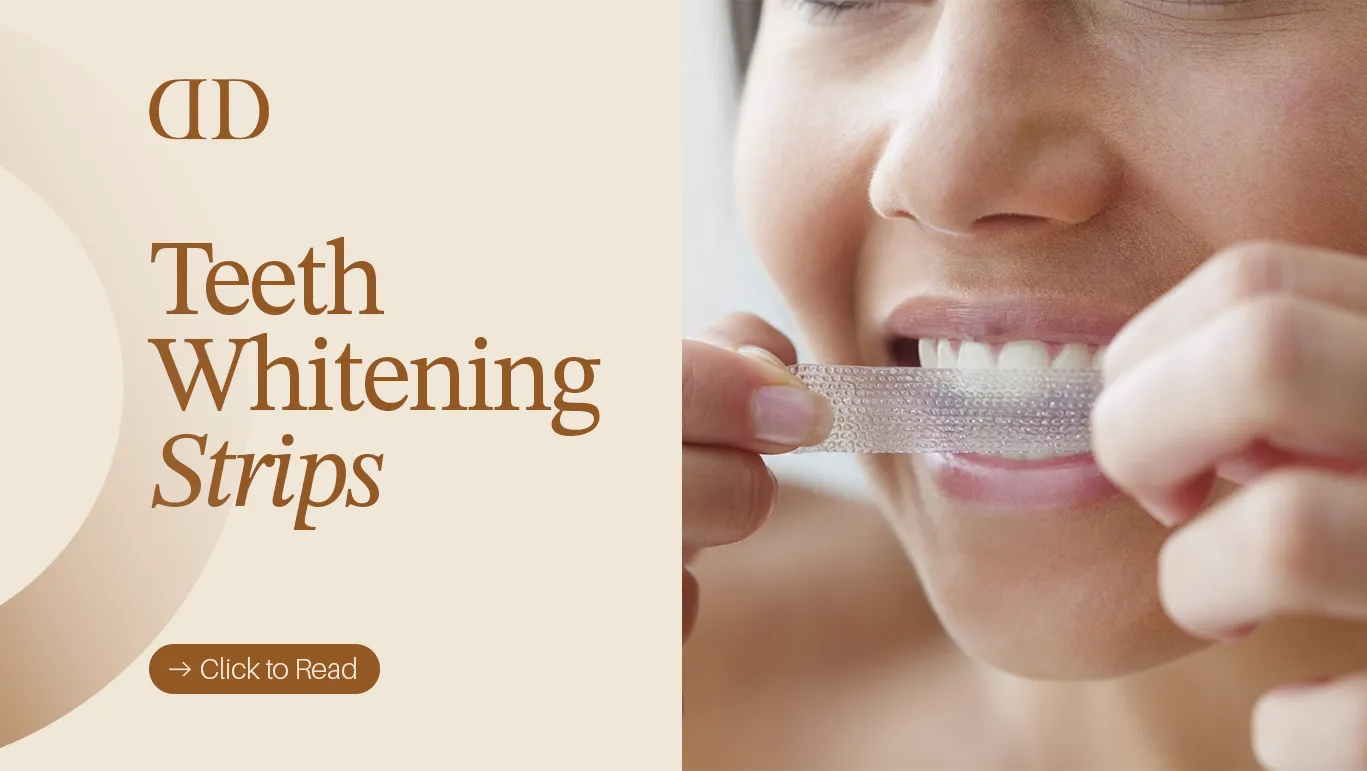
Whitening strips work — studies show peroxide-based strips can lighten teeth by 2 to 5 shades over a 2-week treatment period. But whether they’re the right move for your teeth is a different question entirely.
You’ve seen them everywhere. On TikTok, in drugstore aisles, tucked inside influencer unboxing videos. Teeth whitening strips have become one of the most popular at-home cosmetic dental products on the market — and for good reason. They’re affordable, easy to find, and you can use them while doing literally anything else. But underneath the glossy marketing, there’s a lot of nuance worth understanding before you peel that first strip off its liner.
This guide covers everything: how they work, which ones are actually worth your money, what the science says about their safety, and — critically — when you’re better off booking a professional appointment instead.
How Do Teeth Whitening Strips Actually Work?
Most whitening strips rely on one of two active ingredients: hydrogen peroxide or carbamide peroxide. When these compounds come into contact with your tooth enamel, they break down into oxygen molecules that penetrate the enamel surface and oxidize the discolored molecules sitting in the inner tooth structure (dentin). The result? Stains that were absorbing and reflecting dark light now scatter it differently — and your teeth appear whiter.
The concentration matters a lot here. Over-the-counter strips typically contain between 6% and 14% hydrogen peroxide. Prescription-grade or professional bleaching products can go significantly higher, which is why professional results tend to be more dramatic and faster.
Research published in the Journal of Clinical Dentistry confirmed that 6% hydrogen peroxide whitening strips produced measurable, statistically significant whitening after just one week of use. That’s meaningful clinical validation for what most people already suspected: yes, these things do something.
Are Whitening Strips Bad for Your Teeth?
Here’s the question most people are actually typing into Google at midnight. And the honest answer is: not necessarily, but it depends on how you use them.
The active peroxide ingredients in whitening strips are safe for enamel at the concentrations found in consumer products, provided you follow the instructions. The concern isn’t really the enamel — it’s the sensitivity. Peroxide can temporarily increase the permeability of your enamel, which allows heat, cold, and pressure signals to reach the nerve more easily. This is why many people report sharp, shooting tooth sensitivity during or after a whitening strip session.
A 2025 study published in the Journal of Dentistry found that while hydrogen peroxide whitening systems were effective, sensitivity was the most commonly reported side effect — and it was largely temporary, resolving within 24–48 hours of stopping use.
Can whitening strips damage your teeth over the long term? Overuse is where the real risk lives. Using strips more frequently than recommended, or stacking multiple whitening products simultaneously, can degrade enamel over time and cause lasting sensitivity or gum irritation. This isn’t a warning to scare you off — it’s just a reminder that more isn’t always better when it comes to cosmetic dental care.
Whitening Strips Side Effects: What to Expect
Being prepared for side effects makes the whole experience a lot less alarming. The most common ones include:
- Tooth sensitivity — The most frequently reported side effect. Typically mild to moderate and temporary.
- Gum irritation — Often caused by strips that don’t fit your teeth well and allow peroxide to contact gum tissue.
- Uneven whitening — If the strip doesn’t lay flat or doesn’t fully contact all tooth surfaces, you may end up with patchy results.
- Enamel softening — Rare with proper use, but possible with overuse or very high-concentration products.
Sensitivity is the big one. If you already deal with sensitive teeth, it’s worth trying a lower-concentration strip or using a desensitizing toothpaste (look for ones containing potassium nitrate or stannous fluoride) in the days leading up to your whitening treatment.
How to Use Teeth Whitening Strips (Without Ruining the Results)
Using whitening strips correctly is straightforward, but the details matter. Here’s how to get the best outcome:
- Brush your teeth first — But wait 30 minutes before applying strips. Brushing immediately beforehand can temporarily open enamel pores and increase sensitivity.
- Dry your teeth — Lightly pat your teeth dry with a tissue or gauze. This helps the strip adhere better and improves peroxide contact time.
- Apply carefully — Line the strip up with your gumline, then fold the remainder behind your teeth. Avoid letting the strip overlap onto your gums.
- Leave on for the instructed time — Usually 30 minutes to an hour. Don’t exceed this thinking it’ll speed things up — it won’t, and it increases irritation risk.
- Rinse thoroughly — After removal, rinse your mouth well and avoid eating or drinking anything colored for at least an hour.
Consistency matters more than intensity. Two weeks of daily use as directed will outperform three days of aggressive, doubled-up application every time.
How Often Should You Use Teeth Whitening Strips?
Most over-the-counter whitening strip products are designed for once-daily use over a 14-day period. After completing a full course, results typically last anywhere from three months to a year, depending on your diet, oral hygiene habits, and natural tooth composition.
For maintenance, most dental professionals suggest repeating a whitening strip treatment no more than two to three times per year. Doing it more frequently without professional supervision is where you start risking enamel and gum integrity.
If you’re a heavy coffee or red wine drinker, you’ll likely need more frequent touch-ups than someone whose diet is gentler on their enamel. That’s just the reality.
How to Choose the Best Whitening Strips for You
Not all strips are created equal, and the “best” one depends on your specific situation. Here’s a breakdown of what to look for:
| Factor | What to Look For |
| Active Ingredient | Hydrogen peroxide for faster results; carbamide peroxide for gentler, slower action |
| Concentration | 6–10% HP for beginners or sensitive teeth; 10–14% for those with no sensitivity history |
| Strip Design | No-slip grip strips adhere better; dissolvable strips eliminate cleanup |
| ADA Seal | Look for the American Dental Association Seal of Acceptance for safety verification |
| Whitening Claims | Be skeptical of extreme claims (e.g., “20 shades whiter”); 2–5 shades in 2 weeks is realistic |
| Price Point | $25–$65 for reputable brands; cheaper isn’t always worse, but be cautious with unknowns |
What Are Dissolvable Whitening Strips?
Dissolvable whitening strips — sometimes called “no-rinse” strips — are a newer format that fully dissolves in your mouth after use, meaning no awkward peel-off moment and no residue. Brands like Listerine have popularized this format. They tend to use lower concentrations of active ingredients, making them a good option for people with mild sensitivity or those new to whitening.
Results are typically more modest compared to traditional non-dissolvable strips, but for maintenance after a professional whitening session, they’re a convenient option.
The Best Whitening Strips: A Quick Comparison
Rather than naming a single “winner” (because your teeth are not my teeth), here’s an honest overview of the categories:
For sensitive teeth: Look for strips with added fluoride or potassium nitrate, or specifically labeled “sensitive formula.” Concentrations below 10% hydrogen peroxide will be your friend.
For fastest visible results: Higher-concentration strips (10%+ HP) from established brands with clinical backing will deliver the most noticeable change in the shortest time. Research evaluating non-peroxide whitening systems found that while non-peroxide alternatives do offer some benefit, peroxide-based strips remain the gold standard for measurable color change.
For maintenance: Dissolvable strips used 2–3 times weekly after a professional treatment are ideal for sustaining your results without over-exposing your enamel.
For convenience: No-slip grip strips that don’t require repositioning are worth the premium if you plan to use them while working or commuting.
Whitening Strips vs. Professional Teeth Whitening: Which Is Right for You?
This is where the real decision gets interesting. Whitening strips have their place — but they’re not always the right tool for the job.
Here’s a straightforward comparison:
| Whitening Strips | Professional Whitening | |
| Active Ingredient Concentration | 6–14% hydrogen peroxide | 25–40% hydrogen peroxide |
| Shade Change | 2–5 shades over 2 weeks | 4–8 shades in 1–2 sessions |
| Time Required | 30 min/day for 14 days | 1–2 hours at a clinic |
| Cost | $25–$65 per box | $300–$1,000+ (US/UK) |
| Supervised Use | No | Yes |
| Suitability for Restorations | Not effective on crowns/veneers | Discussed case by case |
| Longevity of Results | 3–12 months | 1–3 years with maintenance |
At-home strips are excellent for people with mild to moderate discoloration from coffee, tea, or lifestyle habits, and for those maintaining results after a professional treatment. But if your discoloration is significant — or if it stems from intrinsic sources like medications (tetracycline staining, for example), trauma, or fluorosis — professional whitening will give you results that strips simply cannot match.
A clinical study on at-home 16% carbamide peroxide bleaching demonstrated effectiveness for at-home use, but the study’s authors noted that higher concentrations and more complex cases benefit considerably from professional supervision.
When Whitening Strips Won’t Work (And What to Do Instead)
Whitening strips only work on natural tooth enamel. If you have crowns, veneers, bonding, or implants on your visible front teeth, those restorations won’t respond to peroxide — which means you could end up with a two-tone smile if you’re not careful.
They also won’t address:
- Deep intrinsic stains from antibiotics (tetracycline)
- Staining from trauma or nerve damage
- Fluorosis (white or brown spots from excess fluoride during development)
- Uneven enamel that’s already been thinned
In those cases, the options worth exploring with a dental professional include professional bleaching, microabrasion, composite bonding, or porcelain veneers — all of which require an in-person consultation to assess properly.
The Darya Dental Clinic Perspective: What Patients Ask Us
At Darya Dental Clinic in Istanbul — located between Ümraniye and Ataşehir — we regularly hear from international patients who’ve been using whitening strips at home and want to understand their options. A recurring question: “I’ve been using strips for months but my teeth still look yellow — why isn’t it working?”
The answer is almost always one of three things: intrinsic staining that peroxide can’t reach, restorations that don’t respond to bleaching, or unrealistic expectations about what a 10% concentration product can achieve on heavily discolored enamel.
Professional-grade whitening at Darya Dental uses 38% hydrogen peroxide activated under controlled conditions — a dramatically higher concentration than anything available over the counter, delivered with precision and aftercare support. For patients traveling from South Africa, the UK, Australia, or the US, the combination of European-standard care and Istanbul pricing makes professional whitening here considerably more accessible than it would be back home.
That said, whitening strips remain a legitimate and useful tool for the right candidate. Our advice to patients: understand what you’re working with before you commit to any whitening method, and consult a professional if you’re unsure.
A Note on Sensitivity: The Research Is Reassuring
One of the biggest fears around whitening strips is the idea that they’re secretly wrecking your teeth every time you use them. The clinical reality is more nuanced. Studies examining whitening-induced sensitivity consistently show that sensitivity associated with peroxide-based products is transient — meaning it resolves on its own — and that there is no documented evidence of permanent pulp damage from properly used consumer-grade whitening strips.
This doesn’t mean sensitivity is fun or that everyone will experience it mildly. But it does mean that occasional discomfort during a whitening treatment is not a signal that permanent damage is occurring. It’s a physiological response to temporary enamel permeability changes, and it passes.
If your sensitivity is severe or persists beyond 48 hours after stopping strips, that warrants a conversation with your dentist — not because catastrophe has struck, but because your teeth may have specific conditions (exposed dentin, cracked enamel, existing decay) that need to be addressed before any whitening is appropriate.
The Bottom Line on Whitening Strips
Whitening strips work. They’re safe when used as directed. The best ones contain clinically validated concentrations of hydrogen peroxide and are designed to maximize contact with your enamel while minimizing gum exposure. Sensitivity is the main side effect, and it’s generally temporary.
Three things to take with you:
- Strips are best for extrinsic, surface-level staining — coffee, tea, wine, smoking. They’re not the right tool for deep intrinsic discoloration.
- Consistency beats intensity — stick to the recommended schedule rather than doubling up to speed things up.
- Professional whitening delivers more dramatic and lasting results, particularly for significant discoloration or for patients who want precision and oversight.
If you’re somewhere in the middle — you want better results than strips can offer but haven’t explored what professional whitening involves — it’s worth getting a proper consultation. Understanding your baseline is always step one.
FAQ: Whitening Strips — Direct Answer
Do whitening strips actually work?
Yes. Peroxide-based whitening strips have been clinically shown to lighten teeth by 2 to 5 shades over a standard 14-day treatment course. Results vary based on the type and severity of discoloration and the concentration of the active ingredient.
Are whitening strips safe to use regularly?
Yes, when used as directed — typically once daily for two weeks, two to three times per year. Overuse increases the risk of enamel erosion and persistent sensitivity. People with existing sensitivity, gum recession, or dental restorations should consult a dentist before starting any whitening regimen.
How long do whitening strip results last?
Results from a standard over-the-counter whitening strip treatment typically last between 3 and 12 months. Longevity depends heavily on dietary habits (coffee, red wine, smoking all accelerate re-staining), oral hygiene, and whether any maintenance treatments are used.
Can whitening strips damage crowns or veneers?
No — but not in a good way. Peroxide-based whitening products have no effect on porcelain, ceramic, or composite restorations. If you whiten your natural teeth while leaving existing restorations unchanged, you may create a visible color mismatch. Always consult your dentist if you have restorations in your smile zone before whitening.
What’s the difference between whitening strips and professional teeth whitening at a clinic like Darya Dental in Istanbul?
Professional whitening at a clinic like Darya Dental Clinic in Ümraniye-Ataşehir, Istanbul uses hydrogen peroxide concentrations of up to 38% — significantly higher than the 6–14% found in consumer strips — and is applied under clinical supervision. Results are faster (often visible in a single session), more dramatic (up to 8 shades), and longer-lasting. For international patients, Istanbul’s pricing makes professional whitening a highly cost-effective alternative to UK or US dental pricing.
Always consult a licensed dental professional before beginning any whitening treatment, particularly if you have existing dental restorations, tooth sensitivity, gum recession, or underlying oral health conditions.
