
What Is Diastema? Does Braces Fix Diastema?
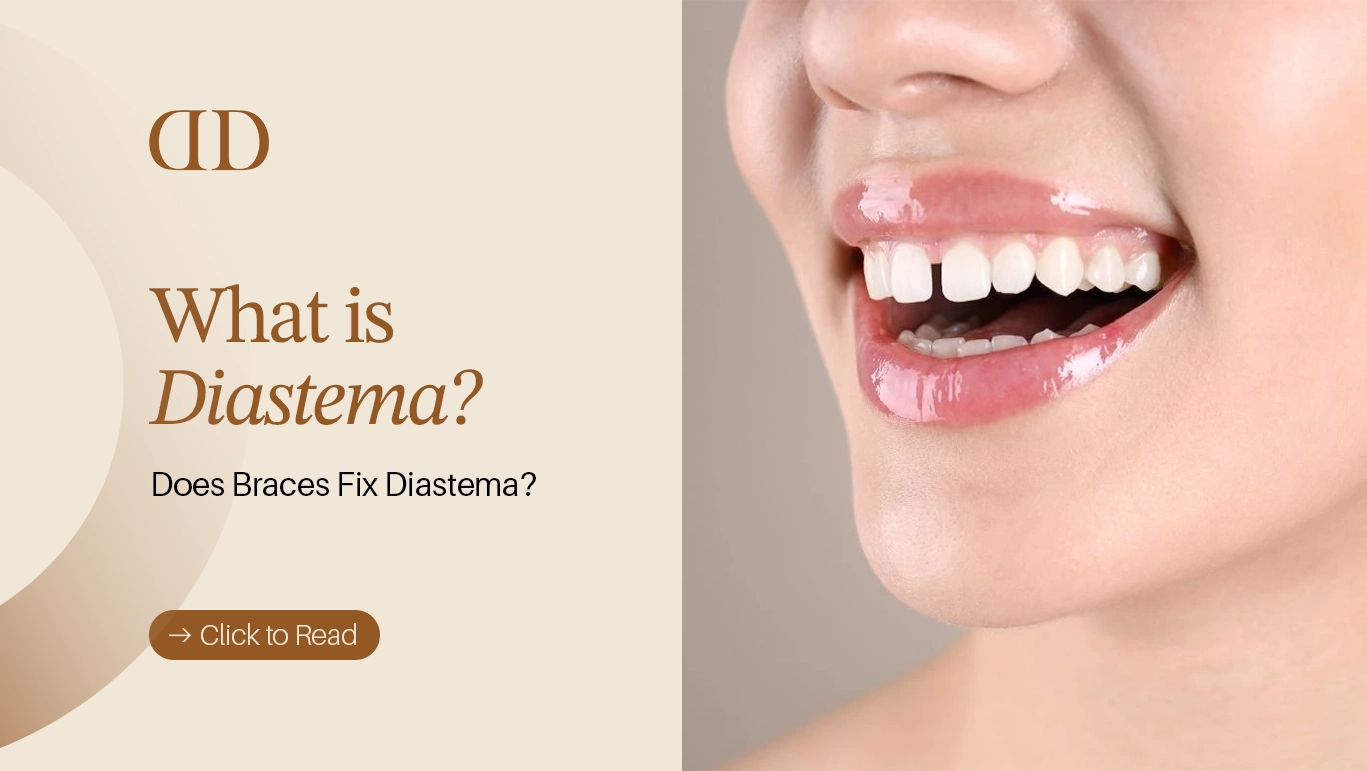

Diastema is one of those dental terms that seems simple at first glance, yet becomes more interesting the deeper you look into it. In dentistry, diastema refers to a visible space or gap between two teeth, most commonly between the upper front teeth. This gap can be subtle or pronounced, temporary or permanent, and its meaning changes depending on age, anatomy, and even cultural context.
At Darya Dental Clinic, questions about diastema often go beyond aesthetics. People want to understand why diastema forms, whether it is something that should be addressed, and most importantly, whether braces can truly fix diastema in a stable way.
What Does Diastema Mean in Modern Dentistry?
In clinical terms, diastema is defined as a space between adjacent teeth that exceeds what is considered typical contact. While most people associate diastema with the midline gap between the two upper incisors, it can occur between any teeth in the mouth.
Dentists do not classify diastema as a disease. Instead, it is viewed as a variation in dental alignment. This distinction is important because it shifts the conversation from “treatment is required” to “understanding is essential.” A diastema can exist without pain, dysfunction, or oral health complications.
Outside the clinic, diastema carries different meanings. In some cultures, it is associated with beauty, charisma, or individuality. In others, it is seen as a childhood phase that should disappear with maturity. These differing perspectives show that diastema is not only a dental concept but also a social and psychological one. Depending on the cause and extent of the gap, different procedures may be considered, so you can explore all dental treatments to review the available options.
Common Causes of Diastema Formation
The development of diastema is rarely caused by a single factor. More often, it results from a combination of structural, behavioral, and genetic influences. Understanding these causes helps explain why diastema looks different from person to person.
The most frequently discussed causes include:
- Tooth size being smaller than jaw size, creating extra space
- A prominent or low-attached labial frenulum
- Childhood habits such as thumb sucking or tongue thrusting
- Missing teeth or delayed eruption patterns
- Genetic traits related to jaw shape and tooth spacing
Each of these factors can influence whether a diastema appears early in life or develops later. For example, genetically driven diastema often remains stable over time, while habit related diastema may change as behaviors evolve.
Scientific discussions on craniofacial development frequently highlight the role of genetics and growth patterns. For broader biological context, research resources from the
National Institutes of Health
offer valuable insight into how oral structures develop and adapt.
Is Diastema Always a Problem That Needs Fixing?
One of the most misunderstood aspects of diastema is the assumption that it always needs correction. In reality, many people live comfortably with diastema without experiencing any functional or oral health issues.
Premium Dental Care in Turkey
Expert treatments with high-end technology. Get your personalized quote today via WhatsApp.
In children, a temporary diastema is often considered part of normal dental development. As permanent teeth erupt, these gaps frequently close on their own. In adults, a stable diastema may persist without causing any changes in chewing, speech, or gum health.
From a professional standpoint, diastema is usually evaluated based on three considerations:

Want trusted dental advice in your Google AI answers?
Add Darya Dental Turkey as a Preferred Source on Google to make our dental guides easier to find in your search results and AI Overviews.
- Functional impact on biting or speaking
- Oral hygiene challenges related to spacing
- Personal perception and satisfaction with the smile
Organizations such as the
American Dental Association
often emphasize individualized evaluation, reinforcing the idea that diastema should be understood rather than automatically labeled as a defect.
Does Braces Fix Diastema in a Predictable Way?
The question of whether braces fix diastema is one of the most common and most nuanced. Orthodontic systems are designed to move teeth gradually using controlled forces, and from a mechanical perspective, braces are capable of closing spaces, including diastema .
However, effectiveness depends largely on why the diastema exists. When diastema is primarily caused by tooth positioning, braces often achieve visible closure. When soft tissue factors or skeletal patterns are involved, orthodontic movement alone may not fully address the tendency for the space to reopen.
Another important concept is retention. Even when braces successfully close a diastema, long-term stability often relies on retention strategies that counter natural forces such as tongue pressure and periodontal fiber memory. This does not mean braces are ineffective, but rather that diastema behaves differently than crowding issues.
At Darya Dental Clinic, orthodontic discussions around diastema typically focus on understanding the origin of the space before exploring alignment possibilities.
Diastema Compared With Other Tooth Spacing Patterns
Although diastema is often used as a general term, not all gaps between teeth fall into the same category. Distinguishing diastema from other spacing patterns helps clarify expectations and terminology.
| Condition Type | Description | How It Differs From Diastema |
| Diastema | A defined space between two teeth | Usually localized, often midline |
| Generalized spacing | Multiple gaps across the arch | Involves several teeth, not isolated |
| Tooth drift | Spacing due to gum or bone changes | Develops later in life |
| Developmental spacing | Temporary gaps in children | Often resolves naturally |
This comparison shows that diastema is a specific pattern rather than a catch-all term. Understanding these distinctions prevents oversimplification and supports more meaningful conversations.
How Diastema Influences Smile Aesthetics
Smile aesthetics are deeply subjective, and diastema plays a unique role in how smiles are perceived. For some, diastema adds personality and memorability. For others, it becomes a focal point that draws attention in photos or social settings.
From an aesthetic dentistry perspective, balance often matters more than symmetry. The width of the diastema, lip movement, facial proportions, and tooth shape all influence whether the gap blends naturally or stands out.
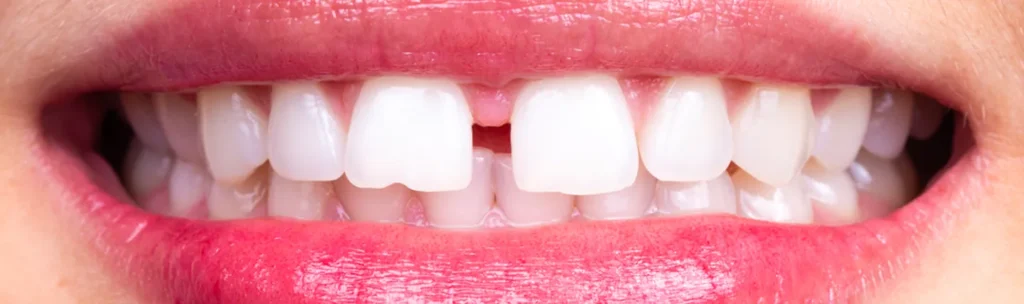
Psychological studies on facial recognition suggest that distinctive features, including diastema, can make faces more recognizable. This explains why some individuals grow attached to their diastema over time, viewing it as part of their identity rather than an imperfection.
Scientific Observations on Diastema Stability
Dental research consistently shows that diastema behavior over time depends on its origin. Developmental diastema may close naturally, while genetically influenced diastema often remains stable for years.
Orthodontic literature frequently discusses the concept of relapse, particularly with midline diastema. Periodontal fibers and muscular forces can encourage teeth to move back toward their original positions, even after closure.
At the same time, long-term observational studies indicate that untreated diastema does not necessarily worsen with age. In many cases, it remains unchanged, reinforcing the idea that diastema is not inherently progressive.
Diastema in Children Versus Adults
Age significantly shapes how diastema is interpreted. In children, diastema is often transitional and linked to growth stages. Pediatric dental literature generally views early diastema as a normal finding rather than a concern.
In adults, diastema tends to reflect established anatomy. While it may attract more attention cosmetically, it is less likely to change without external influence. This stability explains why adult discussions around diastema often center on choice and curiosity rather than urgency.
Understanding this age related distinction helps frame diastema as a lifelong variation rather than a fixed problem.
Seeing Diastema as a Feature, Not Just a Gap
Diastema is more than a space between teeth. It represents a blend of biology, growth, culture, and personal perception. While braces can influence diastema in many situations, they are only one part of a broader conversation.
Approaching diastema with knowledge rather than assumption allows for thoughtful reflection and informed discussion. Whether viewed as a defining feature or an area of interest, diastema deserves context, nuance, and respect for individual choice.
